
Why does your living room smell like a campfire even when you haven’t lit a match in weeks? It’s a common frustration for many homeowners when a stubborn fireplace smells like smoke in Mission Hills, especially during the humid summer months or after a heavy downpour. You want your home to feel clean and safe, yet that heavy, ashy scent seems to cling to every curtain and sofa cushion. It’s natural to feel a bit of anxiety about whether that odor signals a hidden safety risk or a potential chimney fire.
We understand that your fireplace should be a source of comfort, not a cause for concern. You’ll discover the specific reasons behind these odors, ranging from negative air pressure to moisture problems that go beyond simple soot buildup. We’ll explain how staying compliant with the 2027 NFPA 211 standards and 2018 International Building Codes ensures your system operates correctly. By identifying the root cause, you can eliminate the smell permanently and ensure your home is ready for the 2026 season. We’ll walk through professional solutions like chimney relining and cap installations that restore your peace of mind and keep your living space fresh.
Key Takeaways
- Identify why a healthy chimney should be odorless and how creosote buildup acts as the primary source for lingering campfire scents.
- Understand how negative air pressure pulls air down the flue, which is often why your fireplace smells like smoke in Mission Hills during the off-season.
- Learn how moisture absorbed by older masonry reacts with soot to create pungent, acidic odors during humid Kansas summers or rainy days.
- Discover immediate troubleshooting steps you can take today, including the importance of keeping your damper closed when the system isn’t in use.
- Explore how a professional Level 2 inspection uses video technology to find hidden structural issues and provide a permanent solution for your home.
Identifying the Source: Why Smoke Odors Linger in Mission Hills Homes
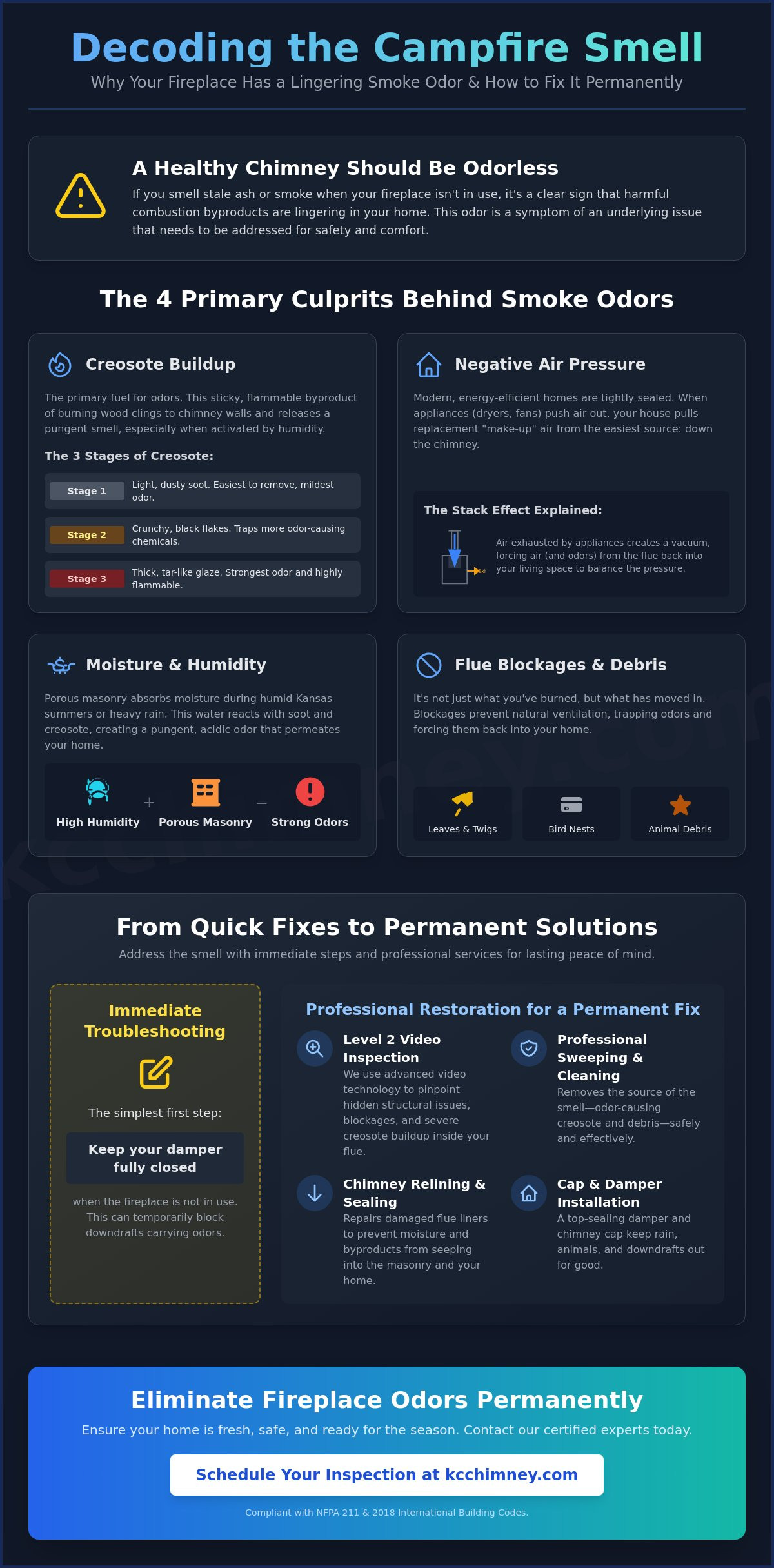
A healthy fireplace system should be virtually odorless when it isn’t in use. If you walk into your living room and immediately catch a whiff of stale ash, your chimney is trying to tell you something. In Mission Hills, where many homes feature beautiful, traditional masonry, these odors are often more than just a nuisance. They are a sign that combustion byproducts are lingering where they don’t belong. When your fireplace smells like smoke in Mission Hills, the most common source is creosote, a carbonaceous chemical byproduct of burning wood.
Creosote acts as the primary fuel for these odors. It’s a sticky, oily substance that adheres to your chimney walls every time you light a fire. While a dry winter day might keep these smells at bay, the humid climate common to the Kansas City area acts as a catalyst. High moisture levels in the air reactivate stale creosote, making the scent much more pungent. It’s also important to distinguish between a sooty smell, which indicates creosote, and a musty odor. Musty smells often point toward organic decay, such as damp leaves or moisture trapped within the brickwork itself. If you find that your fireplace smells like smoke in Mission Hills after a heavy rain, the moisture is likely reacting with existing soot deposits.
The Role of Creosote Buildup
Creosote develops in three distinct stages, and each brings a different level of intensity to the odor in your home. Stage 1 is a light, dusty soot that is relatively easy to remove during a standard chimney sweeping. Stage 2 consists of crunchy, black flakes that trap more odor-causing chemicals. The most severe is Stage 3 creosote, often called glaze. This is a thick, tar-like coating that is extremely difficult to remove and highly flammable. Because glaze is so concentrated, it produces the strongest and most offensive smells. Even a thin layer of soot can become noticeable during a humid spring, as the porous material absorbs moisture and releases gas into your home.
Blockages and Debris
Sometimes the smell isn’t just about what you’ve burned, but what has moved into the chimney since your last fire. Bird nests, fallen leaves, and twigs can collect on the smoke shelf or inside the flue, trapping odors and preventing them from venting naturally. We often see chimney guests like raccoons or squirrels that leave behind nesting materials or, in unfortunate cases, perish inside the system. These organic materials create a foul, decaying scent that mixes with old soot. Understanding The Science of the ‘Campfire Smell’ is key here. A blocked flue prevents the natural ventilation of stale air, forcing those concentrated odors back down into your living room through the damper.
The Science of the ‘Campfire Smell’: Drafting and Negative Pressure
Your home functions like a living, breathing organism that requires a constant supply of air to operate correctly. This is known as make-up air. When you run a kitchen exhaust fan, a clothes dryer, or your furnace, these appliances pull air from inside your home and vent it outdoors. If your house is sealed tightly for energy efficiency, that exhausted air must be replaced. Often, the path of least resistance for replacement air is right down your chimney flue. This reversal of airflow is the primary reason why your fireplace smells like smoke in Mission Hills even during the middle of spring or summer.
The Stack Effect is another scientific principle that dictates how air moves through your residence. In multi-story homes, warm air naturally rises toward the upper levels and escapes through attic vents or small gaps in the structure. This creates a low-pressure zone on the ground floor and in the basement. To balance this pressure, the house pulls air in from the bottom, frequently using the chimney as an intake vent. Throughout May 2026, we’ve observed significant temperature swings in the Kansas City region. These rapid shifts between cool mornings and warm afternoons can destabilize the natural draft of your chimney, making these pressure imbalances much more noticeable to your nose.
Understanding Negative Pressure
Many homes in our community have undergone weatherization to improve climate control. While these upgrades are excellent for your utility bills, they often turn the house into a vacuum. When the house can’t find enough air to “breathe,” it borrows it from the chimney, bringing the scent of old soot and creosote into your living room. This isn’t just a matter of odor; it’s a safety concern. High levels of negative pressure can cause backdrafting, which pulls dangerous combustion gases back into your home. Pursuing a Professional Restoration or a dedicated pressure test can help determine if your home’s air balance is putting your family at risk.
The ‘Cold Air Plug’ Phenomenon
If your chimney is built on the exterior of your home, you’ve likely encountered the “cold air plug.” Because the masonry is exposed to the elements on three sides, the air inside the flue becomes heavy, dense, and very cold. This column of air acts like a literal lid, preventing any warm air from rising. When you attempt to light a fire, the smoke has nowhere to go but out into your room. You can often solve this by priming the flue. Simply roll up a piece of newspaper, light it, and hold it near the open damper for sixty seconds. This heat breaks the cold air lock and establishes a proper upward draft. If your draft issues persist despite priming, a Level 2 inspection is the next logical step to ensure there are no internal obstructions.
Moisture and Masonry: How Water Penetration Amplifies Odors
The historic charm of Mission Hills architecture often comes with a hidden challenge: porous masonry. Many of the older homes in our neighborhood feature brick and mortar that, while beautiful, act like a sponge. These materials naturally absorb moisture from the humid Kansas City air and heavy seasonal rains. When water seeps into your chimney, it doesn’t just sit there. It triggers a chemical reaction with the existing soot and creosote lining the flue. This combination creates a pungent, acidic odor that many homeowners describe as a “musty campfire.” If your fireplace smells like smoke in Mission Hills specifically after a storm, you aren’t just smelling old fires; you’re smelling the reactivation of dormant chemicals through water penetration.
This odor is frequently a warning sign of structural decay. When moisture sits within the masonry, it can lead to the deterioration of the mortar joints and the brick itself. Over time, this compromises the integrity of your chimney and increases the dangers of poorly maintained chimneys, including the risk of moisture reaching your home’s framing. Addressing these issues early through expert chimney repair in Kansas City is the most effective way to protect your hearth and eliminate these deep-seated odors.
Leaky Chimney Caps and Crowns
The chimney crown is the concrete or mortar “roof” at the very top of your chimney stack. In Mission Hills, our frequent freeze-thaw cycles are incredibly hard on these surfaces. Small cracks form as the water inside the concrete expands and contracts, eventually allowing water to seep behind the chimney liner. A properly installed chimney cap acts as a secondary defense, keeping the interior of the flue dry. Without a functional cap and a solid crown, rain falls directly into the chimney, soaking the creosote and causing that heavy smoke smell to permeate your living space. Crown repair and cap installation are essential steps for a dry, odorless system.
The Danger of a Damaged Flue Liner
A compromised flue liner is a significant contributor to lingering smells. Most older chimneys use clay tile liners that can crack or shift over decades of use. These cracks provide the perfect hiding place for soot and moisture to collect. Because the liner is no longer a smooth, sealed surface, odors can actually permeate through the gaps and into your home’s walls. This makes the scent nearly impossible to scrub away with standard cleaning. A professional chimney inspection in Kansas City is vital for liner health, as it uses specialized cameras to find these hidden defects before they lead to structural damage or health risks. If your fireplace smells like smoke in Mission Hills despite regular sweeping, the liner may be the culprit.
Troubleshooting and Prevention: A Mission Hills Homeowner’s Checklist
Dealing with a lingering scent requires a mix of quick fixes and professional oversight. If your fireplace smells like smoke in Mission Hills, you don’t have to wait for a scheduled appointment to start reclaiming your air quality. While some issues require structural repair, many odor problems stem from simple air pressure imbalances or neglected seasonal maintenance. Taking immediate action helps prevent the scent from settling deeper into your furniture and carpets.
Immediate Steps for Odor Control
- Verify the Damper: Ensure your damper is fully closed and creates a tight seal. Even a small gap allows the house to pull smelly air from the flue into your living space.
- Perform the Window Test: If the smell is strong, crack a window in the same room. If the odor dissipates, you’ve confirmed that negative pressure is “sucking” air down the chimney.
- Neutralize, Don’t Mask: Avoid heavy perfumes or sprays. Instead, place a bowl of white vinegar or activated charcoal near the hearth. These materials absorb the acidic molecules responsible for the campfire scent.
Timing your maintenance is just as important as the service itself. Most homeowners wait until fall to call a professional, but spring is actually the best time for odor control. By scheduling a cleaning in April or May, you remove the creosote “fuel” before the high humidity of a Kansas summer has a chance to reactivate the smell. Removing soot early prevents that heavy, ashy aroma from permeating your home during the months you aren’t even using the fireplace.
Long-term Prevention Strategies
- Schedule a Professional Cleaning: An annual chimney sweep in Kansas City is the most effective way to remove the source of the smell and ensure your system meets 2027 NFPA safety standards.
- Upgrade to a Top-Sealing Damper: Unlike traditional throat dampers, these install at the top of the flue and feature a rubber gasket. They provide an airtight seal that keeps odors out and conditioned air in.
- Install a Stainless Steel Chimney Cap: This prevents rain from soaking your masonry and keeps birds or squirrels from nesting in the flue, eliminating two of the most common causes of foul smells.
While these steps help manage the symptoms, a professional video inspection is the only way to find hidden cracks or blockages deep within the masonry. We use advanced camera technology to see what the naked eye misses, ensuring your home stays fresh and safe. If you’re ready to eliminate these odors for good, book a professional odor diagnostic today.
Professional Restoration: How Best Chimney Services Eliminates Odors
When a fireplace smells like smoke in Mission Hills, a standard cleaning is often just the first step. Our team at Best Chimney Services approaches odor issues with a specialized diagnostic mindset. We don’t just scrub away surface soot; we investigate the structural and environmental factors that allow smells to enter your living space. We treat your home as a complete system, ensuring that every component from the hearth to the chimney cap works in harmony to maintain your indoor air quality.
Our technicians utilize advanced video camera equipment to perform Level 2 inspections, providing a high-definition view of every joint and tile inside your flue. This technology allows us to see hidden cracks, gaps in the masonry, or stage 3 creosote that a simple flashlight would miss. We understand that Mission Hills residents value their property’s integrity. That’s why we provide a “no-mess” guarantee. We use professional-grade tarps, specialized HEPA vacuums, and a methodical process to ensure your carpets and furniture remain pristine throughout the restoration process. Investing in a professional diagnostic is about more than just smell; it’s an investment in your home’s long-term safety and value.
Our Diagnostic Process
Every visit begins with a comprehensive evaluation led by our CSIA-certified technicians. We look for the subtle signs of failed pressure balances and structural gaps that serve as conduits for odors. Our multi-level safety evaluation follows the 2027 NFPA 211 standards, checking for proper clearances and liner integrity. By identifying exactly where the air is leaking, we can provide a targeted solution rather than a temporary fix. We prioritize transparency, showing you the video footage of your flue so you can see the condition of your chimney for yourself.
Beyond Sweeping: Comprehensive Solutions
Sometimes the solution involves more than a brush. If we find that your clay liner is porous or cracked, we may recommend chimney relining to create a smooth, airtight path for exhaust. For homes struggling with negative pressure, we often install top-sealing dampers that provide a much tighter seal than traditional throat dampers. We also specialize in gas fireplace repair to address odors caused by blocked vents or improper burner calibration. Our goal is to ensure your system is fully prepared for the 2026 season with zero lingering odors. Ready to breathe easy again? Schedule your Mission Hills chimney evaluation today and let our local experts restore your peace of mind.
Restore Freshness and Safety to Your Mission Hills Home
A persistent campfire scent is more than a minor annoyance; it’s a signal that your chimney’s pressure balance or structural integrity needs professional attention. You’ve learned how negative air pressure and moisture penetration can turn a dormant fireplace into a source of stubborn odors. By addressing these issues now, you ensure your home is ready for the 2026 season while protecting your indoor air quality and masonry. Taking action today prevents these scents from permanently settling into your carpets and furniture.
Our team has been serving Mission Hills since 2012, providing high-integrity solutions that prioritize your family’s safety above all else. Every project is handled by CSIA Certified Technicians who take pride in our A+ rated, mess-free service. If your fireplace smells like smoke in Mission Hills, don’t let the problem linger. We have the specialized tools and local expertise to identify the root cause and provide a permanent remedy that stands the test of time.
Schedule Your Mission Hills Chimney Inspection & Odor Diagnostic today. We look forward to helping you enjoy a cleaner, fresher, and safer living space for years to come.
Frequently Asked Questions
Why does my chimney smell like smoke when it’s raining?
Rain increases the humidity inside your flue and changes the local air pressure, which reactivates dormant creosote odors. The damp air is heavier than dry air, so it’s more likely to sink into your home and carry the scent of old soot with it. This is a common reason why a fireplace smells like smoke in Mission Hills during the rainy spring season. Ensuring your chimney cap is intact helps keep the interior dry and minimizes these seasonal odors.
Can a dirty chimney make you sick?
Yes, a dirty chimney can impact your health by releasing fine particulate matter and volatile organic compounds into your indoor air. These irritants can trigger asthma, allergies, or other respiratory issues for sensitive individuals in your household. In severe cases, a blocked or heavily soot-laden chimney can cause carbon monoxide to backdraft into your living space. Regular professional cleaning helps maintain a healthy environment and ensures your home’s air remains fresh and safe.
How do I get the smoke smell out of my house after a fireplace mishap?
You should start by ventilating the room thoroughly and placing bowls of white vinegar or activated charcoal near the hearth to absorb odor molecules. For lingering scents in fabrics, a mixture of water and baking soda can be used as a light spray on curtains and rugs. If the smell persists for more than a few days, it usually means the source is still inside the chimney. In these cases, a professional sweeping is required to fully remove the soot deposits.
Is it normal for a gas fireplace to smell like smoke?
No, a gas fireplace should never produce a wood-smoke odor; this typically indicates a venting problem or a buildup of dust and debris on the burner. If you notice a smoky or “burnt” smell, it could mean the exhaust isn’t exiting the home correctly through the vent. You should turn off the unit immediately and schedule a professional diagnostic. This ensures the venting system is clear and the gas is burning efficiently according to modern safety standards.
Will a chimney sweep remove all fireplace odors?
A professional sweep removes the creosote that acts as the odor source, but it may not solve problems caused by negative air pressure or structural leaks. If your fireplace smells like smoke in Mission Hills even after a thorough cleaning, the issue is likely related to how your home “breathes.” A comprehensive Level 2 inspection can determine if you need a top-sealing damper or masonry repairs to eliminate the scent for good.
How much does a chimney inspection cost in Mission Hills?
The cost for a chimney inspection varies depending on the level of detail required and the current condition of your system. A standard visual evaluation is typically the most affordable option, while a Level 2 video inspection involves specialized equipment and provides a more in-depth look at the flue’s interior. We recommend contacting a local professional for a specific quote based on your home’s unique architectural needs and the age of your chimney.
What is a top-sealing damper and does it stop smells?
A top-sealing damper is an airtight hardware unit installed at the very top of your chimney stack that replaces traditional throat dampers. Because it features a specialized rubber gasket, it creates a much tighter seal when the fireplace isn’t in use. This prevents outside air from pushing chimney odors down into your home. It’s one of the most effective ways to stop draft-related smells while also improving your home’s overall energy efficiency.
Can I use baking soda to clean my chimney odors?
Baking soda is effective for absorbing surface odors in your living room, but it cannot clean the creosote deposits inside your chimney flue. While you can sprinkle it on the hearth to manage light scents, the only way to remove the root cause of the odor is through mechanical cleaning. A professional sweep uses specialized brushes to strip away the soot and glazed creosote that baking soda simply cannot reach.