
What is creosote and is it dangerous, or is the dark residue in your fireplace just ordinary soot? Chimney creosote forms when smoke from burning wood cools and leaves deposits inside the flue. A small amount is a normal byproduct of wood burning, but buildup can be highly flammable and increase the risk of a chimney fire. The word “creosote” is also used for substances made from coal tar, so it helps to know which kind you’re seeing.
If you’ve spotted dark deposits, it’s reasonable to wonder whether you can keep using your fireplace. The answer depends on the amount of buildup and the chimney’s condition. This guide explains how creosote forms, how its stages may look, and why deposits can threaten your chimney and home.
You’ll also find practical ways to limit buildup, guidance on when to stop using the fireplace, and an explanation of how a professional sweep and inspection can reveal deposits inside the flue that aren’t visible from the hearth.
Key Takeaways
- Learn how creosote forms and why accumulated deposits can increase the risk of a chimney fire.
- Compare common creosote stages by texture and removal difficulty, while remembering that appearance alone can’t assess the flue.
- If you notice a serious concern, pause fireplace use and arrange a professional assessment before burning another fire.
- Understand the difference between sweeping, which removes deposits, and an inspection, which evaluates the chimney’s condition.
- For Kansas City-area homeowners, checking the chimney before regular seasonal use can help guide safer next steps.
What Is Chimney Creosote? Understand the Residue Left by Burning Wood
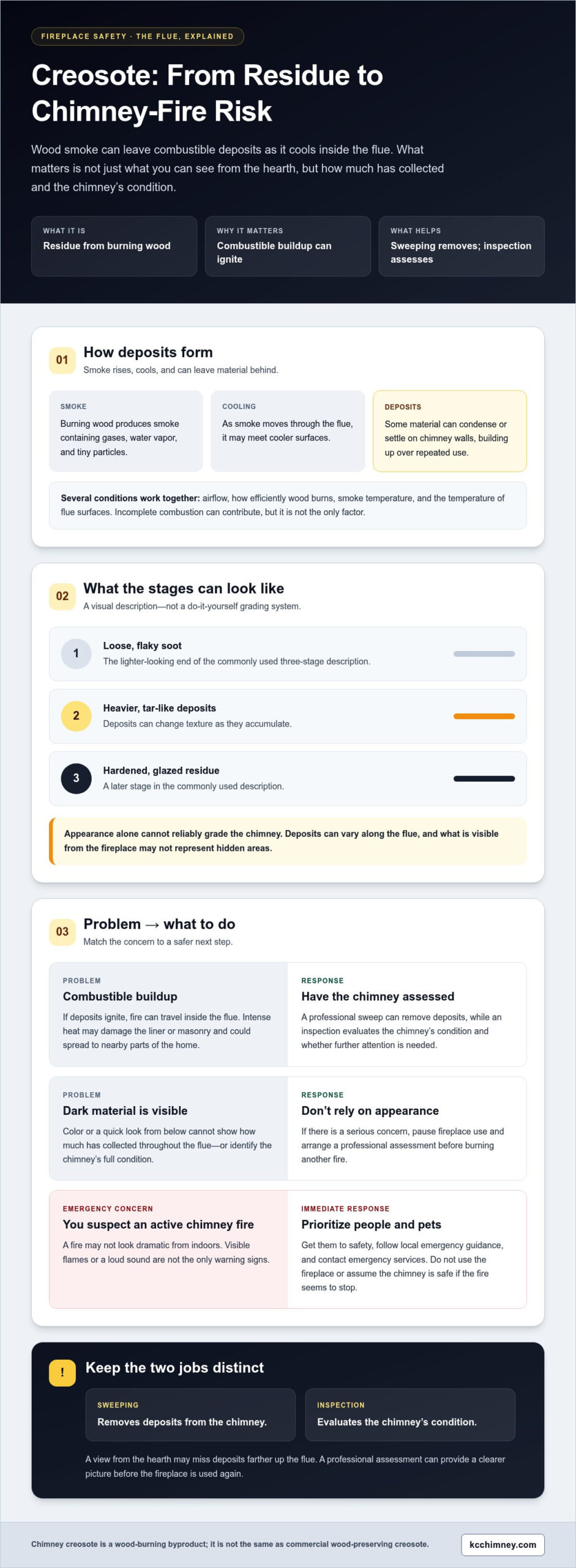
Chimney creosote is combustible residue deposited inside a flue as smoke from burning wood rises and cools. It can range from loose, dark soot to a heavier, tar-like coating. Creosote is a normal byproduct of wood burning, but accumulated residue can become a safety concern.
The word can also refer to products used to preserve wood. Those products aren’t the same as residue from a residential fireplace. Knowing how chimney creosote forms helps explain why deposits vary and why their appearance alone doesn’t tell the whole story.
How does creosote form inside a chimney?
Burning wood produces smoke containing gases, water vapor, and tiny particles. As the smoke rises through the flue, it may meet cooler surfaces. Some of its contents can condense or settle there, gradually leaving deposits. Incomplete combustion can contribute to residue, but it isn’t the only factor.
Conditions in the fireplace and chimney also matter. Airflow affects how efficiently wood burns and how smoke moves through the flue. Smoke temperature and the temperature of the flue surfaces can influence whether material stays airborne or collects on the chimney walls. These factors work together, so no single habit or fuel choice explains every deposit.
For example, two fires may leave different residue depending on how they burn and how the chimney carries smoke away. Creosote can build up over repeated use, and deposits may change texture as they accumulate. Looking in through the fireplace opening won’t necessarily reveal what coats the full length of the flue.
Why does the word creosote refer to different substances?
“Creosote” is a broad term for materials from different sources. Some forms are associated with wood tar, while coal-tar creosote has been used in industrial wood preservation. The chimney residue discussed here is produced during residential wood burning. It isn’t the same product as a commercial wood preservative.
This distinction matters because information about an industrial creosote product shouldn’t automatically be treated as a description of fireplace residue. The substances have different origins and uses. For a broader overview of the term’s forms and historical uses, see What is Creosote? This guide focuses on deposits inside a chimney and what they mean for homeowners.
If you find dark material around the flue, don’t assume it’s a wood-treatment product. It may be soot or creosote from burning wood. A professional assessment can identify what’s present and how much has collected, giving you a clearer picture than color or a quick glance from below.
Why Is Chimney Creosote Dangerous? Understand the Fire Risk
Accumulated chimney deposits can fuel a chimney fire if they ignite, but their presence doesn’t mean a fire is inevitable. Combustible material coating the flue gives a fire inside the chimney something to burn. Intense heat can damage the flue liner or masonry and may spread to nearby parts of the home.
The main household risk from creosote deposits is fire. The amount of residue, where it has collected, and the chimney’s condition all matter. A view from the fireplace may not reveal what’s happening farther up the flue.
Can creosote buildup cause a chimney fire?
Yes. A spark or sufficiently hot condition can ignite combustible deposits, allowing fire to travel inside the flue. The heat may damage chimney components and create a path for fire to reach concealed areas of the home. Not every chimney fire looks dramatic from indoors, so don’t rely on visible flames or a loud sound as the only warning signs.
If you suspect an active chimney fire, treat it as an emergency. Get people and pets to safety, follow local emergency guidance, and contact emergency services. Don’t continue using the fireplace or assume the chimney is safe because the fire seems to have stopped. Damage may not be visible from the hearth.
Is chimney creosote toxic to people?
Keep fire risk separate from claims about toxicity. “Creosote” can refer to different substances, including industrial products used to preserve wood. The EPA’s Creosote and Environmental Concerns page discusses that broader product context. Its information shouldn’t automatically be applied to deposits in a residential chimney. Smoke exposure, direct contact with residue, and exposure to wood-preserving products are different situations.
As a sensible precaution, don’t handle or stir chimney deposits yourself. Keep children and pets away from loose residue or removed material, and avoid spreading soot through the living space. If anyone has symptoms after smoke exposure, seek appropriate medical advice. During a suspected chimney fire, the urgent priority is protecting people from fire and smoke.
Even without an emergency, visible residue is a reason to take the chimney seriously rather than guess at its condition. A professional chimney sweeping and inspection can remove deposits and assess the flue, helping identify whether further attention is needed before you use the fireplace again.
Creosote Stages and Warning Signs: What Can a Homeowner Recognize?
Creosote can look different as deposits accumulate, but appearance is only a clue, not a reliable way to grade a chimney. A commonly used three-stage description moves from loose, flaky soot to heavier, tar-like deposits and then hardened, glazed residue. These categories help explain why buildup matters, but they aren’t a do-it-yourself inspection system. Deposits can vary across the flue, and the surface you can see may not represent areas hidden from view.
How do creosote deposits change over time?
Lighter deposits may look dry and flaky, while heavier buildup can look sticky or tar-like. Hardened, shiny deposits can be especially difficult to remove. Texture affects removal: loose material may be easier to brush away, while glazed deposits can require specialized professional methods. Don’t scrape or test residue yourself to determine its stage. A visual guess can miss buildup elsewhere in the chimney.
| General appearance | Removal difficulty | Why appearance has limits |
|---|---|---|
| Loose, flaky soot-like deposits | May be less tenacious | Visible flakes don’t show how much may be higher in the flue. |
| Heavier, tar-like residue | Can be more difficult to remove | A small visible patch may not reflect deposits in other areas. |
| Hard, glazed deposits | May require specialized professional removal | Shine or hardness alone can’t confirm the full extent or chimney condition. |
This comparison is a general guide, not a diagnosis. The stage of creosote matters, but so do the amount and location of the buildup. A dark mark near the fireplace opening may be a reason to arrange an assessment, but it can’t confirm what coats the full flue or whether the chimney is otherwise sound.
Can I tell how much creosote is in my chimney?
No. Looking up from the firebox gives you only a limited view, and deposits can collect on surfaces beyond your line of sight. Soot around the opening, a strong smoky odor, or visible residue may be clues to discuss during an assessment, not proof of how much buildup is present. Avoid reaching into the flue or estimating its condition from one visible spot.
A video camera inspection can reveal internal chimney surfaces that aren’t visible from the hearth. Technicians use camera equipment to examine the flue and assess conditions beyond the fireplace opening. This view helps put visible warning signs in context and determine whether sweeping or further attention is appropriate.
What Should You Do About Creosote? Safer Burning and Next Steps
If you’re concerned about chimney deposits, take a measured approach: stop using the fireplace if there’s an immediate safety concern, arrange an assessment, then follow the recommendations based on the chimney’s condition. You don’t need to identify a deposit’s stage yourself before taking the concern seriously.
What should you do if you suspect heavy buildup?
Don’t scrape deposits from the flue or try to burn them off with an especially hot fire. DIY removal can leave material behind or create a hazardous situation. If you suspect a chimney fire or another immediate danger, stop using the fireplace, get people to safety, and follow local emergency guidance.
If you suspect heavy buildup but there’s no active emergency, arrange an assessment by a qualified chimney professional. Sweeping removes deposits, while an inspection evaluates the chimney and flue’s overall condition. The services have different purposes: cleaning alone doesn’t establish whether the liner or other parts of the system need attention.
- Pause fireplace use if there’s a serious concern. Don’t light another fire to test whether the chimney is safe.
- Arrange an assessment. A professional can examine the flue and determine whether deposits need to be removed or further work is appropriate.
- Follow the findings. Ask for the next steps to be explained clearly, and wait to resume use if the assessment identifies a safety issue.
Which habits can help limit future buildup?
Good burning habits can help reduce conditions that contribute to deposits, though no single habit prevents creosote or replaces chimney care. Use dry, seasoned firewood rather than wood that’s still wet. Keep the damper open during a fire so smoke can travel up the flue, and operate the fireplace to maintain appropriate airflow.
A fire that smolders with limited air may burn less completely, which can contribute to more residue. Avoid restricting airflow so much that the fire struggles to burn. Follow the fireplace’s operating instructions, and don’t leave a fire unattended. These steps support cleaner combustion, but they can’t show whether deposits have already accumulated inside the chimney.
For a practical overview of seasonal upkeep and chimney care, see this Kansas City chimney sweeping guide. If deposits are a concern, arrange professional chimney sweeping and an inspection to have the flue assessed and determine the right next step.
Creosote in Kansas City Homes: When Sweeping and Inspection Help
For Kansas City homeowners who use a wood-burning fireplace during the colder season, arrange chimney care before regular fires begin. A fireplace can look ready while deposits or other conditions inside the flue remain out of sight. The practical next step is to understand the chimney’s condition rather than rely on what you can see from the hearth.
Why pair chimney sweeping with an inspection?
Sweeping and inspection address different needs. A professional chimney sweep removes deposits from the flue; an inspection evaluates the chimney and its components for conditions that may affect safe operation. Cleaning doesn’t confirm that the liner or other parts are in good condition, so one service shouldn’t be treated as a substitute for the other.
Video inspection equipment helps technicians view internal chimney surfaces that aren’t visible from below. That view informs the assessment, while sweeping addresses deposits. The Kansas City chimney inspection guide explains more about how inspection helps evaluate chimney condition.
How local homeowners can take the next step
Best Chimney Services provides chimney sweeping and multi-level safety inspections for homeowners in the Kansas City metro, including Overland Park, Mission Hills, Stilwell, Bucyrus, and Spring Hill. Technicians use video camera equipment to assess internal chimney conditions and professional sweeping methods to remove deposits. The findings clarify what the chimney needs and whether further attention is appropriate.
Before relying on a wood-burning fireplace for regular seasonal use, arrange professional chimney care. If you notice a serious concern, such as signs of a possible chimney fire, don’t use the fireplace until it has been assessed. Otherwise, a sweep and inspection can provide useful information about deposits and the flue’s condition, helping you decide on next steps.
Seasonal planning can make chimney care part of preparing your Kansas City-area home for fireplace use. Sweeping addresses accumulated residue; inspection looks beyond the residue to the system itself. Together, they give a clearer picture than visible deposits or cleaning alone.
Explore Best Chimney Services’ chimney sweeping and inspection services to plan care for your Kansas City-area home.
Take the Next Step Toward a Safer Fireplace
Understanding what is creosote and is it dangerous can help you make a more confident decision about your fireplace. You can’t judge the full condition of a chimney by appearance alone. If deposits concern you, or you’re preparing to use a wood-burning fireplace again, arrange professional attention before relying on it.
Best Chimney Services provides chimney sweeping and inspections for Kansas City-area homeowners. An evaluation can clarify what’s happening inside the flue and what care may be appropriate for your home.
Schedule chimney sweeping or an inspection with Best Chimney Services for your home in Overland Park, Mission Hills, Stilwell, Bucyrus, or Spring Hill.
Frequently Asked Questions
Is creosote in a chimney always dangerous?
No. The presence of creosote doesn’t mean a chimney fire will happen, but deposits shouldn’t be ignored. The risk depends on factors such as how much has collected and where it sits in the flue. Creosote buildup is combustible, so a professional assessment can help determine whether cleaning or other attention is needed.
Can a chimney fire happen without warning?
Yes. A chimney fire may not provide a clear, reliable warning beforehand, and some signs can be easy to miss from inside the house. Don’t treat the absence of loud sounds, visible flames, or heavy smoke as proof that everything is safe. If you suspect a chimney fire, get people to safety, follow local emergency guidance, and don’t use the fireplace again until the chimney has been assessed.
Can I remove creosote from my chimney myself?
Professional sweeping is the safer choice for removing chimney deposits. You may not be able to reach or see the full flue, and scraping or brushing without knowing the chimney’s condition can leave residue behind or cause damage. Don’t try to burn deposits away. If you see residue near the damper or firebox, arrange an assessment rather than attempting a DIY cleaning.
Does burning seasoned wood prevent creosote?
No. Properly seasoned wood can support cleaner burning, but it can’t guarantee that deposits won’t form. For example, a well-seasoned log may still smolder if airflow is restricted or the fire is operated poorly. Use dry firewood and follow your fireplace’s operating instructions, but don’t treat fuel choice as a replacement for checking the chimney. Previous use and the flue’s condition also affect what care may be needed.
What does glazed creosote look like?
Glazed creosote is generally described as a hard, shiny, tar-like coating on chimney surfaces. Its appearance can be concerning, but don’t try to confirm the deposit type by scraping or touching it. A small visible patch may not show what’s present farther up the flue. If you notice a glossy coating through an accessible opening, avoid handling it and arrange a professional evaluation.
How often should a chimney be inspected for creosote?
The National Fire Protection Association recommends having chimneys, fireplaces, and vents inspected at least once a year. An inspection can help identify deposits and other conditions, even if the fireplace hasn’t been used heavily. This is useful guidance for homeowners in Overland Park, Mission Hills, Stilwell, Bucyrus, and Spring Hill as they plan seasonal fireplace use. Whether sweeping is needed depends on the chimney’s condition and use.