
Imagine a freezing January evening in Overland Park where you’re ready to relax, but your fireplace refuses to ignite. It’s more than just a minor inconvenience; it’s a disruption to your home’s comfort and a potential source of anxiety regarding gas safety. When you’re staring at a cold hearth, troubleshooting gas fireplace problems can feel overwhelming, especially when you’re faced with complex manuals or the fear of a hidden leak. You want your living space warm again, but you also need the absolute certainty that your family is protected from carbon monoxide or mechanical failure.
We believe your fireplace should be a source of reliable warmth, not a cause for concern. This guide is designed to demystify technical hurdles and provide a clear roadmap for Kansas City homeowners. You’ll learn how to identify common issues like stubborn pilot lights or faulty sensors and determine which tasks are safe for a DIY approach. We’ll also highlight the critical moments when calling a certified professional for a thorough inspection is the only responsible choice. By the end of this article, you’ll have the knowledge to restore your fireplace’s glow and the peace of mind that comes from a safe, functional home.
Key Takeaways
- Start with the basics by confirming your main gas supply is active and checking electrical breakers or GFCI outlets for modern electronic ignition systems.
- Master troubleshooting gas fireplace problems by learning to identify if a dirty pilot orifice or a failing thermopile is preventing your hearth from staying lit.
- Learn to distinguish between harmless “new unit” burn-off smells and dangerous gas leaks that require immediate evacuation and professional intervention.
- Perform a simple visual inspection of burner ports and replace remote receiver batteries to resolve common ignition failures without a service call.
- Understand why a professional Level 2 inspection is a non-negotiable safety standard for ensuring the long-term integrity and performance of your gas fireplace insert.
Identifying Why Your Gas Fireplace Won’t Ignite
When your hearth stays dark, the first step in troubleshooting gas fireplace problems is verifying the basics. Check the simple things first. Many service calls are resolved by simply turning a valve or flipping a switch. Ensure the main gas line valve, usually located under the firebox or behind a side panel, is in the “on” position. If you’ve recently had other gas appliances serviced, a technician might have left the supply closed for safety. It’s a common oversight that happens more often than you might think.
For modern electronic ignition systems, check your home’s electrical panel. A tripped breaker or a triggered GFCI outlet can cut power to the ignition module. Don’t overlook the “wall switch trap.” Many homeowners don’t realize their wall switch has a child lock or that the remote receiver is set to “OFF” rather than “REMOTE.” Understanding Fireplace types and components helps you identify whether your specific model relies on a standing pilot or an intermittent pilot ignition (IPI) system, which changes how you’ll approach the power source. If there is no spark when you flip the switch, the issue is likely electrical.
Kansas City’s notorious seasonal winds also play a role. Strong downdrafts can occasionally extinguish a standing pilot light. They might also interfere with the pressure switch in a direct-vent system. If the wind is howling outside, your fireplace might be struggling against nature. It isn’t always a mechanical failure. In these cases, the system is actually working as intended by shutting down for your safety.
Cold Air Plugs and Ventilation Issues
Extreme cold in Overland Park can lead to “cold air plugs.” This happens when heavy, frigid air sits in the venting system, preventing the fireplace from drafting correctly. To fix this, you can sometimes warm the air near the top of the firebox with a hairdryer for a few minutes before attempting to ignite. Also, check the exterior vent cap. Local pests like birds or squirrels often find these caps to be perfect nesting spots. These nests block airflow and trigger safety sensors that prevent ignition. Troubleshooting gas fireplace problems often requires looking outside the firebox itself.
The Role of Remote Controls and Receivers
If your wall switch works but the handset doesn’t, your batteries are likely dead. Most remotes use standard AA or AAA batteries, but don’t forget the receiver box hidden inside the fireplace. To test this, slide the receiver switch to “ON.” If the fireplace ignites, the issue is definitely the remote. You might need to reset the digital link between the two by pressing the “learn” or “sync” button on the receiver and then pressing a button on the handset. This re-establishes the connection and usually solves the problem immediately.
Troubleshooting Pilot Light and Thermopile Failures
When your fireplace stays cold, the issue often lies within the pilot assembly. This small cluster of components is the heart of your system’s ignition and safety. To begin troubleshooting gas fireplace problems, you must understand the difference between a thermocouple and a thermopile. A thermocouple is a single sensor that generates a tiny voltage to keep the pilot valve open. A thermopile is a larger probe, essentially a bundle of thermocouples, that produces enough electricity to open the main gas valve. If your pilot light stays on but the main burner won’t ignite, your thermopile is likely the component failing to perform.
Carbon buildup and household dust are the most frequent causes of pilot failure. Over time, these particles clog the pilot orifice, resulting in a “lazy” yellow flame. A healthy pilot flame should be sharp, blue, and strong enough to wrap around the tips of your sensors. If the flame is weak or dancing away from the thermopile, the sensor won’t reach the required temperature to signal the safety valve. You can often resolve this by gently cleaning the area with a soft brush or canned air, but be careful not to bend the delicate metal components. If you’re uncomfortable with these internal parts, scheduling a Level 2 inspection is a proactive way to ensure everything is aligned and functioning safely.
The Science of the Safety Valve
The millivolt system is a heat-activated safety circuit. This ingenious design allows your fireplace to operate even during a Kansas City power outage because it generates its own electricity from heat. As the pilot flame hits the thermopile, it creates a small electrical charge, typically between 250 and 750 millivolts. This charge is the only thing holding the gas valve open. If your gas control knob feels stripped or doesn’t “pop” back out after being pressed, the internal valve mechanism may be damaged. Technicians use multimeters to test these specific millivolt outputs to determine if a sensor is truly dead or just needs a thorough cleaning.
Step-by-Step Pilot Reigniting Procedure
Most standing pilot systems follow a standard “Push, Turn, Hold” sequence. First, turn the gas knob to the “Pilot” position. You must then push the knob in firmly while clicking the piezo igniter or “sparker.” If you don’t hear a sharp, metallic click, the igniter wire might be loose or the ceramic insulator could be cracked. Once the pilot ignites, continue holding the knob for at least 30 seconds. This duration allows the thermocouple to heat up sufficiently to engage the safety magnet. If the flame goes out immediately after you release the knob, wait at least five minutes before your next attempt. This waiting period is critical to allow any unburned gas to dissipate safely from the firebox. For persistent ignition issues, it is best to consult a professional certified by the National Fireplace Institute (NFI) to avoid damaging the gas control assembly.
Decoding Unusual Fireplace Smells, Sounds, and Soot
Your gas fireplace should operate with minimal noise and no noticeable odor. When it begins producing strange scents or sounds, it’s often the system’s way of signaling a need for maintenance. New gas fireplace inserts often produce a distinct “burn-off” smell during their first few hours of operation as manufacturing lubricants cure. This is normal. However, if your established unit suddenly smells like singed hair or dusty fabric, it’s likely just accumulated pet dander or household dust burning off the heat exchanger. These scents are common in Kansas City homes during the first cold snap of the year and usually dissipate quickly.
Sounds can be equally telling. A dull rumbling often indicates a dirty burner or a pilot flame that’s slightly out of adjustment. High-pitched whistling is typically caused by gas traveling through a kinked flex line or high gas pressure. You might also hear rhythmic clicking or ticking; this is usually just the sound of metal components expanding and contracting as they heat up. While these sounds are rarely dangerous, they can be annoying. Addressing them is a standard part of troubleshooting gas fireplace problems to ensure your living room remains a quiet sanctuary.
Soot is another visual cue that something is wrong. While gas is a clean-burning fuel, soot can accumulate if the air-to-gas ratio is off. If you notice black velvety deposits on your ceramic logs or a dark film on the glass, your fireplace isn’t breathing correctly. This buildup is often a result of incomplete combustion, which can lead to carbon monoxide concerns if left unaddressed. Following basic Gas Appliance Safety Tips, such as monitoring your flame color, can help you catch these issues before they become hazards.
When to Worry About Gas Odors
A “rotten egg” smell is never normal. Gas companies add a chemical called mercaptan to natural gas specifically so you can detect leaks. If you encounter this sulfurous scent, stop what you’re doing immediately. Don’t flip any light switches, use a phone inside the house, or attempt to shut off the fireplace. These actions can create a spark. Evacuate everyone from the home and call the gas company from a neighbor’s yard. To protect your family year-round, ensure you have working carbon monoxide detectors installed on every level of your home, particularly near sleeping areas.
Log Misalignment and Air Shutter Adjustments
Soot often stems from logs that have shifted during cleaning or from a dusty air shutter. If a log blocks a burner port, it “impinges” the flame, causing “ghosting” where the fire appears to float and produce smoke. The air shutter, located near the burner intake, must be adjusted to provide the right amount of oxygen. A flame that’s too blue may be too lean, while a heavy orange flame without enough air will produce soot. If your glass is cloudy, use a specialized fireplace glass cream. Never use ammonia-based window cleaners, as they can permanently etch the glass when it heats up.
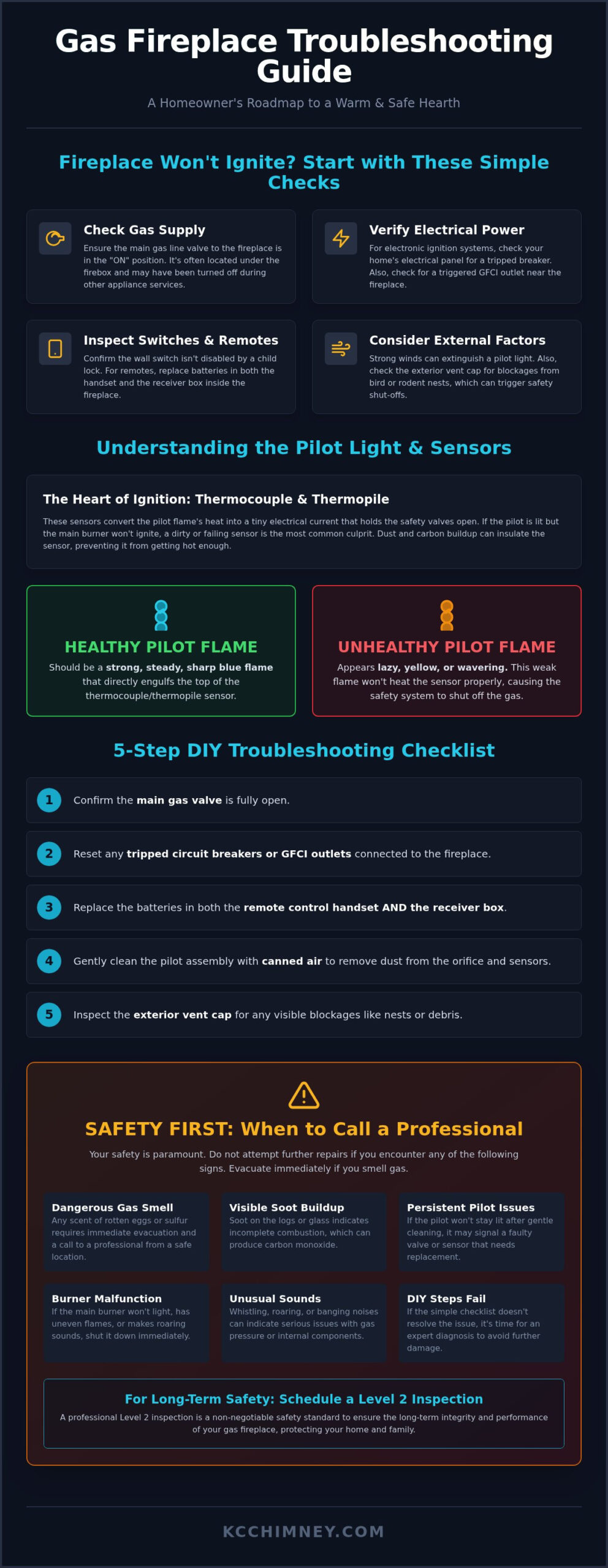
A Step-by-Step Troubleshooting Checklist for Homeowners
Before you assume a major mechanical failure, use this systematic approach to rule out the most common culprits. Many issues that prevent a cozy evening are simple fixes that don’t require specialized tools. Systematic troubleshooting gas fireplace problems helps you avoid unnecessary service fees and restores your home’s comfort quickly. Start with a thorough visual inspection of the firebox. Use a flashlight to check the burner ports for any visible obstructions like loose glowing embers or debris that might have shifted during a recent cleaning.
Follow this checklist to narrow down the source of the problem:
- Check the Power Source: Replace the batteries in both your wall-mounted thermostat and the remote handset. Don’t forget the receiver box batteries located behind the bottom louvers.
- Verify Thermostat Settings: Ensure your thermostat is set to “Heat” and the temperature is at least five degrees above the current room temperature to trigger a “call for heat.”
- Test the Wall Switch: If your fireplace uses a toggle switch, flip it several times to clear any dust from the internal contacts.
- Clear the Pilot Assembly: Use a can of compressed air to gently blow out the pilot hood area. This often removes microscopic dust that prevents the flame from reaching the sensors.
While troubleshooting gas fireplace problems can save you time, your efforts should always prioritize safety. If these steps don’t ignite the burner, the issue likely involves internal components that require professional expertise.
The Homeowner Safety Assessment
Your physical inspection should extend beyond just the ignition. Carefully examine the glass for any tiny “spiderweb” cracks or white cloudy etching that won’t wipe away; these are signs of heat stress or chemical damage. Ensure your safety screen is securely in place to prevent accidental contact with the hot glass. If your unit has a manual damper, verify it’s locked in the fully open position. Finally, maintain a strict three-foot “no-fly zone” around the hearth, keeping blankets, toys, and holiday decorations away from the heat discharge. If you notice any structural concerns during this check, schedule a professional inspection to prevent a hazardous situation.
When to Stop DIY and Call a Certified Tech
There is a clear line where homeowner maintenance ends and professional repair begins. If your troubleshooting leads you to suspect a faulty gas valve, damaged internal wiring, or a cracked heat exchanger, stop immediately. These components are part of a sealed system designed to keep combustion gases out of your living space. Repairing these parts requires specialized diagnostic equipment and specific safety certifications. You can refer to our 2026 gas fireplace repair guide for professional insights into complex mechanical failures. Dealing with live gas lines is a high-stakes task that is best handled by technicians who understand the rigorous safety standards required for Kansas City homes.
Ensuring Long-Term Safety with Professional Gas Fireplace Service
While homeowner troubleshooting gas fireplace problems can resolve minor pilot issues or battery failures, it cannot replace a comprehensive safety evaluation. Gas appliances require mechanical precision. Even a tiny misalignment in the burner or a microscopic crack in the heat exchanger can compromise your indoor air quality. Annual inspections are the industry standard for preventing hazardous leaks and ensuring your system operates at peak efficiency throughout the winter months. Professional maintenance doesn’t just fix current glitches; it extends the lifespan of your investment.
A Level 2 Inspection is a non-negotiable baseline for any gas fireplace insert. Unlike a basic visual check, this process involves a detailed examination of all accessible portions of the chimney and appliance. At Best Chimney Services, we utilize advanced video technology to scan the internal flue and firebox. This allows our certified technicians to identify hidden hazards, such as internal masonry gaps or venting obstructions, that are impossible to see from the hearth. This level of thoroughness is what distinguishes a professional service from a simple cleaning.
Professional cleaning also plays a vital role in burner efficiency. Over time, even the cleanest-burning gas units accumulate a fine layer of dust on the burner ports and pilot assembly. This buildup can lead to uneven flames and increased fuel consumption. A technician will remove this debris, calibrate the gas pressure, and ensure the oxygen-to-fuel ratio is perfectly balanced. This results in a cleaner, more vibrant flame and the absolute certainty that your system is exhausting carbon monoxide safely out of your home.
The Best Chimney Services Approach in Kansas City
Our approach in Overland Park and Mission Hills is built on a foundation of integrity and thoroughness. We understand that your home is your sanctuary, so our technicians prioritize a mess-free environment. We use protective coverings and specialized vacuums to ensure your living space remains pristine during our visit. We don’t just fix a single symptom; we perform multi-level evaluations to address the root cause of any performance issues. You can learn more about our Kansas City chimney inspection process to see how we protect your hearth from seasonal wear.
Preparing Your Hearth for the KC Winter
Kansas City winters are notoriously unpredictable and often harsh. Scheduling your maintenance before the first deep freeze of the season ensures your home is ready for whatever the climate throws your way. A certified safety check provides the peace of mind that your family is protected from carbon monoxide and fire risks. If you still have questions about specific mechanical issues or service intervals, feel free to browse our fireplace repair FAQ for more answers. Investing in professional care today guarantees a warm, worry-free winter tomorrow.
Secure Your Home’s Warmth for the Season Ahead
Troubleshooting gas fireplace problems often starts with simple checks, like verifying your power source or gently cleaning the pilot assembly. However, maintaining a safe and efficient hearth involves more than just a working switch. It requires a commitment to safety and regular professional oversight. By understanding when to DIY and when to call for help, you protect your family from the hidden risks of gas leaks and incomplete combustion. A fireplace should be a source of relaxation, not a project that causes stress or safety concerns.
Our CSIA-certified technicians have served the Kansas City metro since 2012, providing the technical authority you need for total peace of mind. We specialize in comprehensive Level 2 video inspections that uncover hazards beneath the surface, ensuring every component meets rigorous safety standards. Don’t let a cold hearth or a strange odor disrupt your winter comfort. Schedule Your Professional Gas Fireplace Inspection Today to ensure your fireplace remains a reliable, safe fixture in your home. We’re here to be your trusted local experts, keeping your living space warm and your family protected all season long.
Frequently Asked Questions
Why is my gas fireplace pilot light on but the fire won’t start?
This issue is usually caused by a faulty thermopile or a blocked burner orifice. The thermopile generates the millivolts needed to open the main gas valve. If it’s worn out or covered in carbon buildup, it won’t signal the valve to release gas, even if the pilot is burning. You should also verify that your thermostat is set correctly and that the remote receiver batteries aren’t dead.
Is it normal for a gas fireplace to smell like it’s burning?
It’s common for new units to produce a “burn-off” scent during their first few hours of operation. For established fireplaces in Mission Hills, you might notice a burning dust smell during the first cold snap as pet dander or household debris clears the heat exchanger. However, a sharp sulfur or rotten egg odor is never normal and indicates a gas leak that requires immediate evacuation.
How do I clean the white foggy film off my gas fireplace glass?
You should use a specialized gas fireplace glass cream specifically formulated for this purpose. This white film is a byproduct of combustion and minerals in the fuel. Avoid using standard ammonia-based window cleaners, as they can permanently etch the glass once it reaches operating temperatures. Apply the cream with a soft cloth, let it dry to a haze, and then buff it away for a clear view.
Why is my gas fireplace making a beeping sound?
A beeping sound is almost always a low battery warning from your remote receiver box or the ignition control module. These battery packs are typically hidden behind the bottom louver panel of your fireplace. If the beeping persists after you’ve installed fresh batteries, it could indicate a communication error between the handset and the receiver or a safety lockout that requires a professional reset by a certified technician.
Can I use my gas fireplace if the glass is cracked?
No, you should never operate your fireplace if the glass has even a minor crack. The glass is a critical structural component of a sealed combustion system. It keeps flames and carbon monoxide contained while ensuring proper drafting. Operating a unit with compromised glass can allow toxic exhaust into your Overland Park home. Shut the gas supply off immediately and wait for a professional replacement before using it again.
How often should I have my gas fireplace inspected in Kansas City?
You should schedule a professional safety inspection at least once every year. In the Kansas City metro area, the best time for this service is during the autumn months before the heavy winter usage begins. Annual maintenance ensures your burner ports are clear, safety sensors are calibrated, and the venting system is free of debris or local pest nesting that could cause dangerous blockages or mechanical failure.
Why does my gas fireplace turn off by itself after a few minutes?
This is often a safety response triggered by a failing thermocouple or an obstructed vent. When troubleshooting gas fireplace problems like sudden shutdowns, technicians often find that the safety sensor isn’t staying hot enough to keep the gas valve open. It could also be a sign of oxygen depletion if the air shutter isn’t adjusted correctly. A professional evaluation is necessary to test these specific millivolt signals.
What should I do if I smell gas near my fireplace?
Evacuate everyone from your home immediately if you detect a distinct rotten egg odor. Do not flip any light switches, use a telephone inside, or attempt to shut off the fireplace, as any small spark could ignite the gas. Once you are at a safe distance outside, call your gas provider and 911. Safety is the absolute priority, and you should never re-enter the house until a professional clears it.