
The lowest estimate isn’t always the clearest one. For homeowners comparing stainless steel chimney liner installation cost Mission Hills proposals, the key is to understand what each estimate includes and what the chimney’s condition may reveal during an inspection.
It’s reasonable to want a figure before scheduling work, but liner dimensions, access to the flue, its condition, and any related repairs can all affect the project scope. Proposals are difficult to compare when they describe different liner systems or leave inspection findings and included work unclear.
This guide explains what can shape a project specific estimate and which scope details to request in writing, including inspection, materials, labor, and cleanup. You’ll also find questions to ask if a camera inspection identifies damage or access could complicate installation. Best Chimney Services serves Mission Hills and uses video equipment to evaluate chimney interiors. A careful assessment can help establish whether relining is appropriate and what the proposed work involves before you schedule.
Key Takeaways
- Understand which details shape the stainless steel chimney liner installation cost Mission Hills homeowners may see in a project specific estimate.
- Ask how inspection findings support the recommendation before approving work.
- Compare proposals by checking liner details, dimensions, labor, inspection, and clearly listed exclusions.
- Verify the property address, proposed scope, and how changes to the estimate will be handled.
- Follow a clear path from inspection to written proposal, then confirm liner suitability before scheduling.
What Determines Stainless Steel Chimney Liner Installation Cost in Mission Hills?
It can be hard to tell why two chimney liner proposals differ, especially when they describe the work in different terms. The stainless steel chimney liner installation cost Mission Hills homeowners are quoted depends on the individual chimney, liner requirements, access to the work area, and exactly what the estimate includes. An inspection based, itemized proposal gives you a clearer basis for comparing options than a rough figure based on the property address alone.
A liner provides a channel for exhaust gases to travel through the chimney and outdoors. For background, see What is a Flue? The flue’s dimensions and condition help determine the materials and work involved. Ask the provider to explain how the proposed scope relates to the inspection findings and the appliance the chimney serves.
Which chimney conditions can change the project scope?
Flue size affects the liner dimensions required, while chimney height can affect the amount of material and labor involved. Shape matters as well. A straight, accessible flue may present different installation needs from one with bends or changes in configuration. The condition of an existing liner can also affect what work is appropriate.
If an inspection reveals cracks, deterioration, or other concerns, ask whether the findings call for further evaluation or related repairs before relining. Don’t assume a particular condition based on the home’s age or neighborhood. Inspection results, not generalizations about Mission Hills homes, should guide the recommendation. Request written findings that distinguish confirmed work from concerns that may need further attention.
How can access and installation requirements affect an estimate?
Labor assumptions can vary with roof access, chimney layout, and conditions around the work area. A steep or obstructed approach, for example, may require a different plan than a clear, easy to reach roof. These property specific factors should be assessed on site rather than inferred from the address.
Before comparing proposals, ask each provider to state what access conditions the estimate assumes and whether any limitations could change the scope. Check for exclusions such as inspection, disposal, or related repairs, and ask how additional work would be discussed before proceeding. A clear estimate should identify the proposed liner requirements, labor, included tasks, and items not covered. That detail helps you compare like with like and understand what the stainless steel chimney liner installation cost Mission Hills estimate represents, without relying on unsupported local averages.
How an Inspection Establishes the Right Stainless Steel Liner Scope
An inspection turns a general concern into a documented picture of the flue and the work it may need. The technician can assess the existing liner’s condition, note relevant dimensions and configuration, and explain how those findings inform a proposed relining scope. This makes the stainless steel chimney liner installation cost Mission Hills estimate more useful because it connects the recommendation to the actual chimney rather than an assumption.
Best Chimney Services offers Level 2 inspections and uses video equipment for internal chimney evaluations. Ask what the inspection covers and how the findings will be shared. For additional background, expert chimney inspection in Kansas City explains why a thorough evaluation matters. You can also review the national safety standards reference for information about NFPA 211 and its chimney related scope.
What should a chimney liner assessment document?
Before approving work, ask the technician to record the existing flue’s condition, relevant measurements, configuration, and any observed defects. If video inspection images are available, ask to review them or have the technician explain what they show. This documentation helps you understand why a particular liner size or installation approach is being proposed.
It’s also useful to separate confirmed findings from uncertainties. Ask which conditions are visible now and whether others can only be assessed once work begins. The estimate should explain how those unknowns would be handled and whether the provider will seek your approval before doing additional work.
When might relining be considered alongside other chimney repairs?
A liner recommendation doesn’t automatically mean other repairs are needed. Ask the technician to connect each suggested repair to a documented condition. Confirm whether masonry, crown, or firebox work is included, excluded, or quoted separately. This makes it easier to see what the inspection found and which items are separate recommendations.
For concerns that are distinct from relining, see this chimney repair guidance for Kansas City homeowners. Mission Hills homeowners can also discuss inspection findings and the proposed relining scope with Best Chimney Services. Ask for the findings, included work, exclusions, and unresolved questions in writing.
Comparing Stainless Steel Liner Proposals: Materials, Scope, and Alternatives
Two proposals can recommend relining yet describe different materials, dimensions, or included work. Compare the written scope line by line before judging the totals. The aim is to understand what each provider proposes for your appliance and chimney, and why, rather than assume one liner type or configuration suits every home.
What details make two liner quotes genuinely comparable?
Use the table to spot missing information and ask providers to explain any differences. If a detail doesn’t apply, ask them to say so rather than leave the scope unclear.
| Proposal detail | What to compare or ask |
|---|---|
| Material and specifications | What material and product specifications are proposed? Ask why they suit the appliance and documented flue conditions. |
| Dimensions | Are the liner size and length stated? Do they match the measurements used for the estimate? |
| Installation scope | What installation work is included? Are setup, cleanup, testing, and disposal included or listed separately? |
| Inspection | Does the proposal include the assessment, or is it separate? What findings support the recommendation? |
| Exclusions and assumptions | What repairs or access conditions are excluded or assumed? How would newly discovered issues be handled? |
Totals alone can conceal different assumptions. One estimate may include tasks another lists separately, or proposals may use different measurements. Ask each provider to explain those differences in writing. This makes the stainless steel chimney liner installation cost Mission Hills proposals easier to compare on equal terms.
What should homeowners ask about stainless steel liner suitability?
Ask the provider to connect the recommendation to the appliance it serves and the inspection findings. A suitable liner depends on those specifics, including the flue’s condition and configuration. Request the proposed product specifications, dimensions, and installation details in the written scope, along with the reason stainless steel was selected and whether alternatives were considered.
Be cautious of broad performance or lifespan claims without clear support. Ask what a claim applies to and whether it fits the exact product and conditions proposed for your chimney. For background on credentials, consult the Chimney Safety Institute of America and ask providers what qualifications they hold. The CSIA can help homeowners learn about a certified chimney professional, but confirm any individual provider’s credentials directly.
A clear proposal should let you trace the recommendation from appliance and inspection findings to liner details and included work. If those links aren’t explained, ask for clarification before comparing estimates or approving a project.
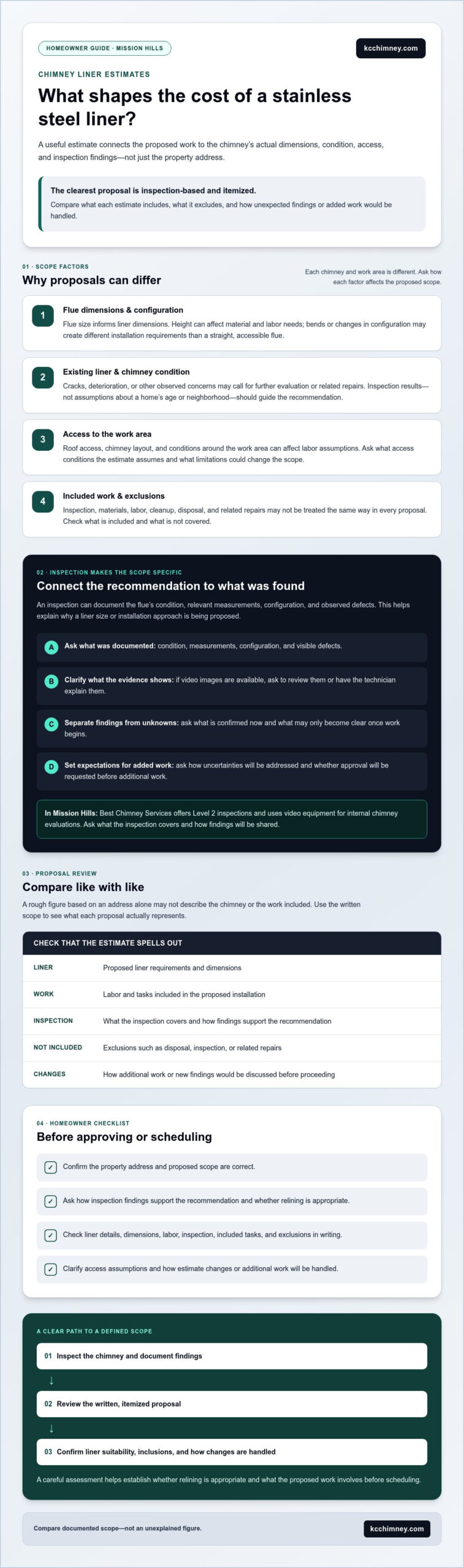
A Mission Hills Homeowner’s Checklist for Reviewing a Liner Estimate
Before approving a chimney liner project, make sure the proposal describes your home, the inspection findings, and the recommended work. Use this checklist to clarify the scope and identify unanswered questions before scheduling.
- Verify the property address. Check that the estimate identifies the correct Mission Hills home and chimney.
- Ask what supports the recommendation. Request the inspection evidence behind installing a liner, including relevant video findings or documented defects.
- Review the proposed work. Confirm the stated liner details, dimensions where available, installation tasks, and any related work.
- Clarify who handles each task. Ask who supplies materials, completes the installation, and takes care of cleanup.
- Identify exclusions and approval steps. Have the provider list work not included and explain how additional repairs or newly discovered conditions will be presented for your approval.
- Confirm practical arrangements. Ask about the anticipated schedule, required access, work area preparation, cleanup, and conditions that could change the scope.
Which questions should you ask before accepting an estimate?
Ask the provider to connect the inspection findings to the proposed liner and explain any assumptions. If the estimate recommends additional work, request the reason and ask whether it’s included or quoted separately. Get answers in writing, especially for tasks that may require separate approval. This record helps you compare proposals without relying on a total that leaves important details unclear.
How can Mission Hills homeowners prepare for an assessment?
Have the appliance details and any previous chimney records available, along with notes about concerns such as smoke entering the room or unusual odors. Confirm how the technician will access the chimney and which areas need to be clear for the evaluation. For related upkeep information, see this Kansas City chimney sweeping and maintenance guide.
A focused assessment can help clarify whether relining is appropriate and what the written scope should address. Best Chimney Services serves Mission Hills and offers chimney relining. Request a local chimney assessment to discuss the inspection findings and next steps.
Plan Stainless Steel Chimney Liner Installation with a Local Chimney Professional
A sound decision follows a clear sequence: inspect the chimney, confirm whether a liner is suitable, compare written proposals, and schedule only after you understand and approve the scope. This gives you a firmer basis for evaluating the stainless steel chimney liner installation cost Mission Hills homeowners may be quoted than relying on an online average.
Best Chimney Services serves Mission Hills and offers chimney relining. Its technicians use video equipment for internal chimney evaluations, which can help document what’s visible inside the flue. Ask whether the company offers the stainless steel liner type you’re considering, and have the provider explain how the inspection findings support the recommendation. The proposal should reflect the specific chimney and appliance, rather than assume every home needs the same work.
What happens after you request a chimney liner assessment?
Start by sharing the property location, appliance details, and your concern. The provider can explain what information is needed to assess the chimney and discuss an appropriate next step. During an evaluation, ask what the technician examines, whether video inspection is appropriate, and how the findings will inform the recommended scope.
Booking, estimate, and scheduling procedures can vary, so confirm those details directly rather than assuming a particular process. Ask how the proposal will be provided and whether inspection, materials, labor, and related work are itemized. Next steps should depend on the documented findings and your approval. If the inspection leaves questions, request clarification before authorizing work.
How to move forward with confidence in Mission Hills
Keep the inspection findings and written proposal together. They give you a practical reference as you compare recommendations, confirm inclusions and exclusions, and discuss unresolved conditions. A project specific scope is more useful than an unsupported online average because it connects the proposed work to your chimney’s actual condition.
Before scheduling, make sure you understand what’s being recommended and what would require separate approval. If you’re still comparing options, ask the provider to explain the reasoning in straightforward terms. That conversation can help you make an informed decision without feeling rushed.
Homeowners in Mission Hills, Overland Park, Stilwell, Bucyrus, and Spring Hill can discuss their chimney and next steps with Best Chimney Services. Contact Best Chimney Services to discuss chimney relining and ask about arranging an assessment for your property.
Take the Next Step Toward a Clear Liner Plan
The stainless steel chimney liner installation cost Mission Hills homeowners are quoted depends on the chimney’s condition, liner requirements, access, and included work. An inspection can clarify what’s happening inside the flue, while an itemized written proposal helps you compare recommendations and identify exclusions before approving work.
Best Chimney Services is a locally owned and operated Kansas City metro business founded in 2012. The company serves Mission Hills, offers chimney relining, and uses video camera equipment for internal chimney evaluations. A project specific assessment can help you understand the findings and discuss appropriate next steps. Ask whether the proposed liner type fits your appliance and chimney, and what the estimate includes.
Keep the inspection findings and proposal on hand as you make your decision. Contact Best Chimney Services to discuss chimney relining and request an assessment for your home. With clear information and a defined scope, you can move forward with greater confidence.
Frequently Asked Questions
How much does stainless steel chimney liner installation cost in Mission Hills?
There isn’t one dependable price for every home. The stainless steel chimney liner installation cost Mission Hills homeowners are quoted depends on the flue’s dimensions and condition, the proposed liner, access, and the work included. Request an inspection based, itemized estimate that separates confirmed work from possible additional repairs. Ask each provider to clarify whether inspection, materials, labor, cleanup, and related work are included or listed separately.
What factors affect the cost of installing a stainless steel chimney liner?
The chimney’s height, flue size and shape, existing liner condition, and access to the work area can all affect the project scope. The appliance served and liner requirements matter too. A flue with bends or visible deterioration, for example, may call for a different plan from one in clearer condition. Ask the provider to explain how inspection findings and access assumptions are reflected in the written estimate.
Does every chimney need a stainless steel liner?
No. A stainless steel liner isn’t automatically necessary for every chimney. Whether relining is appropriate depends on the appliance, the existing flue, and the chimney’s documented condition. An inspection can help establish whether a liner is needed and what type may suit the project. Ask the technician to explain the findings behind the recommendation, and don’t approve relining based only on a general assumption about the home or neighborhood.
Can an inspection change my chimney liner installation estimate?
Yes. An inspection can clarify flue dimensions, configuration, and visible defects, which may change the recommended materials or work. Video equipment can also help evaluate the chimney’s interior. If findings raise questions about additional repairs, ask which concerns are confirmed and which remain uncertain until work begins. Request an updated written scope before approving added work, so you understand what changed and why.
How do I compare stainless steel chimney liner quotes?
Compare the scope, not just the totals. Check whether each proposal identifies the material, liner dimensions, included labor, inspection, setup, cleanup, and disposal. Review exclusions and ask providers to explain differences in their assumptions. For homeowners in Mission Hills and nearby communities such as Overland Park, Stilwell, Bucyrus, and Spring Hill, a property specific assessment is more useful than a broad online average.
How long does stainless steel chimney liner installation take?
The time required depends on the chimney’s height, configuration, access, and condition, as well as the defined work. An inspection may identify factors that affect the schedule, but timing can’t be confirmed from an online description alone. Ask the provider for an expected work duration after evaluating your property, and clarify whether repairs or newly discovered conditions could affect the schedule.
Is stainless steel chimney liner installation a DIY project?
Professional installation is recommended because the liner must suit the appliance and chimney, and the work involves evaluating the flue and completing the installation. A kit alone won’t establish that the product or approach fits your system. Before considering a DIY project, ask a qualified chimney professional to explain the inspection findings, safety concerns, and work involved. Don’t proceed if you’re unsure about suitability or installation requirements.
What should a chimney liner installation estimate include?
A clear estimate should identify the property, inspection findings, proposed liner material and dimensions, installation labor, and included work. It should also state exclusions and explain how additional repairs or unexpected conditions would be reviewed and approved. Ask whether inspection, cleanup, disposal, or permits are included or separate rather than assuming. Request written clarification of anything unclear before scheduling, so the proposal reflects the scope you’ve agreed to.