
Would you knowingly light a match inside a room lined with invisible, flammable tar? Most Spring Hill homeowners don’t realize that a single season of use leaves behind creosote, a sticky substance that can turn your chimney into a hidden fire hazard. As the temperature begins to drop, getting fireplace ready for winter Spring Hill becomes about much more than just comfort; it’s a vital step in protecting your family from chimney fires and dangerous carbon monoxide leaks. We understand that the transition to colder months often brings a mix of excitement for cozy nights and a quiet worry about the safety of your flue.
You deserve the peace of mind that comes from knowing your hearth is a reliable source of warmth rather than a safety risk. This guide ensures your home stays safe and efficient with an expert-led checklist for fireplace preparation. We’ll walk you through the essential maintenance tasks, from clearing blockages that ruin air quality to ensuring your system meets the 2024 International Fire Code standards that went into effect this June. By following these professional steps, you can avoid the frustration of smoky rooms and the high costs of emergency repairs during a January freeze.
Key Takeaways
- Schedule your maintenance in early autumn to avoid the peak season rush and ensure your home is prepared for the first unexpected frost.
- Understand why getting fireplace ready for winter Spring Hill involves a Level 2 inspection to detect hidden damage and ensure compliance with 2026 safety standards.
- Protect your chimney’s exterior from the destructive freeze-thaw cycle by identifying small masonry cracks before they lead to structural failure.
- Learn the professional “prime the flue” technique to improve draft efficiency and prevent smoke from lingering in your living space.
- Discover how expert sweeping services utilize specialized vacuums and drop cloths to maintain a soot-free environment during your annual cleaning.
Getting Your Fireplace Ready for Winter in Spring Hill: Why Early Prep Matters
Winter in Spring Hill isn’t just about the first snowfall; it’s about the security of your home. Getting fireplace ready for winter Spring Hill involves more than just buying a bundle of wood. It is a comprehensive process that combines professional cleaning, technical inspections, and necessary structural repairs. While many homeowners wait for the first frost to think about their hearth, starting in early autumn ensures you aren’t stuck in the November rush when service schedules are packed. Early preparation allows for a methodical approach, giving you time to address any masonry issues before the bitter Kansas City winds arrive.
Neglecting your chimney creates serious safety risks, primarily the dangers of chimney fires caused by creosote buildup. Beyond safety, a well-maintained system operates at peak efficiency. When your flue is clear and your masonry is sound, your fireplace draws air correctly. This helps reduce heating bills by preventing heat loss and ensuring a cleaner burn. A system that hasn’t been serviced since last winter might have hidden blockages or damaged components that waste fuel and money. Investing in maintenance now ensures that every log you burn provides maximum warmth for your family.
The Local Advantage: Why Spring Hill Winters Require Specific Prep
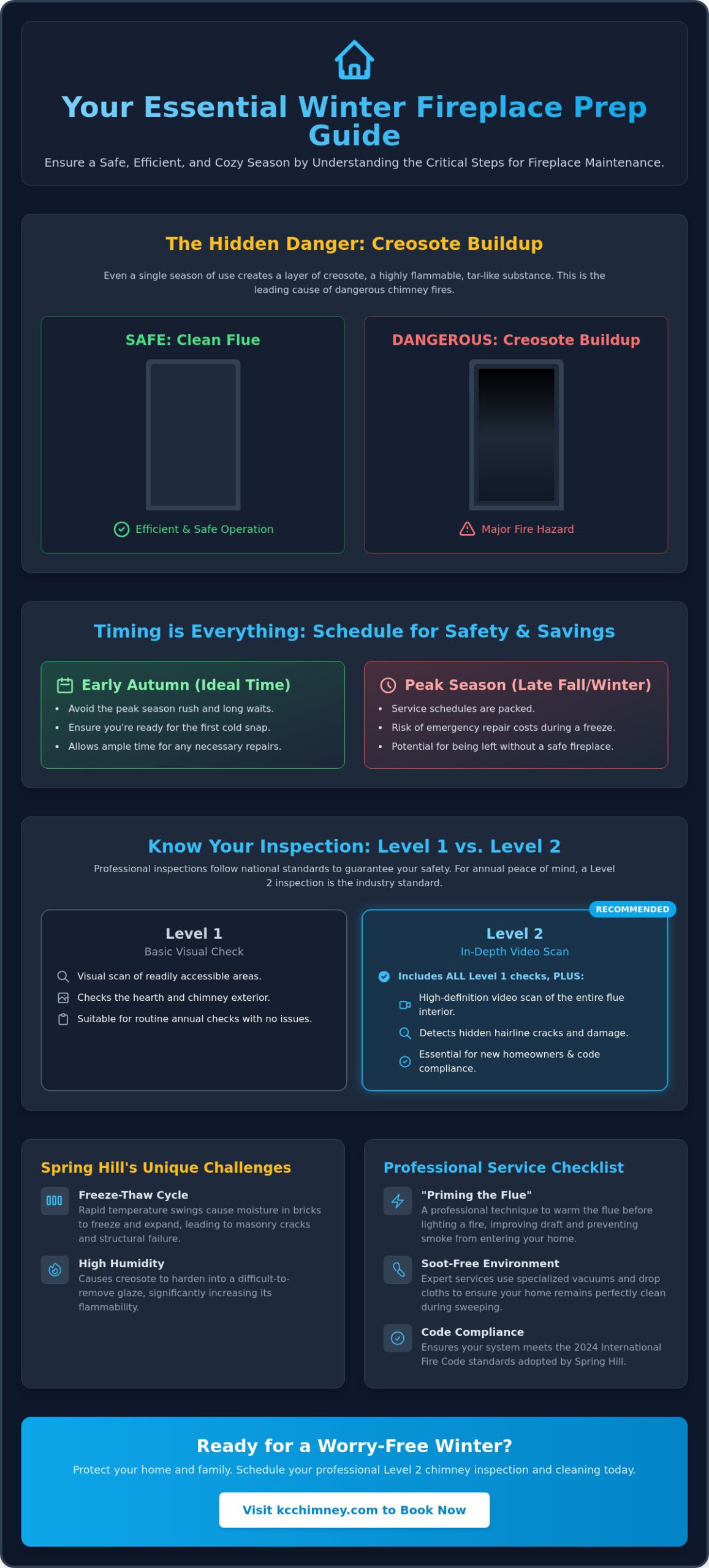
Our local climate in the Kansas City metro area presents unique challenges. The fluctuating temperatures cause a rapid freeze-thaw cycle that can wreak havoc on chimney masonry. In Johnson County, high humidity levels can cause creosote to harden into a glaze that is much more difficult to remove than standard soot. Whether you live in a historic Mission Hills home or a newer build in Spring Hill, the specific architectural styles and local weather patterns dictate how your chimney wears over time. Professional care accounts for these regional factors, ensuring your masonry stays intact through the harshest January freezes. Furthermore, with the city of Spring Hill adopting the 2024 Edition of the International Fire Code as of June 1, 2026, staying ahead of these safety requirements is essential for every homeowner.
The Consequences of the “Wait and See” Approach
Delaying maintenance often leads to the primary cause of chimney fires in the KC metro: excessive creosote accumulation. You can often perform a simple “smell test” yourself. If your living room smells like a campfire on a humid day when no fire is lit, you likely have a moisture or buildup problem that needs immediate attention. This odor is a warning sign that your system is struggling. Creosote is a highly flammable byproduct of wood combustion that requires professional removal to prevent a disaster. Waiting until you have a problem often results in higher repair costs and potential property damage that could have been avoided with a simple autumn checkup. A proactive approach is the only way to guarantee your fireplace is ready when you need it most.
The Critical Role of Professional Chimney Inspections (Level 1 vs. Level 2)
While a flashlight might seem sufficient for a quick check, the Chimney Safety Institute of America (CSIA) emphasizes that professional inspections follow strict standards to ensure home safety. The National Fire Protection Association (NFPA) categorizes these into three distinct levels. A Level 1 inspection is a basic visual check of the hearth and accessible chimney parts. However, getting fireplace ready for winter Spring Hill often requires a more thorough approach. Level 3 is reserved for serious structural concerns, but Level 2 is the industry standard for annual peace of mind.
A Level 2 Chimney Inspection in Kansas City is essential if you’ve recently purchased your home, changed your heating system, or survived a particularly harsh Midwestern season. This level of service includes everything in Level 1 plus a detailed look at the internal flue surfaces. We use high-definition cameras to scan the interior, finding hairline cracks in the flue liner that are invisible to the naked eye. These small fractures can allow heat or toxic gases to seep into your home’s framing, turning a cozy night into a major hazard.
What to Expect During a Professional Video Inspection
Modern chimney camera equipment is non-invasive and highly precise. We guide a specialized camera through the entire length of the flue to inspect the smoke chamber, flue tiles, and damper functionality. This process doesn’t damage your home but provides total visibility into the “health” of your system. Once finished, you receive a written report. This document acts as a roadmap for your maintenance, highlighting exactly what needs attention now and what can wait.
Gas Fireplace Maintenance: More Than Just a Pilot Light
It’s a common misconception that gas fireplaces are maintenance-free. While they don’t produce creosote, they still require annual safety checks to ensure gas line connections are secure and leak-free. Dust and debris can clog burners, leading to inefficient heating or carbon monoxide risks. If your pilot light flickers or you notice soot on the glass, you likely need expert gas fireplace repair. Professional technicians will clean the burner assembly and inspect the glass seal to keep your system airtight. Scheduling a professional inspection before the temperatures drop is the most reliable way to protect your property and family.
Exterior Checklist: Protecting Your Chimney from the Freeze-Thaw Cycle
The silent enemy of every Spring Hill chimney is the freeze-thaw cycle. Our local weather is notoriously volatile, often swinging from freezing nights to mild afternoons in a matter of hours. When moisture enters the porous surface of a brick and the temperature drops below 32 degrees, that water expands by approximately 9%. This internal pressure causes the masonry to crack from the inside out. While internal cleaning is vital, ignoring these exterior vulnerabilities during the process of getting fireplace ready for winter Spring Hill can lead to structural failure by mid-February.
Your chimney crown is the first line of defense against attic leaks and internal masonry rot. It’s the concrete or mortar “lid” designed to shed water away from the flue. If this surface develops hairline fractures, water seeps directly into the chimney’s interior structure. Supporting the crown is the chimney cap. This small metal component is essential for keeping rain and local wildlife out of your flue. Without a cap, your chimney acts as a giant straw, pulling moisture and debris into the heart of your home and potentially damaging your fireplace insert.
Signs of Masonry Distress: What to Look For from the Ground
You can identify many exterior issues without ever climbing a ladder. Look for “spalling,” which occurs when the outer face of a brick literally pops off. You might find small chunks of red clay or brick dust on your lawn or roof. Also, watch for efflorescence, which appears as white, powdery salt stains on the exterior bricks. These stains prove that water is moving through your masonry and carrying minerals to the surface. If you see crumbling mortar joints, chimney repair in Kansas City is necessary to stabilize the structure before the heavy snows arrive.
Fortifying the Crown and Cap
Crown repair is a proactive measure that saves homeowners thousands of dollars. We can often apply a professional-grade, flexible sealant to small cracks, which prevents the need for an expensive full masonry rebuild later. When choosing a cap, we recommend stainless steel over galvanized steel for our local climate. Stainless steel resists the corrosion caused by Kansas City’s high humidity and acidic rain. A properly fitted cap also serves a dual purpose on windy Spring Hill nights by preventing downdrafts that can push smoke back into your living room. Ensuring these exterior components are sound is the only way to guarantee a truly dry and safe winter season.
Optimizing Performance: Drafts, Dampers, and Seasoned Wood
Once you’ve addressed the masonry and structural safety of your system, the final phase of getting fireplace ready for winter Spring Hill involves mastering the mechanics of the burn. A fireplace that smokes or fails to stay lit is often a sign of poor draft management rather than a broken chimney. Before you strike that first match of the 2026 season, follow this 5-step checklist to ensure a safe, efficient start:
- Open the damper: Ensure it moves freely and locks into place without resistance.
- Check for obstructions: Use a flashlight to confirm no nests or debris have fallen since your professional inspection.
- Prime the flue: Warm up the cold air inside the chimney to establish a proper upward draw.
- Select seasoned fuel: Only use wood that has been properly dried to prevent excessive soot.
- Start small: Begin with a kindling fire to gradually heat the masonry and flue liner.
The Science of the Perfect Fire: Draft Management
Modern homes in Spring Hill are built to be airtight, which can ironically lead to fireplace performance issues. This tightness creates negative air pressure, making it difficult for the chimney to pull smoke upward. If you notice smoke entering the room, your chimney air is likely too cold. You can “prime the flue” by lighting a roll of newspaper and holding it near the open damper for a minute. This pre-heats the air column, creating a vacuum that pulls smoke away from your living space. If you still struggle with drafting, your damper may be warped. A damper that fails to provide a tight seal when closed will also let your furnace-heated air escape straight up the chimney all winter long.
Sourcing and Storing Wood in Spring Hill
The quality of your wood directly impacts how much creosote builds up in your system. When buying fuel, understand that a standard cord of wood is a stack measuring four feet high, four feet wide, and eight feet long. Avoid green wood, which is freshly cut and full of sap. This moisture prevents the wood from burning hot, leading to excessive smoke and rapid creosote glazing. Wood is considered seasoned only when its moisture content is below 20 percent, typically requiring 6 to 12 months of drying. To maintain this quality, store your logs off the ground on a rack and keep the top covered, while leaving the sides open for airflow. If you suspect your damper is warped or your flue needs a professional sweep, contact us to schedule an expert inspection before your first fire.
Partnering with Best Chimney Services for a Worry-Free Winter
We believe that getting fireplace ready for winter Spring Hill should be a straightforward, transparent process. That is why we utilize flat-rate sweeping and inspection fees. This approach allows budget-conscious families to prioritize safety without the stress of hidden service charges or surprise costs. By scheduling your chimney sweep in Kansas City before the November rush, you ensure your system is ready for that first unexpected cold snap. Our goal is to provide a seamless experience that transitions your home from summer heat to winter warmth with total confidence.
Our Proven Multi-Level Safety Evaluation
Our process is far more than a simple brush through the flue. We perform a multi-level safety evaluation that examines every component from the hearth to the roofline. We check for masonry degradation, damper functionality, and the integrity of your flue liner. If your current system is inefficient or outdated, we also specialize in fireplace insert installation in KC to help you upgrade to a high-efficiency heating solution. This thoroughness reflects our commitment to neighborly service and community protection. We don’t just fix chimneys; we provide the peace of mind that your family is safe from the hidden risks of a neglected fireplace.
Ready for a Safer Hearth?
The best time to secure your home is before the winter winds begin to howl. Beyond our core chimney work, we also offer secondary services like dryer vent cleaning to provide total home fire prevention. A clogged dryer vent is a leading cause of residential fires, and addressing it alongside your chimney is a smart safety move. Contact us through our website or give us a call to book your appointment. We are ready to help Spring Hill residents enjoy a cozy, safe, and efficient 2026 winter season. Let our seasoned professionals take the lead in protecting your home this year.
Secure Your Warmth for the 2026 Season
Taking the time to address your chimney’s health now ensures you won’t be left in the cold when the first Kansas City frost arrives. We’ve explored how getting fireplace ready for winter Spring Hill requires a blend of internal safety checks and external masonry fortification. By focusing on Level 2 inspections to catch hidden flue cracks and protecting your brickwork from the destructive freeze-thaw cycle, you’re making a long-term investment in your home’s safety and efficiency. Using seasoned wood and mastering your damper controls will provide the high-performance fire your family deserves.
Our team brings over 14 years of experience in the KC metro area to every project. We utilize advanced video camera inspection technology to provide a clear view of your system’s interior, ensuring no safety risk goes unnoticed. With our No-Mess Guarantee, you can rest easy knowing your home will remain clean throughout the process. Don’t wait for the peak of January to discover a problem. Schedule Your Spring Hill Chimney Inspection Today and enjoy the peace of mind that comes with a professionally certified hearth. We look forward to being your partner in home safety this winter.
Frequently Asked Questions
How do I know if my chimney needs a professional cleaning before winter?
You should check for soot buildup thicker than 1/8 of an inch on the walls of your firebox or flue. You might also notice poor drafting or a strong, smoky odor even when the fireplace is cold. These indicators suggest it’s time for getting fireplace ready for winter Spring Hill by scheduling a professional sweep. Regular usage naturally creates creosote, and if you can’t remember your last service, a cleaning is a safe baseline for the season.
Is a gas fireplace safer than a wood-burning one for Spring Hill homes?
Both systems are safe when maintained, but they present different risks that require professional attention. Gas fireplaces eliminate the risk of creosote fires but can develop gas leaks or carbon monoxide issues if the pilot light or venting fails. Wood-burning fireplaces require more active management of soot and ash to prevent chimney fires. Regardless of the fuel type, an annual inspection ensures that your specific system remains a secure source of heat for your household.
What is the average cost of a chimney inspection in the Kansas City area?
Costs vary based on the level of inspection required and the complexity of your chimney system. A basic visual check is generally more affordable than a comprehensive video scan used for real estate transfers or after a structural event. For precise figures that reflect the specific needs of your home, it’s best to request a personalized quote from a local service provider. This ensures you pay for the exact level of care your system needs without guesswork.
Can I inspect my own chimney flue with a flashlight?
You can perform a basic visual check, but a flashlight cannot reveal hidden structural issues or cracks deep within the flue liner. Professional technicians use specialized high-definition cameras to see around corners and identify hairline fractures that are invisible to the naked eye. These small defects are often where house fires begin. While a DIY check is a good habit, it doesn’t replace the technical accuracy of a certified evaluation using modern diagnostic tools.
What happens if I use my fireplace without cleaning it for several years?
Using an uncleaned fireplace leads to the dangerous accumulation of creosote, which is a highly flammable byproduct of combustion. Over several years, this substance can glaze over and become a primary fuel source for a chimney fire. Additionally, blockages from soot or debris can force carbon monoxide back into your home. Neglecting maintenance increases the risk of a catastrophic event and significantly reduces the overall heating efficiency of your fireplace.
Why does my fireplace smell like a campfire even when no fire is burning?
How can I prevent animals like birds or squirrels from nesting in my chimney over winter?
Installing a high-quality chimney cap is the most effective way to keep local wildlife out of your flue. These caps feature mesh siding that allows smoke to escape while preventing animals from entering to build nests that block airflow. If you already suspect an animal is inside, don’t attempt to smoke them out. This can be dangerous for your family and the animal; instead, contact a professional to clear the obstruction safely before your first fire.
What is the best type of wood to burn for a clean, safe fire?
Seasoned hardwoods like oak, hickory, and maple are the best choices for a clean-burning fire. These woods are dense and provide long-lasting heat with minimal smoke production compared to softwoods. When getting fireplace ready for winter Spring Hill, ensure your wood has been dried for at least six months. Avoid softwoods like pine or cedar for regular indoor use, as their high sap content accelerates creosote buildup and creates more sparks.