
Imagine a freezing January evening where, instead of relaxing, you are hauling heavy logs through the snow and scrubbing soot off your living room hearth. Most neighbors agree that while the crackle of a wood fire is nostalgic, the reality often involves drafty chimneys, smoky smells, and the constant worry of creosote buildup. If you want to convert wood fireplace to gas Bucyrus homeowners can finally trade the mess for a reliable, push-button heating solution that protects your home and your schedule.
Discover how to transform your messy wood-burning hearth into a clean, efficient gas fireplace with our expert Bucyrus conversion guide. It is a smart investment. We will walk you through the 2026 installation process, from selecting high-efficiency inserts to navigating the specific permitting requirements through the Richland County Building Department. Learn how a professional upgrade can boost your property value and provide the peace of mind you deserve during the next cold snap.
Key Takeaways
- Learn why high-efficiency gas inserts are the preferred choice for eliminating winter drafts and providing reliable supplemental heat.
- Understand the functional differences between decorative gas log sets and heating inserts to ensure you choose the right solution for your home.
- Discover the essential role of a professional Level 2 inspection in verifying your chimney’s safety before any installation begins.
- Get a clear roadmap to convert wood fireplace to gas Bucyrus homeowners can use to navigate 2026 local codes and permitting.
- Identify the long-term benefits of conversion, including increased property value and the elimination of messy seasonal maintenance.
Why Bucyrus Homeowners are Converting Wood Fireplaces to Gas in 2026
Bucyrus winters don’t go easy on local homes. If you’ve spent a freezing February night huddled near a wood fireplace only to feel a cold breeze on your back, you’ve experienced what many call the “Bucyrus Draft.” Open masonry fireplaces are notoriously inefficient. They often pull more warm air out of your living room than they provide in heat, acting like a giant vacuum for your furnace’s hard work. This reality is driving a major shift across the Kansas City region. Homeowners are choosing to convert wood fireplace to gas Bucyrus systems to gain total control over their indoor climate and their family’s safety.
Traditional wood burning requires constant vigilance. You have to haul heavy logs through the snow, manage the flame, and clear out messy ash. You also have to schedule regular Level 2 chimney inspections to check for dangerous creosote buildup. By 2026, the preference for a “push-button” lifestyle has become the local standard. A gas fireplace offers immediate, consistent warmth without the physical labor or the lingering smell of smoke in your curtains and furniture.
Environmental and Efficiency Standards in 2026
Modern gas technology has advanced significantly to meet stricter efficiency expectations. Today’s systems are designed as sealed units that prevent conditioned air from escaping through the chimney. When you look at Fireplace Inserts Explained, it’s clear that these units function as high-efficiency heaters rather than just decorative features. In the KC metro, converting to a gas system reduces your home’s carbon footprint by eliminating the particulate matter associated with wood smoke. This transition often leads to a noticeable decrease in annual heating bills because it allows for effective “zone heating.” You can warm the room you’re actually using instead of cranking up the thermostat for the entire house.
Lifestyle Benefits: Beyond Just Warmth
The benefits of a gas conversion extend well beyond the temperature in the room. You can finally say goodbye to the chore of ash disposal and the risk of chimney fires. In the competitive Bucyrus real estate market, a professionally installed gas fireplace is a high-value asset. Prospective buyers look for homes that offer modern convenience and lower maintenance requirements. Beyond aesthetics, a gas fireplace serves as a critical backup during winter power outages. While your furnace might fail if the electricity goes out, many gas inserts can operate without power. This provides a reliable source of heat that protects your family when the grid fails. It’s an investment in the long-term resilience of your home.
Choosing Your Conversion Path: Gas Logs vs. Gas Inserts
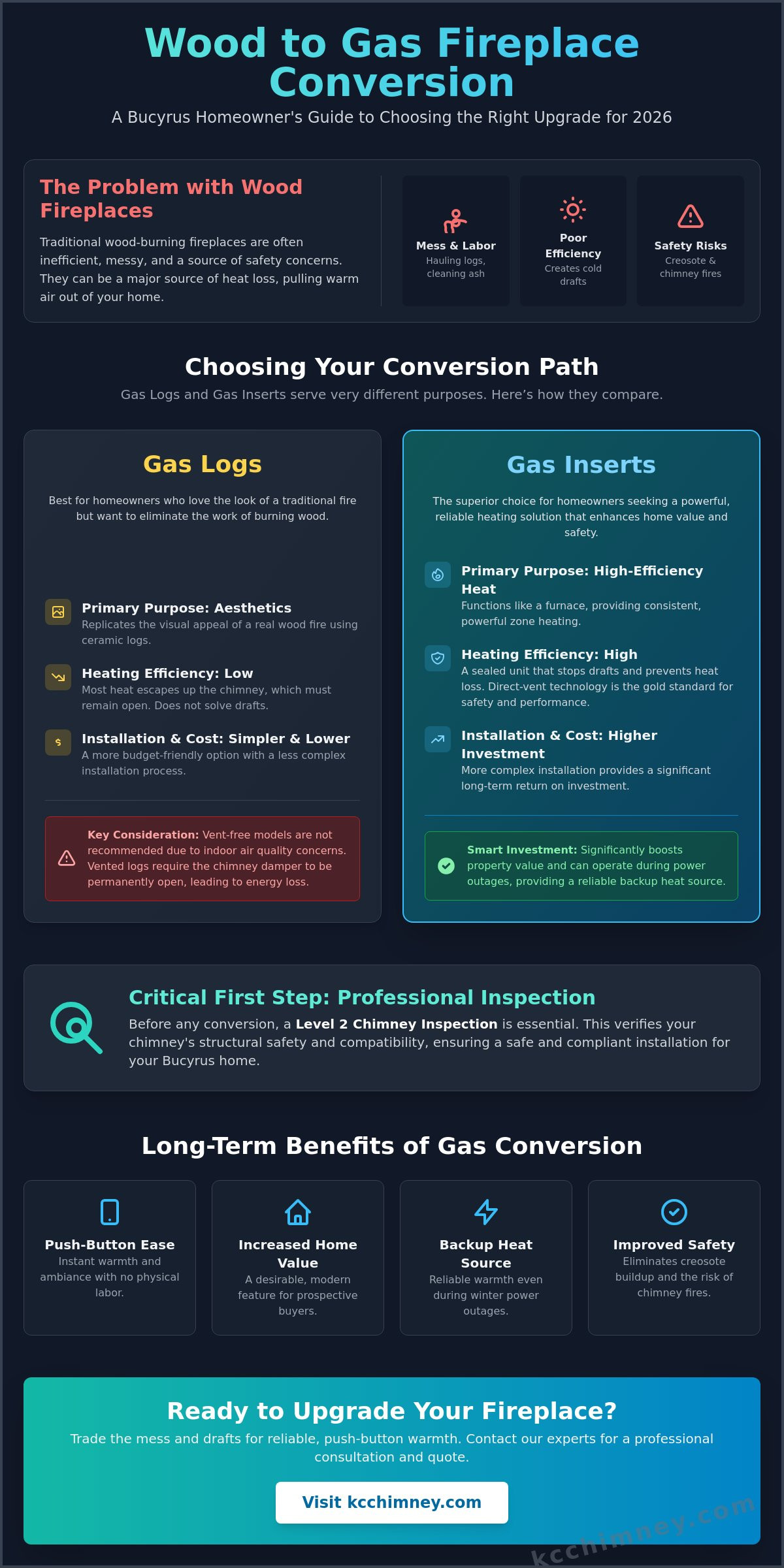
Deciding how to convert wood fireplace to gas Bucyrus residents often find themselves at a crossroads between two distinct technologies: gas logs and gas inserts. While both eliminate the need for firewood, they serve very different purposes. Gas logs are primarily decorative. They sit inside your existing firebox and mimic the appearance of a real wood fire with impressive realism. However, because they are often vented through your existing chimney, they don’t offer much in the way of heating efficiency. In contrast, a gas insert is a heavy-duty heating appliance designed to sit inside your masonry fireplace and function like a high-efficiency furnace.
Local regulations in the Bucyrus and Johnson County areas generally favor vented systems for indoor air quality. Vent-free logs are efficient because they don’t require a chimney, but they release moisture and combustion byproducts directly into your home. Following Gas Fireplace Safety Tips is essential here; most professionals recommend vented or direct-vent systems to ensure carbon monoxide and water vapor are safely exhausted outside. Direct-vent technology is the gold standard for 2026. It uses a dual-pipe system to pull in fresh air from outside while pushing out exhaust, keeping your indoor air completely separate from the combustion process.
Gas Logs: The Budget-Friendly Aesthetic Choice
Gas logs are an excellent choice if you love the look of a roaring fire but hate the labor. These ceramic logs are sculpted to look like oak, birch, or driftwood. Because they use your existing firebox, they preserve the original masonry aesthetic of your home. Installation for vented logs requires your chimney flue to remain functional, and the damper must be pinned open permanently. This means that while they are cheaper to install, they don’t stop the “Bucyrus Draft” when the fire is off. They are best for homeowners prioritizing ambiance over a serious heat source.
Gas Inserts: The High-Efficiency Heating Powerhouse
A gas insert is a completely different animal. It turns your fireplace into a sealed system, using a metal box surrounded by another metal box to create a heat exchanger. Blowers then push the warm air into your living room. A high-efficiency insert can produce up to 40,000 BTUs, which can heat a large portion of your home. This is why expert fireplace insert installation in KC is the preferred choice for drafty homes. It stops heat loss and provides a reliable, powerful heat source that can lower your overall energy consumption. If you want to maximize your home’s warmth, choosing an insert is the most effective way to convert wood fireplace to gas Bucyrus.
The Real Cost of Conversion: Efficiency, Maintenance, and ROI
Investing in your home requires a clear understanding of both the upfront commitment and the long-term returns. When you decide to convert wood fireplace to gas Bucyrus homeowners often find that the initial project cost is quickly balanced by operational savings and lifestyle improvements. Unlike wood-burning systems, which require the ongoing purchase, delivery, and storage of seasoned logs, natural gas provides a steady, predictable fuel source. You no longer have to worry about the rising price of a cord of wood or the physical labor of stacking it. Modern gas valves and electronic ignition systems are engineered for longevity, often providing decades of reliable service with minimal mechanical intervention.
One of the most significant “hidden” savings comes during the Kansas City shoulder seasons. In late October or early April, running a full furnace to take the chill off the house is often overkill. A gas fireplace allows for effective zone heating. This means you can keep the rest of the house at a lower temperature while maintaining a perfect 72 degrees in the room where you spend the most time. According to EPA data on fireplace emissions, traditional wood-burning fireplaces produce 99 percent more particulate emissions than natural gas. This drastic reduction in soot and smoke doesn’t just help the environment; it preserves the structural integrity of your flue and keeps your home’s interior surfaces cleaner for longer.
Long-Term Maintenance for Gas Fireplaces
While gas is significantly cleaner than wood, it is not maintenance-free. Safety remains the top priority. Scheduling an annual gas fireplace inspection is a critical requirement to ensure there are no small leaks or pilot light obstructions. Over time, a white film can develop on the glass panels from combustion byproducts, and pilot assemblies can become dusty. In Bucyrus, we also pay close attention to exterior vent caps. Local wildlife, such as birds or squirrels, often find these warm spots attractive for nesting, which can lead to dangerous blockages if not checked by a professional.
ROI and Home Value in Johnson County
A gas fireplace conversion is consistently ranked as a high-return home improvement project in the KC metro market. In the 2026 real estate landscape, prospective buyers in Bucyrus view a gas fireplace as a premium, “move-in ready” feature. It often appears as a specific requirement on buyer wish lists because it suggests a well-maintained, modern home. Beyond the resale value, the daily utility is where the investment truly shines. A high-efficiency gas insert can pay for itself through zone heating efficiency by significantly reducing the load on your primary furnace during the coldest months.
The Conversion Process: What to Expect in Your Bucyrus Home
Converting a traditional hearth into a modern heating system is a methodical process that prioritizes your home’s structural integrity. When you decide to convert wood fireplace to gas Bucyrus installations must follow a specific sequence of safety checks. The journey begins with a mandatory Level 2 chimney inspection. This specialized assessment uses video technology to examine the internal flue for cracks or voids that could allow gas fumes to seep into your living spaces. It is the only way to verify that your existing masonry is a safe candidate for a high-efficiency insert.
Once the inspection is complete, the physical transformation moves from the chimney to the gas supply. Navigating local plumbing codes is essential for a safe transition. In Bucyrus, structural work and gas line modifications require a permit from the Richland County Building Department. A professional installation ensures these codes are met, protecting your family and your homeowner insurance policy. After the gas line is secured, we focus on the electrical components and the final venting system to ensure your new fireplace operates with the precision of a modern appliance.
Gas Line Installation and Plumbing Safety
Running a gas line into an existing masonry hearth is a delicate task. We first determine if your current gas meter can handle the additional BTU load of a high-output insert. The process involves “fishing” a flexible or rigid gas line through the basement or crawlspace and into the firebox. This connection must be airtight and tested under pressure. DIY gas work is never recommended because even a minor error can lead to significant safety risks. Professional installation is a non-negotiable requirement for maintaining your property’s safety standards and ensuring long-term reliability.
Venting and Chimney Liners
Proper venting is the most critical technical step in the conversion. Old masonry flues are often too large for modern gas appliances, which can cause exhaust to cool too quickly and create dangerous condensation. To solve this, we perform chimney relining using flexible aluminum or stainless steel liners sized specifically for your new insert. This creates a sealed path for combustion byproducts to exit your home. Finally, a high-quality chimney cap is installed to protect the new system from debris and the intense storms common in the KC metro area. If you are ready to start your transition, contact our team today for a professional assessment of your hearth.
Trusting Best Chimney Services for Your Bucyrus Conversion
Choosing a partner for your home’s transformation is about more than just finding a technician. It is about finding a guardian for your hearth. Since 2012, our team has served the Kansas City metro as a high-integrity alternative to high-pressure sales companies. When you decide to convert wood fireplace to gas Bucyrus residents deserve a process rooted in technical mastery and neighborly respect. We don’t just install a new unit and leave. We ensure every structural element is sound through our commitment to safety-first chimney repair in Kansas City. Our certified technicians treat your property with the same care they would their own homes.
We understand that a fireplace conversion can feel like a major disruption to your living space. To address this, we operate under a strict “No-Mess” promise. Our crews use heavy-duty drop cloths and specialized dust-containment systems to protect your flooring and furniture. We manage the soot and debris so you don’t have to. Beyond the installation day, we provide ongoing local support. Whether you need a seasonal check-up or have a question about your remote system, we are a fixture in the community and remain available for the life of your appliance.
Why Local Expertise Matters for Bucyrus Homeowners
Bucyrus homes face specific environmental challenges that national franchises often overlook. The clay-based soil throughout the KC metro is prone to significant expansion and contraction. This movement often leads to foundation shifts that can cause subtle cracks in masonry chimneys or tilt the exterior stack. Our team understands these regional architectural nuances. We maintain strong working relationships with local Bucyrus and Johnson County safety inspectors to ensure every project meets or exceeds 2026 standards. Supporting a locally owned business means you are working with experts who truly understand the climate your home must withstand.
Ready to Switch? Your Next Steps
The path to a cleaner, warmer home begins with a detailed feasibility inspection. During this initial visit, our technician will evaluate your existing firebox dimensions and the condition of your flue. To help us provide the most accurate assessment, please have any information regarding your current gas service or previous chimney maintenance records ready. We will walk you through the best options for your specific floor plan and heating needs. Stop struggling with heavy logs and drafty rooms. Transform your home today by scheduling your professional conversion consultation with our experienced local team.
Invest in Your Home’s Comfort and Safety
A gas fireplace conversion is more than an aesthetic upgrade; it’s a commitment to a safer, more efficient household. By choosing to convert wood fireplace to gas Bucyrus homeowners effectively eliminate the drafty chimneys and constant chores associated with traditional wood-burning hearths. Whether you select a decorative log set for ambiance or a high-output insert for zone heating, you’re investing in a system that provides reliable warmth at the touch of a button. This transition ensures your home remains protected while lowering your seasonal energy bills.
Since 2012, our team has built a 5-star local reputation for safety and precision throughout the KC metro. Our CSIA Certified Technicians understand the specific needs of local architecture and provide the thoroughness your family deserves. We’re ready to help you navigate the 2026 installation process with integrity. Don’t spend another winter hauling logs through the snow. Schedule Your Bucyrus Fireplace Conversion Consultation today and take the first step toward a more resilient home. We look forward to helping you create a warm, worry-free environment for years to come.
Frequently Asked Questions
Can I convert my wood fireplace to gas myself in Bucyrus?
No, you should not attempt to convert wood fireplace to gas Bucyrus homes yourself because of the technical safety risks involved. Professional installation ensures that the gas line is pressure-tested and the venting system is properly sealed to prevent carbon monoxide leaks. Most local building codes and homeowner insurance policies require a certified technician to perform the work to ensure compliance and safety.
How long does a wood-to-gas fireplace conversion typically take?
A professional fireplace conversion usually takes one to two days to complete once the planning and permitting stages are finished. The first day typically involves running the gas line and installing the new chimney liner. The second day focuses on the final unit placement, electrical connections for blowers, and comprehensive safety testing to ensure everything is operating correctly.
Do I still need to clean my chimney if I switch to a gas insert?
Yes, you still need professional chimney maintenance after switching to a gas system. While gas doesn’t produce creosote like wood, it still generates moisture and combustion byproducts that can affect your liner over time. We recommend an annual inspection to check for debris or wildlife obstructions, such as bird nests, that could block the vent and create a safety hazard.
What is the difference between vented and vent-free gas logs?
Vented gas logs require a functional chimney to exhaust fumes outdoors, providing a realistic flame that looks like a wood fire. Vent-free logs are designed to operate without a chimney, but they release all combustion air and moisture back into your living room. Most professionals recommend vented or direct-vent systems for better indoor air quality and to avoid moisture issues in your home.
Will a gas fireplace work during a power outage in Bucyrus?
Yes, most gas fireplace inserts are designed to work during a power outage because they use a millivolt system or battery backup to ignite the pilot light. While the electric blower that pushes air into the room won’t function without electricity, the unit will still radiate enough heat to keep your family warm. This makes it a reliable backup heat source for the Bucyrus area during winter storms.
Does a gas fireplace conversion require a permit in Johnson County?
Yes, a conversion requires a permit from the Richland County Building Department or the relevant local authority in Johnson County. This permit ensures that the gas line installation and venting modifications meet all current safety codes. Professional contractors handle the permitting process and the final inspection to provide you with peace of mind and proper documentation for your home records.
How much heat does a gas fireplace insert actually provide?
A high-efficiency gas insert can produce between 25,000 and 40,000 BTUs, which is enough to heat a large living area or a significant portion of a main floor. This makes it an effective way to convert wood fireplace to gas Bucyrus homeowners use for zone heating. By warming the rooms you use most, you can often lower your primary furnace usage and reduce your overall energy costs.
Can I install a gas fireplace if I don’t have an existing chimney?
You can still enjoy a gas fireplace without an existing masonry chimney by choosing a direct-vent system. These units can be vented through an exterior wall, allowing for flexible placement in almost any room of your home. This technology uses a dual-pipe system to pull in fresh air and exhaust fumes, making it a safe and efficient alternative for modern Bucyrus homes.