
You light a cozy fire on a chilly Kansas evening, but instead of a comforting glow, your living room quickly fills with acrid smoke and the smell of soot. It’s a frustrating and frightening moment that leaves you wondering if your furniture is ruined or, worse, if carbon monoxide is leaking into your home. We understand that a blocked flue is more than just a mechanical failure; it’s a direct disruption to your family’s safety and comfort. Many homeowners in our community face these exact concerns, especially when local wildlife or seasonal debris decides to call their chimney home.
Professional chimney blockage removal Spring Hill services are designed to address these hazards with technical precision and neighborly care. Since the City of Spring Hill follows specific building codes and requires Johnson County contractor licensing, it’s vital to handle these repairs with a focus on local standards and safety. You’re about to learn how to identify the warning signs of a dangerous obstruction, the steps required to clear your flue safely, and the best ways to prevent future animal nesting. This guide provides the information you need to restore your home’s airflow and regain the peace of mind you deserve.
Key Takeaways
- Learn how to spot early warning signs like back-drafting smoke or unusual odors before they lead to severe soot damage or health risks.
- Discover why professional chimney blockage removal Spring Hill is essential for safely clearing heavy creosote and local wildlife nesting.
- Understand the critical risks of a blocked flue, including the mechanics of chimney fires and the hidden danger of carbon monoxide poisoning.
- Explore the professional process of using high-resolution cameras and HEPA-filtered vacuums to restore airflow without making a mess in your home.
- Find out how installing high-quality chimney caps can provide a long-term solution to prevent future obstructions and protect your masonry.
Recognizing the Signs of a Blocked Chimney in Your Spring Hill Home
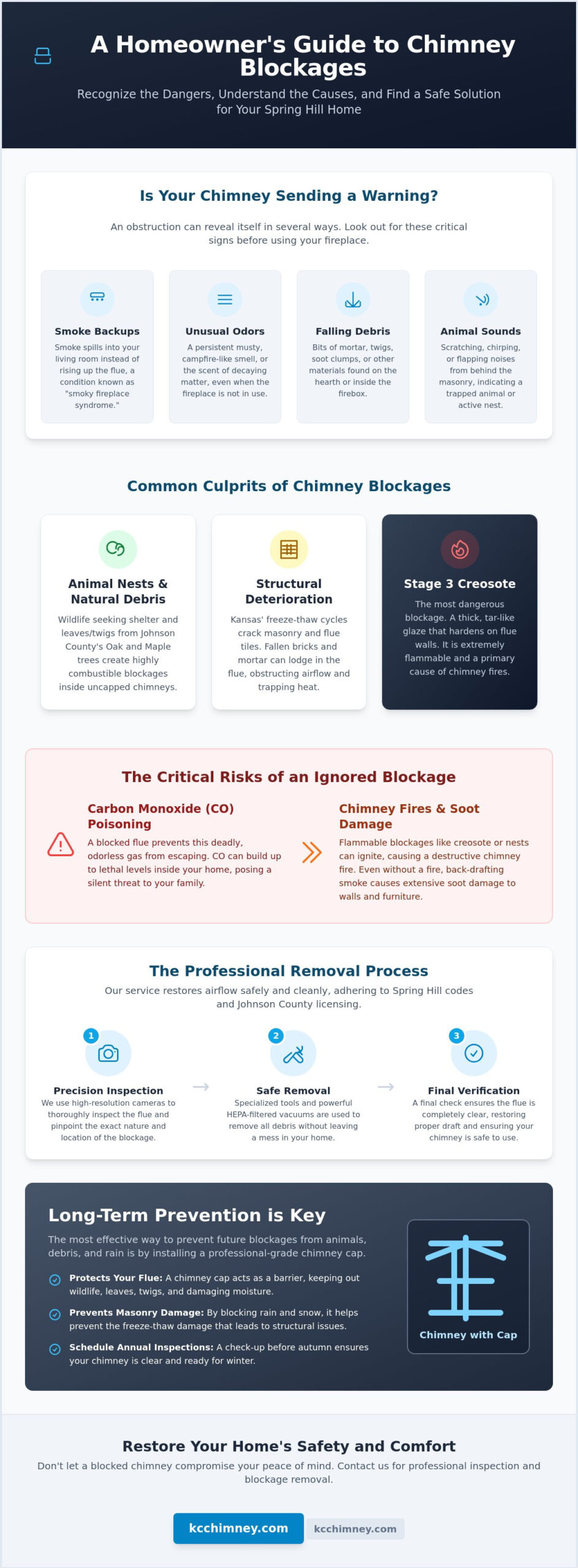
Identifying a chimney obstruction early can be the difference between a cozy evening and an emergency call. Many homeowners first notice something is wrong when they see physical debris, such as bits of mortar, twigs, or clumps of soot, falling onto the hearth or into the firebox. These visual cues are clear indicators that the internal structure of your flue is changing. You might also hear unusual sounds coming from behind the masonry. Scratching, chirping, or the frantic sound of flapping wings usually means a local animal has mistaken your chimney for a safe nesting spot. These physical barriers require professional chimney blockage removal Spring Hill to ensure the passage is clear before you attempt to use your fireplace.
Odors are another reliable warning sign. A blocked chimney often traps moisture and stagnant air, leading to a musty, campfire-like smell that permeates the room even when no fire is burning. In some cases, the smell of decaying organic matter indicates that an animal has become trapped and died within the flue. Ignoring these scents doesn’t just impact your comfort; it signals a total lack of ventilation that can trap dangerous gases inside your home.
Why Smoke Backups Are Your First Warning
A functional chimney relies on a specific pressure dynamic to vent exhaust. You can study Chimney function and terminology to understand how the stack effect creates the necessary draft to pull smoke upward. When an obstruction is present, this draft is neutralized. Smoke that cannot rise will naturally spill out into your living area, a condition often called “smoky fireplace syndrome.”
It’s vital to distinguish between a cold flue and a physical blockage. A cold chimney might struggle to draft initially, but a blockage will cause smoke to billow back even after the air has warmed. Never try to “burn through” a suspected obstruction. If the blockage consists of flammable nesting materials or heavy creosote, adding high heat will likely ignite a chimney fire rather than clearing the path.
Local Spring Hill Environmental Factors
Homeowners in Eastern Kansas face specific environmental challenges that contribute to chimney clogs. The high humidity levels common in our region can cause soot to clump and harden, eventually forming a thick glaze on the flue tiles. This process accelerates when moisture from rain or snow enters an uncapped chimney. Additionally, the frequent high winds in Johnson County often deposit leaves, pine needles, and small branches into open flues, creating a “bird’s nest” effect even without the birds.
We typically see these issues peak in early autumn. As the first frost approaches, residents discover that months of summer debris or animal activity have completely sealed their chimneys. Scheduling a professional inspection before that first lighting is the most reliable way to ensure your home remains safe and smoke-free throughout the winter season.
Common Types of Chimney Obstructions in Johnson County
In our corner of Johnson County, a chimney blockage is rarely just a simple pile of soot. It’s often a complex combination of environmental debris, biological activity, and structural wear. Homes in Spring Hill are surrounded by beautiful hardwood trees like Oak and Maple, which shed significant amounts of leaves and twigs. These materials easily find their way into uncapped flues, though professional arborists at Statement Tree Care recommend regular pruning to keep overhanging branches away from the roofline and minimize this debris. Over time, this organic matter packs down, completely sealing off the airflow and making professional chimney blockage removal Spring Hill a necessity before the first fire of the season.
Structural deterioration is another frequent culprit. The Kansas freeze-thaw cycle is notoriously hard on masonry. Moisture can seep into mortar joints, expand as it freezes, and cause bricks or clay liner tiles to crack and fall. These heavy pieces often lodge in the chimney’s throat or on the smoke shelf. Because these obstructions are made of non-combustible material, they won’t burn away; they simply sit there, blocking exhaust and potentially trapping heat against the home’s wooden framing.
The Danger of Stage 3 Creosote
Fire safety experts frequently emphasize the dangers of creosote buildup, but Stage 3 creosote represents the highest level of risk. This advanced form of creosote has a thick, tar-like consistency that hardens into a shiny, glass-like glaze. It forms when flue temperatures are consistently too low or when unseasoned wood is burned. Unlike the flaky or dusty soot found in earlier stages, this glaze is highly concentrated fuel. Standard chimney brushes often skip right over the surface without removing it. Clearing this type of blockage requires specialized chemical treatments or mechanical tools to break the bond between the glaze and the flue liner.
Wildlife and the Chimney Swift Challenge
Local wildlife often views your chimney as a perfect, predator-proof hollow tree. Raccoons and squirrels are common visitors, frequently building large dens that can span several feet of the flue. However, the Chimney Swift presents a unique legal challenge for homeowners in Spring Hill. These birds are federally protected under the Migratory Bird Treaty Act. It’s illegal to remove their nests while eggs or young birds are present. If you hear the distinct “chipping” sound of swifts, you’ll need to wait for them to migrate in late summer or early fall before the nest can be cleared.
Managing these biological and structural hazards requires a steady, experienced hand. If you’ve noticed unusual smells or debris in your firebox, scheduling a professional Level 2 inspection is the most reliable way to identify exactly what’s hiding in your flue and how to remove it safely.
The Critical Risks of Ignoring a Blocked Flue
A blocked chimney is more than a simple inconvenience; it is a serious liability for your property and your family’s health. When debris or creosote restricts the passage of exhaust, the heat and toxic gases that should escape your home are forced back into your living space. This reversal of airflow creates a hazardous environment that can lead to permanent property damage or life-threatening emergencies. Prioritizing professional chimney blockage removal Spring Hill is the only reliable way to ensure these risks are neutralized before you strike a match.
Carbon Monoxide: A Real Threat to Spring Hill Families
Carbon monoxide (CO) is often called the “silent killer” because it is colorless, odorless, and tasteless. When a chimney is blocked, the combustion process cannot complete its cycle, and CO levels can rise rapidly inside your home. Homeowners often mistake the early signs of CO exposure, such as headaches, dizziness, and nausea, for a common cold or the flu. This confusion is dangerous, as it leads to delayed action.
It’s vital for Spring Hill residents to maintain working carbon monoxide detectors on every level of the home, particularly near sleeping areas. While a detector provides a necessary final layer of defense, it doesn’t solve the underlying problem. Only a professional clearing of the obstruction can restore the safe venting required for your fireplace or wood stove to operate without endangering your family.
Chimney Fires and Masonry Integrity
When heat is trapped behind a blockage, it can reach temperatures high enough to ignite the obstruction itself, especially if it consists of dry leaves or animal nesting. A nest fire can burn intensely and quickly spread to the wooden framing or attic of your home. Even if the fire stays contained within the chimney, the extreme heat causes a phenomenon known as thermal shock. This occurs when the sudden temperature spike causes the clay flue liner to expand and crack, potentially allowing future fires to reach the house structure.
Ignoring a minor obstruction can lead to catastrophic repair costs. A cracked liner often requires a full chimney relining to make the system safe again. By addressing blockages early, you protect the structural integrity of your masonry and avoid the high expense of rebuilding a damaged chimney stack.
Professional Blockage Removal: The Best Chimney Services Process
Restoring a chimney to safe operating condition requires more than just a quick brush. Our approach to chimney blockage removal Spring Hill combines advanced diagnostics with powerful extraction methods to ensure every inch of your flue is clear. We don’t guess about what’s inside your chimney; we use technology to confirm it. This systematic process begins with clearing the smoke shelf and damper area, where heavy debris often accumulates and restricts airflow. By focusing on these specific collection points, we ensure the mechanical components of your fireplace function smoothly.
The Role of Video Inspection Technology
A standard flashlight only reveals the first few feet of a flue. To truly understand the state of your chimney, we perform a Level 2 Inspection using high-resolution cameras that travel the full length of the stack. This allows us to identify high-level blockages, such as animal nests or structural collapses, that would otherwise remain hidden. These internal views are essential for documenting cracks or gaps in the liner. This documentation provides you with clear evidence for insurance purposes and the peace of mind that comes from seeing a clean flue.
Our Mess-Free Guarantee for Spring Hill Residents
We treat your home with the same respect we’d give our own. A major concern for homeowners is the potential for soot and dust to escape into the living room during a cleaning. To prevent this, we utilize industrial-strength, HEPA-filtered vacuum systems that maintain a constant vacuum on the firebox. This dust-containment protocol ensures that every particle we dislodge is captured immediately. Our team also lays down heavy-duty drop cloths and uses protective runners to ensure your flooring remains pristine.
While a simple broom sweep might remove loose soot, it’s often ineffective against the glazed creosote mentioned earlier. We use specialized mechanical tools, such as rotary power cleaning heads, to safely break down stubborn glazing without damaging the underlying masonry. Our goal is to leave your home exactly as we found it, with the only difference being a safe, functional fireplace. If you suspect an obstruction, scheduling professional Chimney Sweeping is the most effective way to restore your home’s safety and airflow.
Preventing Future Blockages and Maintaining Your Hearth
Once your flue is clear and the airflow is restored, the focus shifts to long-term protection. While professional chimney blockage removal Spring Hill resolves the immediate crisis, a proactive maintenance framework prevents the cycle of debris and wildlife from repeating. Think of your chimney as a precision exhaust system that requires specific conditions to operate safely. By implementing a few structural safeguards and mindful burning habits, you can protect your masonry and ensure your fireplace remains a reliable source of warmth rather than a recurring hazard.
Chimney Caps: Your First Line of Defense
Installing a high-quality chimney cap is the most cost-effective way to prevent future obstructions. Without a cap, your flue is essentially an open invitation for Kansas wildlife, such as raccoons and squirrels, to build nests during the off-season. Additionally, a cap prevents rain and snow from entering the stack. Moisture is the primary catalyst for masonry decay and the clumping of soot. When choosing a cap for Spring Hill homes, stainless steel is a durable, corrosion-resistant option that stands up well to our regional storm patterns. Copper is another excellent choice for homeowners looking for exceptional longevity and a classic aesthetic. Proper sizing is critical; a cap must be tall enough to allow a full draft while featuring a mesh screen tight enough to exclude even the smallest pests.
Safe Burning Practices for 2026
The health of your chimney is directly tied to what you put in the firebox. To minimize creosote buildup, follow the seasoned wood rule. Hardwoods like Oak, Maple, and Hickory should be dried for at least six to twelve months until their moisture content is below 20 percent. Burning “green” or wet wood creates excessive smoke and steam, which cools the flue and causes creosote to harden rapidly into a dangerous glaze.
- Avoid Softwoods: Pine and cedar contain high amounts of resin. While they smell pleasant, they contribute to rapid soot accumulation and should only be used as kindling.
- Never Burn Trash: Cardboard, wrapping paper, and household trash release toxic chemicals and can cause intense, uncontrollable flare-ups that ignite existing soot.
- No Treated Lumber: Pressure-treated or painted wood contains heavy metals and chemicals that are hazardous when inhaled and can damage your flue liner.
Consistency is the final piece of the safety puzzle. Even with perfect burning habits, a thin layer of soot will naturally accumulate over time. Scheduling an annual chimney inspection in Kansas City ensures that minor issues, like small cracks or early-stage nesting, are caught before they become dangerous. Pairing this with a regular visit from a certified chimney sweep in Kansas City keeps your system in peak condition. This methodical approach to maintenance provides the peace of mind that your home and family are protected throughout the coldest months of the year.
Restore Your Home’s Safety and Comfort
Your chimney is a vital safety component of your home, but it requires regular attention to perform its job effectively. We’ve discussed how identifying early warning signs, such as smoky fireplace syndrome or unusual odors, can prevent dangerous carbon monoxide exposure and devastating chimney fires. By choosing properly seasoned firewood and installing a durable chimney cap, you take the necessary steps to keep your flue clear of Kansas wildlife and debris throughout every season.
When you need professional chimney blockage removal Spring Hill, it’s essential to trust experts who prioritize your family’s peace of mind. Since 2012, our five-star rated local service has provided residents with technical mastery and neighborly care. Our certified technicians serve Johnson and Miami counties, utilizing advanced video camera inspections as a standard part of our process to ensure your flue is completely secure. Don’t wait for a minor obstruction to become a major hazard or a costly repair. Schedule your professional chimney blockage removal in Spring Hill today. We look forward to helping you enjoy a safe, warm, and worry-free fireplace experience.
Frequently Asked Questions
How do I know if my chimney is blocked or just cold?
A cold chimney usually drafts properly after you warm the air with a torch or newspaper, while a blocked chimney will continue to push smoke back regardless of temperature. If you’ve preheated the flue and smoke still spills into the room, you likely have a physical obstruction. This is a clear indicator that professional intervention is needed to restore airflow. Don’t risk smoke damage by continuing to light fires in a poorly drafting fireplace.
Can I remove a bird’s nest from my chimney myself?
Attempting to remove a nest yourself is dangerous and often ineffective. Nests can be several feet deep and tightly packed, making them impossible to reach with household tools or a garden hose. Additionally, disturbing certain wildlife can lead to injury or legal issues. Professionals use specialized mechanical tools to ensure the entire structure is removed without damaging the delicate flue liner or creating a larger mess in your home.
How much does chimney blockage removal cost in Spring Hill?
The cost of chimney blockage removal Spring Hill varies based on the type of obstruction and the extent of the buildup. Since every situation is unique, we provide quotes on a per-job basis after an initial assessment. Factors like the presence of Stage 3 creosote or the height of the chimney will influence the final investment required to make your home safe and functional again. We recommend an inspection to determine the specific needs of your system.
Is it safe to use my fireplace if I smell something strange?
No, you shouldn’t use your fireplace if you detect unusual odors like rotting organic matter or a heavy, musky scent. These smells often indicate animal nesting or moisture-damaged soot that has become stagnant. Lighting a fire could ignite flammable nesting material or force toxic gases into your home. It is always safer to keep the damper closed until a professional can inspect the system and identify the source of the odor.
How long does a professional blockage removal take?
A standard professional blockage removal typically takes between one and three hours to complete. The duration depends on the severity of the clog and whether we’re dealing with loose debris or hardened creosote. We take the time necessary to perform a thorough extraction and verify the results with a post-removal video inspection. This ensures your fireplace is ready for safe use immediately after we finish our work.
Will the removal process make a mess in my house?
Professional removals are designed to be completely mess-free for the homeowner. We utilize industrial HEPA-filtered vacuums and dust-containment protocols to capture every particle of soot and debris. By using drop cloths and protective runners, we ensure that your living room remains in the same condition as when we arrived. Our goal is to provide a clean service that respects your property while restoring your fireplace’s safety.
What happens if a chimney swift is nesting in my flue?
If Chimney Swifts are nesting in your flue, you must wait until they migrate before the nest can be legally removed. These birds are federally protected, and it is illegal to disturb them while eggs or young are present. Once the birds leave in late summer, we can perform a chimney blockage removal Spring Hill to clear the debris before you start your first fire of the season.
Can a blocked chimney cause carbon monoxide to enter my home?
Yes, a blocked chimney is a primary cause of carbon monoxide entering the home. When the flue is obstructed, the toxic byproducts of combustion cannot escape and are forced back through the firebox. This creates a life-threatening situation for your family. Maintaining working CO detectors is a vital safety layer, but the only permanent solution is restoring proper ventilation through a professional cleaning of the obstruction.