
That thin, white film on your fireplace glass isn’t just a cosmetic nuisance; it’s often a chemical byproduct that signals your system is struggling to breathe. You likely chose a gas fireplace for its convenience and the cozy atmosphere it brings to your Mission Hills home, yet it’s easy to let annual maintenance slip when the pilot light seems to be working fine. However, a “set it and forget it” approach can lead to unreliable operation or, more seriously, hidden safety hazards. This guide explains how a professional gas fireplace safety check Mission Hills residents rely on can identify carbon monoxide risks and restore your unit’s efficiency before the winter season begins.
We understand that navigating local venting regulations and ignition standards can feel overwhelming. You deserve to feel completely secure when you flip that switch. By reading on, you’ll gain a clear understanding of what a technical safety audit actually entails, from checking the integrity of your seals to ensuring your system meets the latest 2026 California energy requirements. We’ll also address common frustrations like stubborn pilot lights and clarify exactly how often your specific model needs a professional eye to keep your household protected.
Key Takeaways
- Learn why gas fireplaces are not maintenance-free and how Mission Hills’ unique home designs impact your system’s venting and air pressure.
- Discover the essential steps of a professional inspection, including technical tests for gas valves and pilot assemblies to ensure a clean, blue flame.
- Understand when to schedule a standard visual audit versus a more intensive Level 2 gas fireplace safety check Mission Hills residents require during home sales.
- Identify critical warning signs like the smell of rotten eggs or a white foggy film on the glass that indicate your fireplace needs immediate professional attention.
- See how a mess-free service using HEPA vacuums and drop cloths protects your home’s interior while restoring your fireplace to peak efficiency.
Why a Gas Fireplace Safety Check in Mission Hills is Essential
Many homeowners in our community mistakenly believe that switching from wood to gas means the end of chimney maintenance. While you’ve traded soot and ash for a convenient remote, the mechanical components of a gas system require just as much vigilance. A gas fireplace safety check Mission Hills residents schedule annually isn’t just about cleaning; it’s a technical verification of your home’s air quality. Neglecting these systems can lead to a false sense of security, as gas burns much cleaner but carries its own set of invisible risks.
Our neighborhood is known for its architectural integrity, featuring many historic estates and custom luxury builds. These homes often feature complex fireplace design and safety considerations, particularly regarding air pressure. Modern renovations can make a home so “tight” that gas appliances struggle to vent properly. This lack of fresh air can lead to backdrafting issues, where combustion byproducts are pulled back into your living space rather than being exhausted outside. Beyond venting, gas systems carry risks like slow-leaking valves or the buildup of residue on the glass. If the glass assembly is not seated correctly or if the relief springs are seized, a delayed ignition could cause the glass to shatter or explode. Documented inspections are also a frequent requirement for homeowners’ insurance coverage in high-value areas, ensuring that your property is protected by professional standards.
Carbon Monoxide: The Silent Threat in Gas Systems
Incomplete combustion happens when the gas-to-air ratio is off, often caused by a clogged burner or a blocked flue. This imbalance produces carbon monoxide (CO), a gas that standard home detectors might not catch until levels are already dangerous. These wall-mounted units are designed for emergency alerts, but they often miss the low-level, chronic exposure that a professional technician detects with specialized equipment. Carbon monoxide is a colorless, odorless, and tasteless gas known as the silent killer because it can overcome residents before they even realize a leak exists.
The Role of Mission Hills’ Climate in Fireplace Wear
The Kansas City region presents unique challenges for mechanical fireplace systems. High summer humidity often causes corrosion on gas valves and burners, which can lead to clogs or total component failure when you try to light the unit in the fall. Extreme temperature swings also cause the masonry and venting seals to expand and contract; this movement potentially creates cracks in the flue. Additionally, local wildlife like chimney swifts or squirrels frequently view quiet gas vents as ideal nesting spots during the spring. This creates dangerous obstructions that only a thorough gas fireplace safety check Mission Hills experts provide will reveal before you strike the first match of the season.
The 12-Point Professional Gas Fireplace Inspection Checklist
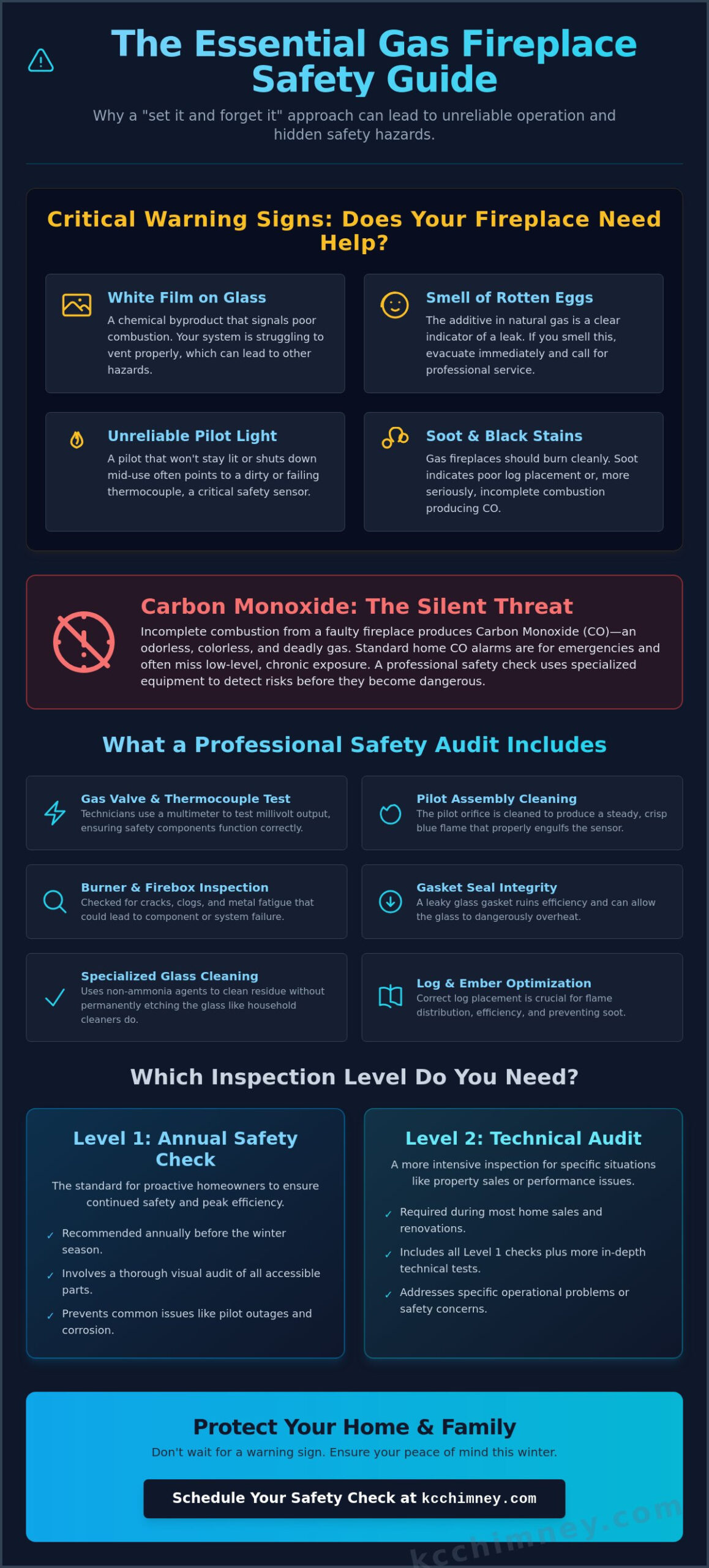
A professional gas fireplace safety check Mission Hills homeowners invest in is a rigorous technical audit, far exceeding a simple cosmetic cleaning. It begins with the heart of the system: the gas valve and the thermocouple. Our technicians use specialized multimeters to test the millivolt output of these components. If the voltage is too low, the valve won’t stay open. This leads to an unreliable pilot light or a fireplace that shuts down mid-use. We also dismantle the pilot assembly to clean the orifice, ensuring you have a steady, crisp blue flame that properly engulfs the sensor.
Next, we examine the main burner for signs of metal fatigue, cracks, or clogs. Over time, the repeated expansion and contraction of the metal can lead to structural failure. We also verify the integrity of the firebox and the gasket seal on the glass assembly. A leaky gasket allows room air to enter the combustion chamber at the wrong rate, which ruins efficiency and can cause the glass to overheat. To finish, we clean the glass using specialized non-ammonia agents. Standard household cleaners often contain chemicals that permanently etch into the glass when exposed to high heat, leaving a cloudy finish that’s impossible to remove. This process follows the high standards set by the Chimney Safety Institute of America, ensuring your unit is both beautiful and safe.
Log Placement and Ember Bed Optimization
The logs in your gas fireplace aren’t just for show; they’re engineered to sit in a very specific configuration. If a log shifts even an inch, it can cause “flame impingement,” where the fire directly hits the ceramic. This results in incomplete combustion and a heavy buildup of carbon, or soot, which can eventually clog your burner ports. During our visit, we also refresh the glowing wool and vermiculite. These materials are essential for creating an even ember bed that promotes optimal combustion while providing that signature warm glow you love. If you haven’t had your system serviced in the last twelve months, consider scheduling a professional inspection to ensure everything is in peak condition.
Venting and Flue Integrity Checks
The venting system is your home’s primary defense against combustion byproducts. We inspect the termination cap on your roof for obstructions like bird nests or debris that may have accumulated during the off-season. We also verify that the firestop and shielding are intact, especially in the attic where heat transfer can become a fire risk if the venting is compromised. A blocked vent forces poisonous exhaust gases back into your living space. We ensure every connection is tight and that the flue is clear so your family can breathe easy all winter long.
Level 1 vs. Level 2 Gas Fireplace Inspections
Understanding the difference between inspection tiers is vital for maintaining your home’s integrity. A gas fireplace safety check Mission Hills residents book annually is typically a Level 1 inspection. This level is appropriate if your appliance and venting system haven’t changed and you haven’t noticed any performance issues. It involves a thorough visual examination of the firebox, the visible venting, and the internal components we discussed in the previous section. If everything appears stable and you simply need peace of mind for the coming winter, Level 1 is your standard baseline.
Specific circumstances require a more rigorous Level 2 inspection. This is a mandatory requirement during real estate transactions in Mission Hills or following a malfunction like a chimney fire or seismic event. At Best Chimney Services, we utilize advanced video scanning technology for every Level 2 evaluation. We don’t guess what’s happening inside your walls; we see it. This precision protects both buyers and sellers by providing a factual, documented account of the system’s health before any contracts are finalized. It’s a professional standard that ensures no hidden liabilities are passed on to the next owner.
When a Video Scan is Non-Negotiable
Internal cracks in a flue liner are often invisible from the hearth or the roofline. These fractures can allow heat to transfer to nearby wooden framing, creating a significant fire risk that remains hidden until it’s too late. By utilizing a high-definition camera, our technicians can identify these structural flaws and document them for insurance or warranty claims. If you’re moving into a new home or haven’t had a professional look at your system in years, a comprehensive chimney inspection kansas city experts provide is the only way to verify the flue’s internal integrity.
Comparing Inspection Scopes
Choosing the right level depends on the age of your home and your current situation. We follow the NFPA 211 standards, which are the national professional baseline for chimney and fireplace safety. While a Level 1 inspection serves as a reliable baseline for units that haven’t changed, a Level 2 assessment provides the forensic detail required for high-stakes decisions.
| Feature | Level 1 (Annual) | Level 2 (Sale/Issue) |
|---|---|---|
| Visual Check | Yes | Yes |
| Tool Usage | Basic Hand Tools | Advanced Diagnostic Tools |
| Video Scan | No | Yes (Full Flue Scan) |
| Report Depth | Standard Safety Pass | Comprehensive Documented Audit |
A blocked vent forces poisonous exhaust gases back into the living space, which is why we never skip the internal verification during a Level 2 scan.
Common Signs Your Gas Fireplace Needs Immediate Attention
Recognizing the early warning signs of a malfunctioning unit is the best way to prevent a minor repair from becoming a hazardous emergency. While we recommend a regular gas fireplace safety check Mission Hills residents should also remain vigilant between professional visits. If you ever detect a “rotten egg” odor, you’re smelling mercaptan. This is a harmless chemical added to natural gas specifically to alert you of a leak. If this smell is present, immediately evacuate your home and contact your gas provider from a safe distance. Don’t operate any electrical switches or phones inside the house, as even a small spark can trigger an ignition.
Another common symptom is a persistent white, foggy film on the interior of the fireplace glass. This isn’t just common household dust; it’s often a byproduct of sulfur or mineral deposits in the gas that haven’t been vented properly. If left uncleaned, these deposits can permanently etch the glass, but more importantly, they indicate that your combustion process is out of balance. Similarly, if you notice dark soot accumulating on your ceramic logs or the glass, your air-to-fuel ratio is incorrect. This carbon buildup is a major red flag that your system is producing excessive carbon monoxide, which directly contradicts the clean-burning promise of a well-maintained gas unit.
Perhaps the most startling sign is delayed ignition. If you hear a distinct “boom” or a loud “thump” when you turn your fireplace on, the gas isn’t igniting immediately. Instead, it’s building up in the firebox before finally catching the spark. This sudden burst of pressure can damage the unit or even shatter the glass assembly. If you experience this, turn the unit off and do not use it again until a technician has verified the pilot assembly and burner ports.
Pilot Light and Ignition Failures
A pilot light that refuses to stay lit is often your system’s safety features working exactly as intended. If the thermocouple is dirty or the gas valve is failing, the system will cut the gas flow to prevent a leak. Distinguishing between a simple cleaning and a hardware failure requires technical expertise. If your ignition system is acting up, it’s time to look into professional gas fireplace repair to restore reliable operation and ensure your safety sensors are functional.
Unusual Noises and Smells
While gas fireplaces are generally quiet, you should listen for rumbling or roaring sounds. These often point to a worn-out blower motor or a burner that has become misaligned over time. You might also notice an electrical “burning” smell, which could indicate a problem with the fan wiring or the remote receiver tucked beneath the firebox. Any “burning dust” smell should dissipate quickly after the first use of the season as the unit clears out settled particles. If these symptoms persist or if you haven’t had a gas fireplace safety check Mission Hills experts provide in over a year, schedule a safety inspection immediately to protect your home.
Scheduling Your Mission Hills Safety Check with Best Chimney Services
Choosing a service provider for your home requires a partner who understands the specific architectural nuances of our neighborhood. Since our founding in 2012, we’ve built our reputation on being more than just a mechanical service company; we act as guardians of your household safety. When you schedule a gas fireplace safety check Mission Hills residents can expect a technician who arrives on time, maintains professional certifications, and treats your property with the highest level of integrity. We don’t just look for problems. We provide durable solutions that protect your investment for the long term.
We recognize that many homes in Mission Hills feature high-end finishes and luxury flooring. Our mess-free guarantee is a non-negotiable part of every visit. Our technicians utilize industrial-grade HEPA vacuums and heavy-duty drop cloths to ensure that no dust, soot, or debris ever touches your carpets or hardwoods. Once the inspection is complete, we provide a comprehensive digital report. This document includes high-resolution photos of your system’s internal components, giving you a clear record of your home maintenance for insurance or future real estate needs. While many homeowners wait until the first frost to call, we recommend scheduling your safety check during the spring or summer. This allows us to address any corrosion or wildlife issues immediately, ensuring your system is ready the moment you need it.
Local Expertise for Johnson County Homeowners
Our team is deeply familiar with the specific gas fireplace brands and venting configurations common across Johnson County. We understand how the local climate impacts these systems, from humidity-driven valve corrosion to the nesting habits of local birds. Because we are a neighborly, locally owned business, we can easily integrate your gas safety audit with other essential maintenance, such as a chimney sweep kansas city homeowners trust for their wood-burning units. This holistic approach to home fire safety ensures every flue and vent in your house is operating at peak efficiency.
Ready for a Warmer, Safer Home?
Don’t let the winter rush dictate your family’s comfort. Booking your appointment early ensures you have the pick of the schedule and plenty of time for any necessary repairs. We believe in total transparency, which is why we offer flat-rate inspection fees so you never have to worry about hidden costs or high-pressure sales tactics. While we are evaluating your fireplace, we also encourage you to have our team check your dryer vents. Lint buildup is a leading cause of household fires, and addressing both systems at once provides total peace of mind. Contact us today to secure your gas fireplace safety check Mission Hills and experience the professional care your home deserves.
Secure Your Peace of Mind for the Coming Winter
Best Chimney Services has been a fixture in the community since 2012. Our certified technicians bring technical mastery to every project, combining rigorous industry standards with a neighborly approach. We stand behind our work with a mess-free guarantee, using specialized equipment to protect your luxury interiors. Don’t wait for the first cold snap to discover a hidden malfunction in your system. Schedule Your Mission Hills Gas Fireplace Safety Check Today and enjoy the warmth of your home with complete confidence. We look forward to helping you keep your property cozy and secure for years to come.
Frequently Asked Questions
How often should I have a gas fireplace safety check in Mission Hills?
You should schedule a gas fireplace safety check Mission Hills at least once per year, preferably before the winter heating season begins. Even if you don’t use the unit frequently, components like the gas valve, thermocouple, and venting system can degrade or become obstructed by dust and local wildlife. Regular audits ensure that small technical issues don’t turn into expensive repairs or hidden safety hazards for your family.
Do gas fireplaces really need to be cleaned if there is no wood ash?
Yes, gas fireplaces require regular cleaning despite the lack of wood ash. Dust, pet hair, and household debris can clog burner ports and the pilot assembly, leading to incomplete combustion and dangerous soot buildup. Professional cleaning also involves removing mineral deposits from the glass to prevent permanent etching and ensuring the log set remains in its precisely engineered position for optimal safety and performance.
What is the average cost of a gas fireplace inspection in Kansas City?
Most professional inspections are structured as a flat-rate service fee rather than an hourly charge. This fee covers the time and specialized diagnostic tools required for a technician to evaluate your system’s integrity and safety. For a transparent quote based on your specific fireplace model and venting needs, it’s best to contact a local service provider directly to discuss your home’s requirements.
Can I perform a gas fireplace safety check myself?
You shouldn’t attempt a gas fireplace safety check yourself because the process involves handling live gas lines and sensitive ignition components. Professional technicians use specialized equipment like multimeters and gas leak detectors that aren’t available to the average homeowner. A certified expert ensures your system meets rigorous safety standards, which is a level of precision that DIY visual checks simply cannot provide.
Why is there a white film on my fireplace glass and is it dangerous?
The white film on your glass is a byproduct of sulfur and minerals found in natural gas and room air. While the film itself isn’t immediately dangerous, it indicates that your combustion process or venting system isn’t operating with peak efficiency. If you leave it uncleaned, these deposits can permanently etch the glass, and the underlying cause could lead to increased carbon monoxide production over time.
What should I do if I smell gas near my fireplace in Mission Hills?
If you smell gas near your fireplace, you must evacuate the premises immediately and contact your gas utility company from a safe distance. Don’t turn on any lights, use your phone, or operate electrical appliances inside the home, as these can create a spark. Once the utility company has secured the leak, contact a certified technician to repair the fireplace before attempting to use it again.
Does a gas fireplace safety check include a carbon monoxide test?
A comprehensive gas fireplace safety check Mission Hills includes a test for carbon monoxide to ensure your home’s air quality remains safe. Technicians use calibrated sensors to detect CO levels that standard wall-mounted detectors might miss. This test verifies that your venting system is correctly exhausting all combustion byproducts out of your living space rather than backdrafting them into your home’s interior.
How long does a professional gas fireplace inspection usually take?
A professional gas fireplace inspection usually takes between 45 and 90 minutes to complete. This timeframe allows the technician to perform a thorough 12-point checklist, including testing the gas valves, cleaning the pilot assembly, and verifying the flue’s integrity. More complex systems or units that haven’t been serviced in several years may require additional time for a deep cleaning or advanced diagnostic testing of the electronic components.