
Did you know that chimney fires account for roughly 6% of all residential fires in the United States? For many Kansas City homeowners, the chimney is a source of warmth and comfort, but recognizing the signs of a bad chimney liner is essential to keeping that warmth safe. If you’ve noticed bits of clay tile on your hearth or smelled strange odors after a fire, you’re right to be concerned about the hidden condition of your flue.
We understand the worry that comes with maintaining an older home in Johnson County, especially when it involves technical decisions like choosing between clay and metal liners. This guide helps you identify critical red flags so you can act before a fire hazard or carbon monoxide leak develops. You’ll learn how to self-diagnose common issues and discover why upgrading to a stainless steel liner is often the smartest investment for your property’s longevity. We’ll break down the inspection process and help you determine if professional relining is necessary to keep your family protected and your home’s integrity intact.
Key Takeaways
- Understand how your liner acts as a critical barrier between dangerous heat and your home’s wooden structure.
- Learn to spot the visible signs of a bad chimney liner, such as “shuckings” of clay in the firebox or white powdery stains on the exterior masonry.
- Compare the long-term durability of stainless steel relining against traditional clay tile to find the most cost-effective solution for your home.
- Discover why a high-resolution Level 2 video inspection is necessary for identifying hidden cracks that a simple mirror and flashlight will miss.
- Gain peace of mind by understanding how annual certified evaluations protect your family from carbon monoxide and fire hazards.
Understanding Your Chimney Liner’s Role and Why It Fails in Kansas City
Your chimney is more than just a brick stack on your roof. It’s a complex ventilation system designed to keep your family safe. At the heart of this system is the liner, which acts as an inner exhaust pipe. This critical component serves as a barrier, protecting your home from intense heat and preventing toxic gases like carbon monoxide from seeping into your living spaces. Most homes in our area utilize one of three materials: traditional clay tiles, cast-in-place liners, or modern stainless steel sleeves.
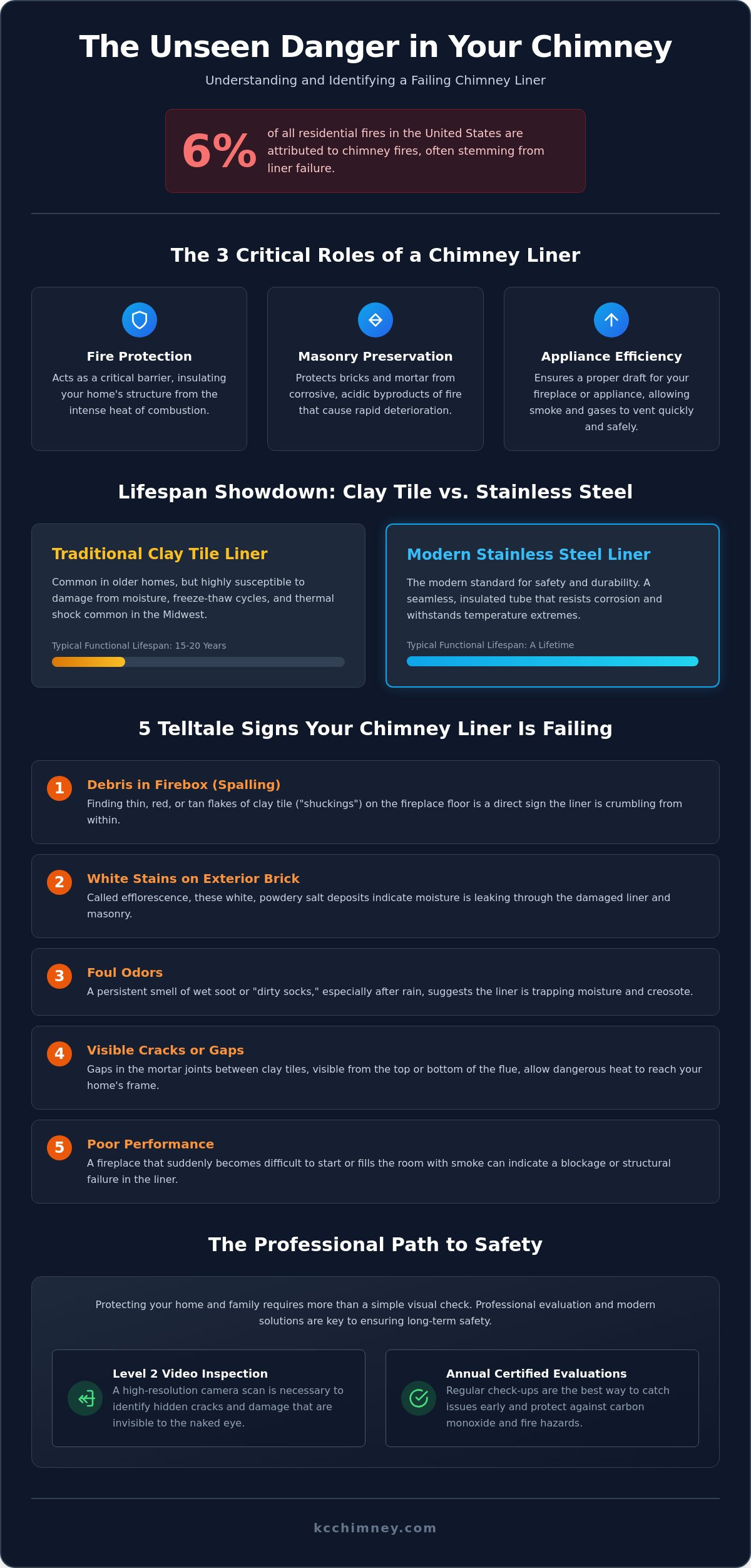
A properly installed liner performs three vital roles. First, it provides fire protection by insulating the chimney masonry from the high temperatures produced by combustion. Second, it preserves your masonry. The byproducts of burning wood or gas are acidic; without a liner, these chemicals would quickly corrode your mortar and bricks from the inside out. Finally, it ensures appliance efficiency by maintaining the correct draft, which allows smoke to rise quickly and completely. For those looking for a technical deep dive, Understanding Chimney Liners through industry definitions highlights why these components are now mandatory under modern building codes in Johnson County.
The Kansas City Freeze-Thaw Factor
Our local climate is particularly hard on traditional chimney materials. Kansas City is famous for its drastic temperature swings where we might see a sixty degree afternoon followed by a ten degree night. During the winter, moisture from rain or melting snow can seep into the porous surface of clay tiles. When temperatures drop, that water freezes and expands, creating microscopic fractures that eventually lead to structural failure.
We also frequently see a phenomenon called thermal shock. When you light a roaring fire in a freezing cold chimney, the sudden blast of heat causes the liner to expand rapidly. If the material is already weakened by age or moisture, it can snap or flake. Our high humidity levels also play a role, as moisture accelerates the erosion of the mortar joints between clay sections. This is why many homeowners eventually notice signs of a bad chimney liner after a particularly harsh Missouri winter.
Lifespan Expectations for Standard Liners
Most clay tile liners in the Midwest have a functional lifespan of 15 to 20 years. If your home was built or last relined in the 1990s or early 2000s, your system is likely approaching its end of life. You might notice small pieces of tile in your firebox or see cracks forming near the top of the flue during a visual check. These are clear warnings that the material can no longer handle the stress of regular use. While clay tile liners typically last 15 to 20 years in our region, a modern stainless steel upgrade is designed to last as long as you own the home.
Staying ahead of these issues is the best way to avoid expensive emergency repairs. Recognizing the early signs of a bad chimney liner allows you to plan for an upgrade on your own timeline rather than waiting for a safety hazard to force your hand.
7 Tell-Tale Signs Your Chimney Liner Is Damaged or Failing
Identifying the early signs of a bad chimney liner can be the difference between a simple repair and a dangerous house fire. Many homeowners in the Kansas City area don’t realize their liner is failing until a professional points it out during a routine sweep. However, your chimney often leaves clues that something is wrong. If you know what to look for, you can catch these issues before they compromise your family’s safety.
- Visual Debris (Spalling): If you find “shuckings,” which are thin, red or tan flakes of clay tile, sitting on your smoke shelf or fireplace floor, your liner is literally falling apart. This process, known as spalling, occurs when moisture and heat cause the clay to delaminate.
- White Powdery Staining: Known as efflorescence, these white salt deposits on your exterior brickwork indicate that moisture is leaking through the flue liner and carrying minerals to the surface.
- Foul Odors: A liner that traps moisture often smells like wet soot or “dirty socks.” This suggests that the liner is no longer providing a smooth, sealed path for exhaust.
- Visible Cracks and Gaps: Using a mirror or phone camera, you might see gaps in the mortar joints between clay tiles at the top of the flue. These openings allow heat to reach your home’s wooden frame.
- Performance Issues: If your fireplace suddenly smokes out the room or won’t “draw” properly, the internal dimensions of the liner may be compromised by debris or structural shifts.
If you notice any of these red flags, scheduling a Level 2 Inspection is the most reliable way to confirm the integrity of your flue. Professional technicians use specialized cameras to see what a simple visual check might miss.
The Danger of Condensation and Backdrafting
A cracked or deteriorating liner often allows cold air to enter the flue from the surrounding masonry. This cools the exhaust gases too quickly, leading to “sweating” or heavy condensation on the chimney’s exterior. When exhaust gases cool down before they exit the chimney, they become heavy and can sink back into your living space. This backdrafting is a major safety concern because it can carry invisible, odorless carbon monoxide into your home. A healthy liner maintains the high temperatures necessary to keep these gases rising safely out of the house.
When Fuel Changes Demand a New Liner
Converting your fireplace from wood to gas, or vice versa, always requires a liner reassessment. Modern gas fireplace inserts produce a different type of exhaust than wood fires, often containing higher levels of water vapor. In many Mission Hills homes, high-efficiency furnaces are “orphaned” when they are vented into an oversized, older chimney. This mismatch causes rapid liner rot because the furnace exhaust isn’t hot enough to create a strong draft, leading to acidic condensation that eats away at clay tiles. Always ensure your liner is sized correctly for the specific appliance you are using.
Evaluating Your Options: Chimney Repair vs. Relining with Stainless Steel
Choosing between a simple repair and a full system upgrade depends on the severity of the damage found during your inspection. If you’ve spotted the early signs of a bad chimney liner, such as flaking clay or minor cracks, you might be tempted to look for a quick fix. However, localized masonry repairs are often just a bandage on a deeper problem. While minor mortar issues at the very top of the flue might be addressable with tuckpointing, deep-seated structural cracks usually demand a more robust response.
Relining with stainless steel has become the gold standard for Kansas City homes because it stands up to our extreme weather cycles. Unlike clay, which can crack during the first hard freeze of the season, stainless steel expands and contracts without losing its structural integrity. This durability is why most modern relining projects come with a lifetime warranty, offering a permanent solution that clay tiles simply cannot match.
Many homeowners worry about the “mess factor” of chimney work. Replacing individual clay tiles is an incredibly invasive and labor-intensive process that involves breaking out old sections of the flue. In contrast, installing a flexible stainless steel liner is a relatively clean process. The new liner is lowered from the top of the chimney, minimizing the impact on your living room and hearth while providing a seamless, smoke-tight exhaust path.
Why Stainless Steel is the Preferred KC Solution
We prioritize high-grade materials like 316Ti or 304L stainless steel because they offer superior corrosion resistance against acidic exhaust. When we perform Chimney Relining, we often wrap the steel in a specialized insulation blanket. This extra layer keeps the flue gases hot, which drastically improves the fireplace’s draft and prevents the buildup of dangerous creosote. This protection is essential for keeping your home a safe sanctuary during Missouri winters.
The Limitations of Clay Tile Patching
While some companies offer “resurfacing” for clay tiles, this is often a temporary solution for deep structural failures. Patching cannot restore the original strength of a shattered tile, and the labor required to replace tiles individually is often more expensive than a full reline. Ignoring the obvious signs of a bad chimney liner while attempting to patch old clay often results in recurring issues. Partial liner repairs often fail to meet NFPA 211 standards because they cannot guarantee a continuous seal from the firebox to the chimney cap.
The Professional Inspection: How We Verify Liner Integrity in Overland Park
Identifying the outward signs of a bad chimney liner is an excellent first step, but much of the danger remains hidden from view. A common misconception is that a quick look with a flashlight or a mirror from the hearth is enough to clear a chimney for use. In reality, these methods only show the first few feet of the flue. They cannot reveal the hairline fractures or missing mortar joints that often exist thirty feet up or behind a bend in the masonry. Without a closer look, a failing system can easily be mistaken for a healthy one.
What Happens During a Level 2 Inspection?
A Level 2 inspection is a comprehensive safety check that goes beyond a basic sweep. Our technicians lower a specialized camera through the entire height of the flue, capturing clear footage of the liner’s condition. This process helps us identify hidden breeches that could lead to “hot spots” in your attic or within your walls. If you want to learn more about our process, you can view the details of our Expert Chimney Inspection in Kansas City. This thorough approach ensures that even the smallest compromise in your liner is documented before it becomes a hazard.
Common “Hidden” Hazards Found in Older KC Chimneys
Many historic homes in Kansas City were built without chimney liners at all. While these are often “grandfathered” in, they represent a significant fire risk. Over decades of use, the heat from an unlined or poorly lined chimney causes a chemical change in the surrounding wood framing known as pyrolysis. This process lowers the ignition temperature of the wood, meaning your house could catch fire even without a direct spark hitting the lumber. A professional inspection is the only way to catch this silent threat. If you haven’t had your flue checked this year, schedule a Level 2 Inspection today to protect your home’s future and ensure your fireplace is safe for the upcoming season.
Protecting Your Kansas City Home with Expert Chimney Services
Recognizing the signs of a bad chimney liner is the first step toward a safer home. True security comes from knowing that your ventilation system has been thoroughly vetted by a professional who understands the unique architectural demands of the Kansas City area. Annual maintenance isn’t just a recommendation for Johnson County residents; it’s a necessary safeguard against the silent threats of carbon monoxide and structural fires. By prioritizing regular evaluations, you ensure that small issues never have the chance to grow into costly, dangerous failures. Your safety is our priority.
At Best Chimney Services, we combine the grit of manual labor with the precision of modern safety standards. We believe that every homeowner deserves a clear, honest assessment of their flue’s health. Whether you’ve noticed debris in your firebox or simply want the confidence that comes with a certified inspection, our team acts as the guardian of your hearth. We use a methodical approach to ensure every square inch of your system meets rigorous safety benchmarks.
Why KC Homeowners Trust Best Chimney Services
Since our founding in 2012, we’ve established deep roots within the Overland Park and Stilwell communities. We understand that inviting a service provider into your home requires trust, which is why we offer a mess-free guarantee on all our sweeping and relining projects. We treat your living space with the same respect we’d show our own. For those looking to move away from high-maintenance masonry flues, we also provide Fireplace Insert Installation. These modern units offer a high-efficiency alternative that simplifies your home’s heating while adding a touch of contemporary style and improved heat output.
Schedule Your Peace of Mind Today
Don’t wait for the first cold snap to discover the signs of a bad chimney liner. Booking a Level 2 inspection or a professional sweeping is straightforward and provides the documentation you need for total peace of mind. We proudly serve homeowners across the region, including Mission Hills, Bucyrus, and Spring Hill. Our technicians are seasoned professionals who take pride in their specialized niche, ensuring your project is handled with measured care. You can contact us today to secure your appointment and ensure your family stays warm and protected all winter long.
Secure Your Hearth for the Seasons Ahead
Protecting your home starts with awareness. You now know how to spot the physical signs of a bad chimney liner, from flaking clay tiles to moisture stains on your exterior brickwork. You also understand why stainless steel relining offers a permanent, weather-resistant upgrade for Kansas City’s intense freeze-thaw cycles. Choosing the right material and committing to regular maintenance ensures your chimney remains a safe exhaust path rather than a hidden fire hazard.
Our team at Best Chimney Services has been locally owned and operated since 2012. We include advanced video camera inspections with our evaluations to identify hidden hazards that a standard visual check would miss. Our certified technicians serve Johnson and Miami Counties with a commitment to integrity and neighborly service. We prioritize your peace of mind so you can enjoy your fireplace without worry. It’s our goal to keep your home safe and your masonry in top condition.
Don’t leave your family’s safety to chance this winter. Schedule Your Professional Chimney Inspection in Overland Park Today. Taking this small step now ensures your fireplace remains a safe, warm centerpiece for your home for years to come.
Frequently Asked Questions
How much does it cost to replace a chimney liner in Kansas City?
The total investment for a liner replacement varies based on the height of your chimney, the material selected, and the complexity of the installation. While clay tiles are traditional, many local homeowners choose stainless steel for its durability and safety. You should consult a professional to receive a detailed assessment and an accurate estimate tailored to your specific architectural needs.
Can I use my fireplace if the liner is cracked?
It is not safe to use a fireplace with a damaged liner. even a small fracture allows intense heat and toxic gases to reach your home’s combustible framing. Cracks also increase the risk of carbon monoxide entering your living space. You should refrain from lighting any fires until a certified technician clears the system for use after a proper repair.
How long does a stainless steel chimney liner last?
A high-quality stainless steel liner is designed to be a permanent solution. When installed correctly and swept annually, these liners typically last as long as you own your home. Many manufacturers offer lifetime warranties on the materials because they resist the corrosive acids found in wood and gas exhaust much better than traditional clay tiles.
Is a chimney liner required by law in Johnson County, KS?
Most local municipalities follow the International Building Code, which mandates a flue liner for all masonry chimneys. If you’re installing a new fireplace insert or replacing a furnace, you’ll likely need a permit and an inspection to ensure the liner meets current safety standards. This regulation protects your property and your neighbors from fire hazards.
What is the white powder on the outside of my chimney bricks?
This white, salty substance is called efflorescence. It occurs when moisture travels through your chimney’s masonry and evaporates on the surface, leaving mineral deposits behind. This is often a sign that your liner is failing to contain condensation, allowing water to soak into the brickwork and cause structural damage over time.
Do gas fireplaces need a chimney liner?
Yes, gas appliances require a dedicated liner to vent safely. Gas combustion produces significant amounts of water vapor and acidic byproducts. Without a proper liner, this moisture condenses inside the cold masonry, leading to rapid deterioration of the mortar and bricks. A correctly sized liner ensures these gases exit your home efficiently without damaging the structure.
How often should I have my chimney liner inspected?
You should schedule an inspection at least once a year. Even if you don’t use your fireplace frequently, Kansas City’s extreme weather can cause masonry to shift or crack. Annual checks allow technicians to catch the early signs of a bad chimney liner before they become dangerous or lead to expensive emergency repairs during the winter months.
What is the difference between a Level 1 and Level 2 chimney inspection?
A Level 1 inspection is a basic visual check of the readily accessible parts of your fireplace and chimney. A Level 2 inspection is much more thorough and includes a high-resolution video camera scan of the entire flue. This deeper look is essential for identifying cracks, gaps, or obstructions that are impossible to see from the hearth or the roof.