
What if the traditional masonry fireplace you love is actually the biggest source of heat loss in your home? While a crackling fire looks beautiful, most open chimneys lose up to 85% of their heat straight through the roof, leaving your living room drafty and your heating bills high. It’s a common frustration for Kansas City homeowners who want the warmth of wood without the inefficiency of an outdated system. This guide explains how a professional wood fireplace insert installation kc can transform your existing hearth into a high-efficiency heating powerhouse for 2026 and beyond. Modern inserts are designed to deliver efficiency ratings of over 75%, providing a steady, reliable heat source that uses significantly less fuel than a standard open fire.
We understand that local building codes and safety standards can feel overwhelming. You want to ensure your home is protected and your installation meets the 2018 International Residential Code requirements used throughout the metro area. In the following sections, we’ll walk you through the essential components of a safe installation, from stainless steel liners to proper venting. You’ll learn how to upgrade your home’s comfort while gaining the peace of mind that comes from a system built to last through the toughest Missouri winters. We will cover everything from the importance of professional inspections to the specific technical standards that keep your family safe.
Key Takeaways
- Learn how an EPA-certified insert increases your fireplace efficiency from roughly 10% to over 75%, which drastically reduces your wood consumption.
- Understand why a stainless steel chimney liner is a mandatory safety component that ensures your new high-efficiency system drafts correctly.
- Discover why a Level 2 video inspection is a vital first step to identify hidden hazards before you invest in a new heating appliance.
- Follow our guide to wood fireplace insert installation kc to navigate local building codes and permit requirements with total confidence.
- Find out how certified technicians provide a mess-free installation process that prioritizes your home’s safety and long-term protection.
Why Wood Fireplace Insert Installation is a Top KC Upgrade in 2026
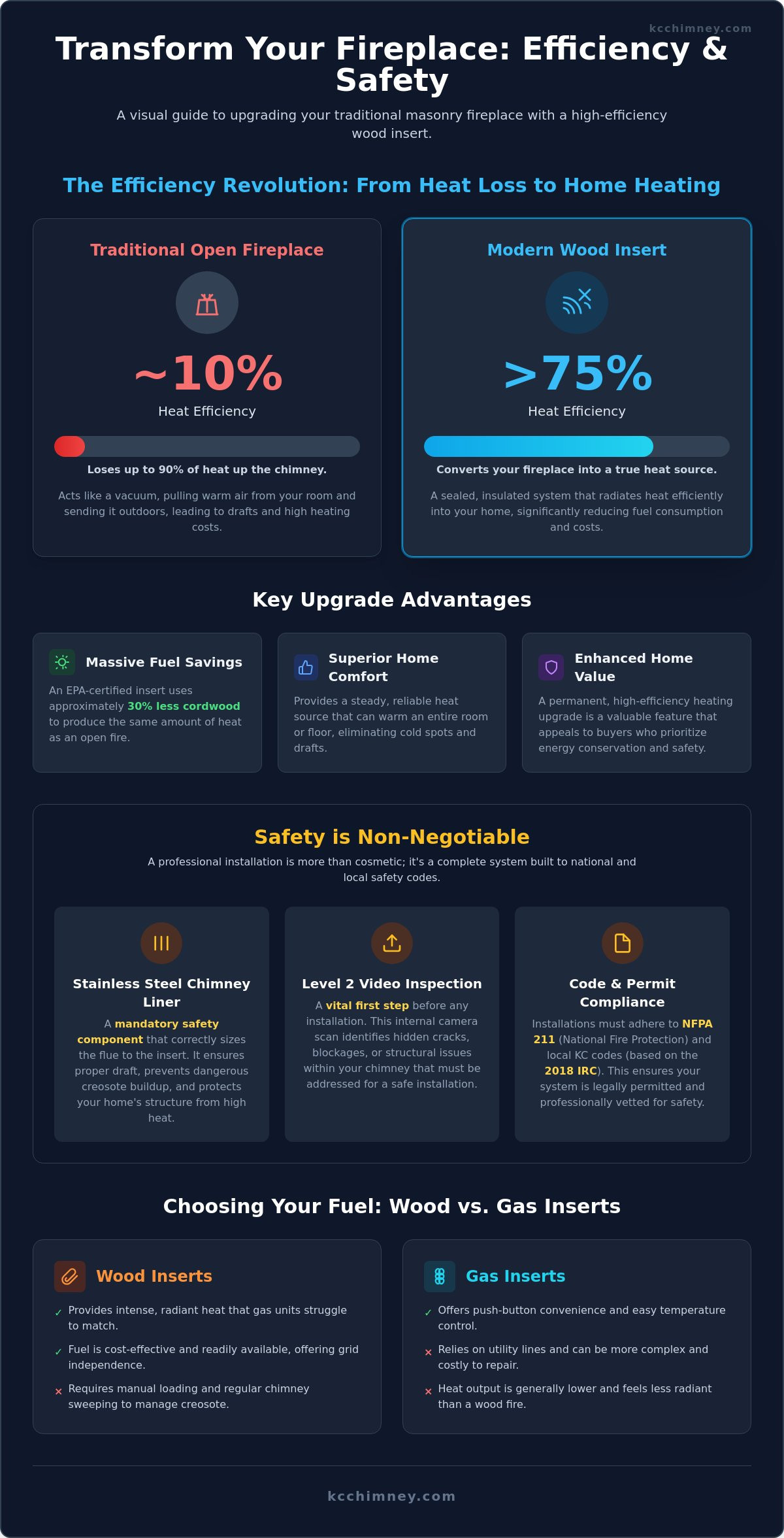
A wood insert is essentially a heavy-duty, insulated firebox engineered to fit precisely into an existing masonry fireplace. If you are asking What is a Fireplace Insert?, it’s helpful to think of it as a high-tech heating appliance that seals off your drafty hearth. Most traditional open fireplaces are incredibly inefficient. They often lose 90% of their heat through the chimney, essentially acting as a vacuum that pulls warm air out of your home. By contrast, a modern wood fireplace insert installation kc transforms that opening into a sealed system with efficiency ratings exceeding 75%.
Kansas City winters are unpredictable and often harsh. As utility costs for gas and electricity continue to climb, homeowners in our community are looking for ways to gain independence from the grid. An insert allows you to keep the authentic experience of a wood-burning fire while actually heating your living space. It bridges the gap between the nostalgic ambiance of a crackling fire and the practical need for a reliable, high-output heat source that can warm an entire room or even a whole floor.
The Environmental and Economic Benefits
The EPA standards for 2026 require wood-burning appliances to meet strict emission limits. These modern units burn smoke and gases that traditional fireplaces simply exhaust into the atmosphere. This secondary combustion process means you get more heat from every log. In fact, an EPA-certified insert typically uses 30% less cordwood to produce the same amount of heat as an open hearth. This efficiency translates to fewer trips to the woodpile and lower annual fuel costs. Whether you are sourcing local timber or researching specialized solid fuels from international experts like Schönbucher Brennstoffe, the quality of your fuel directly impacts the longevity and heat output of your insert. Beyond the immediate savings, installing an insert is a permanent structural investment. In the local KC real estate market, a high-efficiency heating upgrade is a valuable feature that appeals to buyers who prioritize energy conservation and home safety.
Wood vs. Gas Inserts: Which is Right for You?
Choosing between wood and gas often comes down to your lifestyle and fuel access. Kansas City is surrounded by excellent sources of local hardwood, making wood a cost-effective and readily available fuel choice. Wood inserts provide a level of heat intensity that gas units struggle to match, though they do require regular chimney sweeping to manage creosote. Gas units offer push-button convenience but rely on utility lines and can be more complex to repair if a valve fails. You can explore a deeper comparison in our guide on Gas vs. Wood Fireplace Inserts for Your KC Home to see which fits your daily routine. Regardless of the fuel, the goal remains the same: protecting your home’s integrity while maximizing your comfort.
Understanding the Technical Requirements: Liners, Codes, and Safety
Successful wood fireplace insert installation kc involves more than just sliding a steel box into a stone opening. You must consider the entire venting system to ensure the unit operates safely. A common problem we encounter is the “choke” effect. High-efficiency inserts are designed to vent through a specific diameter, typically six inches. If you attempt to vent that small volume of hot exhaust into a massive, cold masonry flue, the smoke cools down before it can exit. This causes the smoke to stall and dump thick layers of creosote onto your chimney walls, creating a significant fire hazard.
To prevent this, a stainless steel liner is a non-negotiable requirement for a professional installation. This liner creates a continuous, smooth path from the insert to the top of the chimney. Following established fireplace safety guidelines from the U.S. Consumer Product Safety Commission is the best way to protect your property. In our local area, including Overland Park and Mission Hills, building codes require specific permits for these upgrades. We follow NFPA 211 standards, which are the national baseline for chimney safety, to ensure every project meets or exceeds local requirements.
The Critical Role of the Chimney Liner
A chimney liner is the primary safety barrier between high-heat exhaust and your home structure. Beyond safety, it optimizes the draft. When the flue is sized correctly to the insert, it creates the precise amount of suction needed to pull oxygen into the firebox. This keeps the glass clean and ensures the wood burns completely. By containing the heat within a smooth steel pipe, we minimize creosote buildup and make future maintenance much simpler. If you’re unsure about the state of your current flue, you can request a professional evaluation to see what size liner your home requires.
Clearances to Combustibles
Modern inserts radiate intense heat, far more than an old open hearth. This means we have to be extremely careful with the “mantel zone.” If your wooden mantel or decorative trim is too close to the unit, it can catch fire through pyrolysis, a process where wood chemically changes and becomes more flammable over time due to repeated heat exposure. We also look at hearth protection. Most units require a non-combustible floor extension that reaches 16 to 18 inches in front of the door. In the older, sprawling homes found in Stilwell and Bucyrus, we often find custom woodwork that needs to be shielded or adjusted to meet modern safety clearances. Every inch matters when it comes to protecting your family and your investment.
Assessing Your Chimney: Is Your Hearth Ready for an Insert?
A successful wood fireplace insert installation kc begins with a rigorous evaluation of your existing chimney structure. You cannot simply choose a model based on aesthetics; the physical condition of your masonry determines what is possible. We start every project with an Expert Chimney Inspection in Kansas City to identify hidden vulnerabilities. In the historic estates of Mission Hills, we often find that while the exterior masonry looks grand, the internal structure has suffered from decades of freeze-thaw cycles. We look for cracked crowns, crumbling mortar joints, and signs of shifting that could compromise the safety of a new high-heat appliance.
Sizing the firebox is the next critical step. You need precise measurements of the opening height, width, and depth, as well as the width of the firebox at the back. These dimensions ensure the insert fits snugly while leaving enough room for the necessary insulation and the stainless steel liner connection. When selecting a unit, it must comply with current EPA regulations for wood-burning appliances to ensure it meets 2026 emission standards. A unit that is too large for your hearth will not sit properly, while one that is too small may not provide the heating capacity your room requires.
Common Structural Red Flags
Many older homes in Kansas City neighborhoods were built with “unlined” chimneys, meaning the exhaust travels through a raw brick-and-mortar channel. These systems are incompatible with modern inserts and require significant upgrades. We also watch for water damage and active chimney leaks. Moisture is the enemy of masonry; if water is entering through a cracked crown or failing flashing, it must be addressed before the insert goes in. If we discover these issues, we provide Expert Chimney Repair in Kansas City to stabilize the structure. Installing a new appliance on a failing foundation is a recipe for expensive future repairs.
The Importance of a Level 2 Inspection
A standard chimney sweeping is not enough to clear a chimney for a new wood fireplace insert installation kc. We perform a Level 2 inspection using advanced video technology to scan the entire length of the flue. This camera allows us to find hidden gaps in the clay tiles or voids in the masonry that the naked eye would miss. These gaps are often where house fires begin, as heat and sparks can escape into the wooden framing of your home. We also verify the structural integrity of the smoke shelf and damper area to ensure they can support the weight and heat of the new venting system. This methodical approach is the only way to guarantee your hearth is truly ready for an upgrade.
The Professional Installation Process: What to Expect
Professional wood fireplace insert installation kc is a methodical process designed to protect your home while maximizing the performance of your new appliance. On the day of installation, our technicians arrive with a clear plan to ensure the project is completed efficiently. We prioritize a mess-free environment by laying down heavy-duty floor protection and dust barriers before any tools enter the room. This preparation ensures that soot or debris from the old masonry flue never touches your carpet or hardwood floors.
The physical installation follows a structured five-step sequence to guarantee safety and code compliance:
- Step 1: Preparation. We clean the existing firebox and verify all measurements one last time.
- Step 2: Liner Installation. A technician on the roof drops the flexible stainless steel liner down the chimney, while a second technician guides it into the firebox.
- Step 3: Connection and Sealing. We secure the liner to the insert’s exhaust port using high-temperature sealants and mechanical fasteners to create an airtight path for smoke.
- Step 4: Aesthetic Finishing. Our team installs the decorative surround and faceplate, which covers the gap between the new unit and your original masonry.
- Step 5: The Commissioning Fire. We light a small, controlled fire to test the draft and begin curing the high-temperature paint on the firebox.
Rooftop Work and Liner Security
The work performed on your roof is just as critical as the work in your living room. We install a custom top plate and a high-quality chimney cap to seal out moisture, nesting birds, and debris. If your chimney is located on an exterior wall, we often recommend insulating the liner to maintain the high internal temperatures required for a strong draft. A top-sealing chimney cap or damper acts as a lid for your home, preventing expensive heated air from escaping when you aren’t enjoying a fire. This final seal is a vital part of the structural investment in your home’s masonry.
Final Finishing and Homeowner Education
Once the unit is in place, we calibrate the blower system to ensure heat is distributed evenly throughout your room. We don’t just pack up and leave; we take the time to teach you how to operate the air controls. Understanding how to manage the primary and secondary air intakes is the key to achieving the long, overnight burn times that modern inserts are famous for. We also discuss maintenance, recommending that you schedule your first professional sweep after your first full heating season to monitor creosote levels. To get started on your home upgrade, you can schedule your wood fireplace insert installation kc with our certified team today.
Choosing Best Chimney Services for Your KC Fireplace Upgrade
When you decide on a wood fireplace insert installation kc, you are choosing more than just a new appliance. You’re choosing a partner to maintain the structural integrity of your home’s masonry. Our “Service-First” philosophy means we don’t just look at the firebox; we evaluate the entire chimney system from the hearth to the crown. If a chimney has underlying structural issues, simply sliding in a new insert won’t solve the problem. We prioritize the health of your masonry because a safe installation is the only one worth doing.
Many regional showrooms focus on high-volume sales and then hand the installation off to third-party subcontractors. We take a different approach. Every project is handled by our own in-house certified technicians. This allows us to maintain a consistent safety standard and ensures that the person who inspects your home is the same professional responsible for the final connection. Our team specializes in the intersection of structural masonry restoration and modern appliance technology, providing a level of precision that general contractors often miss.
Kansas City’s climate presents unique challenges for wood-burning systems. From the high humidity of our summers to the deep freezes of January, your chimney undergoes constant stress. Our local expertise allows us to understand the specific draft patterns and architectural styles found throughout the metro area. We don’t believe in a one-size-fits-all solution. Instead, we provide comprehensive care that covers the entire lifecycle of your hearth, including annual sweeping and long-term maintenance.
Serving Overland Park, Mission Hills, and Beyond
We’re proud to serve the Johnson County and Miami County communities. Our deep knowledge of Kansas City housing stock, from mid-century ranches to historic estates, leads to better outcomes for our neighbors. We understand the specific building codes used in Overland Park and the unique masonry needs of Mission Hills homes. This neighborly approach is built on a foundation of protection and reliability. We view ourselves as guardians of your home, ensuring that every fire you light is a safe one.
Ready to Transform Your Hearth?
The path to a warmer, more efficient home starts with a professional evaluation. To begin, you can book your initial Level 2 inspection and consultation. When our technicians arrive, please ensure the fireplace is cold and clear of any ash or decorative items. We use advanced video technology to document the current state of your flue, giving you a clear picture of what is needed for a successful installation. Taking this first step ensures that your investment is supported by a sound structure. Schedule your wood fireplace insert consultation with Best Chimney Services today!
Secure Your Home’s Comfort for the Seasons Ahead
Upgrading your hearth is about more than just aesthetics; it’s a structural investment that pays dividends in warmth and efficiency. By choosing a high-efficiency unit, you transition from a drafty masonry fireplace to a system that captures over 75% of its heat. Remember that a successful wood fireplace insert installation kc depends entirely on the integrity of your chimney liner and adherence to local safety codes. A professional Level 2 inspection ensures your home is ready for this transformation, protecting your family from hidden hazards like creosote buildup or masonry gaps.
Best Chimney Services has been serving the Kansas City area since 2012. Our team consists of Certified Level 2 Safety Inspectors who prioritize your peace of mind above all else. We offer a mess-free guarantee on all installations, ensuring your living room remains spotless while we modernize your hearth. Don’t let another winter go by with an inefficient fireplace. Take the first step toward a safer, warmer home today. Schedule Your KC Wood Insert Consultation Now and experience the difference of a professional, neighborly approach to home heating.
Frequently Asked Questions
How much does wood fireplace insert installation cost in Kansas City?
The total investment for an upgrade depends on several variables including the specific unit’s heating capacity, the height of your chimney, and the current condition of your masonry. Your project typically involves the cost of the insert unit, a high-quality stainless steel liner, and professional labor. Because every home has unique venting requirements and structural needs, we recommend a personalized consultation to determine the exact scope of work for your property.
Do I really need a chimney liner for a wood insert?
A stainless steel chimney liner is a non-negotiable requirement for a safe and efficient installation. Modern inserts are designed to vent through a specific six-inch diameter to maintain the high temperatures needed for a strong draft. Without a properly sized liner, the hot exhaust enters the large, cold masonry flue and quickly cools, which leads to rapid, dangerous creosote buildup and poor performance.
Can I install a wood fireplace insert myself?
Professional installation is strongly advised to ensure your system complies with local building codes and maintains your homeowner’s insurance coverage. Installing these heavy appliances involves complex rooftop work, precise venting connections, and strict adherence to clearance-to-combustible standards. A mistake in the venting or floor protection can create significant fire hazards that may not be apparent until the system is under high heat.
How long does the installation process typically take?
Most wood fireplace insert installation kc projects are completed within a single day. Our team typically requires between four and eight hours to prepare the workspace, install the liner, secure the unit, and complete the final safety testing. We prioritize a methodical pace that ensures every connection is airtight and every local code requirement is met before we light the first fire.
What is the difference between a wood stove and a wood fireplace insert?
The primary difference lies in the placement; a wood stove is a freestanding appliance that sits on a hearth pad, while an insert is specifically engineered to fit inside an existing masonry fireplace. Inserts allow you to utilize your current hearth and chimney structure while gaining the high-efficiency performance of a modern stove. Both options provide excellent heat, but inserts are the preferred choice for preserving your room’s original architectural layout.
Will a wood insert heat my entire house?
How often do I need to clean my chimney after installing an insert?
You should schedule a professional chimney sweeping at least once per year or after burning one full cord of wood. Even with high-efficiency secondary combustion, some creosote will accumulate over time. Regular maintenance allows a certified technician to inspect the liner’s integrity and ensure the blower system is free of dust, which keeps the unit running at peak performance for years.
Do I need a building permit for a fireplace insert in Overland Park?
Yes, a mechanical or building permit is required for fireplace insert installations in Overland Park and throughout the Kansas City metro area. Local codes require a permit to ensure that a third-party inspector can verify the safety of the venting system and the clearances to nearby woodwork. We manage the technical details of the installation to ensure your project meets the 2018 International Residential Code standards used in our region.