
Did you know that a traditional open-hearth fireplace often loses up to 90% of its heat straight up the chimney? It’s a common frustration for homeowners across the KC metro who love the crackle of a real fire but hate the drafty rooms and soaring utility bills that follow. When you invest in a wood fireplace insert installation in Kansas City, you aren’t just buying a new appliance; you’re sealing your home’s envelope and prioritizing your family’s safety.
We believe your hearth should be a source of comfort, not a source of worry about creosote buildup or heat loss. This 2026 guide will show you how to transform an inefficient masonry fireplace into a high-performance heating powerhouse that lowers energy costs while retaining the authentic ambiance of burning wood. We’ll preview the latest high-efficiency models, explain the necessity of professional video inspections, and walk you through the local standards required to keep your home warm and secure all winter long.
Key Takeaways
- Learn how a wood insert eliminates the “draft factor,” turning an inefficient open hearth into a sealed system that retains significantly more heat.
- Understand the critical safety steps for a wood fireplace insert installation in Kansas City, including the mandatory Level 2 video inspection and chimney sweep.
- Discover why a code-compliant stainless steel liner is essential for protecting your home’s structure and ensuring a proper draft.
- Get a clear comparison of catalytic and non-catalytic combustion systems to help you select the right unit for your specific lifestyle and square footage.
- Learn how to maintain peak performance with annual spring inspections and by burning seasoned local hardwoods like Missouri Oak.
Why Kansas City Homeowners are Upgrading to Wood Fireplace Inserts
KC winters aren’t kind to drafty homes. If you’ve spent a February evening in Mission Hills huddled near a roaring fire only to feel a cold breeze on your back, you’ve experienced the “Draft Factor.” Traditional masonry fireplaces are notoriously inefficient. They often pull more warm air out of your living room than they provide in radiant heat. In fact, research indicates that an open-hearth fireplace can lose up to 90% of its heat through the chimney.
A wood insert is a heavy-duty steel or cast-iron box that turns an open fireplace into a closed-combustion heater. By choosing a wood fireplace insert installation in Kansas City, you effectively seal that “hole” in your roof. These units are designed to slide directly into your existing masonry firebox, creating a controlled environment where wood burns slower and hotter.
The Environmental and Economic Impact in the Metro
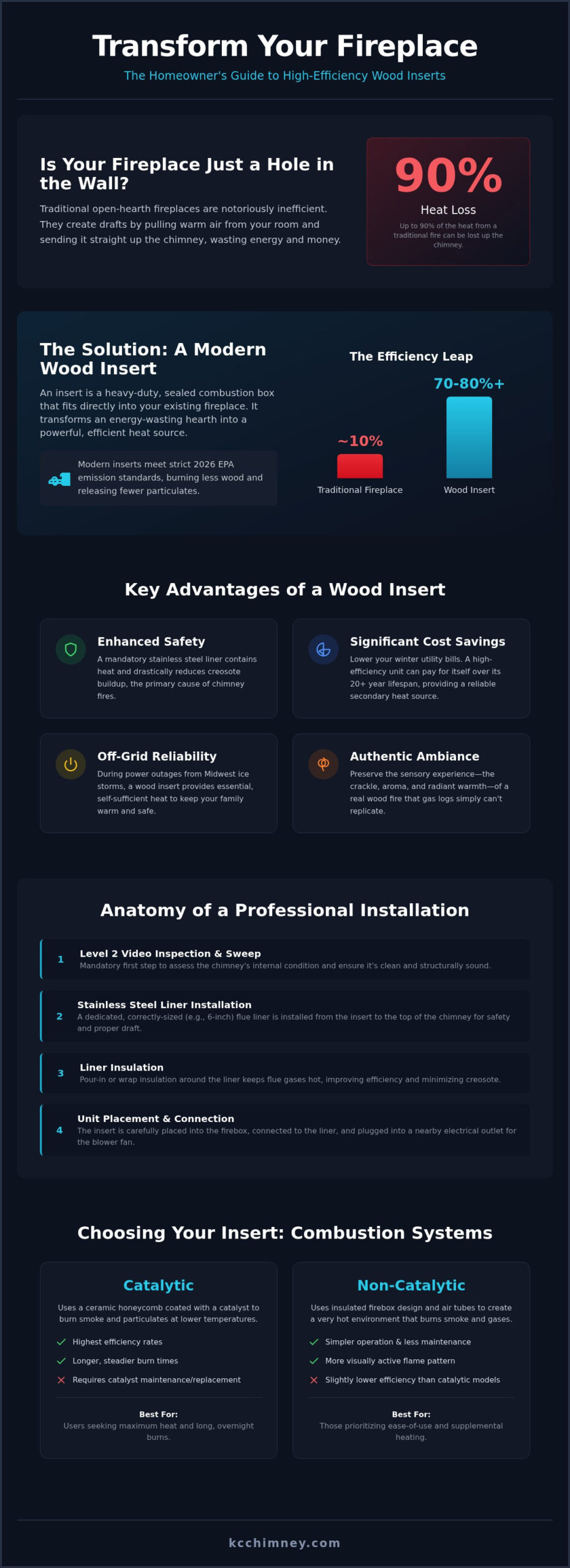
Upgrading to a modern insert represents a shift from 10% efficiency to over 70% or 80% for EPA-certified models. For homeowners in areas like Stilwell and Bucyrus, where homes might rely on expensive propane or electric heat, this efficiency jump translates into noticeable savings on winter utility bills. A professional wood fireplace insert installation in Kansas City is a long-term investment. These rugged units are built to last 20 years or more, providing a reliable secondary heat source that pays for itself over time. Modern designs also meet strict 2026 EPA emission standards. This means you’re burning less wood to get more heat while releasing fewer particulates into the Kansas City air.
Preserving the Tradition of a Real Wood Fire
Many people ask, “What is a Fireplace Insert?” simply because they want to keep the sensory experience of a real fire without the mess. While gas logs offer convenience, they can’t replicate the authentic aroma and crackle of seasoned Missouri Oak. There’s also a significant safety advantage. In older Overland Park neighborhoods, aging clay liners in masonry chimneys can develop cracks. An insert requires a dedicated stainless steel liner, which significantly reduces creosote buildup and contains the heat within a secure, tested system.
During our frequent Midwest ice storms, a wood-burning hearth provides more than just ambiance. It offers the psychological comfort of knowing your family will stay warm even if the power grid fails. It’s a self-sufficient heating solution that combines the grit of traditional labor with the precision of modern safety engineering.
Technical Requirements for a Professional Insert Installation
A successful wood fireplace insert installation in Kansas City starts with a detailed assessment of your existing hearth foundation. Your masonry firebox must be structurally sound to support the weight and intense heat of the new unit. We look for crumbling mortar or loose bricks that could compromise the system. Beyond the firebox, we measure your hearth extension. This is the non-combustible floor space in front of the fireplace that protects your flooring from stray sparks. Most units require 16 to 18 inches of clearance, depending on the specific model and local safety codes.
Heat distribution is another technical hurdle. While the insert generates significant warmth, it needs a way to move that air into your living space. Most modern units include a built-in blower motor. This fan pulls cold air from the floor, warms it against the firebox, and pushes it back into the room. This is essential for the large, open floor plans common in the KC metro, ensuring the heat doesn’t just sit inside the masonry. Following EPA’s Best Wood-Burning Practices ensures that your technical setup translates into real-world efficiency.
The Critical Role of the Stainless Steel Liner
Every wood fireplace insert installation in Kansas City requires a dedicated stainless steel flue liner. Using your existing, oversized masonry flue is a significant fire hazard. When hot exhaust enters a large, cold chimney, the gases cool too quickly. This results in rapid creosote buildup, which is the primary cause of chimney fires. A 6-inch liner creates the proper draft, keeping exhaust hot and moving swiftly out of the home.
Insulation plays a vital role here as well. We often use a pour-in insulation or a specialized wrap around the liner. This keeps the flue gases at a high temperature, further reducing creosote and improving the efficiency of the burn. It’s a precision-based process that turns an old chimney into a modern, high-performance exhaust system.
Electricity and Gas Line Considerations
Modern inserts are high-tech appliances that require power for their convection fans. You’ll need a standard electrical outlet near the hearth to plug in the blower. If your home in Mission Hills or Leawood currently has a gas starter line in the fireplace, this must be capped or rerouted by a professional. We ensure all electrical and gas work complies with local building codes to maintain your home’s integrity. If you aren’t sure if your current hearth meets these standards, a professional chimney inspection can provide the answers you need before you choose a unit.
Selecting the Right Wood Insert for Your KC Home
Choosing the right unit for your wood fireplace insert installation in Kansas City involves more than just picking a style you like. You first need to decide on the combustion technology that fits your lifestyle. Catalytic inserts use a honeycomb-shaped catalyst to burn off smoke and gases at lower temperatures. This results in longer, steadier burn times that can last through a cold night in Johnson County. Non-catalytic inserts are simpler to operate; they use secondary air tubes to create a lively fire with large flames. These are perfect for homeowners who want a beautiful fire for a few hours in the evening without managing a catalytic system.
The material of the insert also affects how it heats your home. Cast iron units are known for their thermal mass. They take longer to warm up but continue to radiate heat long after the fire dies down. Plate steel inserts heat up almost immediately. They’re a great choice if you want to take the chill off a room quickly after getting home from work. Regardless of the material, every professional wood fireplace insert installation in Kansas City must adhere to NFPA 211 Installation Standards to ensure the unit operates within its designed safety limits.
BTU Output and Square Footage Mapping
Sizing is a critical step in the process. A unit that’s too small won’t keep your Overland Park living room warm, while one that’s too large will drive you out of the room with excessive heat. We generally categorize units by their heating capacity:
- Small Inserts: Up to 1,200 square feet. These are best for cozy family rooms or supplemental heat.
- Medium Inserts: 1,200 to 2,200 square feet. This is the standard for most suburban KC homes.
- Large Inserts: 2,500+ square feet. These are designed for open floor plans or whole-house heating.
This approach is called “zone heating.” It allows you to turn down your central furnace and focus warmth where you spend the most time. For a deeper look at the latest models and sizing options, see our guide on Expert Fireplace Insert Installation in KC: Upgrade Your Hearth for 2026.
Aesthetics: Matching Your Kansas City Architecture
Your insert should look like it was built with the house. Flush-mount inserts sit flat against the masonry for a clean, modern look. Extended hearth models protrude slightly into the room, providing a small shelf that can radiate more heat. Whether you have traditional red brick or a modern stone veneer, you can choose finishes like matte black, metallic black, or even timberline brown. Customizable faceplates, often called shrouds, seal the gap between the unit and the masonry. This ensures a finished, professional appearance that complements your home’s unique style.
The 5-Step Professional Installation Process
A professional wood fireplace insert installation in Kansas City is a methodical process that prioritizes your home’s safety and long-term heating efficiency. We don’t just “drop in” a stove; we rebuild your fireplace’s internal exhaust system. A standard installation typically takes between 4 to 6 hours. This timeline ensures we have enough time to verify every seal and connection without rushing the safety checks. Our process follows five distinct steps to turn your old masonry hearth into a modern heating powerhouse.
- Step 1: The Level 2 Safety Inspection. We begin by using specialized video cameras to scan the entire length of your chimney. This identifies hidden cracks or structural voids that aren’t visible to the naked eye.
- Step 2: Professional Chimney Sweeping. Before the new liner goes in, we remove all existing creosote and soot. This creates a clean, safe environment for the stainless steel components.
- Step 3: Stainless Steel Liner Installation. We drop a high-grade 6-inch liner from the chimney crown down to the firebox. This creates a direct, airtight path for exhaust gases.
- Step 4: Unit Placement and Sealing. The insert is carefully positioned into the firebox. We then install the decorative surround or shroud, which covers the gap between the unit and your masonry.
- Step 5: The Test Fire and Homeowner Education. We perform a controlled test fire to verify the draft. During this time, we’ll teach you how to use the air control settings to achieve the perfect burn.
Why a Level 2 Inspection is Non-Negotiable
The NFPA 211 standard requires a Level 2 inspection whenever there’s a “change in use” for a chimney, such as adding a high-efficiency insert. This is the only way to verify that your original structure can handle the intense heat of a modern wood-burning system. Our video technology allows us to see deep inside the flue to find clay tile gaps that could lead to a house fire if left unaddressed. To understand the full scope of this process, read our guide on Expert Chimney Inspection in Kansas City: Ensuring Safety for Your Family Hearth.
The Mess-Free Guarantee
We treat your living room with the same respect we’d show our own. Our team uses heavy-duty drop cloths and high-powered HEPA vacuums to ensure that no soot or debris enters your home during the wood fireplace insert installation in Kansas City. We take pride in being neighborly experts who leave your home exactly as we found it, only warmer. If you’re ready to upgrade your drafty fireplace, you can schedule your wood insert installation today and enjoy peace of mind all winter.
Maintaining Your Insert for Peak Performance in KC
After completing your wood fireplace insert installation in Kansas City, the focus shifts to protecting your investment. These systems are precision-engineered to provide heat for decades, but they rely on proper fuel and regular care to stay efficient. We are fortunate in the Midwest to have access to Missouri Oak and Hickory. These hardwoods are the gold standard for KC hearths because they are dense and provide a longer, hotter coal bed than softer woods like pine or cottonwood.
You must only burn seasoned wood. “Green” wood, which hasn’t dried for at least six to twelve months, still contains high moisture levels. When you burn it, the energy goes into boiling the water rather than heating your home. This sizzles, produces thick smoke, and quickly blackens your ceramic glass with creosote. To keep the view of the fire crystal clear, you can use a damp paper towel dipped in cold wood ash to scrub the glass. This mild abrasive removes soot without scratching the ceramic surface.
Annual Maintenance and Safety Checks
A professional wood fireplace insert installation in Kansas City requires a post-season checkup every spring. During these visits, we look at the internal baffle and the door gaskets. If a gasket loses its seal, the unit draws too much air, which lowers efficiency and can lead to over-firing. In towns like Spring Hill, we also pay close attention to the chimney cap. Bird nests and seasonal debris can obstruct the draft over the summer months. For a full breakdown of what to expect during a visit, see our Chimney Sweep Kansas City: The 2026 Homeowner’s Safety & Maintenance Guide.
Best Practices for the Perfect Fire
Lighting a fire in a modern insert is different than an open hearth. We recommend the “Top-Down” method. Place large logs on the bottom, smaller pieces on top, and kindling at the very peak. This warms the flue faster and reduces initial smoke. Use the air control lever to find the “sweet spot” for your room. Keep it open during startup, then gradually close it to maintain a steady, slow-burning fire. Never burn trash, treated lumber, or old Christmas trees. These materials burn too hot or release chemicals that can damage the internal catalytic or non-catalytic components of your insert.
Secure a Warmer Future for Your Kansas City Home
Transitioning from an open masonry fireplace to a high-efficiency insert is one of the smartest investments you can make for your property. You now understand how a sealed system stops heat loss, why a stainless steel liner is a non-negotiable safety requirement, and how to maintain peak performance with seasoned Missouri hardwoods. Choosing a professional wood fireplace insert installation in Kansas City ensures that your hearth meets modern safety standards while slashing your winter heating costs.
Since 2012, our certified technicians have brought over 14 years of local expertise to homeowners across Johnson and Miami Counties. We prioritize your peace of mind with our dedicated mess-free service guarantee and rigorous attention to technical detail. Don’t wait for the first ice storm to realize your chimney isn’t ready. Schedule your Level 2 Safety Inspection with Best Chimney Services today and enjoy the reliable, cozy warmth your family deserves all winter long.
Frequently Asked Questions
Do I really need a chimney liner for a wood insert installation?
Yes, a stainless steel liner is essential for every wood fireplace insert installation in Kansas City. An oversized masonry flue allows exhaust gases to cool too quickly, leading to rapid creosote buildup and poor performance. A dedicated 6-inch liner maintains the high temperatures needed for a strong draft and a cleaner burn. It also acts as a critical safety barrier between the heat of the fire and your home’s original chimney structure.
How much does it cost to install a wood fireplace insert in Kansas City?
The total investment varies based on the specific unit you choose, the height of your chimney, and any necessary structural repairs identified during the initial inspection. Factors like the type of venting required and the complexity of the liner installation influence the final requirements. We recommend a professional on-site assessment to determine the technical needs of your hearth. This ensures your project meets all local safety codes and performance expectations.
Can I install a wood fireplace insert myself to save money?
We strongly discourage DIY installation due to the complex safety codes and technical precision required. Installing an insert involves working with heavy units, navigating roof heights, and ensuring airtight seals on the liner system. A minor mistake can lead to carbon monoxide leaks or house fires. Professional installers understand local building codes and provide the documentation often required by homeowners’ insurance companies to verify the system is safe for use.
Will a wood insert work during a power outage in the KC metro?
Yes, your wood insert will still provide significant radiant heat even when the power is out. While the electric blower motor won’t be able to circulate air through your floor plan, the unit itself continues to burn wood and radiate warmth into the room. This makes it a reliable emergency heating source during severe Midwest ice storms or grid failures. It’s a self-sufficient system that doesn’t rely on external utilities to keep you warm.
How often should I have my wood insert chimney swept?
You should have your system inspected and swept at least once a year, preferably in the spring after the heating season ends. Regular use causes creosote to accumulate inside the liner, even with high-efficiency units. If you burn wood as your primary heat source, you might need more frequent cleanings. An annual visit ensures your wood fireplace insert installation in Kansas City remains in peak condition by checking the gaskets and baffle for wear.
What is the difference between a wood stove and a wood fireplace insert?
A wood stove is a standalone appliance that sits on a non-combustible hearth and connects to a chimney via a stovepipe. A wood fireplace insert is specifically designed to slide into an existing masonry firebox, utilizing the original chimney structure. Both use similar combustion technology, but the insert is a space-saving solution. It transforms a drafty open hearth into a sealed, efficient heater without requiring extra floor space in your living room.
Does my existing masonry chimney need to be in perfect condition for an insert?
Your chimney doesn’t need to be perfect, but it must be structurally sound. We perform a Level 2 video inspection to identify issues like crumbling mortar or cracked flue tiles. While the new stainless steel liner bypasses many internal flue problems, the exterior masonry must be able to support the system’s weight and protect against moisture. If we find significant damage, we may recommend tuckpointing or crown repair before the insert is installed.
How do I know if my wood is seasoned enough for my new insert?
Seasoned wood usually looks gray on the outside, has visible cracks in the ends, and feels surprisingly light. When you strike two pieces together, they should make a hollow “clink” rather than a dull thud. You can also use a moisture meter to verify the wood is below 20% moisture content. Burning wood that isn’t properly seasoned will cause your glass to turn black and significantly reduce the heat output and efficiency of your unit.