
It is 2:00 AM in Stilwell, and while the Kansas wind sweeps across your open acreage, your living room sounds like it is hosting a haunted flute performance. You are lying awake, wondering if that persistent whistling or rhythmic banging means your chimney cap is about to become a projectile. You aren’t alone in your frustration. Many local homeowners deal with a chimney making noise in the wind during harsh Stilwell weather, often fearing that structural damage is imminent. It is stressful to hear your home protest against the elements, especially when you can’t tell if the sound is a simple nuisance or a serious safety hazard.
This guide will help you decode those sounds so you can finally get a peaceful night’s rest. We will explain exactly what those whistling, rattling, or thumping noises indicate and show you how to secure your flue against the high-velocity gusts common in Johnson County. You will learn to distinguish between a loose cap and a failing damper, identify when a noise signals an immediate safety risk, and understand how the team at Best Chimney Services uses comprehensive Level 2 inspections to solve these mysteries for your family.
Key Takeaways
- Identify the difference between harmless “singing” and dangerous rattling that suggests your chimney cap or damper is failing.
- Explore how Stilwell’s geography and high-velocity winds contribute to a chimney making noise in wind Stilwell homes, including the “oil-canning” of metal covers.
- Learn how securing a wind-rated cap or installing a top-sealing damper can silence your home and protect it from structural damage.
- Discover why a Level 2 video inspection is the definitive tool for diagnosing noise mysteries and identifying hidden hazards.
- Understand which specific maintenance steps, from crown repair to chase cover replacement, will restore your peace of mind during Kansas storms.
Identifying the Sounds: What Your Chimney Noise is Telling You
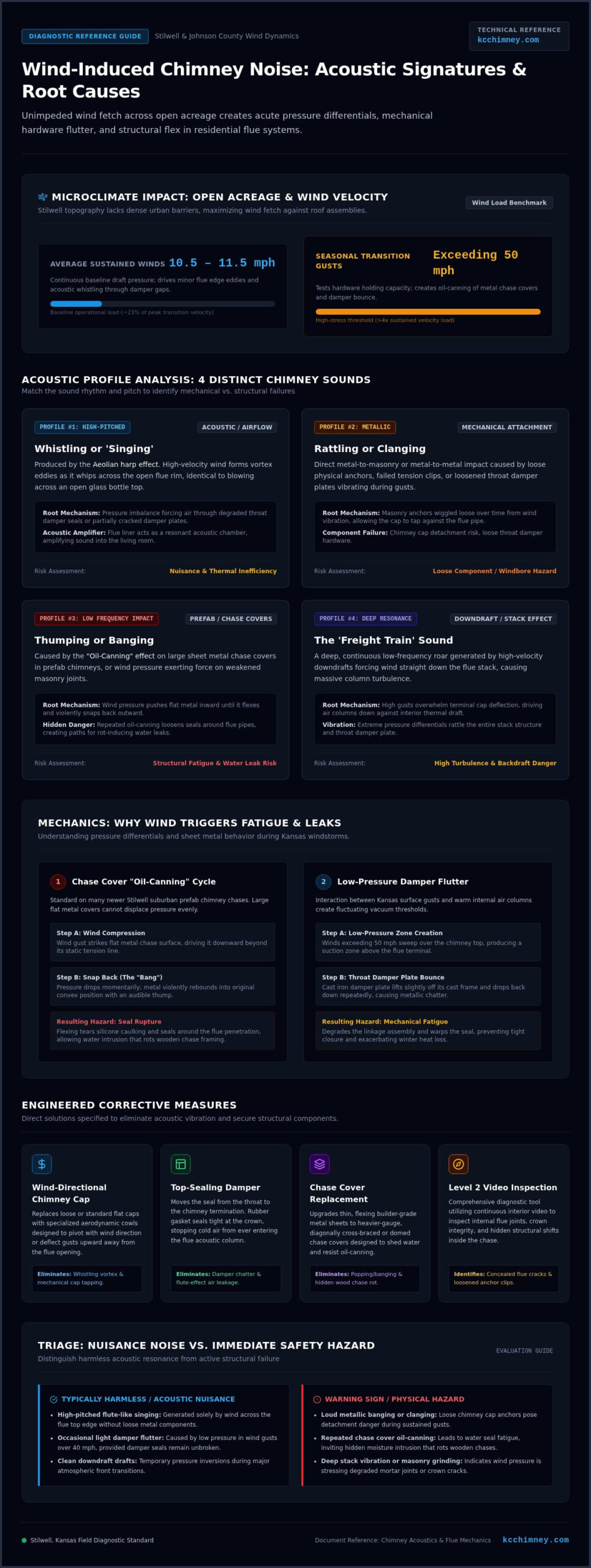
Identifying the specific rhythm and pitch of your chimney’s protest is the first step toward a quiet home. In the open plains of Stilwell, wind doesn’t just pass by your house; it interacts with every protrusion on your roof. When you hear a chimney making noise in wind Stilwell storms, the sound usually falls into one of four categories:
- Whistling or ‘Singing’: This high-pitched tone is often the result of the Aeolian harp effect. It happens when wind creates a vortex as it passes over the open top of your flue, similar to blowing across the top of a glass bottle.
- Rattling or Clanging: These metallic sounds are almost always mechanical. They suggest that a component, like your chimney cap or a throat damper, has hardware that’s no longer tight.
- Thumping or Banging: This deeper sound often points to “oil-canning.” This occurs when large metal sheets, such as a chase cover, flex and pop under wind pressure. It can also indicate structural masonry issues where wind pressure is stressing weakened joints.
- The ‘Freight Train’ Sound: This low-frequency roar is common during high-velocity downdrafts. It occurs when wind is forced directly down the flue, creating intense turbulence that vibrates the entire stack.
The Whistling Flue: Air Pressure and Your Damper
A whistling chimney often acts like a giant flute. If your throat damper is partially open or has a degraded seal, wind rushing across the top of the chimney creates a pressure imbalance. This forces air through tiny gaps at high speeds, generating that haunting “sing” you hear in the living room. Your chimney flue liner acts as an acoustic chamber, amplifying these vibrations and sending them straight down into your home. Simply closing the damper isn’t always a permanent fix. If the seal is worn or warped, the air will still find a way through, continuing the noise until the hardware is professionally repaired or replaced.
Mechanical Rattles: Loose Caps and Accessories
Metal components on your roof take a beating from Kansas weather. Over time, the constant vibration from the wind can cause masonry anchors to wiggle loose or tension clips to lose their grip. A chimney cap serves as a protective barrier designed to deflect wind away from the flue opening while preventing rain and debris from entering the system. When these caps become loose, they tap against the masonry or the flue pipe with every gust. For homes in high-wind areas, many residents find relief by installing specialized chimney cowls and wind-directional caps which are engineered to stay silent and secure even during severe gusts.
Common Causes of Wind-Related Chimney Noise in Stilwell Homes
Stilwell sits in a unique geographic pocket that influences how your home interacts with the elements. Unlike the densely wooded urban areas of Kansas City, our community features open acreage and rolling hills. This allows for significant wind fetch, meaning wind travels long distances without obstruction before hitting your roof. When you have a chimney making noise in wind Stilwell weather, it’s often because the structure is bearing the full brunt of these unimpeded gusts. While average sustained winds in the region range from 10.5 to 11.5 mph, seasonal transitions often bring gusts exceeding 50 mph that test the integrity of every chimney component.
Pressure differentials also play a major role in acoustic disturbances. When high-velocity winds whip across the top of your chimney, they create a low-pressure zone. This can cause “damper flutter,” where the metal plate bounces against its frame. This isn’t just a noise issue; it can also lead to mechanical fatigue of the damper hardware over time. Understanding these forces is the first step in moving from a noisy nuisance to a quiet, secure home.
The ‘Oil-Canning’ Effect in Prefab Chimneys
Large metal chase covers are standard on many homes in newer Stilwell suburban developments. These covers are prone to a phenomenon called “oil-canning.” As wind pressure builds against the flat metal surface, the metal flexes inward and then snaps back, creating a loud popping or banging sound. While the noise is annoying, the real concern is structural fatigue. Repeated flexing can loosen the seals around the flue pipe, leading to hidden water intrusion that can rot the wooden framing of your chimney chase.
Drafting Issues and Pressure Differentials
Modern home insulation levels also impact how your chimney behaves. The “Stack Effect” occurs when warm air rises through the house, pulling cold air in through any available gap. Wind intensifies this pull, sometimes making your fireplace feel like a vacuum. Following EPA chimney venting and inspection recommendations ensures your system maintains the correct draft and flue height to counteract these forces. Additionally, thick creosote deposits can change the internal dimensions of the flue, creating turbulent air pockets that amplify whistling. Regular chimney sweeping can smooth out these surfaces and improve the overall acoustics of your fireplace system. If your chimney making noise in wind Stilwell conditions persists, scheduling a professional evaluation can provide the clarity you need to restore the quiet safety of your home.
The Difference Between Nuisance Noise and Structural Danger
While a whistling flue is often just a matter of air pressure, certain sounds should never be ignored. If you have a chimney making noise in wind Stilwell gusts, it’s vital to determine if the sound is a minor annoyance or a warning sign of structural failure. A metallic rattle from the roof often means the mounting hardware on your chimney cap has corroded or vibrated loose. In severe Kansas storms, a loose cap can easily become a projectile, posing a risk to your property or your neighbors. Similarly, a “singing” noise can sometimes be caused by wind entering cracks in the chimney crown. These cracks allow moisture to penetrate the masonry, leading to expensive freeze-thaw damage that compromises the entire stack.
An active chimney should be a silent guardian of your home’s air quality. When it begins to protest against the wind, it’s often because the physical components are no longer working in harmony. Ignoring these signals can turn a simple hardware tighten into a major structural overhaul. Recognizing the difference between a harmless breeze and a mechanical cry for help is essential for every Stilwell homeowner.
Loose Masonry and Tuckpointing Hazards
Wind puts significant lateral stress on the “shoulder” of your chimney where it meets the roofline. Repetitive wind vibration acts like a slow-motion hammer, gradually weakening the bond between bricks. If you notice small bits of mortar on your roof or near the base of the chimney, your mortar joints are likely failing. This degradation requires professional chimney repair kansas city to prevent the stack from leaning or collapsing during the next high-wind event. Maintaining the integrity of these joints is essential for both safety and home value.
Damper and Liner Integrity
A damper that flaps or bangs in the wind is more than a sleep disruptor. If the hinge or housing is compromised, the damper plate can dislodge and block the flue entirely. This creates a critical safety hazard by preventing combustion gases from exiting your home. A noisy chimney can also be an early indicator of a breached flue liner. When wind creates unusual turbulence inside the stack, it may be because the liner has shifted or cracked. This increases the risk of carbon monoxide leaking into your living spaces. To accurately diagnose these issues, we follow NFPA 211 chimney inspection standards to ensure every component meets safety requirements. A Level 2 inspection is the gold standard for noise diagnostics because it uses internal video technology to find hazards that are invisible from the ground.
Practical Solutions to Quiet a Noisy Chimney
Once you understand why your chimney making noise in wind Stilwell gusts is happening, you can implement targeted repairs. Silence isn’t just about comfort. It’s about ensuring your chimney system is physically sound and ready for the next Kansas storm. Most noise issues are solved with high-quality hardware upgrades that are specifically designed for our local climate.
Upgrading Your Chimney Cap
Standard chimney caps often fail in open terrain because they aren’t built to handle the lateral force of a 50 mph gust. Upgrading to a high-wind chimney cap is one of the most effective ways to stop persistent rattling. These specialized models use aerodynamic designs to deflect wind, reducing the turbulence that causes whistling. Proper sizing is critical. A cap that’s even slightly too large will vibrate against the masonry, while a precision-fit cap stays silent and secure. These caps also serve a dual role. They act as a permanent barrier against nesting birds and local wildlife that often seek shelter in quiet flues during the winter months.
The Benefits of Top-Sealing Dampers
If your noise is a high-pitched whistle, the culprit is likely a traditional throat damper. These metal-on-metal plates rarely create a perfect seal. This allows wind to scream through the gaps. Top-sealing dampers are a superior alternative. They mount at the very top of the flue and use a silicone gasket to create an airtight seal when closed. This eliminates whistling at the source. Beyond noise reduction, these dampers offer significant energy efficiency gains. They prevent your heated indoor air from escaping up the stack. They also protect your flue from wind-driven rain, which can lead to internal masonry erosion in the damp Stilwell spring.
For prefabricated chimneys, reinforcing or replacing a flexing chase cover will stop the “oil-canning” pop. If you aren’t sure which component is failing, a professional Level 2 inspection is the best next step. Our technicians use advanced video equipment to verify internal stability and ensure your repairs target the exact source of the sound. You can schedule a professional chimney evaluation today to secure your home and restore your peace of mind.
Professional Chimney Care in Stilwell: Ensuring Safety and Silence
When you have a chimney making noise in wind Stilwell storms, you need more than a generic repair. You need a team that understands the specific architectural needs of southern Johnson County. Best Chimney Services has built a reputation as a trusted local expert by prioritizing the safety and peace of mind of our neighbors. We don’t just treat the sound; we investigate the underlying mechanical or structural cause to ensure your home remains a sanctuary. Our approach blends the grit of manual labor with the precision of modern safety standards, providing a high-integrity alternative for homeowners who value longevity and durability.
Preparing your fireplace for the next high-wind event doesn’t have to be a source of anxiety. By addressing small rattles today, you prevent them from becoming structural failures tomorrow. We take pride in our no-nonsense, service-oriented cadence, ensuring every project is handled with measured care and a commitment to mess-free maintenance. Whether you live on a multi-acre parcel with high wind exposure or in a newer suburban development, we are here to guardian your home against the elements.
The Best Chimney Inspection Process
Our technicians use a methodical flow to diagnose noise mysteries. During a service call, we don’t just look at the exterior; we perform an advanced video evaluation to see what is happening inside the flue. This is especially important in Stilwell, where unincorporated Johnson County building codes require specific safety and fire standards. A Level 2 inspection is our gold standard for noise diagnostics. It allows us to identify detached liners, cracked joints, or hardware fatigue that a simple visual check might miss. You can learn more about our thorough chimney inspection kansas city protocols to see how we verify every component of your system.
Local Expertise for Johnson County Homes
Stilwell’s housing stock ranges from historic masonry to modern prefabricated designs, and each requires a specialized touch. Our deep roots in the community mean we understand how Kansas weather patterns, including our 11.5 mph average sustained winds and 65 mph seasonal gusts, impact these different structures. We know that a chimney making noise in wind Stilwell conditions is often a sign of regional environmental stress. This local knowledge allows us to recommend the right wind-directional caps or top-sealing dampers that actually work for our climate. We value long-term customer relationships over high-pressure tactics, providing the honest expertise you need to keep your hearth quiet and safe. Contact Best Chimney Services for a Stilwell inspection today to ensure your chimney is ready for whatever the Kansas sky brings next.
Restore Quiet and Safety to Your Hearth
Living with a chimney making noise in wind Stilwell storms is more than a sleep-disrupting nuisance; it is an early warning system for your home’s mechanical health. You now understand that while whistling might indicate a simple pressure imbalance, metallic rattling often points to hardware that could fail during the next major Kansas gust. Taking action now by securing loose caps or upgrading to a top-sealing damper ensures your chimney remains a silent, safe part of your home’s infrastructure.
Best Chimney Services has been serving Stilwell and Johnson County since 2012. Our certified CSIA technicians specialize in advanced video safety inspections that take the guesswork out of chimney diagnostics. We are committed to providing high-integrity repairs that stand up to the unique wind loads of our local plains. Don’t wait for the next storm to test your masonry’s limits. Schedule your Stilwell chimney inspection with Best Chimney Services today and enjoy the quiet, reliable protection your family deserves.
Frequently Asked Questions
Is it normal for a chimney to whistle when it’s windy in Stilwell?
Whistling is a common occurrence in Stilwell due to our open geography and high seasonal wind speeds. While the sound is a natural result of air moving over the flue opening, it often signals that your throat damper isn’t creating an airtight seal. This “flute effect” is annoying and usually points to air leakage that affects your home’s efficiency. Upgrading to a top-sealing damper is the most effective way to silence this specific noise.
Can a loose chimney cap cause a rattling noise?
A loose chimney cap is one of the most frequent causes of metallic rattling during Kansas storms. Over time, the constant vibration from the wind can loosen masonry anchors or the screws holding the cap in place. If the cap is not securely fastened, it will tap against the flue or crown with every gust. This isn’t just a noise issue; a loose cap can eventually blow off and cause property damage.
What is the ‘thumping’ sound in my chimney during high winds?
Thumping or banging sounds are typically caused by “oil-canning” in prefabricated chimneys. This happens when the large metal chase cover flexes under wind pressure and then pops back into place. While the sound is startling, it also warns you that the metal is under significant stress. If the flexing continues, it can break the waterproof seals around your flue pipe, leading to hidden water damage inside the chimney structure.
Should I close my fireplace damper during a windstorm to stop the noise?
Closing your throat damper can sometimes muffle the sound, but it rarely stops a chimney making noise in wind Stilwell conditions if the hardware is degraded. If the damper is warped or the seal is worn, air will still whistle through the gaps. You shouldn’t rely on a closed damper as a substitute for a secure chimney cap or a professional inspection. The noise often indicates a deeper mechanical failure that needs attention.
Could the noise in my chimney be a sign of a structural problem?
Noise can definitely be a symptom of structural issues like failing mortar joints or a cracked chimney crown. Repetitive wind vibration puts lateral stress on the masonry, which can lead to tuckpointing failure over time. If the sound is a deep rumbling or roaring, it might also indicate a breached flue liner. We recommend a Level 2 inspection to verify that your chimney’s structural integrity hasn’t been compromised by years of wind exposure.
How much does a chimney inspection cost in Stilwell?
Chimney inspection costs in Stilwell vary based on the level of inspection required for your specific situation. A Level 1 inspection is a standard visual check, while a Level 2 evaluation uses video technology to identify hidden internal hazards. Prices are generally determined by the number of flues and the accessibility of the stack. Investing in a professional assessment is the most reliable way to find the exact source of wind noise mysteries.
Will a chimney cap replacement solve my wind noise issues?
Replacing an old or poorly fitted cap with a wind-rated model often resolves rattling and some whistling issues. These specialized caps are designed to deflect high-velocity gusts and reduce the turbulence that creates noise in the flue. However, a cap replacement only works if the cap was the primary source of the sound. If your noise is coming from a vibrating chase cover or a loose damper, those components will also need professional attention.
What happens if I ignore the rattling sound in my chimney?
Ignoring a chimney making noise in wind Stilwell events can lead to expensive repairs or safety hazards. A rattle usually means a component is loose, and continued vibration can cause that part to detach completely. This leaves your flue open to water intrusion, nesting animals, and internal masonry rot. Addressing the noise early prevents a minor hardware fix from turning into a major structural restoration or a complete chimney rebuild after a severe storm hits our community.