
Could a rust spot on your chimney chase cover be harmless, or is it a warning that water can get in? The question of when to replace a rusted chase cover Spring Hill homeowners ask isn’t answered by rust alone. Light surface corrosion may not mean the cover has failed, but holes, heavy rust streaks, or a sagging surface can signal that it no longer protects the chase effectively.
It’s understandable to worry about moisture reaching the chase or nearby parts of your home, especially when the cover is hard to inspect from the ground. This guide explains which visible signs warrant an assessment, what helps determine whether repair or replacement is appropriate, and how a failing cover can allow moisture to spread. You’ll also learn what to expect from a chimney inspection and how chase cover replacement can help protect your Spring Hill home. Best Chimney Services provides chimney inspections and chase cover replacement in Spring Hill, Overland Park, Mission Hills, Stilwell, and Bucyrus, helping homeowners make informed decisions without guessing from below.
Key Takeaways
- Visible rust alone doesn’t settle when to replace a rusted chase cover Spring Hill homeowners are concerned about. The cover’s ability to shed water matters most.
- Look for warning signs such as holes, heavy rust scale, failed seams, loose edges, or water appearing near the fireplace.
- Surface rust may call for assessment rather than immediate replacement, while deeper corrosion can leave the chase vulnerable to moisture.
- Observe and document concerns from the ground, then arrange a professional assessment. Don’t climb onto the roof or handle a corroded cover yourself.
- A replacement decision should account for corrosion, drainage, fit, and signs of moisture damage, not appearance alone.
When Does a Rusted Chase Cover Need Replacement in Spring Hill?
Orange rust on a chimney can raise immediate questions: Is water getting in? Is the cover still protecting the chase? Does it need replacement? A chase cover is the metal top that shields a framed chimney chase from rain and other precipitation. It protects the structure around the chimney, which is distinct from the flue itself. For a general overview of how a chimney is built and functions, see Wikipedia’s reference.
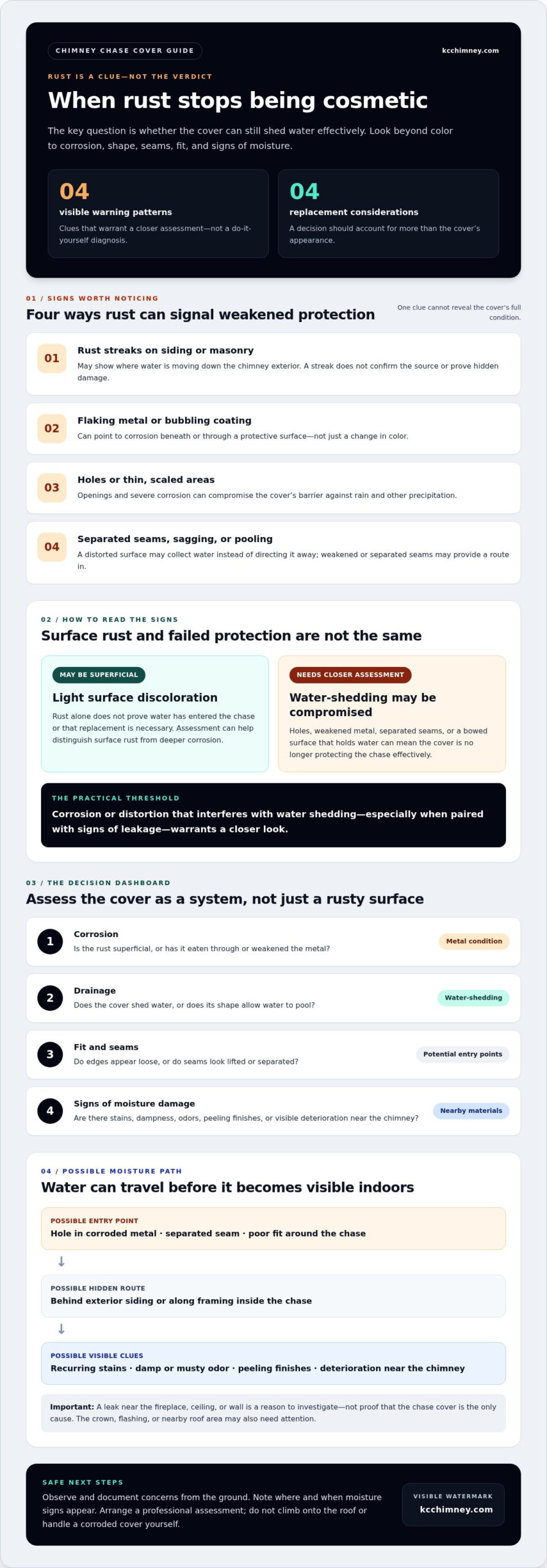
Rust alone doesn’t prove that water has entered the chase or that replacement is necessary. A small area of surface discoloration differs from corrosion that has eaten through the metal or distorted the cover. The key question behind when to replace a rusted chase cover Spring Hill is whether the cover can still shed water effectively. Holes, weakened metal, separated seams, or a bowed surface that holds water all warrant a closer assessment.
Use these clues as reasons to take a closer look, not as a do-it-yourself diagnosis:
- Orange streaks: Rust trails on siding or masonry may indicate that water is moving from the cover down the chimney exterior.
- Flaking metal or bubbling coating: These signs can point to corrosion beneath or through a protective surface.
- Holes or thin, scaled areas: Openings and severe corrosion can compromise the cover’s barrier against precipitation.
- Distorted seams or pooling: Seams that appear separated, or a cover that sags and collects water, may no longer direct water away as intended.
One clue can’t reveal the full condition. A rust trail shows where water may have travelled, but it doesn’t confirm the source or prove that hidden materials are damaged. Similarly, a view from the ground may not reveal the condition of the seams or underside. Staining or signs of leakage warrant an assessment. Whether the cover needs replacement depends on the extent of corrosion and its ability to protect the chase.
Which visible rust signs deserve attention?
Pay particular attention when rust appears alongside flaking, bubbling, holes, or seams that look lifted or separated. These signs suggest more than a change in color and may point to weakened protection. Rust streaks on the chimney’s siding or masonry also matter because they may trace water from above. No single stain or mark establishes whether the cover needs replacement, though. Its overall condition and water-shedding shape matter too.
What Spring Hill weather exposure can mean for a chase cover
Like other exterior components, a chase cover is exposed to rain, seasonal moisture, and temperature changes over time. Water that remains pooled on a distorted surface stays in contact with the metal longer and can contribute to corrosion. A cover that sheds water poorly may leave seams or weakened areas more vulnerable to leaks. These are general exposure concerns, not a claim about a specific Spring Hill weather pattern. A professional assessment can help determine whether rust is superficial or has compromised the cover’s protection.
For homeowners asking when to replace a rusted chase cover Spring Hill, appearance is only the starting point. The practical threshold is corrosion or distortion that interferes with water shedding, especially when paired with signs of leakage. An assessment helps distinguish early surface rust from a cover that can no longer do its job.
How a Corroded Chase Cover Can Let Moisture Into the Chimney
Corrosion becomes a concern when it weakens a chase cover’s ability to keep water out. A small rust mark may remain on the surface, but corrosion that creates an opening, weakens a seam, or changes the cover’s shape can give rain a way past the metal barrier. Moisture may then affect materials inside the framed chase before a homeowner notices an indoor stain.
Water doesn’t always appear directly beneath its entry point. It can move along framing or other surfaces inside the chase, then show up lower down or at a nearby ceiling or wall. Dampness, staining, or deterioration can follow, but none of these symptoms alone proves the chase cover is the source. For context on chimney safety and maintenance, the NFPA 211 Standard for Chimneys provides industry guidance. A professional assessment helps identify the condition of a specific chimney.
How water can move past a damaged cover
Holes in corroded metal, separated seams, or a poor fit around the chase can create entry points. Once water gets through, it may travel behind the exterior siding or along framing, staying out of sight until it reaches an interior surface. A leak near the fireplace or ceiling is a reason to investigate, not proof that the cover is the only cause.
Other parts of the chimney can also be involved in a leak. A crown, flashing, or nearby roof area may need attention, so focusing only on the first visible drip can lead to the wrong conclusion. An inspection should consider the cover and surrounding areas together. That broader view helps distinguish a cover-related problem from another route water may be taking into the home.
Clues that moisture may have reached surrounding materials
Watch for recurring interior stains, a damp or musty odor, peeling finishes, or visible deterioration near the chimney. Symptoms may appear below or away from where water entered, and they may become more noticeable after precipitation. Note where and when you see them. A compromised chase cover warrants an assessment for possible moisture intrusion, even if water damage isn’t yet visible indoors.
- Recurring stains: Note whether they return or spread after wet weather.
- Damp odors: Notice whether the smell is concentrated near the chimney or persists in a nearby room.
- Peeling or deteriorating finishes: Record the location and any visible change over time.
These clues help describe the problem, but they can’t establish how far moisture has travelled or which exterior component is responsible. Avoid opening walls or climbing onto the roof to trace a suspected leak yourself. A qualified chimney inspection can assess visible concerns and help determine whether the cover or another part of the chimney needs repair. For Spring Hill homeowners weighing when to replace a rusted chase cover Spring Hill, checking for moisture alongside the cover’s condition can clarify the next step.
Repair or Replace a Rusted Chase Cover? Compare the Signs
Rust doesn’t automatically mean a chase cover has failed. The decision depends on whether corrosion has damaged the metal, seams, or shape enough to affect the cover’s fit and ability to shed water. An assessment can help distinguish limited surface oxidation from deterioration that leaves the chimney chase exposed. Use the comparison below as a guide, not as a diagnosis from the ground.
| Visible condition | Likely assessment | Appropriate next step |
|---|---|---|
| Small, localized surface rust with no visible opening or distortion | Corrosion may be limited, but the cover’s overall condition still matters. | Arrange an assessment before deciding whether maintenance or replacement is appropriate. |
| Flaking metal or extensive rust scale | Corrosion may have reduced the cover’s strength or protective surface. | Have the affected area and surrounding metal assessed for deterioration. |
| Perforation, visible holes, or persistent water entry | The cover may no longer keep precipitation out reliably. | Discuss replacement as a protective option. |
| Loose edges, separated seams, or a distorted surface that holds water | The cover’s fit, joints, or drainage may be compromised. | Assess whether repair can restore reliable protection or replacement is needed. |
When limited corrosion may call for assessment rather than automatic replacement
Localized discoloration without holes, obvious warping, or failed seams may not call for immediate replacement. Still, surface appearance can’t show how much metal remains sound or whether less-visible areas have deteriorated. An assessment should consider the cover’s material, full condition, fit, and drainage. Clearing debris may help with a drainage concern, but maintenance cannot restore metal that corrosion has already eaten away.
A coating or patch shouldn’t be treated as a reliable fix without understanding the underlying condition. Whether repair is suitable depends on the extent and location of corrosion and whether the cover can continue to shed water. Avoid applying a product or attempting a patch based only on a view from the ground.
When replacement becomes the more protective option
Holes, extensive scale, failed joints, loose edges, or ongoing water entry are stronger signs that replacement may be the sounder choice. A replacement needs to fit the chase properly and direct water away from its edges. A new cover that fits poorly can leave gaps in protection. The assessment should weigh both corrosion severity and performance, not color alone.
Cosmetic rust changes a cover’s appearance; corrosion that opens, weakens, or distorts it can compromise water protection. For homeowners wondering when to replace a rusted chase cover Spring Hill, that distinction is central. A professional inspection can evaluate the cover as a whole and explain whether its condition supports continued maintenance or calls for focused chase cover replacement.
How to Get a Rusted Chase Cover Assessed Safely in Spring Hill
A ground-level view can help you spot warning signs, but it can’t confirm whether a chase cover is sound underneath or whether water has reached materials inside the chimney. Don’t climb onto the roof or touch a corroded cover. Record what you can see, then have a professional assess the cover and any related moisture concerns.
What homeowners can observe without climbing
From a safe spot on the ground, look for rust streaks, visible holes, bent edges, or staining on nearby siding or masonry. Indoors, note recurring leaks, ceiling marks, or damp odors near the chimney. These observations can help describe the concern, but they can’t show the full condition of the cover, its seams, or its fit.
Use this simple sequence to prepare for an assessment:
- Observe from the ground. Choose a safe vantage point and don’t step onto the roof or reach toward the cover.
- Document symptoms. Write down where you see staining or leaks, and note whether they appear or return after rain. If you can take a photo safely from the ground, keep it with your notes.
- Arrange an assessment. Share your observations so the technician knows what you’ve noticed and where it appears.
- Review the findings. Get a clear explanation of the cover’s condition, any moisture indicators, and the recommended next step.
A Kansas City chimney inspection can help homeowners understand how a professional review supports safer, more informed decisions. The key is to have the visible concern assessed without putting yourself at risk.
What a professional assessment should help establish
An assessment should consider corrosion, seams, cover fit, and whether the surface directs water away from the chase. It should also account for visible signs of moisture below, such as staining or recurring leaks. These findings help distinguish a cover that may need replacement from a broader chimney repair concern. A Kansas City chimney repair overview explains the wider repair context.
When a chimney inspection includes video equipment, it can help identify concerns in areas that aren’t readily visible. The assessment method depends on the concern being evaluated, so camera equipment doesn’t replace examining the cover’s fit and exterior condition. For homeowners asking when to replace a rusted chase cover Spring Hill, the useful result is a clear explanation of whether corrosion has compromised water protection and whether moisture may have affected surrounding materials.
If rust, staining, or a recurring leak has you concerned, a professional chimney inspection can help determine the cover’s condition and the appropriate next step.
Chase Cover Replacement in Spring Hill: Protect Your Home With a Clear Plan
Deciding when to replace a rusted chase cover Spring Hill homeowners can rely on takes more than spotting rust. An assessment should weigh how much corrosion is present, whether the cover still sheds water, and whether there are signs that moisture has reached the chimney or nearby materials. Those findings give you a clearer basis for choosing focused replacement or addressing a wider concern.
What a replacement plan should account for
A useful assessment looks at how the existing cover sits on the chase and whether its edges and seams remain secure. The chase dimensions matter to the replacement fit, while the cover’s shape and drainage help determine whether water flows away rather than collects or enters at an edge. Appearance is one clue, but a weathered cover may still function, and a cleaner-looking cover may have a problem at a seam or connection.
The technician should explain what was observed and how it affects protection. If corrosion has created openings, weakened joints, or interfered with drainage, replacement may be the more protective path. Any signs of moisture damage beyond the cover deserve attention too. Related chimney concerns may require separate assessment, so the plan should distinguish work on the cover from repairs to other affected areas.
How to move forward after spotting rust
Arrange an assessment when corrosion appears extensive, openings are visible, or leaks keep returning. You don’t need to decide on replacement based on a distant view or a single stain. Share what you’ve observed, including where water marks appear and whether they recur after rain. A clear review should connect those symptoms with the cover’s condition and explain the recommended next step in straightforward terms.
Best Chimney Services provides chimney inspections and chase cover replacement for homeowners in Spring Hill, Overland Park, Mission Hills, Stilwell, and Bucyrus. Certified technicians can assess the concern and explain whether the cover’s condition points to replacement or whether the findings suggest a broader chimney issue. An inspection can also help identify possible moisture concerns that aren’t obvious from outside. The aim is a sound decision based on the chimney’s condition, not a replacement based on rust alone.
If you’ve noticed significant corrosion or recurring leaks, Best Chimney Services can assess your chimney and explain the findings. A clear review can help you protect your home and plan the appropriate work with confidence.
Choose a Clear Next Step for Your Chimney
Uncertainty about when to replace a rusted chase cover Spring Hill homeowners are concerned about can make it tempting to wait for a more obvious leak or assume replacement is the only answer. A better next step is to turn what you’ve noticed into a clear decision: have the condition assessed, understand the findings, and choose work that addresses the actual concern.
You don’t need to diagnose the chimney from the ground or decide on a repair before you know what’s happening. A professional assessment can help you move forward with confidence, whether the right plan is replacement or attention to another part of the chimney. A measured response can help protect your home without guessing or rushing into unnecessary work.
Schedule a Spring Hill chase cover assessment with Best Chimney Services to get a clear path toward protecting your home. A thoughtful decision can bring greater peace of mind through the seasons ahead.
Frequently Asked Questions
Can I paint over a rusted chimney chase cover?
Paint may improve appearance or provide limited surface protection, but only if it suits the cover’s material and condition. It can’t replace metal lost to corrosion, reliably close holes, or correct a separated seam. Before applying a coating, have the cover assessed so you know whether it still sheds water effectively. Painting over a compromised area could hide a warning sign without fixing the underlying problem.
Does rust on a chase cover always mean it needs immediate replacement?
No. Rust by itself doesn’t show how deeply the metal has corroded or prove that immediate replacement is needed. Surface discoloration differs from flaking metal, perforations, failed seams, distortion, or leaks that keep returning. Those stronger signs deserve prompt attention, especially if moisture is appearing indoors. An assessment can help determine whether maintenance, repair, or replacement makes sense for the cover’s actual condition.
Can a chase cover be replaced without rebuilding the whole chimney?
Yes, a chase cover can be assessed as an individual chimney component, and its condition may call for replacement without rebuilding the entire chimney. The surrounding chase and any signs of moisture damage also need evaluation. Replacing the cover alone can’t be assumed to solve every leak or repair existing deterioration. The appropriate scope depends on inspection findings and the condition of other chimney components.
What should I do if water is leaking around my chimney after rain?
Note where the water appears, when you first notice it, and whether the leak returns after rain. Keep clear of roof access and arrange a chimney assessment, particularly if the leak recurs or spreads. Water can enter through different chimney components, so a ceiling stain or damp area can’t identify the source by itself. Evaluation helps clarify the likely path and whether repairs are needed.
Can I inspect a chimney chase cover from the roof myself?
Don’t climb onto the roof or handle a corroded cover yourself. Roof surfaces can be slippery, and damaged metal may have sharp or unstable edges. From the ground, you can safely note visible rust, bent edges, or staining, but that view won’t reveal every defect. Record what you observe and arrange a professional assessment for a closer evaluation without taking on unnecessary risk.
How can I tell whether a chimney leak comes from the chase cover?
Rust, openings, or failed seams may point to a chase-cover concern, but they don’t prove it’s the only source of a leak. Other chimney components or the nearby roof area may also allow water in. An inspection can evaluate the cover alongside other possible entry points and compare those findings with the leak location. For homeowners in Spring Hill, Overland Park, Mission Hills, Stilwell, and Bucyrus, an assessment can help guide the next repair step.