
Imagine sitting in your living room during a heavy Kansas City storm, only to hear the steady, rhythmic sound of water hitting your metal damper. For many local residents, water dripping in fireplace when it rains Mission Hills is a stressful reality that signals more than just a minor nuisance. You likely worry about the hidden structural damage occurring behind your walls or the persistent, musty odor of damp soot that lingers long after the clouds clear.
It’s a frustrating situation, but you don’t have to face the threat of expensive masonry reconstruction alone. This guide will help you identify the exact cause of your chimney leak and introduce the professional solutions required to protect your property. We’ll explore common culprits like failing crowns and damaged flashing, and explain how a Level 2 inspection, as recommended by the NFPA 211 standard, provides the clarity you need to restore your home’s integrity. From chimney cap installations to tuckpointing, you’ll gain a clear understanding of the repair process needed to keep your fireplace dry and durable for years to come.
Key Takeaways
- Learn to distinguish between a standard roof leak and a chimney system failure to ensure you address the root cause of the moisture.
- Understand why water dripping in fireplace when it rains Mission Hills is often a result of Kansas City’s freeze-thaw cycles damaging porous masonry.
- Discover the hidden risks of ignoring leaks, including the growth of mold and the steady deterioration of your chimney’s mortar joints.
- Find out why a Level 2 inspection using internal video cameras is the industry standard for identifying hidden cracks in a flue liner.
- Explore how targeted solutions like crown repair and chimney cap installation provide long-term protection for your home’s structural integrity.
Why is Water Dripping in My Fireplace? Understanding the Mechanics
Identifying the source of a leak requires a methodical approach. When you see water dripping in fireplace when it rains Mission Hills residents often suspect their shingles first. However, the chimney is a distinct architectural system that functions differently than your roof. While a roof leak usually manifests as a ceiling stain, a chimney leak focuses moisture directly into the firebox or behind the mantel. Understanding the basics of Chimney construction and function is the first step toward keeping your home dry.
Listen closely to the rhythm of the drip. A sharp, metallic “clink” suggests water is falling directly onto the steel throat damper. This sound usually points to a missing or damaged chimney cap. A muffled thud or the sight of damp masonry indicates that the bricks themselves are saturated. Mission Hills is known for its beautiful historic masonry, but these older bricks are often more porous than modern materials. They can absorb gallons of water during a typical Kansas City thunderstorm, leading to moisture seepage through the chimney walls.
Surface Water vs. Internal Condensation
In our humid local climate, moisture isn’t always from rain. High-efficiency gas appliances venting into an unlined masonry flue can create internal condensation. This liquid looks like a leak but actually stems from temperature imbalances. You can tell the difference by the smell. Damp soot produces a heavy, acrid odor that is unmistakable. If your living room smells like an old campfire every time it gets humid, you likely have a moisture problem inside the flue rather than a simple roof leak.
The Anatomy of a Water-Resistant Chimney
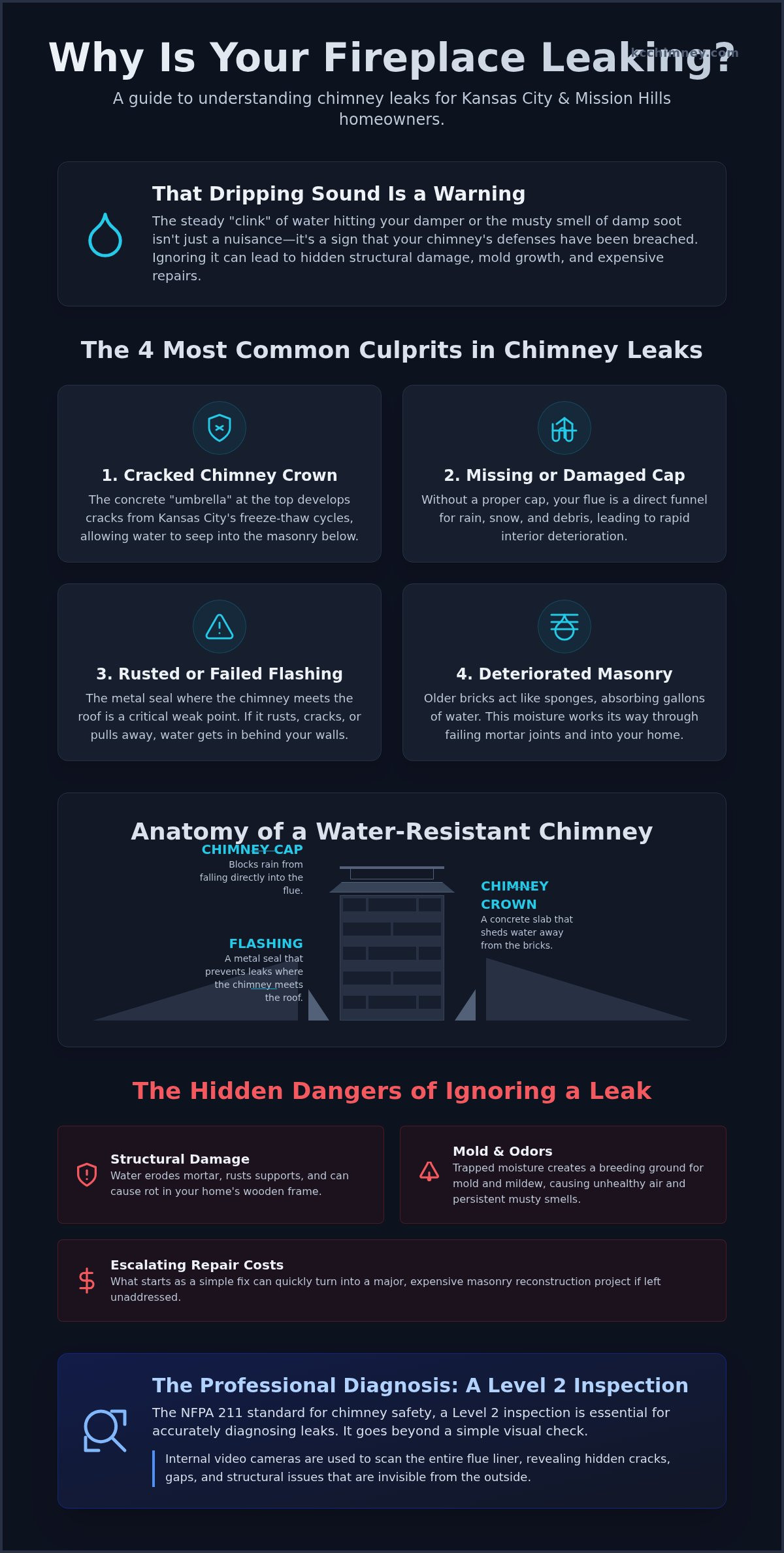
A healthy chimney uses a tiered defense strategy to divert Kansas City’s heavy rainfall. These components must work in unison to protect your masonry:
- The Chimney Cap: This serves as the roof of the flue, blocking rain from falling straight down the center of the chimney.
- The Chimney Crown: This concrete slab acts as an umbrella for the entire structure, shedding water away from the vertical brickwork.
- Flashing: This metal transition provides a watertight seal where the chimney meets the roofline.
In Mission Hills, the local freeze-thaw cycle frequently compromises these seals. When water enters small cracks and freezes, it expands and forces the gap wider. This cycle eventually destroys mortar joints and allows lateral water penetration. Even if your shingles are in perfect condition, a failing crown or cracked flashing will allow water to bypass your roof entirely.
The 4 Most Common Culprits in Mission Hills Chimney Leaks
Mission Hills homes often feature intricate masonry that requires specialized care. The local climate, characterized by intense Kansas City storms and rapid temperature swings, puts immense stress on these structures. If you’ve noticed water dripping in fireplace when it rains Mission Hills weather is likely exploiting one of four common failure points. Identifying these early can save you from the high costs of structural masonry rot.
Cracked or Deteriorated Chimney Crowns
A chimney crown is the masonry slab at the very top of your chimney. It’s designed to act as an umbrella, shedding water away from the vertical bricks. Over time, Kansas City’s freeze-thaw cycles cause hair-thin cracks to expand. When water enters these gaps and freezes, it exerts pressure that can eventually crumble the mortar. Following established chimney safety guidelines involves regular inspections to catch these cracks before they lead to interior rot. A professional crown repair often involves a high-performance sealant or a full rebuild if the damage has become structural.
Damaged or Missing Chimney Caps
Without a cap, your flue is essentially a vertical pipe open to the sky. While a cap blocks vertical rain, it also keeps out nesting birds and debris. In the more open areas around Johnson County, wind-driven rain can sometimes bypass small, standard caps. Upgrading to a full-coverage chimney cap installation protects the entire top surface, including the crown, providing a much higher level of protection against the elements.
Rusted Chase Covers and Flashing Failures
Many homes in our area utilize wood-framed chimneys topped with metal chase covers. If these covers are made of low-grade galvanized steel, they eventually rust through, allowing water to pool and leak into the wooden structure. Similarly, flashing is the metal seal where the chimney meets the roofline. These components fail for several reasons:
- Rust holes: Small pinholes in chase covers allow steady dripping.
- Poor drip edges: Water runs down the siding instead of away from the chimney.
- Dried sealant: Flashing requires properly layered metal, not just beads of caulk.
Treating these issues early prevents the need for major reconstruction. Waterproofing is a vital maintenance step for porous bricks, but it only works if the structural components are sound. If you suspect a leak, scheduling a Level 2 inspection is the best way to pinpoint which of these culprits is causing the trouble before the next big storm hits.
The Hidden Dangers of Ignoring a Leaky Chimney
Ignoring a leak is never just about dealing with a small puddle on the hearth. When water dripping in fireplace when it rains Mission Hills homeowners often face a cascade of structural failures that begin long before the first drop hits the floor. Moisture acts as the primary enemy of masonry. It penetrates the mortar joints, causing them to soften and eventually crumble. This decay necessitates tuckpointing, a precise process where we remove the failing mortar and replace it to restore the chimney’s structural integrity.
Beyond the brickwork, water wreaks havoc on the metal components of your fireplace system. Your throat damper, which regulates airflow, is particularly vulnerable to rust. A seized or rusted damper won’t seal properly, leading to significant heat loss in the winter and higher utility bills. If moisture reaches the firebox, it can damage refractory bricks or metal liners. These issues create serious safety hazards that can only be identified through professional diagnostics. Common signs of hidden chimney damage include:
- Rusted dampers that are difficult to open or close.
- White, powdery salt stains on the exterior brick, known as efflorescence.
- Musty, acrid odors coming from the firebox after a storm.
Masonry Spalling: When Bricks Start to Crumble
Kansas City’s climate is notoriously hard on clay bricks. When water is absorbed into the porous surface of a brick and then freezes, it expands with incredible force. This internal pressure causes the face of the brick to pop off, a phenomenon known as spalling. If you find flaked or chipped brick pieces on your lawn or patio, your chimney is actively deteriorating. Without intervention, spalling spreads through the structure. This eventually requires a full chimney rebuild instead of a simple, localized repair.
Interior Damage: Beyond the Fireplace
The damage rarely stays confined to the chimney stack. Water often travels along the exterior of the flue and seeps into your attic or living spaces. You might notice yellow or brown stains on your ceiling or peeling wallpaper near the chimney breast. This moisture also rots the wood framing and ruins attic insulation, which can lead to mold and mildew growth inside your walls. The cost difference between a minor crown repair and full structural restoration is immense.
A leaky chimney is also a significant liability during a home sale. According to NFPA 211 inspection standards, a Level 2 inspection is required for all real estate transactions. If an inspector finds evidence of water damage or structural rot, it can stall a closing or force a massive price reduction. Addressing water dripping in fireplace when it rains Mission Hills now ensures your home remains a safe, valuable asset for years to come.
Professional Diagnostics: Why a Level 2 Inspection is Essential
A simple visual check from your living room or lawn rarely reveals the true source of a leak. When you experience water dripping in fireplace when it rains Mission Hills homes require a more rigorous diagnostic approach. A Level 2 inspection is the industry benchmark for identifying moisture entry. This process involves a comprehensive evaluation of all accessible portions of the chimney, including the internal flue and the structural components located in your attic or crawlspace.
The most critical tool in our diagnostic kit is advanced video inspection technology. We use specialized internal cameras to scan every inch of your flue liner. This allows us to detect hairline cracks or shifted tiles that are impossible to see from the top or bottom. These hidden defects often serve as the primary conduits for moisture. Identifying them early prevents the slow rot of your home’s framing and ensures your fireplace remains safe for use.
A thorough inspection also requires a roof-level evaluation. Our technicians examine the integrity of the crown, the condition of the flashing, and the porosity of the masonry at close range. To prepare for your appointment, please clear any ash from the firebox and ensure we have easy access to the fireplace and attic. We also ask that you refrain from burning a fire for at least 24 hours prior to our arrival to ensure the system is cool and safe to inspect.
The Limitations of DIY Troubleshooting
Many homeowners attempt to locate leaks using a garden hose test. We strongly advise against this. Spraying large volumes of water onto a chimney can overwhelm failing seals and cause significant interior damage. The high-pitched roofs common in Mission Hills also present a serious fall risk for those without professional safety equipment. Our team uses non-invasive moisture meters to identify masonry saturation without risking your safety or your home’s structural health.
What to Expect in a Repair Quote
A professional repair quote should be direct and detailed. It typically breaks down the labor required for masonry work, such as tuckpointing or crown repair, and the cost of installing weather-resistant accessories like chimney caps or chase covers. We prioritize materials specifically designed to withstand the Kansas City freeze-thaw cycle. You can learn more about our restoration standards in our guide to Expert Chimney Repair in Kansas City. If you’re ready to stop the damage, schedule your Level 2 inspection today to get a clear, professional path forward.
Best Chimney Services: Protecting Mission Hills Homes Since 2012
Since 2012, Best Chimney Services has served as a dedicated guardian for the unique architectural styles found throughout Johnson County. We understand that water dripping in fireplace when it rains Mission Hills residents often encounter is more than a simple household chore. It’s a complex structural issue that requires a deep understanding of local building materials and weather patterns. Our team brings over a decade of experience to every project, ensuring your home remains a safe and dry sanctuary.
Our certified technicians approach every leak with a methodical, safety-first mindset. We don’t believe in high-pressure sales or temporary patches. Instead, we use advanced video technology to demystify your chimney’s condition, providing clear education before we ever pick up a trowel. We take immense pride in our mess-free guarantee. When we enter your home, we treat it with the same respect we show our own, utilizing professional drop cloths and dust control systems to ensure your living room remains pristine. This commitment to thoroughness and integrity is why we’ve become a fixture in the Mission Hills community.
Specialized Repair Services for Leaky Chimneys
Stopping a leak requires a blend of traditional masonry skills and modern safety standards. Our specialists focus on precision tuckpointing and crown restoration to address the porous nature of older brickwork. We also offer custom chimney cap installation and chase cover replacement to provide a durable shield against vertical and wind-driven rain. If you’re concerned about the hidden state of your flue, a comprehensive Expert Chimney Inspection in Kansas City is the most reliable way to ensure your family’s safety and peace of mind.
Contact Our Local Experts Today
We’re proud to serve Mission Hills, Overland Park, and the surrounding KC metro area. Our reputation is built on long-term customer relationships and a no-nonsense approach to home maintenance. We don’t just fix chimneys; we invest in the longevity and durability of your property. Every project we handle is backed by our commitment to high industry standards and rigorous safety protocols.
Don’t wait for the next heavy Kansas City storm to discover a problem. Identifying the source of water dripping in fireplace when it rains Mission Hills is the first step toward protecting your home from expensive structural rot. Contact us today to schedule a thorough chimney evaluation with a team that truly understands the specific needs of your neighborhood. We’re ready to provide the professional remedies you need to keep your hearth healthy and your home dry.
Secure Your Hearth Against the Next Storm
Protecting your home from water damage starts with understanding that your chimney is a specialized system. We’ve explored how porous masonry and failing crowns allow moisture to bypass your roof entirely. If you’ve noticed water dripping in fireplace when it rains Mission Hills weather is likely testing the limits of your chimney’s defenses. Ignoring these early warning signs often leads to expensive structural rot or hidden mold growth inside your walls.
A professional Level 2 inspection is the most reliable way to identify exactly where your system is failing. Best Chimney Services has been serving Johnson County since 2012. Our certified technicians specialize in masonry restoration and multi-level safety inspections, providing the technical expertise needed to preserve the integrity of your property. We don’t just patch problems; we provide long-term solutions that ensure your fireplace remains a safe, dry feature of your home.
Don’t wait for the next heavy rainfall to cause more damage. Schedule Your Mission Hills Chimney Inspection Today and gain the peace of mind that comes with a truly waterproofed home. We look forward to helping you protect your investment for years to come.
Frequently Asked Questions
Why is water dripping in my fireplace only during heavy rain?
Heavy rain often exploits entry points that remain dry during light drizzles. When you notice water dripping in fireplace when it rains Mission Hills storms often push moisture through porous masonry or failing flashing seals. The volume of water during a Kansas City downpour can also overwhelm a cracked chimney crown. If the leak only appears during intense weather, it usually suggests that the chimney’s umbrella components are no longer watertight.
Can a leaky chimney cause a fire hazard?
A leaky chimney definitely presents a fire hazard over time. Moisture causes the flue liner to crack or flake, which allows heat and sparks to reach the combustible wooden framing of your home. Additionally, water can mix with creosote to create a corrosive paste that eats through metal relining pipes. Ensuring the structural integrity of your flue is a critical safety standard for any wood-burning system in Johnson County.
How much does it typically cost to fix a chimney leak in Mission Hills?
Repair costs depend entirely on the source of the leak and the extent of the masonry damage. A minor chimney cap installation is a different investment than a structural crown repair or extensive tuckpointing. Because Mission Hills homes feature diverse architectural styles, we provide customized quotes following a professional evaluation. Scheduling a Level 2 inspection is the most accurate way to determine the specific repairs needed to protect your home’s value.
Does homeowners insurance cover chimney leaks caused by rain?
Insurance coverage usually depends on the cause of the leak. Policies often cover sudden and accidental damage, such as a chimney hit by a falling tree limb or damaged by a severe hail storm. However, water entry caused by a lack of maintenance, like a cracked crown or old flashing, is rarely covered. You should check with your provider to see if they cover structural repairs for your specific Mission Hills property.
What is the white powdery stuff on my chimney bricks after it rains?
The white powder is known as efflorescence. It forms when water soaks into the brick, dissolves natural salts, and then evaporates, leaving the salt deposits behind on the surface. While the powder itself isn’t dangerous, it’s a major warning sign that your masonry is absorbing excessive moisture. If you see this on your chimney in Overland Park, it means your bricks are becoming porous and require a professional waterproofing treatment.
How do I know if I need a new chimney cap or a crown repair?
A missing or damaged chimney cap usually allows water to fall straight down into the firebox, often hitting the metal damper. In contrast, a failing crown typically causes water to seep into the attic or behind the walls, leading to ceiling stains. Our technicians use advanced video technology to pinpoint the exact entry point. This ensures we recommend the correct fix, whether it’s a simple accessory replacement or a more involved masonry restoration.
Can I use my fireplace if I notice a water leak?
We recommend that you stop using your fireplace immediately if you notice a leak. Water dripping in fireplace when it rains Mission Hills can hide serious internal damage to the flue liner. Operating a fireplace with a cracked liner or a rusted damper can lead to dangerous chimney fires or carbon monoxide entry. Safety is our primary concern, so it’s best to have a certified technician inspect the system before you light another fire.
How long does a professional chimney leak inspection take?
A professional Level 2 inspection generally takes about an hour to 90 minutes to complete. During this time, our technicians conduct a thorough video scan of the internal flue and evaluate all exterior masonry components. We serve homeowners throughout the KC metro, including Mission Hills and Stilwell, providing a comprehensive safety report at the end of the visit. This methodical process ensures we identify every potential hazard before recommending a professional repair.