
Could mortar that looks strong actually put an older chimney’s bricks at risk? For homeowners researching tuckpointing for historic homes Stilwell, mortar compatibility matters more than a cosmetic match. Replacement mortar that is too hard for older brick may put added stress on the brick, so a tidy-looking repair is not enough.
It’s understandable to feel unsure when you notice crumbling joints, cracks, or gaps. Not every sign of deterioration calls for the same repair. A sound recommendation starts with a close look at the chimney and its existing mortar, including their condition and composition. That assessment helps determine whether tuckpointing is appropriate and which materials and methods may suit the masonry.
This guide explains what to look for during an inspection, how to compare proposals beyond the bottom line, and what a clear written scope should cover. You’ll also learn how to arrange a professional evaluation in Stilwell and ask informed questions about protecting your home’s brickwork. Best Chimney Services is a locally owned Kansas City metro business serving Stilwell, with chimney tuckpointing among its services.
Key Takeaways
- Learn which chimney mortar warning signs to document and why photos alone can’t determine the right repair.
- Compare proposals side by side to spot differences in work areas, materials, preparation, and cleanup.
- For tuckpointing for historic homes Stilwell, ask providers to explain how their proposed mortar suits the existing brick and joints.
- Plan your next steps in order, from recording concerns to reviewing the written scope and confirming timing with the provider.
- Use a short checklist to assess local coverage, the inspection approach, material explanations, and scope before choosing a chimney tuckpointing provider.
Why historic-home tuckpointing in Stilwell needs more than a cosmetic mortar patch
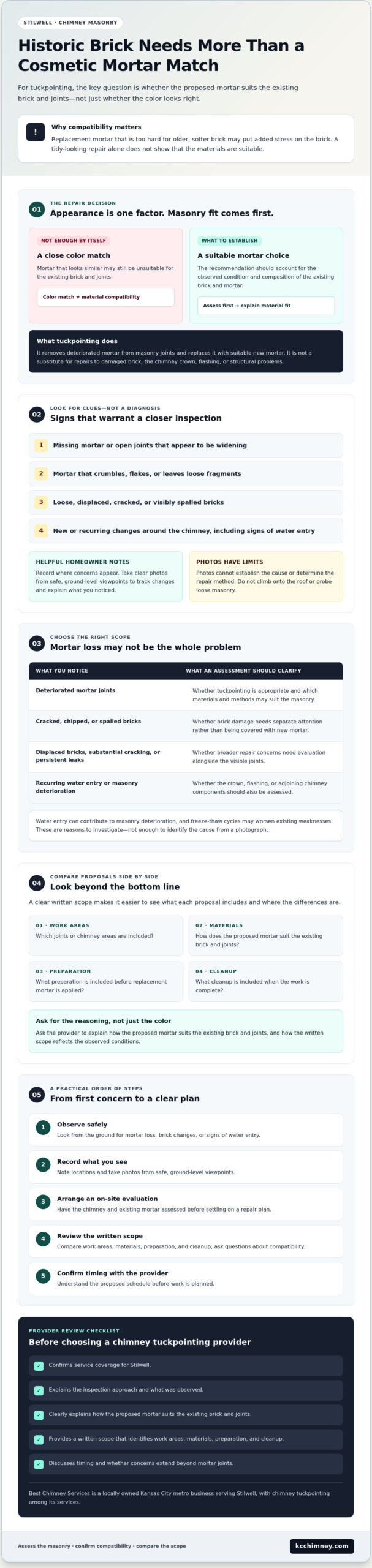
A neat line of fresh mortar can make a chimney look cared for, but appearance alone doesn’t show whether the repair suits the masonry. Tuckpointing removes deteriorated mortar from masonry joints and replaces it with suitable new mortar. The goal is sound joints and compatible materials, not simply a fresh-looking surface. For background on the terminology and its distinction from repointing, see What is tuckpointing.
Stilwell is within Best Chimney Services’ service area, but a home’s location doesn’t establish its age or whether it has an official historic designation. An on-site assessment helps identify whether the concern involves mortar, damaged brick, moisture, or broader chimney deterioration. That distinction matters because the right repair depends on what is actually failing.
What tuckpointing repairs, and what it doesn’t
Tuckpointing addresses deteriorated mortar joints. Cracked, chipped, or spalled bricks are different problems and may need separate attention rather than being covered with new mortar. Tuckpointing also isn’t a substitute for crown, flashing, or structural repairs. If bricks are loose, damage extends beyond the joints, or you notice signs of water entry, ask for a professional assessment before settling on a repair plan.
Why older brickwork needs a compatible repair
Mortar hardness and composition should suit the existing masonry. Replacement mortar that is too hard for softer brick may limit the brick’s ability to accommodate movement and put added stress on its surface. Matching color is only one part of the decision. Mortar that looks similar may still be unsuitable.
Don’t assume the home’s construction period reveals the original mortar recipe. Previous repairs may have changed the materials already in place. A careful evaluation considers the existing brick and mortar before recommending materials. For homeowners considering tuckpointing for historic homes Stilwell, that compatibility check is a practical way to protect the chimney rather than prioritizing a quick cosmetic match. The proposed work should reflect observed conditions, not assumptions based on age or appearance.
How to assess chimney mortar damage on a historic Stilwell home
Start by observing the chimney from a safe place on the ground. Look for changes in the mortar and brick, but treat what you see as clues, not a diagnosis. An open joint may indicate mortar loss, while a shifted brick or recurring damp area can point to an issue that needs a broader evaluation.
Signs that justify a closer masonry inspection
- Missing mortar or open joints that appear to be widening
- Mortar that crumbles, flakes, or leaves loose fragments
- Loose, displaced, cracked, or visibly spalled bricks
- New or recurring changes around the chimney, including signs of water entry
Note where each concern appears and take clear photographs from safe, ground-level viewpoints. Photos can help you track changes and explain what you’ve noticed, but they can’t establish the cause or determine the repair method. Don’t climb onto the roof or probe loose masonry. For more background on careful evaluation and mortar-joint work, consult the National Park Service’s guidance on assessing chimney mortar damage.
When tuckpointing may not be the only repair
Recurring mortar loss may warrant an assessment, but displaced bricks, substantial cracking, or persistent leaks deserve broader attention. Water entering the chimney can contribute to masonry deterioration, and freeze-thaw cycles may worsen existing weaknesses. These factors are reasons to investigate, not enough to identify the cause from a photograph.
A professional may need to assess the crown, flashing, and adjoining chimney components along with the visible joints. This helps distinguish mortar deterioration from another source of damage and clarify whether tuckpointing alone is suitable. For wider repair considerations, read this Kansas City chimney repair guide. Homeowners considering tuckpointing for historic homes Stilwell can use an on-site chimney assessment to understand the condition and appropriate scope before work is planned.
In short: Visible mortar loss warrants assessment, but an inspection determines the repair scope.
How to compare historic-home tuckpointing proposals in Stilwell
Two proposals can describe the same chimney problem but recommend different work. Compare the reasoning and written scope, not just the finished appearance or a short service description. For tuckpointing for historic homes Stilwell, a useful proposal connects the inspection findings to the selected materials and specific repair areas.
Make a simple side-by-side table, with one column for each provider and rows for:
- Inspection findings: What conditions were observed, and where?
- Work areas: Which chimney faces, sections, and mortar joints are included?
- Materials: What mortar is proposed, and why is it suitable for the existing brick and joints?
- Preparation and cleanup: How will deteriorated mortar be removed, and what cleanup is included?
- Related concerns: How does the proposal address possible water entry or adjacent damage, and what work is excluded?
A proposal with few details makes it difficult to tell whether providers assessed the same conditions. The National Park Service explains the importance of appropriate materials and methods in its NPS guidelines for repointing historic masonry. Use that as background when asking a provider to explain a recommendation, not as a substitute for assessing your chimney.
Questions to ask before approving the work
Ask which mortar characteristics the provider considered and how they’ll determine compatibility with the existing masonry. Ask how deteriorated mortar will be removed while protecting surrounding brick. You can also ask who will perform the work, what inspection is included, and whether you’ll receive documentation of findings and completed work. If a provider describes historic-masonry experience, ask what relevant projects or references they can share.
What a clear written scope should explain
Before approving a proposal, check that it identifies the chimney areas and joints included, describes the proposed mortar and preparation, and explains access needs and cleanup responsibilities. It should also state limitations, clarify how unexpected conditions will be handled, and list separate repairs that aren’t included. For example, if the inspection identifies a concern beyond the specified mortar joints, the scope should say whether that work is excluded and how the next step will be discussed.
Choose the proposal that clearly explains the observed condition, repair method, and limitations. If those details aren’t in writing, ask for clarification before work begins.
What Stilwell homeowners should plan for before tuckpointing begins
Good preparation starts before anyone sets up at the chimney. For tuckpointing for historic homes Stilwell, use this sequence to keep decisions clear:
- Document the concerns you’ve noticed, including where they appear and whether they’re changing.
- Arrange an on-site chimney assessment so the condition and potential repair needs can be reviewed.
- Read the written scope and clarify included work, materials, access, and cleanup.
- Once you understand the plan, confirm scheduling and ask how weather may affect the work date.
Exterior mortar work depends on weather and site conditions, so ask the provider about timing rather than assuming a standard project duration. The work area, chimney access, and conditions found during assessment can all affect the plan. Tell the provider about landscaping, pets, and nearby surfaces that may need consideration before work begins.
Questions about timing, access, and site protection
Confirm where technicians need access and whether roof access is anticipated. Ask how the work area and nearby brick, landscaping, and surfaces will be protected, and what you should move or secure beforehand. Also ask how weather-related schedule changes will be communicated. Clear answers help you prepare without making assumptions about access or project length.
When to request a broader chimney inspection
If mortar concerns appear alongside leaks, displaced bricks, or other visible structural changes, ask whether the chimney needs a broader inspection. Findings can help distinguish tuckpointing from other chimney repair needs and identify whether related components should be evaluated. For more context, see this Kansas City chimney inspection guide.
Best Chimney Services serves Stilwell and offers chimney tuckpointing. The appropriate scope depends on an on-site assessment. To discuss a chimney tuckpointing evaluation, contact Best Chimney Services.
Choosing a local tuckpointing provider for your historic Stilwell home
A careful choice starts with clear answers, not a promise based on appearance alone. For tuckpointing for historic homes Stilwell, use this checklist to compare providers:
- Local coverage: Confirm the provider serves Stilwell and handles chimney tuckpointing.
- Inspection: Ask what areas and conditions will be assessed before work is recommended.
- Material explanation: Ask why the proposed mortar is suitable for the existing brick and joints.
- Written scope: Request a description of the work areas, materials, preparation, exclusions, and cleanup.
Best Chimney Services is a locally owned Kansas City metro provider serving Stilwell, with tuckpointing offered as a chimney repair service. Its work is chimney-focused, so homeowners should confirm that the requested work fits that scope. The company also serves homeowners in Overland Park, Mission Hills, Bucyrus, and Spring Hill. A home’s age or appearance alone doesn’t establish its construction details or historic designation, and a repair plan shouldn’t rely on assumptions about either.
What to expect from a chimney-focused evaluation
Before an assessment, share what you know about the chimney, including previous repairs, areas where mortar is deteriorating, and any changes or leaks you’ve noticed. The recommendation should follow observed conditions rather than focus only on making the surface look uniform. Ask the provider to separate the proposed tuckpointing from any additional repair recommendations so you can see what each item addresses and what the written scope includes.
A practical next step for Stilwell homeowners
Contact Best Chimney Services to discuss chimney tuckpointing in Stilwell and request an evaluation of the specific concerns you’ve observed. Ask for a written description of the proposed work and clarification of any materials or repairs you don’t understand. That gives you a practical basis for reviewing the recommendation and deciding how to care for your chimney, without assuming every visible flaw is the same problem.
Take the next step toward a well-planned chimney repair
For tuckpointing for historic homes Stilwell, a sound decision starts with an assessment, not a cosmetic match. Look for a proposal that explains why the mortar suits the existing masonry, identifies the exact work areas, and clearly separates tuckpointing from any additional repairs. A written scope helps you understand what’s planned before scheduling begins.
Best Chimney Services is a locally owned Kansas City metro business founded in 2012. It serves Stilwell and lists tuckpointing among its chimney services. The appropriate repair scope depends on the chimney’s observed condition, so share the signs you’ve noticed and ask for a clear explanation of the recommended work.
Contact Best Chimney Services to discuss chimney tuckpointing in Stilwell and request an evaluation. With careful assessment and a clear plan, you can take a measured step toward protecting your home’s chimney.
Frequently Asked Questions
How do I know if a historic home in Stilwell needs tuckpointing?
Missing, crumbling, or open mortar joints can signal that a chimney needs closer attention, but they don’t prove tuckpointing is the only repair needed. For tuckpointing for historic homes Stilwell, document what you see from a safe location, noting where the mortar is deteriorating and whether the condition changes. Then request a professional assessment of the chimney and surrounding masonry to help identify the cause and appropriate repair scope.
Can the wrong mortar damage historic brick?
Yes, mortar that doesn’t suit the existing masonry can contribute to stress or damage. Brick and mortar characteristics vary, so a replacement material shouldn’t be declared suitable without assessing the chimney. Ask the contractor what they’ll evaluate, how they’ll judge compatibility, and how the proposed material will be documented in the written scope. A clear explanation is more useful than choosing mortar based on color or appearance alone.
How is tuckpointing different from repointing?
The terms are often used similarly in everyday repair discussions, though some trade usage distinguishes a decorative finish called tuckpointing from replacing mortar in joints, known as repointing. Because terminology can vary, focus on what the proposal actually includes. Check which joints are covered, how deteriorated mortar will be removed, what replacement material is proposed, and how the work will be completed rather than relying on the service label alone.
How long does tuckpointing take on a chimney?
There isn’t one reliable duration for every chimney tuckpointing project. Timing depends on the repair area, access, weather, and conditions found during assessment. Ask the provider for an expected schedule based on the specific chimney, what factors could change it, and how weather delays or unexpected masonry damage will be handled. A project-specific estimate is more useful than a standard timeframe that may not reflect your home or site conditions.
Can tuckpointing fix a leaking chimney?
Tuckpointing may address failed mortar as one possible path for water entry, but it won’t necessarily stop a leak caused by another chimney component. Water can also enter through problems involving flashing, the crown, a cap, or other areas. Ask for an inspection to identify the likely source, and request that recommended tuckpointing and any additional repairs be described separately in writing. That way, you can understand what each proposed repair is intended to address.
What should a tuckpointing estimate for a historic home include?
A clear written estimate should identify the observed conditions and chimney areas included, proposed mortar, preparation steps, access needs, cleanup responsibilities, and exclusions. Ask how the material is expected to suit the existing masonry and how the provider will handle additional damage discovered during the work. Estimates can differ in scope, so compare what each one actually covers rather than assuming every proposal includes the same inspection, preparation, or related repairs.
Does Best Chimney Services offer tuckpointing in Stilwell?
Yes. Best Chimney Services lists tuckpointing among its chimney services and serves Stilwell within the Kansas City metro area. The locally owned business also serves nearby communities including Overland Park, Mission Hills, Bucyrus, and Spring Hill. Describe the chimney’s condition and ask about an evaluation to confirm whether the service fits your concern and what work may be appropriate. The repair scope depends on an on-site assessment.