
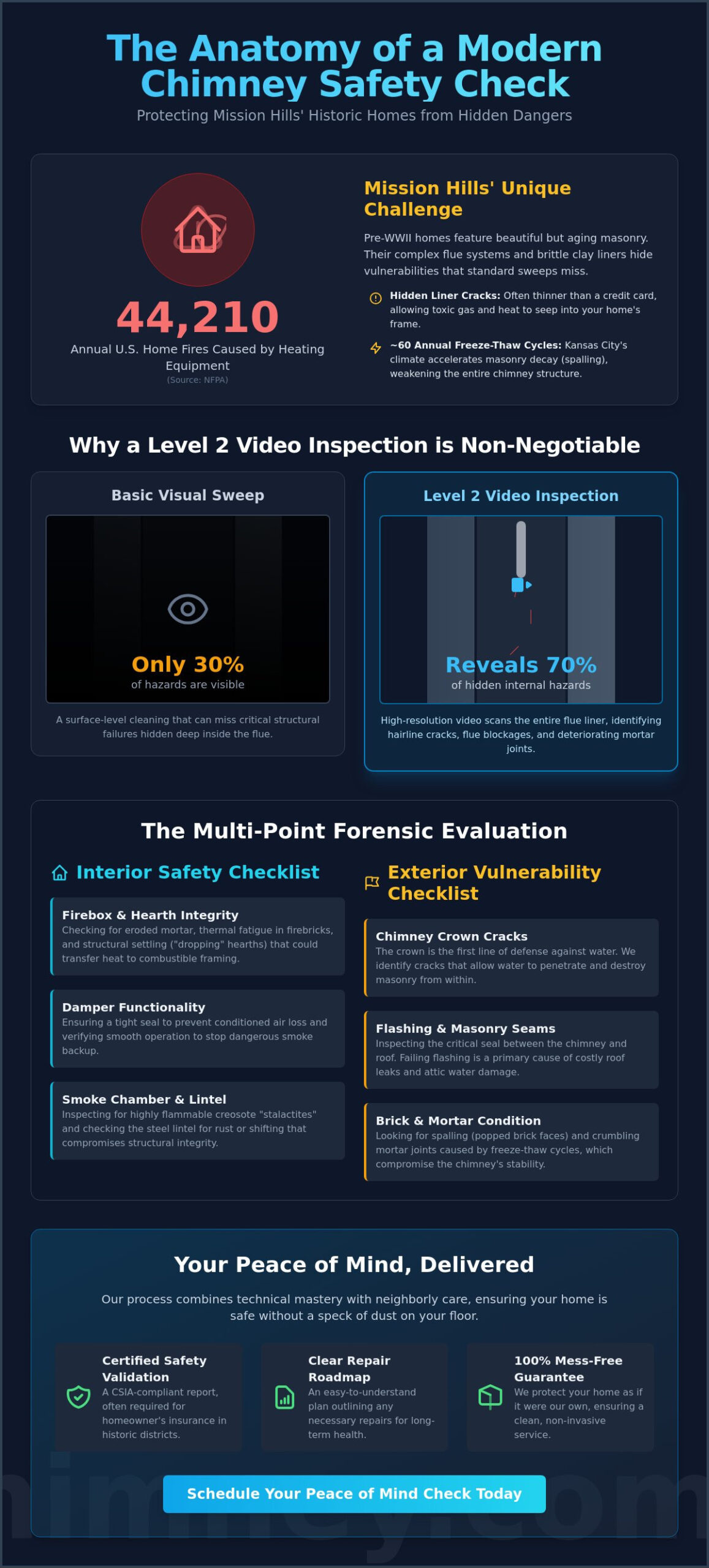
In 2026, heating equipment remains the second leading cause of home fires in the United States, accounting for an average of 44,210 annual structure fires according to the National Fire Protection Association. For families in Mission Hills, where historic masonry is a point of pride, these statistics underscore why a peace of mind chimney check Mission Hills is more than just a chore. You want to enjoy your fireplace without the lingering fear of creosote fires or carbon monoxide leaks. It’s frustrating when you’re caught between the need for safety and the dread of a messy service technician tracking soot through your home.
A professional inspection addresses these concerns by combining technical mastery with neighborly care. We understand that your home is an investment that requires precise, non-invasive solutions to maintain its integrity. This article explores the exact steps of a modern safety inspection, including the high-resolution video technology used in Level 2 scans and the specific NFPA 211 standards we follow. You’ll learn how to secure a certified safety validation and a clear repair roadmap without a single speck of dust ever hitting your living room floor.
Key Takeaways
- Understand why the pre-WWII masonry unique to Mission Hills requires specialized inspection techniques to detect hidden structural vulnerabilities in aging clay liners.
- Discover how a comprehensive peace of mind chimney check Mission Hills uses Level 2 video technology to identify the 70% of internal hazards that basic visual sweeps often overlook.
- Identify critical exterior vulnerabilities, such as cracked chimney crowns and failing flashing, that can lead to costly water damage if left unaddressed.
- Master the interior safety essentials, including firebox integrity and damper functionality, to ensure your fireplace vents dangerous gases correctly and efficiently.
- Learn what to expect from a professional, mess-free safety validation that provides a clear roadmap for your chimney’s long-term health.
Why Mission Hills Homes Require a Specialized Chimney Check
Mission Hills is defined by its architectural heritage. Many homes in this community were constructed before 1945, a period when masonry was an art form rather than a standardized process. These historic structures often feature complex flue configurations that modern building codes no longer permit. While these chimneys are beautiful, they face unique challenges. Over decades, the clay liners inside these systems become brittle. Even minor settling in a home’s foundation can cause hairline cracks to form. Because these cracks are often thinner than a credit card, they remain invisible to a homeowner looking up from the hearth. However, these small gaps allow heat and toxic gases to seep into the home’s framing, creating a high risk for bypass fires.
The Risks of Historic Flue Systems
A standard sweeping brush is designed to remove creosote, not to diagnose structural failure. In a historic Mission Hills home, a surface-level cleaning isn’t enough to guarantee safety. This is why a peace of mind chimney check Mission Hills is essential. It moves beyond the mechanical act of cleaning to provide a comprehensive safety validation. Understanding the basics of chimney construction and safety helps homeowners realize that the venting system is a complex engine that requires regular calibration. Kansas City’s climate adds another layer of stress. Our region experiences roughly 60 freeze-thaw cycles every year. This constant expansion and contraction of water inside masonry pores causes spalling, where brick faces pop off and mortar joints crumble, compromising the entire structure.
The Peace of Mind Standard
We define our safety standard as a multi-point forensic evaluation. While a sweep focuses on the debris, our peace of mind chimney check Mission Hills focuses on the integrity of the system. We verify that every component, from the hearth to the crown, meets the rigorous standards set by the Chimney Safety Institute of America (CSIA). This professional certification isn’t just a badge; it’s often a requirement for homeowner insurance policies in high-value historic districts. By treating your chimney as a critical safety barrier rather than just a stack of bricks, we act as the guardians of your family hearth. This thoroughness ensures that your home remains a sanctuary, protected from the hidden dangers of aging masonry.
The Interior Safety Checklist: Flue and Firebox Integrity
While the exterior of your chimney provides curb appeal, the interior components do the heavy lifting of keeping your home safe. A peace of mind chimney check Mission Hills begins at the hearth, where we examine the firebox for signs of thermal fatigue. Firebricks are designed to withstand temperatures exceeding 2,000 degrees Fahrenheit, but over time, the mortar joints between them can erode. When these joints fail, heat transfers directly to the combustible wooden studs behind the masonry. We also verify the damper’s functionality. A damper that doesn’t seal tightly allows expensive conditioned air to escape, while a stuck damper can lead to dangerous smoke backup in your living room.
The Firebox and Hearth Audit
In many Mission Hills homes, the transition between the firebox and the hearth is a common point of failure. We look for gaps or “dropping” hearths that indicate structural settling. If you have gas logs or wood fireplace inserts, we evaluate the connections and the integrity of the unit itself. We also pay close attention to the lintel, which is the heavy steel support above the fireplace opening. If the lintel is rusted or improperly seated, it can cause the entire face of the fireplace to crack or shift. Ensuring these components are sound is a critical part of an annual chimney inspection as recommended by federal safety guidelines.
Moving upward, we evaluate the smoke chamber. This transition zone between the firebox and the flue is often overlooked. We check for “stalactites,” which are heavy accumulations of soot and creosote that hang from the ceiling of the chamber. These deposits are highly flammable and are a leading cause of chimney fires. Identifying the specific stage of creosote buildup is vital for determining the correct cleaning method. You can learn more about these risks in our guide: What Is Creosote? A KC Homeowner’s Safety Guide.
Creosote and Flue Obstructions
Mission Hills is famous for its lush, wooded lots, but those beautiful trees are home to birds and squirrels that love to nest in chimneys. We often find debris or abandoned nests that completely block the flue, forcing carbon monoxide back into the house. Beyond physical blockages, we analyze the chemistry of the creosote present. Stage 1 is a light, sooty powder, but Stage 3 is a thick, glazed coating that acts like fuel for a blast furnace. Even a layer as thin as an eighth of an inch is enough to ignite. If you suspect your system is overdue for a check, scheduling a professional safety review is the best way to protect your family before the first cold snap arrives.
The Exterior Checklist: Protecting Your Masonry from the Elements
The exterior of your chimney serves as the primary shield against Mission Hills’ unpredictable weather. While the interior flue handles the heat, the outer masonry must withstand driving rain, heavy snow, and ice. A comprehensive peace of mind chimney check Mission Hills includes a meticulous review of the exterior structure to identify vulnerabilities before they lead to structural failure. We start with the chimney cap. A secure cap prevents local wildlife from nesting and keeps moisture from entering the flue directly. We also examine the flashing, which is the metal seal at the roofline. If the flashing is loose or rusted, water will bypass the shingles and rot your attic rafters.
The Critical Role of the Chimney Crown
A cracked chimney crown is the leading cause of expensive masonry restoration in our area. The crown is the concrete slab that covers the top of the chimney stack. It’s designed to shed water away from the bricks. However, when small cracks appear, they trigger the “Sponge Effect.” Because bricks are naturally porous, they soak up water that leaks through the crown. During winter, this trapped moisture freezes and expands, causing the brick faces to pop off in a process called spalling. Regular inspections by a certified chimney sweep can catch these crown cracks early. Applying a professional sealant or performing a crown repair can save thousands in future reconstruction costs.
Tuckpointing and Mortar Health
Mortar joints are the glue of your chimney, but they have a shorter lifespan than the bricks themselves. You can check your mortar health by performing a simple “scratch test” with a screwdriver. If the mortar crumbles or feels soft like sand, it has reached the end of its functional life. In Mission Hills, where historic aesthetics are vital, we prioritize specialized mortar matching. Using the wrong type of modern mortar on older bricks can actually cause the bricks to crack because the new material is too rigid. Tuckpointing, the process of removing old mortar and replacing it with fresh material, restores the chimney’s integrity and prevents water from penetrating the core.
A peace of mind chimney check Mission Hills ensures that these exterior details are never overlooked. By identifying failing mortar or a deteriorating crown today, you preserve the architectural beauty of your home while avoiding the stress of emergency repairs. Our goal is to keep your masonry as durable as the day it was built. If you notice white, powdery stains on your bricks, that’s efflorescence, a clear sign that water is already moving through your masonry. Addressing these signs early keeps your family safe and your home’s value secure.
Why a Level 2 Video Inspection is Non-Negotiable
A standard visual inspection is like looking at a car’s engine without popping the hood. You might see the surface, but you’ll miss the internal cracks that lead to disaster. Industry data shows that visual-only checks miss approximately 70% of internal chimney hazards. This is why a peace of mind chimney check Mission Hills frequently necessitates a Level 2 video inspection. By using specialized camera equipment, we can view the entire length of the flue, identifying structural flaws that would otherwise remain hidden until a fire occurs. In 2026, high-resolution video technology is the gold standard for verifying that a chimney is truly safe for use.
The Tech Behind the Peace of Mind
The process involves a 360-degree internal camera scan. We lower a high-resolution lens down the flue, transmitting a live feed to a monitor on the ground. This allows us to spot shifted flue tiles, which are common in older Mission Hills properties. Even a gap of half an inch between tiles can allow heat to reach your home’s framing. For a deeper dive into how we protect your home, read about our Expert Chimney Inspection in Kansas City. We document every inch, ensuring that your liner is continuous and free from dangerous obstructions or cracks.
When to Upgrade to Level 2
The National Fire Protection Association (NFPA) 211 standard mandates a Level 2 inspection during any property transfer or sale. If you’re buying or selling a home in Mission Hills, this inspection is a non-negotiable part of the closing process. It’s also required after any chimney fire, seismic event, or when you change fuel types, such as switching from wood to a gas fireplace insert. While some might view it as an extra step, a Level 2 check is the ultimate insurance for your hearth. It provides a certified safety validation that protects your liability and your family.
Homeowners in 2026 value transparency and documentation. We provide a comprehensive “Peace of Mind” report that includes digital photos and video footage of your flue’s interior. You won’t have to take our word for it; you’ll see the state of your chimney for yourself. This level of detail eliminates guesswork and ensures repairs are only recommended when truly necessary. If you’re ready to see what’s really happening inside your flue, schedule your Level 2 safety validation today. This proactive approach ensures your fireplace remains a source of comfort rather than a hidden risk.
Choosing Best Chimney Services for Your Mission Hills Home
A peace of mind chimney check Mission Hills is only as effective as the technician performing it. Since 2012, we’ve served as the neighbors you can trust to protect your family’s safety. We understand that a Mission Hills home isn’t just a building; it’s a piece of history that requires specialized care. Our technicians aren’t just laborers. They’re certified experts who act as the guardians of your family hearth. We combine technical mastery with a polite, no-nonsense approach that respects your time and your property. Whether you need a simple sweep or a complex fireplace insert installation, we provide solutions that last for decades.
One of the biggest concerns homeowners have is the mess often associated with chimney work. We’ve solved this with our “No-Mess Guarantee.” Our team arrives with specialized drop cloths and high-powered industrial vacuums to ensure that not a single speck of soot touches your high-end flooring or furniture. We treat your living room with the same care we’d give our own homes. This commitment to cleanliness is a cornerstone of our professional standards. We want you to feel relaxed and reassured from the moment we walk through the door until the job is complete.
The Best Chimney Services Difference
We take pride in our deep local knowledge of Johnson County building codes and the specific requirements for historic masonry. Unlike larger corporate chains, we offer honest, no-pressure safety recommendations. We’ll never try to sell you a repair you don’t need. Our goal is to build a long-term relationship based on trust and reliability. When you book a peace of mind chimney check Mission Hills with us, you’re getting a transparent assessment of your home’s venting health. We provide clear, written reports that explain exactly what we found and why any recommended repairs are necessary for your safety.
Ready for a Safer Season?
As we move into the 2026 burning season, don’t leave your home’s safety to chance. We offer flat-rate inspection fees to ensure complete transparency before we even start the work. You’ll know exactly what to expect without any hidden costs or surprise surcharges. Taking a proactive approach now prevents emergency repairs during the coldest months of the year. It’s the simplest way to ensure your fireplace remains a source of warmth and comfort for your family. Schedule Your Peace of Mind Chimney Check today and let our experts give your hearth the professional validation it deserves.
Secure Your Hearth for the 2026 Season
Protecting the architectural integrity of your home requires more than just a quick sweep. As we’ve detailed, the unique pre-WWII masonry found throughout our community demands the technical precision of a Level 2 video scan to identify hazards that visual checks miss 70% of the time. By addressing small cracks in the chimney crown and monitoring your firebox today, you avoid the high costs of structural restoration later. A peace of mind chimney check Mission Hills ensures that your venting system meets the highest safety standards while preserving the beauty of your historic property.
Since 2012, our Certified Chimney Technicians have built a 5-star local reputation by treating every home with the care it deserves. Our No-Mess Guarantee means your living room remains pristine while we perform our forensic safety audit. Don’t wait for the first freeze of the year to discover a hidden flue obstruction or a failing mortar joint. Take the proactive step to safeguard your family and your investment. Schedule Your Peace of Mind Chimney Check in Mission Hills today. We’re ready to help you enjoy a warm, worry-free season by the fire.
Frequently Asked Questions
Is a chimney inspection required every year in Mission Hills?
Yes, you should schedule a professional review every year. The National Fire Protection Association (NFPA) 211 standard recommends an annual inspection to identify creosote buildup or structural damage before they lead to a home fire. In Mission Hills, our local climate and aging masonry make this yearly validation essential for your home’s long-term safety and insurance compliance. It’s the best way to catch small issues before they become expensive repairs.
How much does a peace of mind chimney check cost?
Costs vary based on the depth of the evaluation. A basic Level 1 visual inspection typically ranges from $100 to $250, while a Level 2 peace of mind chimney check Mission Hills with video technology usually costs between $200 and $1,000. If you combine a Level 1 inspection with a professional cleaning, the average cost is approximately $399 as of May 2026. These rates ensure a thorough safety audit of your venting system.
What is the difference between a Level 1 and Level 2 inspection?
A Level 1 inspection is a visual check of accessible components, while Level 2 includes a high-resolution video scan of the entire flue. Level 2 is the industry standard for home sales, fuel type changes, or after a chimney fire. It identifies hidden cracks and gaps that are invisible during a standard visual walk-through. This more detailed process provides a much higher level of safety validation for older homes.
Can I use my fireplace if I see small cracks in the firebox?
You shouldn’t use your fireplace if you notice any cracks in the firebrick or mortar. Even small gaps allow heat to bypass the safety barrier and reach the combustible wooden studs behind your masonry. This creates a significant fire risk for your family. We recommend a peace of mind chimney check Mission Hills to determine if the firebox requires repair or if the structural integrity of the hearth is compromised.
How long does a professional chimney check take?
A standard professional inspection typically takes between 45 and 90 minutes to complete. This timeframe allows our technicians to perform a thorough exterior check, an interior firebox audit, and a video scan of the flue. If a cleaning is required, it might add another 30 to 60 minutes to the service. We work efficiently to respect your time while ensuring every safety checkpoint is meticulously verified according to national standards.
Will the chimney cleaning process make a mess in my home?
No, the process won’t leave any soot or dust in your living room. We use specialized drop cloths and high-powered industrial vacuums to maintain a “No-Mess Guarantee.” Our technicians are trained to seal the fireplace opening during the cleaning process. This ensures that every particle of debris is contained and removed from your home without affecting your furniture, rugs, or expensive flooring. You’ll never know we were there.
Does my gas fireplace need a chimney check too?
Yes, gas fireplaces require regular safety checks to ensure proper venting and prevent carbon monoxide exposure. While they don’t produce heavy creosote, gas systems can still develop blockages from bird nests or debris. State residential codes mandate carbon monoxide alarms in homes with fuel-burning appliances. An annual check verifies that your gas fireplace is venting correctly and that all safety sensors are functioning to protect your household from toxic gases.
What happens if the inspection reveals a safety hazard?
If we identify a hazard, we provide you with a detailed written report and digital evidence of the issue. We’ll explain the severity of the problem and provide a clear, flat-rate quote for the necessary repairs. Our goal is to demystify the technical issues so you can make an informed decision about restoring your chimney’s safety. We prioritize long-term customer relationships over high-pressure sales tactics, focusing on honest, reliable solutions.