
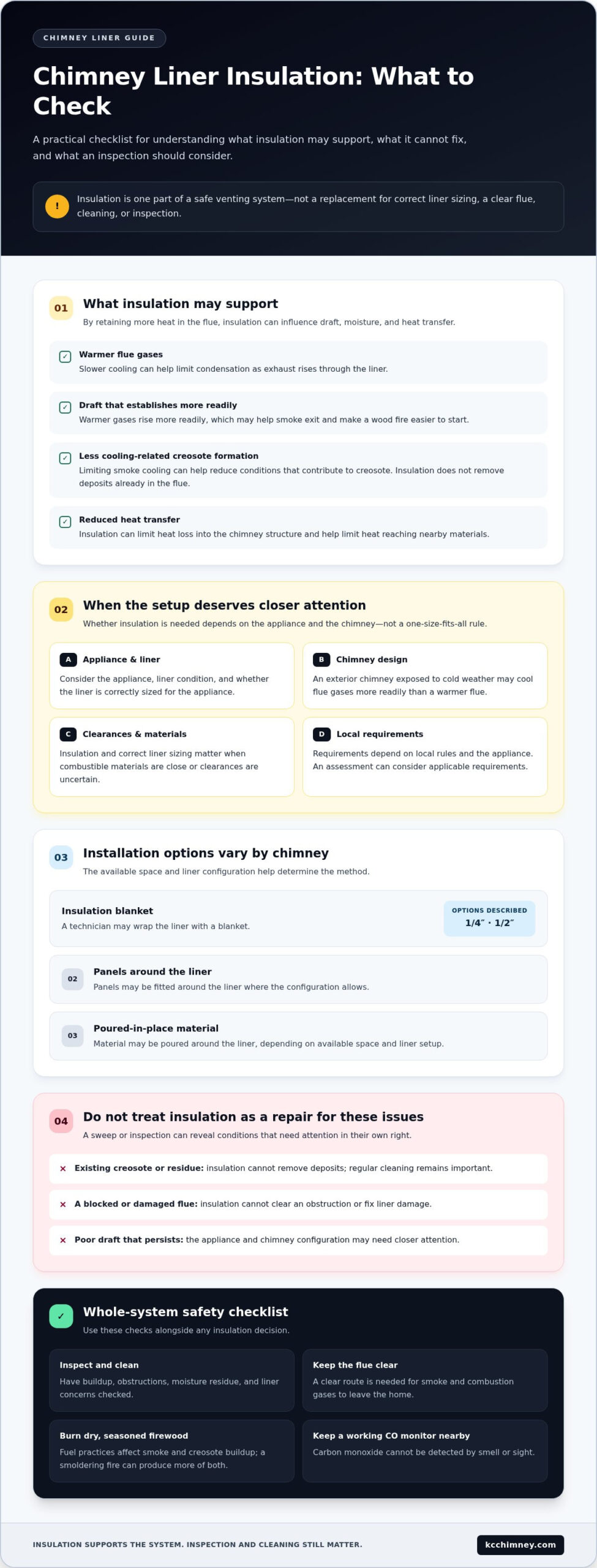
Insulating a chimney liner can support safer wood burning by keeping flue gases warmer, helping improve draft, and reducing heat transfer to nearby chimney materials. Spring Hill chimney liner insulation benefits can also include less cooling of smoke inside the flue, which may help limit condensation and creosote buildup. Insulation can reduce heat loss through exposed chimney sections, but it does not replace proper liner sizing, sweeping, or inspection.
It makes sense to want a fireplace that draws well without sending excess heat into the chimney structure. This article explains how liner insulation works, when it can matter for a Spring Hill home, and how it may support draft, safety, and thermal efficiency. You’ll also learn what an inspection can reveal about the liner and chimney before insulation is considered.
Key Takeaways
- Warmer flue gases can mean less condensation and creosote buildup, helping reduce a key source of chimney risk.
- Insulation may support steadier draft, making fires easier to start and helping wood burn more thoroughly.
- Reducing heat transfer can help protect chimney masonry and limit heat reaching roof and attic spaces.
- Insulation and correct liner sizing matter when combustible materials are close to the flue or clearances are uncertain.
- A chimney sweep can identify creosote, obstructions, or liner concerns that affect whether insulation is part of the right solution.
Benefits of Chimney Liner Insulation – Do I Need to Insulate my Liner?
Insulation helps flue gases stay warmer as they travel through the chimney, reducing cooling that can encourage moisture and creosote. Whether it is needed depends on the appliance, liner condition, chimney design, and local requirements in Spring Hill.
Flue Condensation and Moisture
Flue condensation forms when water vapor in exhaust gases cools against the liner and changes into liquid. The U.S. Environmental Protection Agency notes that a cooler-than-normal chimney allows condensation to occur more readily. Insulation slows heat loss from the flue, helping exhaust gases remain warmer as they rise.
Moisture can mix with soot and creosote, leaving residue and odors inside the chimney. Exhaust from oil- or gas-burning furnaces can also produce corrosive condensation. In wood-burning systems, insulation helps limit smoke cooling and condensation along the flue. A sweep can identify moisture residue during cleaning.
Creosote Buildup and Fire Hazards
Creosote is a flammable deposit formed when smoke cools and condenses on chimney surfaces. Insulation can reduce the cooling that contributes to creosote formation, but it cannot remove deposits already inside the flue. Regular cleaning remains important because accumulated creosote can ignite and cause a chimney fire.
How does chimney liner insulation improve draft and reduce creosote? Warmer flue gases rise more readily, supporting draft and helping smoke exit instead of condensing. Burning dry, seasoned firewood can also reduce smoke. Sound fuel practices, suitable insulation, and regular cleaning address different contributors to creosote buildup.
Insulated and Uninsulated Liners
An insulated liner retains more heat within the flue, while an uninsulated liner loses heat more readily to surrounding masonry. This can affect condensation, draft, and creosote formation, particularly in an exterior chimney exposed to cold weather. Insulation is not automatically required for every setup; the appliance and chimney details matter.
How is insulation installed around a chimney liner? A technician may wrap the liner with an insulation blanket, fit panels around it, or use poured-in-place material around the liner. Blanket insulation options include 1/4-inch and 1/2-inch thicknesses. The chosen method depends on the chimney’s available space and liner configuration.
Risks of Uninsulated Liners
An uninsulated liner can cool flue gases faster, creating conditions that support condensation and creosote buildup. Deposits can create a fire hazard, while corrosive moisture may contribute to liner deterioration. An inspection can identify residue, damage, or other conditions that affect whether insulation or a different repair is appropriate.
What are the risks of an uninsulated chimney liner? The main concerns are increased condensation, creosote buildup, weaker draft, and possible damage from corrosive byproducts. What chimney and fire codes apply to liner insulation in Spring Hill? Requirements depend on local rules and the appliance. In many U.S. areas, a liner is required when installing or replacing heating appliances.
What factors affect chimney liner insulation installation cost? The liner type, chimney size, and chimney condition are key considerations. A professional assessment evaluates these details to determine the work involved. Reducing heat loss and limiting condensation are practical Spring Hill chimney liner insulation benefits homeowners may consider when assessing their chimney system.
Wood-burning appliance safety and draft performance
A wood-burning fireplace needs a clear route for smoke and combustion gases to leave the home. Insulating its liner can help keep flue gases warmer, support draft, and reduce heat loss into the chimney structure.
Cold Flue Air and Draft
Cold air in a flue can slow the upward movement of smoke and combustion gases. Because cold air is heavier than warm air, it can contribute to weak draft and smoke entering the room.
Insulation helps the liner retain heat, supporting the temperature difference that moves gases upward. For example, a cold exterior chimney may take longer to establish draft than a warmer flue. Persistent smoke spillage calls for attention to the chimney and appliance, not just changes to how a fire is lit.
Draft, Heating Efficiency, and Safety
Draft is the flow that carries exhaust from an appliance through the chimney and outdoors. A properly insulated liner can help draft establish more readily, making a wood fire easier to start and helping the wood burn more thoroughly.
Does chimney liner insulation improve heating efficiency or safety? It can support both by helping maintain draft and limiting heat transfer from the liner. Correct liner sizing and a clear flue still matter, since insulation cannot fix an obstruction or damaged liner.
With stronger draft, less smoke may linger in the firebox, and combustion can use more of each log. That can reduce unburned fuel left behind, though the result also depends on using dry, seasoned firewood and operating the appliance properly. A smoldering fire can produce more smoke and buildup even with an insulated liner.
Safety depends on the whole venting system. A liner carries combustion byproducts outdoors and separates hot gases from chimney walls. Insulation can limit heat transfer around the liner, but it does not replace inspection, cleaning, or sound installation.
Keep a working carbon monoxide monitor near the fireplace. It alerts occupants to carbon monoxide, which cannot be detected by smell or sight. A chimney sweep can also check for buildup, obstructions, and liner damage that could interfere with venting.
If draft remains poor after the flue is warm and clear, the appliance and chimney configuration need closer attention. The liner diameter must suit the appliance, while bends, blockages, and chimney condition can affect exhaust flow. A wood insert, for example, needs a liner that matches its exhaust outlet.
For Spring Hill homeowners noticing smoke entering the room or difficulty starting a fire, chimney sweeping can help identify buildup or obstructions affecting draft. Addressing those conditions alongside suitable liner insulation supports safer, more reliable fireplace operation.
Reduced heat transfer to masonry, roofs, and attics
Chimney liner insulation slows heat transfer from the flue into surrounding masonry. This can matter especially where a chimney passes through an attic or extends above the roofline.
How Insulation Limits Heat Transfer
Flue gases carry heat through the liner as a fireplace operates. Insulation around the liner forms a thermal barrier, reducing direct heat transfer to brick, tile, or nearby spaces. A stainless steel liner, for example, can carry combustion gases while surrounding insulation helps limit heat loss to the chimney structure.
This does not mean the chimney stays cool. The liner still gets hot, and its installation must suit the appliance and chimney. Insulation helps manage how quickly heat passes outward. That distinction matters in an attic, where framing and other building materials may be near the chimney route.
Chimney sections above the roofline face outdoor temperatures and can lose heat faster than sections protected inside a home. Insulating the liner can help keep the exposed flue warmer, supporting steadier exhaust flow and reducing cooling inside the chimney.
Condensation, Odors, and Soot
As smoke cools, water vapor and other combustion products can condense on chimney surfaces. Insulation helps retain heat in the flue, reducing conditions that encourage condensation. When moisture combines with creosote and soot, the residue can produce strong odors inside the home.
For example, an exterior chimney may cool faster than one enclosed within the house. A warmer liner can help limit smoke products condensing along its interior. It may also reduce soot residue in the firebox, but insulation does not remove existing deposits or replace proper cleaning.
Cold air in a flue can slow smoke and combustion gases, sometimes contributing to smoke entering the room. Insulation helps the chimney retain warmth and supports upward flow as a fire gets established. Persistent draft trouble still calls for attention to the liner, appliance, and chimney condition.
What Homeowners Should Consider
Heat transfer depends on the whole chimney arrangement, not insulation alone. The liner’s fit, chimney construction, appliance, and surrounding clearances all affect how heat moves. For example, a liner passing through an attic is near different materials than one running inside a masonry chimney.
Insulation materials also occupy space around the liner. Blanket-wrap insulation can add approximately 1.5 inches to the liner’s overall dimensions, so the available clearance and chimney configuration matter before installation. Proper sizing helps the insulated liner fit without compromising the venting path.
Reduced heat transfer is among the practical Spring Hill chimney liner insulation benefits, especially for roofline and attic sections exposed to cold weather. The aim is to retain useful warmth in the flue while limiting heat transfer into masonry and nearby spaces. A sound liner and correctly fitted insulation work together as one venting system.
Preventing heat transfer to combustible materials
A chimney liner separates hot combustion gases from the chimney structure, while insulation helps limit heat moving outward. This matters wherever a flue runs near wood framing, drywall, or plaster. For example, a chimney passing through an attic may have combustible materials close to its exterior. Proper installation helps protect these materials from excessive heat exposure.
The liner and its insulation work as parts of one system. The liner contains exhaust, and insulation around it slows heat transfer toward nearby surfaces. The liner still gets hot during use. Insulation helps manage how heat moves through the chimney assembly, including where masonry surrounds the flue and where the chimney passes through concealed spaces.
Clearance is a key consideration. If the space between a liner and combustible materials cannot be determined, insulating the liner is advised. An inspection can assess the chimney’s construction and identify nearby materials, such as attic joists or roof framing. These details help establish whether the arrangement provides suitable separation and whether insulation is appropriate.
Insulation also affects the liner’s outside dimensions. Blanket-wrap material adds approximately 1.5 inches to the overall dimensions of a chimney liner, so available space inside the chimney must accommodate it. A narrow flue or an irregular masonry passage may affect which installation method fits. Proper sizing protects the venting path while allowing the insulation to surround the liner as intended.
Before insulation is installed, the liner and chimney should be inspected for cracks, corrosion, or deterioration. Damage can affect how well the liner contains combustion gases, and insulation does not repair a damaged liner. For instance, a corroded section near an attic passage needs attention as a liner issue, not simply an added layer of insulation.
Installation should account for the appliance, liner configuration, surrounding masonry, and nearby combustible materials. Depending on the chimney, insulation can be wrapped around the liner, fitted as panels, or applied as a poured-in-place material. These methods take up different amounts of space, so a trained chimney technician assesses the chimney before selecting an approach.
After installation, maintain the flue so soot and creosote do not interfere with safe operation. A chimney sweep can inspect the liner and remove deposits during cleaning. In Spring Hill homes, this measured approach connects the insulation decision to the actual chimney layout rather than treating every fireplace and attic passage as identical.
A properly installed chimney liner creates a barrier between flue gases and chimney walls, helping limit heat transfer to combustible materials, reduce chimney-fire risk, and support fireplace efficiency.
Thermal efficiency and heat loss
Chimney liner insulation helps retain warmth inside the flue instead of allowing heat to pass as readily into surrounding materials. In Spring Hill, this can be especially relevant for chimney sections extending above the roofline, where outdoor exposure encourages faster cooling. Insulation supports thermal efficiency by helping the flue hold heat as exhaust moves outdoors.
Retained warmth serves a purpose: hotter flue gases can support the upward flow needed to vent an appliance. A wood fireplace, for example, needs enough draft to carry smoke through the chimney. Insulation can help reduce heat loss as the flue warms and draft develops. It does not create heat for the living room or establish a set level of household energy savings.
Distinguish heat retained in the flue from heat delivered into the home. A chimney carries combustion gases outside, so heat escaping through that route is not available for room heating. Insulation helps limit heat transfer from the liner to masonry and can reduce cooling in exposed chimney sections. The practical effect depends on the appliance, liner fit, and chimney layout.
A furnace connected to a chimney also relies on a suitable venting path. Insulation can help keep exhaust gases warmer as they travel through the flue, which may reduce cooling and condensation. The right solution depends on the furnace and chimney system: the liner must suit the appliance and carry its exhaust appropriately. Insulation alone will not fix an unsuitable liner or blocked passage.
Material and space matter during installation. A blanket-wrap insulation layer adds approximately 1.5 inches to the overall dimensions of a chimney liner. That added size can affect fit inside an existing chimney, particularly where the passage narrows or changes shape. A technician assesses the liner route, chimney dimensions, and appliance before choosing insulation that fits the installation.
Insulation also needs to complement a sound chimney exterior. A damaged chase cover, for instance, can let water into the chimney, while liner insulation addresses heat retention around the flue. These are separate concerns, so identifying the source of moisture or heat loss helps determine which repair is relevant.
Spring Hill chimney liner insulation benefits include helping an exposed flue retain warmth and supporting efficient venting, not promising a specific reduction in heating bills. If your chimney liner needs assessment or replacement as part of improving the venting system, explore chimney relining for a solution suited to the chimney and appliance.
Best Chimney Services: Chimney Sweeping
Best Chimney Services provides Chimney Sweeping to help homeowners address soot, creosote buildup, and possible flue obstructions. A sweep is a practical next step when smoke enters the room, a fire drafts poorly, or residue is visible around the fireplace. Cleaning also provides an opportunity to identify conditions that may affect the liner and its insulation.
If an inspection finds a damaged or unsuitable liner, Chimney Relining can address the venting system itself. Sweeping and relining meet different needs: one removes deposits, while the other replaces or improves the liner. The right work depends on the chimney’s condition and the appliance it serves.
For help with chimney cleaning or liner concerns, contact Best Chimney Services or visit kcchimney.com.
Plan the Right Next Step for Your Chimney
A useful next step is to connect your fireplace’s performance with the condition of its venting system. Note changes such as smoke entering the room, difficulty maintaining a fire, or visible residue, then share those observations during a professional chimney assessment. They help focus attention on the parts of the system that may need cleaning, repair, or a different liner solution.
The Spring Hill chimney liner insulation benefits that matter most depend on how your appliance and chimney work together. Best Chimney Services helps homeowners address chimney concerns through Chimney Sweeping and Chimney Relining. The company also offers Gas Fireplace Inserts for homeowners considering a different fireplace setup.
For a practical next step, contact Best Chimney Services to discuss your chimney and the issue you’re noticing. Contact Best Chimney Services to start the conversation and move toward a fireplace system that suits your home.
Frequently Asked Questions
What are the benefits of insulating a chimney liner?
Insulating a chimney liner can help a fireplace vent more effectively and reduce heat escaping into the chimney structure. The practical benefit is a venting system better suited to the appliance and the home’s layout. For example, an exterior chimney exposed to cold weather may need a different assessment than a flue enclosed within the house. The right insulation choice depends on the liner, appliance, and available space.
When is chimney liner insulation required by code?
Whether insulation is required depends on local requirements and the appliance installation. In many areas of the United States, a chimney liner is required when installing or replacing heating appliances, but insulation is not automatically required in every case. Spring Hill homeowners, along with residents of Overland Park, Mission Hills, Stilwell, and Bucyrus, should account for local rules and the specific chimney configuration before work begins.
What types of chimney liner insulation are available?
Common options include insulation blankets wrapped around a liner, poured-in-place material, and panels fitted around it. A blanket uses alkaline earth silicate insulation; poured-in-place insulation can use vermiculite and Portland cement, particularly where a blanket will not fit. Panels offer another way to surround the liner. The chimney’s shape and available clearance help determine which method suits the installation.
What chimney and fire codes apply to liner insulation in Spring Hill?
Requirements depend on local rules and the appliance; many U.S. areas require a liner when installing or replacing a heating appliance, so check local requirements before work begins. The page also states that UL 1777 requires a total blanket insulation thickness of 1/2 inch.