
Imagine clearing out the ash from your fireplace on a crisp Stilwell morning only to find thin, reddish flakes of clay mixed in with the soot. It’s a small discovery that often leads to a heavy realization; your home’s primary defense against heat and toxic gases might be crumbling from the inside out. Understanding the signs your chimney liner needs replacing Stilwell homeowners should watch for is the first step in protecting your family from the invisible threats of chimney fires and carbon monoxide leaks. You shouldn’t have to feel anxious every time you light a fire.
At Best Chimney Services, we know you value the safety and integrity of your Stilwell home above all else. We’ll help you identify the critical red flags of chimney liner failure so you can act before a small crack turns into a dangerous hazard. This guide provides a clear checklist of physical symptoms to monitor, explains why our local freeze-thaw cycles are so hard on masonry, and shows how modern video inspections provide the peace of mind you deserve. By learning what to look for, you can make informed decisions about your chimney’s health and ensure your hearth remains a safe centerpiece for your home.
Key Takeaways
- Learn to identify “shaling” and other physical symptoms that signal your flue’s interior is deteriorating.
- Discover how Stilwell’s unique freeze-thaw cycles and high humidity levels put extra stress on your chimney’s structural integrity.
- Recognize the critical signs your chimney liner needs replacing Stilwell homeowners must act on to prevent carbon monoxide risks and chimney fires.
- Understand why modern stainless steel relining is the industry standard for durability and safety compared to traditional clay.
- See how professional Level 2 inspections using high-resolution video technology uncover hidden damage that a standard sweep might miss.
What Is a Chimney Liner and Why Does It Fail?
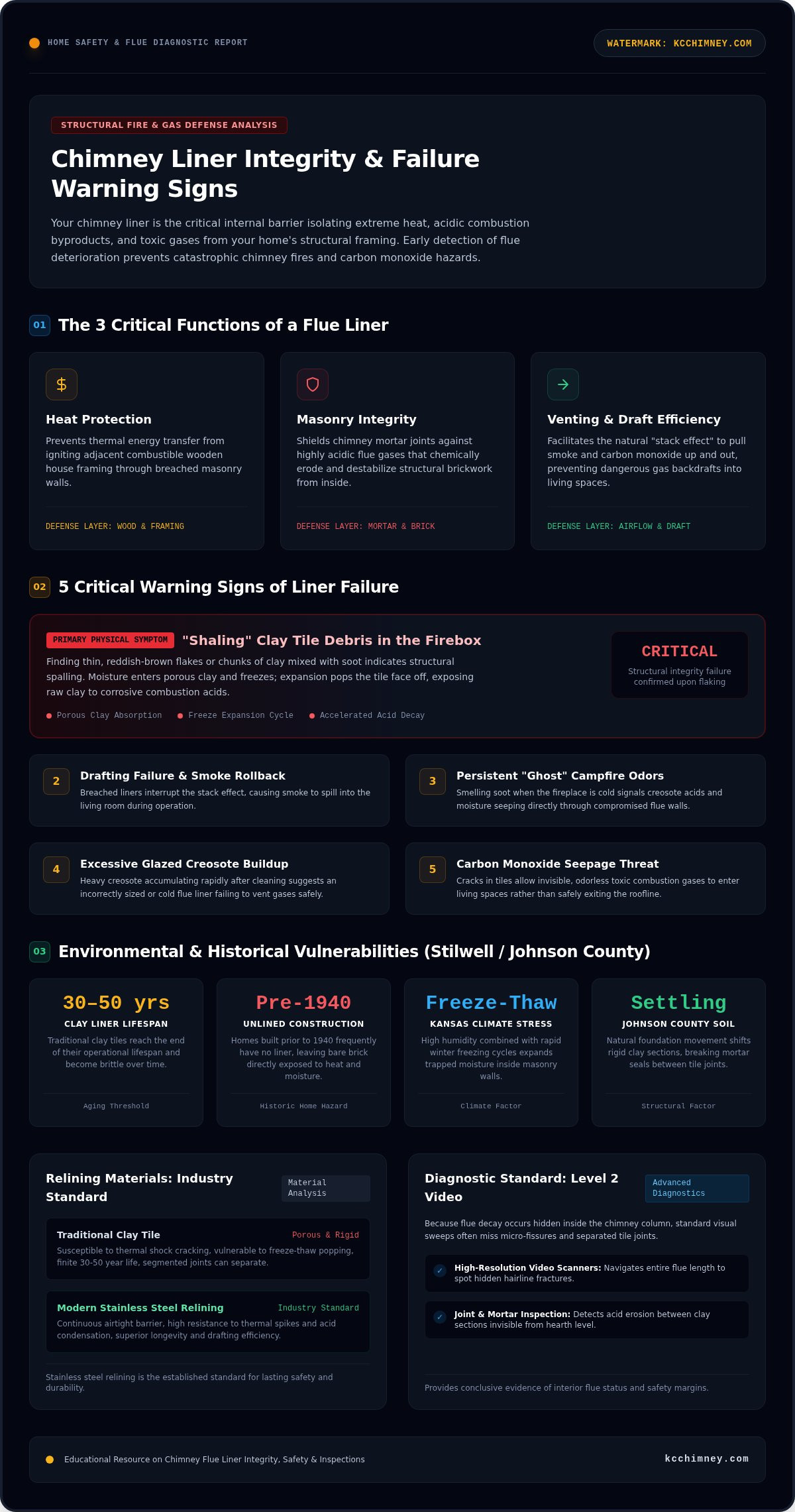
A chimney liner is the inner conduit that contains combustion byproducts like smoke, soot, and carbon monoxide. It’s the primary safety barrier between fire and your Stilwell home. Without this protective layer, the intense heat of a fire would transfer directly to your house’s wooden framing or cause hazardous gases to seep into your living spaces. Understanding basic chimney flue and liner principles helps clarify why this component is non-negotiable for home safety. Over time, liners fail due to natural aging, moisture intrusion, or the “thermal shock” caused by sudden, extreme temperature spikes during a chimney fire.
Recognizing the signs your chimney liner needs replacing Stilwell homeowners often encounter can prevent catastrophic property damage. When a liner cracks or deteriorates, it doesn’t perform its vital functions. This creates a scenario where your home’s safety is compromised every time you light a fire.
The Three Jobs of a Healthy Liner
A functioning liner is a multi-tasker that ensures your fireplace operates without incident. It primarily focuses on three critical areas of home protection:
- Heat Protection: It keeps combustible house framing from igniting. Chimney walls can become hot enough to start a fire in adjacent woodwork if the liner is breached.
- Masonry Integrity: It prevents acidic flue gases from eating away at mortar joints. These corrosive byproducts can cause the chimney structure to weaken from the inside out.
- Efficiency: It maintains the correct draft for your specific appliance. A properly sized liner ensures that smoke and gases exit the home quickly rather than lingering in the flue.
Why Older Stilwell Homes Are at Risk
Stilwell features a beautiful mix of historic properties and newer builds, but older homes face specific challenges. Clay tile liners, which are common in many local residences, have a finite lifespan of 30 to 50 years. If your home was built before 1940, there’s a significant chance it was constructed with no liner at all. This leaves the masonry completely exposed to heat and moisture. Additionally, the natural settling of foundations in Johnson County can cause rigid clay tiles to shift and crack. These structural changes create gaps that allow heat and gas to escape. Monitoring for the signs your chimney liner needs replacing Stilwell residents should know is especially important in these established neighborhoods.
5 Critical Signs Your Chimney Liner Needs Replacing
A failing chimney liner is a hidden hazard. Because the damage occurs inside the flue, many homeowners don’t realize there’s a problem until a professional inspection reveals a breach. However, there are five specific indicators you can monitor from the comfort of your living room. Recognizing the signs your chimney liner needs replacing Stilwell residents encounter most frequently allows you to address safety concerns before they escalate into costly repairs or dangerous house fires.
The “Shaling” Red Flag
If you find thin, reddish-brown flakes or larger chunks of tile in your firebox, your liner is shaling. This occurs when moisture absorbs into the porous clay and then freezes during our cold Kansas winters. As the water expands, it pops the face off the tile. Shaling is a clear signal that the liner’s structural integrity has failed. Once the protective surface is gone, the acidic byproducts of combustion eat through the rest of the tile even faster. If you see these fragments while cleaning your hearth, it’s time for a professional chimney evaluation to determine the extent of the decay.
Drafting and Smoke Problems
A healthy liner facilitates the “stack effect,” which is the natural movement of air that pulls smoke up and out of your home. When a liner is breached, it disrupts this airflow. You might notice smoke curling back into the room or smell a persistent campfire odor even when the fireplace isn’t in use. These “ghost” smells often indicate that creosote acids and moisture are seeping into the masonry. More importantly, poor drafting can lead to carbon monoxide seepage. Following EPA wood-burning maintenance guidelines is critical for ensuring your venting system remains safe and efficient.
Beyond shaling and smoke, keep a watchful eye for these three additional warning signs:
- Excessive Creosote: If your sweep reports heavy, glazed creosote buildup shortly after a cleaning, it often suggests the flue is the wrong size or the liner is too cold to vent properly.
- Visible Cracks: Shine a bright flashlight up through the throat of the fireplace. Any obvious gaps or vertical cracks in the tiles are immediate safety failures.
- Exterior Condensation: Unusual white staining, known as efflorescence, or damp spots on the exterior brickwork suggest that moisture and flue gases are migrating through a broken liner and into the chimney stack.
The Stilwell Factor: How Local Climate Affects Your Flue
Living in Stilwell offers a beautiful rural-suburban blend, but our local environment is particularly aggressive toward masonry structures. The dramatic Kansas City weather swings aren’t just a topic for small talk; they’re a direct threat to your chimney’s interior. One of the most common signs your chimney liner needs replacing Stilwell homeowners face is hidden damage caused by our specific geography. Between shifting Johnson County clay soils and the intense Midwestern humidity, your flue is under constant stress throughout the year.
Freeze-Thaw Cycles and Clay Tiles
Stilwell averages winter lows around 23.2°F in January, but the real danger lies in the temperature transitions. Our region experiences between 50 and 70 annual freeze-thaw cycles where the temperature bounces above and below the freezing threshold. Because clay tiles are naturally porous, they absorb moisture from the air and winter precipitation. When that water freezes, it expands by approximately 9%, exerting immense pressure from within the tile itself. Stilwell’s freeze-thaw cycles create “micro-cracks” in clay liners that eventually lead to the shaling flakes we see in deteriorating flues. A liner that seemed perfectly fine last October can easily fail by March after a particularly volatile winter season.
Moisture Damage in Stilwell Chimneys
High humidity is the other half of the problem for local homeowners. During our muggy summers, moisture enters the flue and reacts with leftover soot and creosote deposits. This chemical reaction produces sulfuric acid, which slowly eats away at mortar joints and clay surfaces. Without a high-quality chimney cap to act as a shield, seasonal storms drive water directly into the flue, accelerating this internal decay. Because these chemical reactions happen out of sight, adhering to NFPA 211 inspection standards is the only reliable way to catch this corrosion before it breaches the masonry walls.
Foundation stability also plays a role in chimney health. The expansive clay soil common in Stilwell can cause foundations to shift slightly over time. Since clay tiles are rigid and brittle, even minor house settling can cause the tiles to crack or misalign. These shifts create gaps that allow heat and toxic gases to bypass the liner entirely. Identifying the early signs your chimney liner needs replacing Stilwell residents should watch for ensures that local environmental factors don’t compromise your home’s safety.
Comparing Replacement Options: Stainless Steel vs. Clay
Once you’ve identified the signs your chimney liner needs replacing Stilwell homeowners face a critical decision: which material will best protect their family for the next few decades? While your chimney was likely built with clay tiles, modern technology offers more durable alternatives. Choosing the right material involves balancing initial installation requirements with long-term safety and performance. We believe in providing solutions that turn a stressful repair into a permanent home improvement.
Stainless steel has become the gold standard for chimney relining. It is highly resistant to the corrosive acids produced by wood and gas fires, and it’s flexible enough to navigate the slight offsets common in local masonry. In contrast, while new clay tiles are inexpensive as raw materials, retrofitting them into an existing chimney is incredibly labor-intensive. It often requires tearing open the chimney breast at various levels, which drives up costs and disrupts your home. For flues with only minor mortar joint deterioration or very fine hairline cracks, a parging system like HeatShield Cerfractory sealant can sometimes restore the surface without a full relining.
Why We Recommend Stainless Steel Relining
We prioritize stainless steel because it offers a level of protection that clay simply cannot match in a retrofit scenario. These liners are tested and listed to UL 1777 standards, ensuring they can withstand the high temperatures of a chimney fire without failing. Whether you use wood, gas, or pellet fuel, a high-grade alloy like 316Ti is designed to last. Professional installation often includes a lifetime transferable warranty, providing a layer of security that traditional masonry repairs lack. Additionally, we can precisely size the new liner to match your specific fireplace or wood insert, which significantly improves drafting and efficiency.
The Cost vs. Value Debate
Investing in a high-quality liner is an investment in your property’s future. While a stainless steel reline requires an upfront commitment, it provides 30 or more years of worry-free use. In the competitive Johnson County real estate market, a certified, warranted chimney system is a major selling point that increases home resale value. Buyers in Stilwell look for homes that are move-in ready and safety-verified. If you are ready to secure your hearth, you can learn more about Expert Chimney Repair in Kansas City and how it preserves your home’s integrity. Don’t wait for a small breach to become a major structural issue; schedule a professional relining consultation today to ensure your fireplace remains a safe, warm centerpiece for your family.
Taking Action: The Professional Inspection Process
When you notice the signs your chimney liner needs replacing Stilwell families often discover, the next step isn’t to guess at the solution. While shaling and drafting issues are strong indicators of failure, a professional confirmation is necessary to ensure your home’s safety. A specialized evaluation removes the uncertainty, providing you with high-definition proof of your chimney’s internal condition. This process isn’t just about finding problems; it’s about creating a documented plan to restore your hearth’s integrity and your own peace of mind.
If you suspect a breach, a standard visual sweep isn’t enough. The industry standard for suspected damage or appliance changes is a Level 2 inspection. This thorough process is designed to uncover hazards that are invisible to the naked eye, such as hairline fractures in clay tiles or gaps in mortar joints hidden deep within the flue. By documenting these issues, you gain a clear record that is essential for insurance claims or real estate disclosures during a home sale in Johnson County.
What Happens During a Level 2 Inspection?
During this process, technicians use specialized, high-resolution cameras to scan every inch of the flue from top to bottom. This video technology allows you to see exactly what the technician sees, demystifying the repair process and building trust through transparency. We don’t just look at the interior; we also check the clearance to combustibles in accessible areas like the attic and crawlspace. This ensures that heat isn’t transferring dangerously close to your home’s wooden framing. You can learn more about the specifics of an Expert Chimney Inspection in Kansas City and how it serves as the foundation for a safe home.
Scheduling Your Stilwell Chimney Evaluation
Timing is everything when it comes to chimney maintenance. While many homeowners wait until the first cold snap in October, the best time to schedule an inspection is during the spring or summer months. Scheduling early ensures you aren’t caught in the fall rush and gives you plenty of time to complete any necessary relining before the burning season begins. Before the technician arrives, ensure the firebox is clear of ash and that there is a clear path to the fireplace and attic access points.
Taking action early prevents minor cracks from becoming major safety hazards. If you’ve seen the signs your chimney liner needs replacing Stilwell residents should never ignore, now is the time to get professional clarity. A detailed report will outline exactly what is happening inside your flue and provide a clear path forward. Don’t leave your family’s safety to chance; schedule your Stilwell chimney inspection today to ensure your fireplace is ready for the seasons ahead.
Secure Your Hearth for the Seasons Ahead
Your chimney liner is your home’s first line of defense against the invisible dangers of fire and toxic gases. We’ve explored how local environmental factors and the natural aging of materials can compromise this vital safety barrier. By keeping a watchful eye for the signs your chimney liner needs replacing Stilwell families can address minor shaling or drafting issues before they become major structural risks. You shouldn’t have to worry every time you light a fire.
Since 2012, our team has served as a trusted guardian for Johnson County homes. Our certified CSIA technicians specialize in identifying hidden breaches using advanced technology. Every evaluation includes a detailed video inspection report, giving you a transparent look at your flue’s health. We’re here to provide the technical expertise and neighborly service you need to keep your home warm and secure. Get a Professional Chimney Liner Evaluation in Stilwell today. Your family’s safety is our highest priority, and we look forward to helping you protect your home for years to come.
Frequently Asked Questions
How much does it cost to replace a chimney liner in Stilwell?
While we don’t provide flat pricing without an inspection, industry data from 2026 suggests national averages for residential relining range between $1,500 and $5,000. In Stilwell, your specific investment depends on the chimney’s height, the chosen material, and whether old tiles must be removed. Complex projects involving multi-story flues or steep roof pitches can exceed these averages. We recommend a Level 2 inspection to provide an accurate estimate for your home’s unique structural needs.
Can I use my fireplace if the liner is cracked?
You should not use your fireplace if you suspect the liner is cracked or compromised. A breach in the flue allows intense heat to transfer directly to your home’s wooden framing, which can lead to a house fire. It also permits carbon monoxide and other toxic combustion gases to seep into your living areas. If you’ve noticed signs your chimney liner needs replacing Stilwell residents should stop all burning until a certified professional completes a safety scan.
How long does a stainless steel chimney liner last?
A high-quality stainless steel liner typically lasts between 20 and 30 years, often outperforming the original clay tiles. Liners made from titanium-stabilized alloys, such as 316Ti, are specifically designed to resist the corrosive acids produced by modern wood and gas appliances. When installed by certified professionals, these systems frequently include lifetime transferable warranties. This makes them a durable, long-term investment in your property’s safety and resale value compared to traditional masonry repairs.
What is the difference between a Level 1 and Level 2 inspection?
A Level 1 inspection is a basic visual check of the readily accessible parts of your fireplace and chimney. In contrast, a Level 2 inspection is a comprehensive evaluation that includes a high-resolution internal video scan of the entire flue. This deeper look is mandatory during property transfers, appliance upgrades, or after a chimney fire. It’s the only reliable way to identify hidden fractures or gaps that indicate signs your chimney liner needs replacing Stilwell homeowners might otherwise miss.
Is a chimney liner required by law in Kansas City?
Building codes in the Kansas City metro, including unincorporated Stilwell under Johnson County regulations, require all masonry chimneys to be lined. The 2018 International Residential Code mandates a liner to contain heat and gases. Using an unlined chimney is considered a code violation and poses a severe fire risk. If your older home lacks a liner or has an original flue that has deteriorated, you must install a modern lining system to meet current safety standards.
Can a chimney liner be repaired without being replaced?
Minor damage can sometimes be repaired using specialized ceramic sealant systems like HeatShield. This process, known as parging, is effective for filling small mortar gaps or thin hairline cracks in clay tiles. However, if the liner shows significant shaling, large structural gaps, or has completely collapsed, a full reline is the only safe solution. A professional video inspection is the best tool to determine if your flue qualifies for a repair or requires a full replacement.
Does a gas fireplace need a chimney liner?
Yes, gas fireplaces and furnaces require a dedicated chimney liner to operate safely. Burning gas produces high levels of moisture and acidic condensation that can quickly dissolve the mortar and bricks of an unlined chimney. Because gas flue temperatures are lower than wood, the moisture doesn’t evaporate as quickly, leading to accelerated masonry decay. We often install specialized stainless steel liners to protect the chimney structure from this corrosive environment while ensuring a proper draft for the appliance. Flue and gas safety specialists such as pspgasengineering.com similarly highlight the importance of dedicated flue relining and thorough inspections to protect masonry from acidic gas exhaust.
Most chimney relining projects in Stilwell are completed in a single day. A standard installation typically takes between four and eight hours, depending on the height of the chimney and the complexity of the roof access. If your existing clay tiles are badly damaged and require a knockout process before the new liner can be inserted, the project may take slightly longer. Our goal is always to provide a thorough, mess-free installation that restores your fireplace safety quickly.