
You’re walking up your driveway on a clear morning when you notice a jagged, orange-red streak bleeding down the side of your chimney’s masonry. It’s a common sight for many neighbors, yet it’s deeply unsettling to see such an unsightly stain on a home you’ve worked hard to maintain. You might feel confused, especially if your house is relatively new, but those rust spots are more than just a cosmetic flaw. They’re a warning light for potential water intrusion and structural rot hidden behind your siding. When it comes to preventing rust on chase cover Spring Hill homeowners must act quickly to get ahead of the local freeze-thaw cycle before a small leak becomes a major repair bill.
We understand that protecting your family’s investment starts with a reliable, weather-tight chimney. In this guide, you’ll learn exactly how to identify failing components, stop corrosion, and resolve chimney issues before they compromise your home’s safety. We’ll walk through the differences between builder-grade materials and long-term solutions like stainless steel. You’ll gain the confidence to choose a replacement that offers lasting protection and a clean, professional appearance. By the end, you’ll have a clear roadmap to keep your chimney dry and your masonry pristine for years to come.
Key Takeaways
- Understand how Spring Hill’s unique climate and humidity levels accelerate the oxidation of standard builder-grade chimney materials.
- Learn the simple maintenance steps and inspection techniques that help in preventing rust on chase cover Spring Hill properties.
- Compare the longevity of galvanized steel versus stainless steel to make an informed investment in your home’s exterior protection.
- Identify essential design features like cross-breaks and drip edges that effectively shed water and prevent pooling on your chimney.
- Recognize when visible rust stains transition from a cosmetic nuisance to a serious risk for hidden structural wood rot.
Why Chase Covers Rust: The Spring Hill Climate Factor
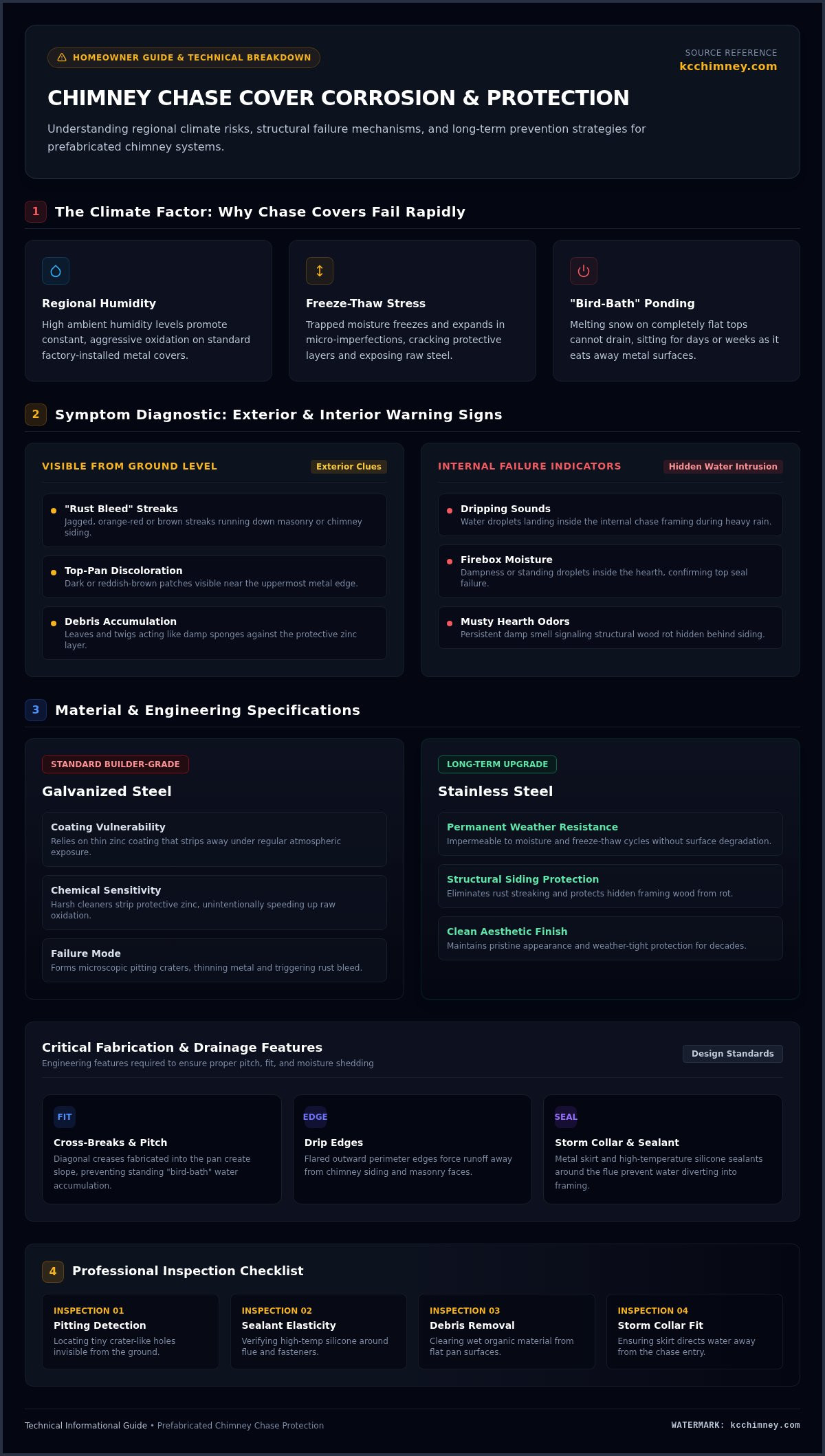
A chimney chase cover serves as the literal roof for your prefabricated chimney system. It’s a flat or slightly sloped metal pan designed to keep rain, snow, and debris out of the internal wooden framing. In our corner of the Midwest, this component is under constant siege. Preventing rust on chase cover Spring Hill homes is a unique challenge because our regional humidity often hovers at levels that promote rapid oxidation. Most original home builders install low-grade galvanized steel covers. These rely on a basic galvanization process and corrosion resistance to protect the metal. However, constant atmospheric exposure eventually strips this protection away, leaving the steel vulnerable.
The Kansas freeze-thaw cycle adds another layer of stress. When moisture settles into small imperfections in the metal and freezes, it expands. This mechanical stress cracks the protective coating, exposing the raw steel to oxygen and water. The result is the “rust bleed” symptom. You’ll see those unsightly orange-brown streaks running down your chimney’s exterior siding or masonry. These stains aren’t just an eyesore. They’re a signal that the metal is thinning and your home’s structural integrity is at risk.
The Role of Standing Water and Poor Drainage
Many homeowners don’t realize that builder-grade covers are often manufactured as perfectly flat sheets. This design is fundamentally flawed because it lacks the necessary pitch to shed water effectively. During a typical Spring Hill winter, snow accumulates on the flat surface and melts slowly. This creates a “bird-bath” effect where water sits for days or weeks at a time. Ponding is the primary catalyst for chase cover corrosion. Without a proper slope, the moisture has nowhere to go but through the metal as it slowly eats away at the surface and creates pinhole leaks.
Identifying Early Warning Signs
You can often spot the first signs of trouble from your driveway. Look for dark patches or reddish-brown discoloration near the top of the chimney. If you wait until you see streaks on your siding, the damage is likely already advanced. Internally, keep an ear out for the sound of dripping during heavy rain or a persistent musty smell near the fireplace hearth. If you notice moisture inside your firebox, it’s a clear indicator that the top seal has failed. These symptoms often signal that it’s time for a professional chimney inspection kansas city experts provide to assess the full extent of the water intrusion and prevent hidden wood rot.
Routine Maintenance: The First Line of Defense
Preventing rust on chase cover Spring Hill installations requires more than just a passing glance from the driveway. While these metal lids are designed to be durable, they aren’t “set it and forget it” components. Consistent maintenance acts as a shield, stopping minor surface oxidation before it eats through the structural material. By taking a proactive approach, you can extend the life of your chimney system and avoid the high costs associated with water damage. Adhering to Chimney Safety Institute of America inspection guidelines ensures that small issues, like failing sealants or minor discoloration, are caught before they compromise your home’s safety.
Cleaning and Debris Management
Leaves, twigs, and organic debris are often the silent killers of metal chase covers. When these materials collect on the flat surface of a chimney top, they act like a sponge, holding moisture directly against the metal for days or weeks. This constant dampness creates a perfect environment for corrosion to take hold. It’s also vital to clean the storm collar, which is the metal skirt encircling the flue pipe. If debris builds up here, it can divert water under the collar and into the chimney chase itself. We recommend a gentle approach to cleaning; avoid harsh chemical cleaners. These products can strip away the protective zinc layer on galvanized steel, unintentionally accelerating the very rust you’re trying to stop.
Professional Inspection Protocols
A certified technician brings a level of precision that a ground-level visual check simply cannot match. During a professional visit, the technician will look for “pitting,” which are tiny, crater-like holes that signal advanced corrosion. These holes are often too small to see from the ground but are large enough to allow water to seep into the wooden framing below. They will also inspect the high-temperature silicone sealants around the flue and fasteners. Over time, the Kansas sun and temperature swings cause these sealants to dry out and crack. Integrating these checks into your regular chimney sweep kansas city schedule ensures your entire system remains watertight. If you haven’t had your roof-level components checked recently, scheduling a seasonal checkup is the best way to maintain peace of mind before the next heavy storm season arrives.
Material Matters: Comparing Replacement Options
Selecting the right material is the most critical step in preventing rust on chase cover Spring Hill installations. While builder-grade galvanized steel is the standard for new construction, it’s rarely the best choice for a replacement. Most homeowners don’t realize that the thin zinc coating on galvanized metal is designed to be sacrificial. Once the elements or a stray branch scratch that surface, the underlying steel is exposed to our humid Kansas air. This leads to rapid oxidation and those unsightly orange streaks. Experts often emphasize the importance of identifying chimney leaks and chase cover damage before the water reaches your home’s structural framing.
You should also consider the risk of galvanic corrosion. This happens when two different types of metal touch each other in the presence of moisture. For example, if you have a stainless steel chimney pipe passing through a galvanized chase cover, a chemical reaction occurs. This reaction causes the galvanized metal to fail even faster than it would on its own. Aluminum is another option some homeowners consider because it’s lightweight and naturally resistant to rust. However, aluminum is a soft metal. In Spring Hill, where we occasionally face heavy snow loads and hail, an aluminum cover can dent or bow, leading to the same pooling issues we want to avoid.
Why Stainless Steel is Best for Spring Hill
Stainless steel is widely considered the gold standard for chimney protection in the Midwest. Unlike galvanized steel, which relies on a surface coating, stainless steel is an alloy that’s resistant to corrosion all the way through. This material stands up exceptionally well to the high humidity and the salt spray that can drift near roads during winter treatment. While the initial cost is higher than builder-grade options, it’s a one-time investment that protects your home for decades. Stainless steel chase covers are virtually maintenance-free regarding rust. When you choose high-quality 304 or 316-grade stainless steel, you’re buying peace of mind that your chimney will remain watertight for the life of the home.
The Downside of Galvanized Replacements
The “zinc layer” myth leads many people to believe that galvanized steel is a permanent solution. In reality, any scratch or imperfection in that coating provides a doorway for moisture. Many homeowners try to extend the life of these covers by painting them, but this is usually a temporary band-aid. Heat from the fireplace causes the metal to expand and contract. This constant movement eventually causes the paint to crack and peel, trapping moisture against the metal. Over time, the intense heat can also degrade low-quality factory coatings, leaving the metal vulnerable to the very rust you’re trying to prevent. If you’re already seeing discoloration, a simple coat of paint won’t stop the chemical process of oxidation that has already begun beneath the surface.
Ensuring Proper Drainage: Pitch and Fit
Even the highest quality material will fail if the design allows water to linger. When homeowners focus on preventing rust on chase cover Spring Hill chimneys, they often overlook the importance of physical design. A flat metal sheet is a liability because it lacks the necessary tension to remain rigid over time. We utilize a specific engineering feature known as a cross-break to solve this. This is a diagonal crease pressed into the metal, creating a subtle pyramid shape. This pitch ensures that rainwater and melting snow immediately roll toward the edges rather than pooling in the center. Without this crease, a flat metal sheet will eventually sag under the weight of Kansas snow, creating a permanent basin for moisture.
A proper fit also requires a hemmed drip edge. This is a flared lip that extends past the chimney’s footprint, usually by at least one inch. It forces water to fall straight to the roof rather than trickling down the side of your siding. If your cover lacks this overhang, moisture will constantly wick into the wood or masonry. This leads to the hidden structural rot we want to avoid. Precision measurements are non-negotiable to prevent oil-canning, which is the loud popping or warping sound metal makes when it’s not secured correctly.
The Engineering of a Water-Shedding Cover
In snowy regions like Spring Hill, a flat cover is a fundamental design flaw. When snow sits and melts, it finds every possible entry point. A custom-fabricated cover integrates a raised collar where the flue pipe exits. We then install a storm collar over this junction, creating a multi-layered defense. This integration is essential for a watertight seal that lasts through our heavy storm seasons. The goal is to move water away from the chimney as quickly as possible.
Common Installation Mistakes to Avoid
One of the most common errors we see is the use of mismatched fasteners. If a contractor uses galvanized screws on a stainless steel cover, the screws will rust almost immediately. This creates those dreaded orange streaks even on a brand-new cover. Another mistake is over-sealing the perimeter. While we want a tight fit, some internal airflow is necessary to prevent condensation. If moisture from the house gets trapped under the metal, it can cause the wooden framing to rot from the inside out. Generic covers from big-box stores often suffer from poor fitment and thin gauges that warp in the wind. To ensure your home is protected with a precision-fit solution, you can schedule a custom chase cover measurement with our team.
When to Replace Your Rusted Chase Cover
Visible rust on the exterior of your chimney is often the start of a structural countdown. While earlier sections discussed maintenance, there comes a point where cleaning is no longer enough. If you see orange streaks on your siding, the metal has likely thinned to the point of failure. This is the “ticking clock” of chimney health; rust on the outside almost always indicates that moisture is already attacking the wooden framework underneath. Waiting for an active leak to appear inside your living room can turn a straightforward component upgrade into a massive project involving chimney repair kansas city homeowners want to avoid.
Investing in a high-quality replacement is a matter of financial logic. The cost of a custom-fabricated stainless steel cover is a fraction of what you would pay to remediate mold in the attic or replace rotted 2×4 framing. Beyond the structural benefits, a clean, rust-free chimney significantly boosts your home’s curb appeal. If you’re planning to sell your Spring Hill property, a rusted chase cover is a red flag for home inspectors. A gleaming stainless steel top, however, signals to buyers that the home has been meticulously maintained, often smoothing the path toward a successful appraisal.
The Replacement Checklist
You can use this simple framework to decide if your current cover has reached the end of its functional life. If you check any of these boxes, it’s time to transition from maintenance to replacement:
- Presence of holes: If a technician finds pinholes or “soft spots” in the metal during an inspection, the seal is officially broken.
- Interior water damage: Dark spots on the ceiling near the fireplace or dampness in the firebox mean water is bypassing the cover entirely.
- Age and material: If your home is over 15 years old and still has the original galvanized steel cover, the protective zinc layer has likely reached the end of its life.
Partnering with Best Chimney Services
At Best Chimney Services, we’ve served as the local guardian of home safety since 2012. Our approach to preventing rust on chase cover Spring Hill installations is rooted in precision and longevity. We don’t believe in “one-size-fits-all” solutions from big-box stores. Instead, our CSIA-certified technicians take exact on-site measurements to ensure your new stainless steel cover fits like a glove. This custom approach, combined with our mess-free maintenance philosophy, provides you with a permanent solution that stands up to the Kansas climate. Don’t wait for the next heavy downpour to test your chimney’s integrity. Contact us today to secure your home with a professional-grade chase cover replacement.
Protect Your Home With Lasting Solutions
Protecting your chimney from the relentless Kansas weather requires a combination of high-quality materials and smart engineering. By choosing stainless steel over builder-grade galvanized metal and ensuring your cover features a proper cross-break for drainage, you stop water intrusion at its source. Preventing rust on chase cover Spring Hill homes isn’t just about aesthetics; it’s about preserving the structural integrity of your property for decades to come. Taking these proactive steps today prevents the hidden rot and costly repairs that often follow years of neglected moisture pooling.
Since 2012, our team has served as a trusted fixture in the community, specializing in professional stainless steel upgrades and comprehensive safety checks. Our CSIA Certified Technicians understand the specific architectural needs of Johnson County and provide the thorough, mess-free service you deserve. Schedule your professional chase cover inspection in Spring Hill today to ensure your home remains a safe, dry haven for your family. We take pride in being the guardians of your hearth and look forward to helping you invest in the long-term health of your chimney.
Frequently Asked Questions
Can I just paint over the rust on my chimney chase cover?
Painting over rust is a short-term cosmetic fix that doesn’t stop the underlying oxidation. Once rust begins on a galvanized surface, the metal is already thinning. A new layer of paint often traps moisture against the steel, which can actually accelerate the corrosion process. For long-term success in preventing rust on chase cover Spring Hill homes, we recommend replacing the failing metal with a material that is naturally resistant to the elements.
How much does it cost to replace a chase cover in Spring Hill?
Replacement costs depend on several factors, including the dimensions of your chimney and the material you choose for the upgrade. While galvanized steel is less expensive upfront, stainless steel offers a much better value over time because it doesn’t require repeated replacements. Every project is unique, so we perform custom measurements to ensure a precision fit. We focus on providing durable solutions that protect your home from expensive structural water damage.
What is the difference between a chimney cap and a chase cover?
A chase cover is the large metal lid that seals the entire top of a framed chimney box. In contrast, a chimney cap is the smaller protective hood that sits specifically over the flue pipe opening to keep out rain and animals. While both components are vital for weatherproofing, the chase cover is the primary defense against water pooling on the chimney top and causing internal rot in our local climate.
How long should a stainless steel chase cover last?
A high-quality stainless steel chase cover is designed to last for the life of your home. Most industry professionals expect these components to provide 30 to 50 years of reliable service without rusting. Builder-grade galvanized covers usually begin to fail within 5 to 10 years in the Spring Hill climate. Investing in stainless steel means you won’t have to worry about orange streaks or water intrusion for decades to come.
Why is my chimney leaking if the chase cover looks okay from the ground?
Visual inspections from the ground often miss small pinhole leaks caused by advanced pitting. Moisture can also enter through hairline cracks in the silicone sealant around the flue pipe or through fasteners that have loosened over time. If your cover lacks a cross-break design, water may be pooling in the center and slowly seeping through microscopic gaps. A professional evaluation is the only way to confirm your chimney’s integrity.
Will insurance cover a rusted chimney chase cover replacement?
Homeowners insurance typically doesn’t cover chase cover replacement because rust is classified as gradual wear and tear or a maintenance issue. Most policies are designed to cover sudden, accidental damage rather than the slow degradation of builder-grade materials. However, if a major storm causes physical damage to the cover that leads to a leak, you should consult your provider. Maintaining your chimney is considered a standard homeowner responsibility.
Is rust on my chimney a fire hazard?
While rust itself isn’t flammable, it creates a significant indirect fire hazard by allowing water into the chimney system. This moisture can rot the wooden framing that supports the metal flue. If the structural integrity of the chase fails, the hot flue pipe may shift or come into contact with combustible materials. Preventing rust on chase cover Spring Hill chimneys ensures that your fireplace remains safely separated from your home’s internal structure.