
What if a chimney inspection finding doesn’t have to derail a home sale? A pre-sale home inspection chimney report Mission Hills sellers can use is most helpful when it explains the chimney’s observed condition and points to practical next steps, rather than reducing everything to a pass-or-fail verdict.
It’s understandable to feel uncertain before listing or closing. You may be wondering what an inspection can reveal, whether a concern calls for routine maintenance or a closer look, and how to share clear information with buyers and your real estate team. A professional chimney inspection can help answer those questions. For a Level 2 inspection, video equipment can help identify internal conditions that aren’t visible from the outside.
This checklist covers what a chimney report may document, how to prepare your home for an inspection, and how to consider findings before closing. You’ll also learn how to organize relevant maintenance history and distinguish observations that may call for follow-up from those that suggest a more substantial repair. The goal is a clearer picture of the chimney’s condition, so everyone involved can discuss next steps with better information.
Key Takeaways
- Use a pre-sale home inspection chimney report Mission Hills sellers can share to clarify observed conditions, not as a blanket certification of the home.
- Make inspection access easier by clearing the path to the fireplace and accessible chimney areas, and gathering relevant maintenance records if available.
- Review each finding for what was observed and what follow-up may be appropriate before agreeing on repairs or sale terms.
- A reported concern doesn’t automatically mean a full chimney rebuild; the right next step depends on the condition identified.
- Keep transaction timing in view, then arrange access and review the findings with the people involved in the sale.
What a Pre-Sale Chimney Inspection Report Can Tell Mission Hills Homeowners
A pre-sale chimney report records observations from a focused inspection of the chimney and fireplace. It can help explain the condition of accessible components, such as the firebox, chimney exterior, and flue, but it isn’t a blanket certification of the home. For sellers seeking a pre-sale home inspection chimney report Mission Hills, the goal is useful information about this specific part of the property.
A chimney is a system that carries smoke and combustion gases away from a fireplace or appliance. The Chimney overview describes common parts and functions, but a professional inspection looks at the actual accessible components in the home. Video camera equipment can help identify internal flue conditions that aren’t readily visible from the fireplace opening.
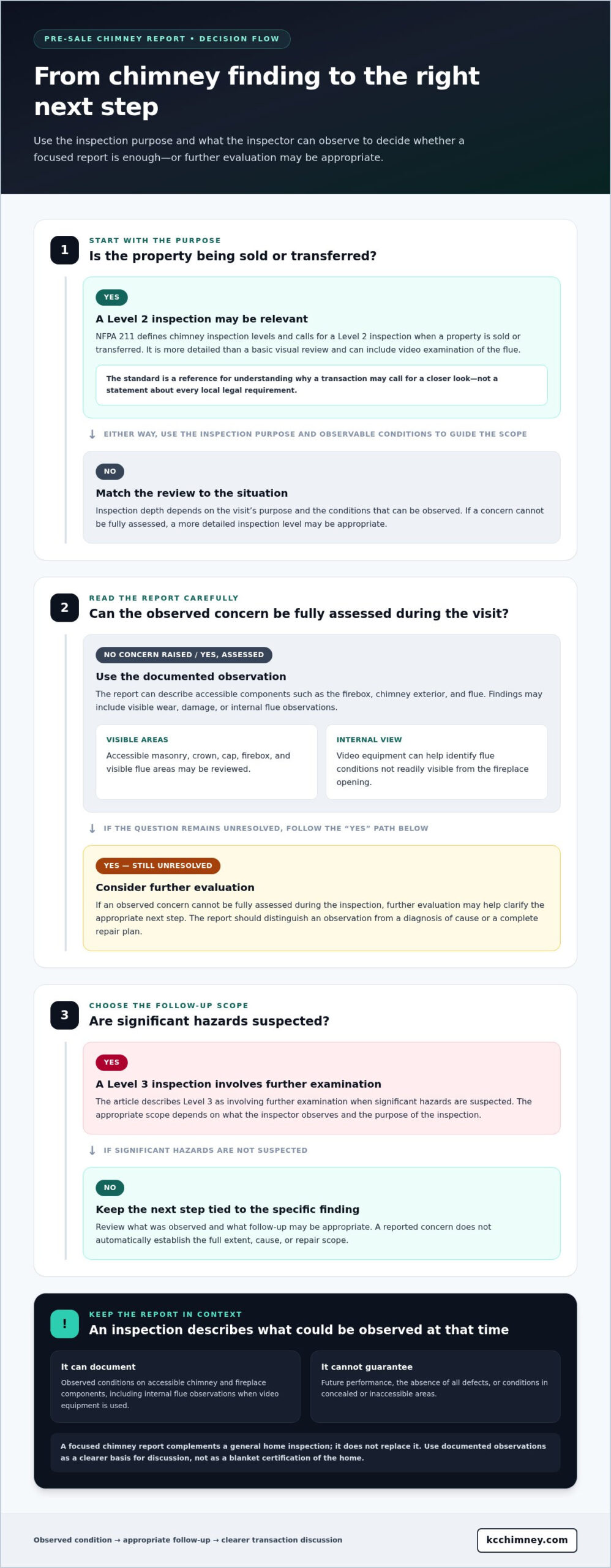
A chimney inspection report describes observed conditions at the time of the visit; it doesn’t guarantee future performance or certify that no defects exist. Conditions can change, and concealed or inaccessible areas may limit what an inspector can observe. A documented observation is also not automatically a diagnosis of the cause or a complete repair plan. If a finding needs further evaluation, that distinction should be made clear.
How a chimney report fits into a Mission Hills home sale
Sellers may arrange a focused inspection before listing to learn what the chimney’s accessible areas show and to plan how to communicate those observations. Buyers may seek added clarity during a transaction, especially if a general home inspection identifies a chimney-related question.
The chimney report complements the broader home inspection rather than replacing it. A general inspector considers many parts of the property, while a chimney inspection focuses on the fireplace and chimney system. Sharing documented observations can give sellers, buyers, and real estate professionals a clearer basis for discussion, though it can’t determine negotiation outcomes or address every buyer’s concerns.
What the report can, and cannot, establish
Findings may describe visible wear, damage, or other conditions on accessible parts of the chimney. They may also note internal flue observations, including those identified with video equipment. These are observations, not necessarily conclusions about the full extent, cause, or repair scope of a condition.
Access matters. A concealed area or component the inspector can’t reach may remain outside the inspection’s view, so the report shouldn’t be read as a statement about every part of the chimney. If the observations point to a question that can’t be resolved during the visit, further evaluation may help clarify the appropriate next step.
What a Mission Hills Chimney Inspection Covers Before a Sale
A pre-sale chimney inspection follows a focused, methodical review of accessible fireplace and chimney components. The inspector considers what can be observed, rather than promising a fixed report template or making conclusions that the evidence doesn’t support. Inspection depth depends on the purpose of the visit and the conditions that can be observed.
Visible chimney and fireplace components
The review may include accessible masonry, the chimney crown, cap, firebox, and visible flue areas. The inspector can describe conditions such as cracked masonry, worn mortar, or damage to a visible component. Those observations help identify what may deserve attention, but they shouldn’t be stretched into a diagnosis of hidden damage or its cause.
Exterior components face weather and other site-specific conditions, so their observed state can vary from home to home. Video camera equipment can also help identify internal flue conditions that aren’t visible from the fireplace opening. For sellers arranging a pre-sale home inspection chimney report Mission Hills, this combination of visible observations and internal viewing can offer a more informed picture of accessible areas.
When a Level 2 inspection may be relevant
A Level 2 inspection provides a more detailed evaluation than a basic visual review and can include video examination of the flue. The NFPA 211 standard defines chimney inspection levels and calls for a Level 2 inspection when a property is sold or transferred. That standard offers a useful reference for understanding why a transaction may call for a closer look, though it shouldn’t be taken as a statement about every local legal requirement.
Findings may also point to the need for further evaluation. For example, if an observed concern can’t be fully assessed during the inspection, a more detailed inspection level may be appropriate. A Level 3 inspection involves further examination when significant hazards are suspected. The appropriate scope depends on the inspection purpose and what the inspector observes.
For more context on inspection practices in the region, see this Kansas City chimney inspection guide. If you’re preparing a Mission Hills home for a transaction, you can also schedule a chimney inspection to better understand the accessible conditions before deciding on next steps.
Pre-Sale Chimney Report Checklist for Mission Hills Buyers and Sellers
A little preparation helps keep a chimney inspection focused and useful during a home sale. Whether you’re arranging the inspection as a seller or reviewing it as a buyer, use this checklist to organize access, records, findings, and possible next steps. A pre-sale home inspection chimney report Mission Hills homeowners can share is one piece of property information, not a substitute for reviewing the full transaction details.
Before the chimney inspection
- Coordinate timing and access. Work with the people involved in the transaction to arrange access to the fireplace and accessible chimney areas. Let the inspector know about any access limitations that could affect the visit.
- Make the area accessible. Clear items that block access to the fireplace or the areas being evaluated. Avoid moving anything that could create a safety concern; share access questions when coordinating the appointment.
- Gather relevant records. If available, collect past chimney or fireplace inspection notes, maintenance records, and documentation of known repairs. These can give useful context, but they don’t replace an assessment of current conditions.
- Share known concerns. Tell the inspector about issues you’ve noticed, such as visible damage or a change in fireplace operation. Clear information helps keep the inspection focused on the questions that matter to the property.
Keep the transaction schedule in view as you arrange the visit. Coordinating access among the seller, buyer, and other involved parties can help avoid confusion about who will be present and how the inspection area will be reached.
After receiving the findings
Read the observations carefully, then sort them by the kind of next step they may call for. A simple system can help keep the discussion grounded:
- Maintenance items: Note conditions that may call for routine care, and review them in context with the records available.
- Repair concerns: Mark observations describing damage or deterioration so the parties can understand what may need attention.
- Further evaluation: Identify any finding where the report recommends a closer look or where the available observations leave a question unresolved.
Buyers can review chimney observations alongside the general home inspection and other property information. Sellers can share the findings with the people involved in the transaction. Neither step determines contract terms or resolves disclosure and negotiation questions. Discuss those matters with your real estate professional, and use the inspection findings to support an informed conversation about possible follow-up.
If a finding raises a repair question, the Kansas City chimney repair guide offers additional context about repair concerns and care for the hearth and home.
How to Interpret Chimney Report Findings Without Overreacting
A chimney report is most useful when you separate what the inspector observed from what should happen next. A note about wear or a maintenance need doesn’t automatically mean the chimney needs a complete rebuild. The right response depends on the specific condition, its location, and whether further evaluation is recommended.
| Observation | Possible implication | Sensible follow-up |
|---|---|---|
| A cleaning need is noted | Combustion deposits or debris may need attention. | Review the inspection recommendation and consider chimney sweeping if appropriate. |
| Visible masonry deterioration is described | A portion of the exterior may need maintenance or repair. | Clarify the area and condition identified, then discuss the recommended next step. |
| A chimney cap or another component appears damaged | The affected component may need repair or replacement. | Use the observed condition to determine whether further evaluation or repair is appropriate. |
| An internal area couldn’t be fully assessed | Limited access may leave questions about concealed conditions. | Consider whether additional inspection could provide more information. |
Routine maintenance versus repair concerns
Cleaning needs, visible masonry deterioration, and damage to a chimney component are different kinds of observations. They shouldn’t be treated as interchangeable or assigned an urgency or repair scope without support from the inspection findings. The inspection professional should connect any recommendation to the condition observed and explain when the available evidence leaves questions unresolved.
When findings call for another evaluation
Further evaluation may be appropriate when access was limited, a condition is concealed, or the report identifies a question that couldn’t be answered during the visit. Video camera equipment can provide added visibility into internal flue conditions, helping clarify what can be observed inside the chimney. It doesn’t make inaccessible areas visible or guarantee that every hidden condition will be found.
If cleaning is relevant to the findings, the Kansas City chimney sweeping guide offers more context. For a pre-sale home inspection chimney report Mission Hills readers can use thoughtfully, keep the follow-up tied to the documented observations. If a finding raises a safety concern, have it evaluated by a qualified chimney professional before deciding how to proceed.
Need a clearer picture of your chimney’s condition? Schedule a chimney inspection in Mission Hills.
Book a Mission Hills Pre-Sale Chimney Inspection and Plan Your Next Step
A chimney inspection can give you focused information to bring into the home-sale process. Start by identifying the transaction timeline, coordinating access, and sharing the question you need the inspection to address. Once you’ve reviewed the findings, you can consider appropriate follow-up and keep transaction decisions moving with your real estate professional.
What to have ready when scheduling
Before arranging a pre-sale home inspection chimney report Mission Hills homeowners can use in a transaction, gather a few practical details:
- Your role: Explain whether you’re scheduling as the seller, buyer, or a real estate professional coordinating access.
- Transaction timing: Share relevant dates or milestones so the inspection can be considered as part of the sale timeline. No inspection or report timing should be assumed.
- Known concerns: Describe any issues you’ve noticed with the fireplace or chimney, and have relevant maintenance or repair records available if you have them.
- The property question: Clarify why the inspection is being requested. A Level 2 inspection and video inspection equipment may be relevant when a closer look at internal flue conditions is needed.
Best Chimney Services is a locally owned Kansas City-area business serving Mission Hills. The inspection’s scope should match the purpose of the visit and the conditions that can be observed. Sharing the reason for the inspection helps establish that focus without assuming a fixed report format or outcome.
Turn documented findings into a practical plan
After the inspection, read the observations and recommendations before deciding on maintenance or repairs. If the report describes an issue that needs clarification, use the documented condition as the starting point for discussing what further evaluation may be appropriate. A finding doesn’t, by itself, establish a repair scope or dictate the terms of a sale.
Coordinate transaction-specific questions with the appropriate real estate professionals. They can help you understand how inspection information fits into your sale or purchase, while the chimney findings provide focused information about the fireplace and chimney.
Best Chimney Services serves Mission Hills and the Kansas City area with chimney inspections, including Level 2 inspections, and uses video camera equipment to help identify internal chimney conditions. If you’re ready to arrange a focused inspection for your property, schedule a chimney inspection.
Move Forward With a Clearer Picture of Your Chimney
A thoughtful pre-sale chimney inspection can help turn uncertainty into useful information. The report documents observed conditions, but it isn’t a blanket certification or a promise about future performance. Prepare by arranging access and gathering relevant records, then review each observation to understand whether maintenance, repair, or further evaluation may be appropriate. A finding doesn’t automatically mean a full rebuild is needed.
For a pre-sale home inspection chimney report Mission Hills homeowners can bring into the sale process, Best Chimney Services offers Level 2 and Level 3 chimney inspections. Video camera equipment can help identify internal chimney conditions. Locally owned and operated in the Kansas City area, the business has served homeowners since 2012.
Give your transaction a more informed next step. Schedule a Mission Hills chimney inspection and move forward with greater clarity and confidence.
Frequently Asked Questions
What does a pre-sale chimney inspection report include?
A pre-sale chimney inspection report documents the conditions observed during a focused inspection. Depending on the inspection scope and access, observations may concern the firebox, visible masonry, chimney components, or internal flue. Video camera equipment can help identify internal conditions. The report describes what was observable during the visit; it shouldn’t be treated as a complete home certification or a guarantee about future performance.
Is a chimney inspection required when selling a home in Mission Hills?
Whether an inspection is legally required for a particular Mission Hills sale depends on the applicable local rules and the terms of the transaction. NFPA 211 provides guidance on inspection levels, including Level 2 inspections for property transfers, but that standard alone doesn’t establish every local legal requirement. Sellers and buyers can discuss transaction requirements with their real estate professional and consider a chimney inspection when added information is needed.
Can a home inspection report replace a chimney inspection?
A general home inspection doesn’t necessarily replace a focused chimney inspection. A home inspector reviews many areas of the property, while a chimney inspection concentrates on accessible fireplace and chimney components. If the general inspection notes a chimney concern, or leaves questions about the flue or another component, a Level 2 inspection may provide a closer evaluation. The appropriate scope depends on the property question and observable conditions.
When should a buyer request a Level 2 chimney inspection?
A buyer may request a Level 2 chimney inspection when a home purchase calls for a closer evaluation than a basic visual review, or when another inspection raises chimney-related questions. Video camera equipment can help identify internal flue conditions that aren’t visible from the fireplace opening. Buyers should coordinate timing and access through the people handling the transaction, then review the observations alongside other inspection findings and property information.
How long does a chimney inspection take before a home sale?
Inspection duration depends on the chimney, the inspection scope, access to relevant areas, and any conditions that need closer evaluation. There isn’t a single time estimate that fits every home. Before scheduling, share the transaction timeline and any known concerns so the inspection can be planned around the property question. Allow time to arrange access and review findings as part of the sale process.
What happens if a chimney inspection finds damage?
If an inspection identifies damage, review the specific observation and any recommended follow-up before deciding what to do. A noted condition doesn’t automatically mean the entire chimney needs rebuilding. The next step may involve maintenance, repair, or further evaluation, depending on what was observed and whether the condition could be assessed fully. Buyers and sellers should discuss contract or disclosure questions with their real estate professional.
Can a chimney inspection report guarantee the fireplace is safe?
No. An inspection report records observed conditions at the time of the visit; it can’t guarantee future performance or certify that the fireplace and chimney are free of every defect. Concealed or inaccessible areas may limit what can be assessed. A focused inspection can still provide useful information to guide decisions. Best Chimney Services serves Mission Hills and nearby Kansas City communities, including Overland Park, Stilwell, Bucyrus, and Spring Hill.