
Would you bet your family’s safety on a quick glance at your roof from the driveway? After a season that has already seen over 600 severe weather reports across Ohio in 2026, many neighbors are asking the same question: is my chimney safe to use after a storm Bucyrus? It’s natural to feel a sense of unease when you hear high winds rattling the masonry, especially when you know that the most dangerous damage often hides where the naked eye can’t see.
We understand the anxiety that comes with wondering if your next fire could lead to a chimney fire or carbon monoxide leak. This guide will help you identify the specific signs of storm-related wear and explain why a professional safety check is vital before you strike a match. You’ll learn how to distinguish between minor cosmetic issues and serious structural threats. We’ll also provide a clear checklist to help you decide when it’s time to call in a certified expert to verify your home’s integrity and peace of mind.
Key Takeaways
- Learn how to identify external warning signs like missing chimney caps or masonry debris in your firebox that indicate your system suffered storm damage.
- Discover why a ground-level visual check is often insufficient to answer the question “is my chimney safe to use after a storm Bucyrus” due to hidden internal flue cracks.
- Understand the critical risks of carbon monoxide leaks and chimney fires that can arise from structural blockages or compromised liners after high-wind events.
- See why the NFPA 211 standard recommends a Level 2 video inspection as the most reliable way to professionally verify your fireplace is safe for operation.
- Find out how local expertise ensures your chimney repairs comply with Kansas safety standards to provide long-term protection for your Johnson County home.
Signs of Storm Damage: A Bucyrus Homeowner’s Visual Checklist
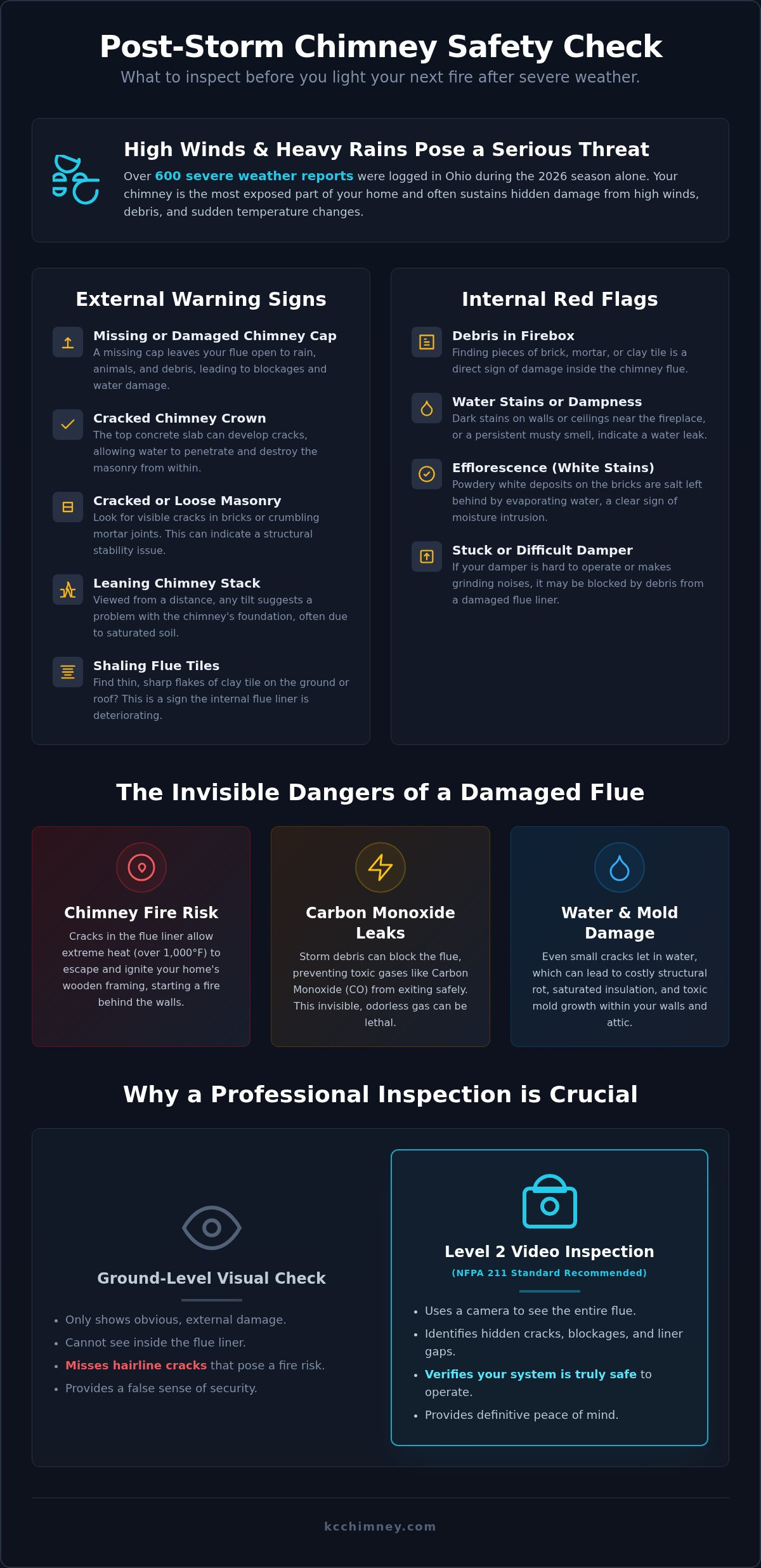
After a severe weather event, your first instinct is likely to check for fallen branches or missing roof shingles. However, your chimney is often the most exposed part of your home and bears the brunt of high-velocity winds. If you’re asking, “is my chimney safe to use after a storm Bucyrus homeowners should start with a methodical visual walkthrough. Look for physical debris in the firebox; finding bits of red brick or jagged clay tile is a clear sign that the internal structure has been compromised. These fragments usually mean the flue liner is failing, which creates a direct fire hazard for your property.
High winds can easily dislodge a chimney cap or chase cover. If you notice these components are missing or sitting at an odd angle, your flue is now open to rain, debris, and nesting animals. Check the roofline for loose bricks or cracks in the masonry that weren’t there before the storm. Heavy rain often reveals leaks around the flashing, which show up as dark water stains on your ceiling or walls near the chimney stack. These are common chimney problems that escalate quickly if left unaddressed during the 2026 storm season. Catching these issues early prevents expensive structural repairs down the road.
External Inspection: What to Look for from the Yard
You don’t need to climb a ladder to spot trouble. Grab a pair of binoculars and focus your attention on the chimney crown, which is the concrete slab at the very top. Look for new hairline fractures or chunks of missing mortar that could allow water to seep into the internal masonry. Pay close attention to the ground around the base of the chimney for “shaling,” which looks like thin, sharp flakes of chimney tile. This indicates that the flue liner is deteriorating from moisture or thermal shock. Finally, step back and view the chimney from a distance to ensure the structure isn’t leaning. Soil saturation from heavy Bucyrus rains can sometimes cause structural shifting that requires a professional assessment to ensure the stack remains stable.
Internal Red Flags in the Firebox
Your nose is often as good a tool as your eyes when checking for damage. Moisture entering a damaged flue often creates a musty, damp smell or intensifies “campfire” odors that linger long after your last fire. Check the interior bricks for efflorescence, which appears as white, powdery salt deposits left behind by evaporating water. This is a sure sign that moisture is migrating through the masonry and weakening the chimney’s integrity. Lastly, try to open and close your damper. If it feels stuck or operates with a new grinding sound, debris from a storm-damaged flue may be obstructing the mechanism. These signs suggest that the answer to “is my chimney safe to use after a storm Bucyrus” is likely no, and a professional check is necessary before your next fire.
The Hidden Risks of Using a Damaged Chimney Post-Storm
Lighting a fire when your chimney has been battered by severe weather is a gamble you don’t want to take. While a missing brick is easy to spot, the most severe threats are often tucked away inside the flue where they remain invisible to the untrained eye. If you’re wondering, “is my chimney safe to use after a storm Bucyrus,” you must consider the integrity of your chimney liner first. Lightning strikes or even the thermal shock of cold rain hitting a warm masonry structure can create deep, jagged fissures in the clay or metal lining. These cracks compromise the system’s ability to contain heat and toxic gases.
Gaps in the mortar joints are another hidden danger that often follows high-wind events. Over time, or during intense pressure from 70 mph gusts, mortar can crumble and fall away. These gaps allow extreme heat to escape the flue and reach the wooden studs and framing of your home. This is how house fires start behind the walls, often going unnoticed until the situation becomes an emergency. Beyond fire risks, storm-driven leaks can lead to long-term water damage and mold growth within your attic or walls. It’s why we recommend a professional safety check following any major weather event to ensure your home’s structural safety remains intact.
Why a Cracked Flue is a Critical Safety Hazard
The chimney flue serves as the primary barrier between the intense heat of your fire and the combustible materials that make up your home’s framing. When a storm causes the liner to crack or shift, that protective barrier is gone. Even a small fissure can allow temperatures exceeding 1,000 degrees to reach nearby wooden studs, eventually leading to spontaneous ignition. Shaling is the process where thin, wafer-like flakes of chimney tile fall to the bottom of the stack, signaling a failing flue liner. If you see these flakes in your hearth, do not light another fire until the system is repaired.
Carbon Monoxide: The Silent Threat After a Storm
Carbon monoxide is a colorless, odorless gas that can quickly become lethal if your venting system is compromised. Severe storms often blow heavy debris like branches or bird nests into the chimney opening, or in extreme cases, dislodged masonry can collapse and block the flue entirely. This prevents toxic gases from exiting your home. If you notice smoke drifting back into your living room, also known as “backdrafting,” your chimney is no longer venting correctly. Always ensure you have a working carbon monoxide detector installed near the fireplace area to provide an early warning of these invisible hazards. If you’re still asking, “is my chimney safe to use after a storm Bucyrus,” the presence of any venting issues means the answer is a definitive no.
Why Bucyrus Storms Require More Than a Ground-Level Inspection
Kansas weather doesn’t take it easy on residential masonry. While a quick look from the yard might suggest everything is fine, the reality of our local climate is much more demanding. In early 2026, regional storms produced wind gusts between 60 and 70 mph, which is more than enough to compromise the stability of a chimney stack. If you’re asking, “is my chimney safe to use after a storm Bucyrus,” you need to consider how these high-velocity winds create lateral pressure. This pressure can cause subtle shifting in the masonry that isn’t always visible from fifty feet away. A chimney that looks straight from the driveway may actually have developed micro-fissures in the mortar joints that allow heat to escape.
Bucyrus and nearby Stilwell feature many homes with traditional brick and stone chimneys. These architectural styles are beautiful, but they are susceptible to the expansion and contraction cycles of our local soil. Heavy rain saturates the ground, causing Miami County’s clay-rich soil to swell. When the weather dries out, the soil shrinks. This constant movement puts immense stress on a chimney’s foundation. Over time, these rain cycles can cause the chimney to pull away from the house or develop structural cracks. These foundation-level issues are often missed during a casual inspection but can lead to a total system failure if the masonry is used while unstable.
High Wind and Your Chimney Flashing
Flashing is the metal transition that seals the gap between your roof and the chimney. During severe weather, wind can actually “lift” these metal sheets. They might not blow away entirely, but the watertight seal is broken. Once the bond is compromised, rainwater travels down the side of the chimney and into your attic. You might notice damp spots on the ceiling or a musty smell near the fireplace. Because these leaks often start small, they can cause significant wood rot before you ever see a drip in your living room. A professional check ensures the flashing is still fastened securely to the masonry.
In addition to masonry checks, we often suggest that homeowners consult with a roofing specialist like Superstorm Roofing & Siding to ensure that the surrounding shingles and gutters are also in top condition after a storm.
The Impact of Hail on Chimney Components
Hail is a frequent visitor to the Kansas City area. Large hail strikes can pulverize the mortar on a chimney crown, especially if the mortar has softened over years of exposure. Metal chase covers on prefabricated chimneys are also at risk. These covers can dent or even crack, leading to rust and water entry. Clay chimney pots, a common decorative feature in Bucyrus, are particularly vulnerable to large hail impacts. If your roof has suffered hail damage, your chimney likely has too. For comprehensive restoration, it’s best to seek out professional chimney repair kansas city services to ensure every component is sealed and secure. If you’re still questioning is my chimney safe to use after a storm Bucyrus experts recommend looking beyond the surface to protect your home’s value and safety.
Professional Level 2 Inspections: When “Good Enough” Is Not Safe
A standard chimney sweep is excellent for routine maintenance, but it won’t answer the critical question: is my chimney safe to use after a storm Bucyrus? When severe weather hits, the national safety standard, NFPA 211, 2024 edition, requires a Level 2 inspection. This isn’t just a suggestion; it’s a rigorous protocol designed for when a building undergoes a change in conditions, such as a high-wind event or a direct lightning strike. Unlike a basic visual check from the hearth, this process provides a definitive “Safe to Use” verdict that protects your family and your home insurance standing.
The value of this professional assessment becomes clear when you compare the modest cost of an inspection to the alternative. The average cost for general storm damage repairs for a home in 2026 is approximately $12,331, with some claims reaching much higher. Investing in a specialized safety check is a small fraction of that expense and far less than the devastating price of a house fire. If you want absolute peace of mind, you can schedule a professional evaluation to ensure your masonry is ready for the next cold Kansas night.
What Happens During a Level 2 Inspection?
This process is methodical and thorough. First, our technicians perform a visual inspection of all accessible internal and external components, checking for the masonry gaps and flashing issues discussed earlier. Second, we use specialized camera equipment to scan the entire length of the flue. This video technology allows us to see jagged cracks or dislodged liners that the human eye simply cannot reach from the ground or the roof. Finally, we conduct attic and crawlspace checks. We verify that the chimney still has proper structural clearance from wooden framing members, ensuring that no shifting occurred during the storm.
When a Professional Check is Mandatory
There are specific scenarios where you should never light a fire without a certified expert’s approval. If you felt the house shake during a storm or heard the unmistakable crack of a direct lightning strike, an inspection is non-negotiable. Lightning can literally explode mortar or fuse metal liners in an instant. You must also call for help if you find any external masonry, such as brick chunks or pieces of the crown, fallen into your yard. For a deeper look at what our experts search for, read our guide on chimney inspection kansas city. If you are still asking is my chimney safe to use after a storm Bucyrus, these physical warning signs are your signal to wait for a professional report.
Restoring Peace of Mind with Best Chimney Services in Bucyrus
Since 2012, our team has served as a fixture in the Bucyrus, Stilwell, and Spring Hill communities. We understand that a house isn’t just a building; it’s a sanctuary for your family. When severe weather threatens that sanctuary, you need more than a mechanical service. You need a neighborly expert who prioritizes your safety and peace of mind above all else. Our goal is to answer the question, “is my chimney safe to use after a storm Bucyrus,” with absolute certainty and technical mastery.
Our technicians are certified professionals who adhere to the most rigorous industry standards, including the 2024 NFPA 211 guidelines. We believe in transparency, which is why we offer flat-rate inspection fees with no hidden costs or high-pressure sales tactics. Whether your chimney requires minor tuckpointing to repair weathered mortar or a complete chimney relining to restore a damaged flue, we handle every project with measured care. We also specialize in crown repair and chase cover replacement to ensure your system is fully sealed against the next Kansas downpour.
The Best Chimney Services Difference
Our approach blends the grit of manual labor with the precision of modern safety standards. We treat every home in Johnson and Miami County as if it were our own, utilizing advanced video technology for every post-storm evaluation. This allows us to share clear, visual evidence of our findings so you can make informed decisions about your property. We provide a mess-free guarantee for every Bucyrus service call, ensuring your living room remains as clean as we found it. This commitment to thoroughness and integrity is why local homeowners have trusted us for over a decade.
Schedule Your Safety Check Today
We prioritize post-storm inspections to help our neighbors return to their normal routines as quickly as possible. When you book a visit, you can expect a punctual, professional technician who will conduct a methodical review of your entire system. We’ll walk you through our findings and provide a clear path forward for any necessary repairs. Don’t leave your family’s safety to chance if you aren’t sure is my chimney safe to use after a storm Bucyrus homeowners should always verify structural integrity before lighting the next fire. Schedule your Bucyrus chimney inspection now and ensure your hearth is ready for another season of warmth.
Secure Your Hearth for the Season Ahead
A severe storm doesn’t have to end your fireplace season, but it should prompt a closer look at your home’s structural integrity. We’ve explored how high winds can lift flashing and why “shaling” indicates a compromised flue liner. Relying on a quick glance from the driveway is a risk no homeowner should take when the safety of their family is on the line. If you’re still questioning is my chimney safe to use after a storm Bucyrus, the most reliable answer comes from a professional Level 2 evaluation that looks deep inside the masonry.
Best Chimney Services has been locally owned and operated since 2012, providing specialized care for the unique architectural styles found throughout Johnson and Miami County. Our certified chimney technicians use advanced video flue inspections to identify internal hazards that are impossible to see from the ground. We take pride in being a guardian for your home, blending modern precision with the honest, hardworking service of a trusted neighbor.
Don’t let uncertainty linger after the clouds clear. You can Book Your Post-Storm Safety Inspection in Bucyrus today to ensure your fireplace is ready for the next cold night. We look forward to helping you enjoy your home with total peace of mind and a warm, safe fire.
Frequently Asked Questions
Is it safe to use my fireplace if the chimney cap blew off during a storm?
No, you should not light a fire if your chimney cap is missing. The cap serves as a vital shield against rain, heavy downdrafts, and wind-blown debris. Without it, moisture can quickly saturate your flue liner or cause a dangerous blockage. Using the fireplace in this state increases the risk of smoke backing up into your living room or causing long-term water damage to the internal masonry.
How can I tell if lightning struck my chimney?
Lightning damage is usually dramatic and easy to spot upon a close inspection. You might see jagged cracks that run the length of the chimney, blown-out mortar joints, or even melted metal components like the chase cover. If you suspect a strike, don’t light a fire. The electrical surge often causes “invisible” damage to the flue liner that only a professional video scan can detect.
Does homeowners insurance cover chimney damage from a storm in Bucyrus?
Yes, most standard homeowners policies in Johnson and Miami County cover sudden damage from wind, hail, or lightning. However, insurance companies rarely cover long-term neglect or wear and tear. If you’re asking is my chimney safe to use after a storm Bucyrus, adjusters often require a Level 2 inspection report to verify that the damage was caused by a specific weather event rather than gradual deterioration.
What is the difference between a Level 1 and Level 2 chimney inspection?
A Level 1 inspection is a basic visual check of accessible components, while a Level 2 inspection involves a detailed video scan of the internal flue. According to the NFPA 211 national safety standard, a Level 2 check is mandatory after any event that could have damaged the chimney, such as a severe storm. This deeper look ensures that hidden cracks or structural shifts are identified before you use the system.
Can high winds in Kansas cause a chimney to collapse?
High winds can absolutely cause a chimney to collapse if the structure is already weakened by age or poor maintenance. Kansas wind gusts exceeding 60 mph apply significant lateral pressure to the masonry. If the mortar is already crumbling or the foundation has shifted due to soil moisture, this pressure can lead to a partial or total collapse of the chimney stack.
Why is my fireplace leaking water after a heavy rainstorm?
Water leaks are typically caused by dislodged flashing or a cracked chimney crown. Flashing is the metal seal where the chimney meets the roof; high winds can lift it just enough to allow rain to seep underneath. Once water enters, it can travel down the masonry and appear as damp spots on your ceiling or walls near the firebox, often leading to wood rot if left unaddressed.
What should I do if I find pieces of brick in my fireplace?
You should stop using your fireplace immediately and call a certified technician to evaluate the system. Finding bits of brick or clay in the firebox is a sign of spalling or structural failure. This means the internal flue liner or the chimney’s exterior is breaking apart, which creates a direct fire hazard. Using the fireplace in this condition could allow heat and flames to reach your home’s wooden framing.