
Imagine sitting in your favorite chair in Brookside or Overland Park; the furnace is humming, yet you feel a persistent, icy breeze hitting the back of your neck. You’re likely searching for how to stop cold air from fireplace openings before the next Kansas City cold snap drives your utility bill through the roof. It’s a common frustration for local homeowners who find themselves wearing extra layers indoors despite a running heater. You shouldn’t have to battle a drafty living room every time the wind picks up across the plains.
We understand that a fireplace should be a source of comfort, not a giant straw sucking expensive warm air out of your home. This guide shares the professional secrets we use to eliminate drafts and lower heating costs while keeping your family safe. We will walk you through troubleshooting your current damper, identifying hidden air leaks, and exploring modern solutions like top-sealing dampers or high-efficiency inserts. By the end, you’ll know exactly how to secure your hearth against the 2026 winter season and ensure your chimney operates with the precision of modern safety standards.
Key Takeaways
- Understand how the “Stack Effect” turns your chimney into a vacuum that pulls freezing Kansas City air into your home.
- Learn immediate DIY methods to block drafts using chimney balloons or magnetic covers for quick relief.
- Discover how to stop cold air from fireplace openings permanently by installing a top-sealing damper with a rubber gasket.
- Identify the unique venting requirements for gas fireplaces and how they differ from wood-burning systems.
- Determine when a Level 2 safety inspection is necessary to find invisible cracks or structural damage causing air exchange.
Why is My Fireplace So Cold? Understanding the Stack Effect
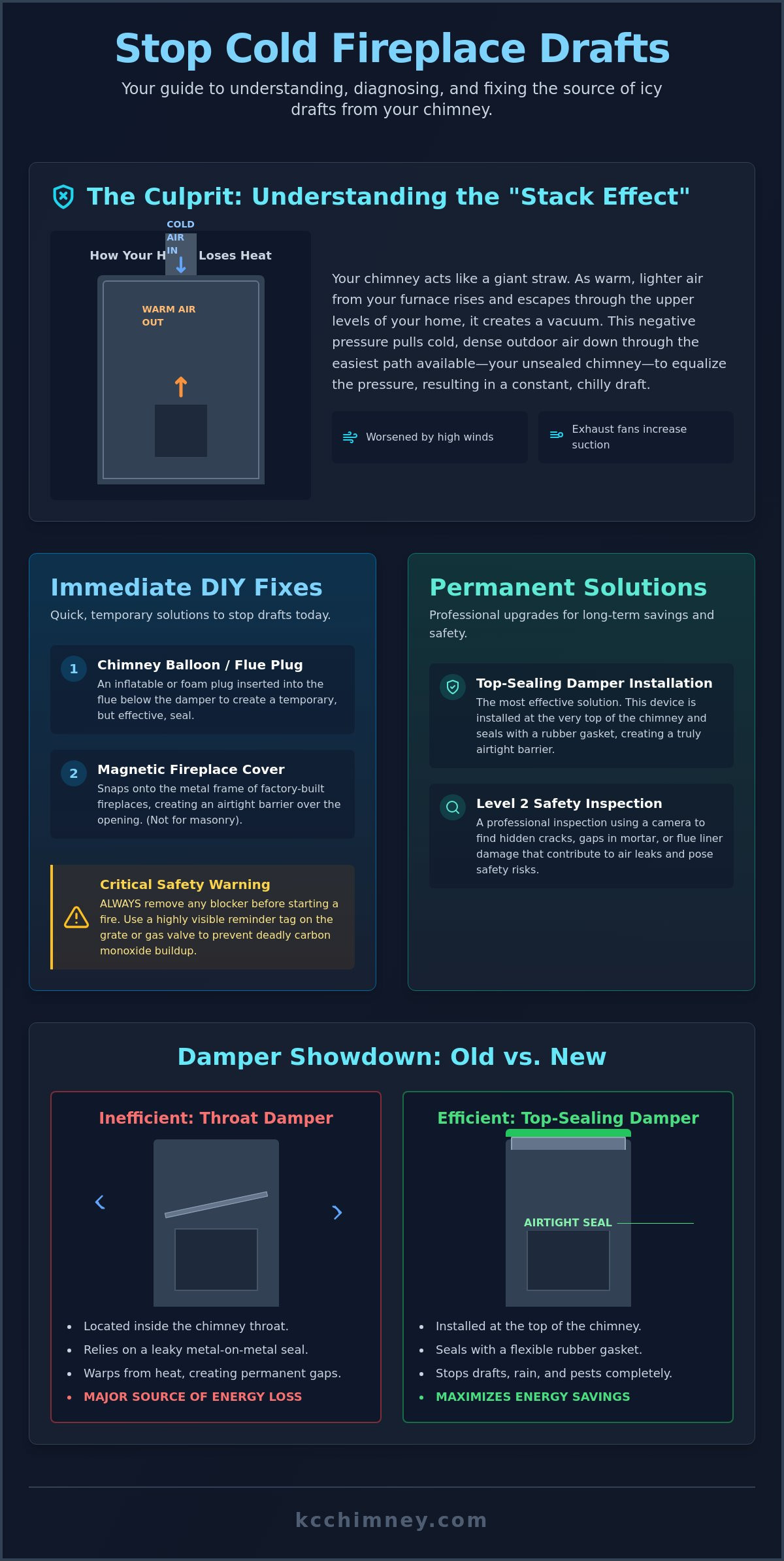
Many homeowners in the Kansas City metro area assume a drafty hearth is just a “feature” of an older home. In reality, it’s often a result of physics. Understanding the Stack Effect is the first step in learning how to stop cold air from fireplace grates during our sub-zero January nights. In the context of Kansas City’s climate, the stack effect is the process where warm indoor air rises and escapes through the top of your home, creating a vacuum that sucks freezing outdoor air down through your chimney.
This pressure imbalance is often made worse by common structural culprits. Warped dampers, missing mortar joints, and degraded insulation around the firebox allow air to bypass your home’s thermal envelope. While some drafts are merely a nuisance that increases your heating bill, others indicate a structural safety issue. If you notice a draft accompanied by a smoky smell or debris in the firebox, it could mean your flue liner has cracks that are compromising the integrity of your chimney system. Our local wind patterns often create high-pressure zones on one side of your house, forcing air through even the smallest gaps in your masonry.
The Role of the Chimney Damper
Most traditional fireplaces use a throat damper, which is a heavy metal plate located just above the firebox. These are notoriously inefficient because they rely on a metal-on-metal seal. Over years of use, the intense heat of wood fires causes this metal to warp. You can perform a simple visual check with a flashlight to see if the plate sits flush. Another reliable method is the “dollar bill test.” Close your damper on a dollar bill; if you can pull the bill out without any resistance, your damper is no longer providing an airtight seal.
Air Pressure and Your Home’s Envelope
Your home operates as a single, interconnected system. When you turn on a powerful kitchen range hood or a bathroom exhaust fan, you’re pumping air out of the house. This creates negative pressure that actively pulls cold air down the chimney to equalize the environment. Similarly, air leaks in your basement or crawlspace can worsen the downdraft effect. Addressing these pressure issues is just as important as sealing the flue itself, especially when Kansas City’s winter winds hit the side of your home with enough force to push through a standard damper.
Immediate DIY Fixes to Stop Fireplace Drafts Today
When a sudden cold front sweeps through the Kansas City metro, you don’t always have time to wait for a scheduled appointment. Learning how to stop cold air from fireplace vents with immediate DIY solutions can save you from a freezing night and a spiked heating bill. These methods are temporary fixes, but they provide much-needed relief while you plan for a more permanent structural solution. While DIY tools help, they are often a band-aid for the underlying pressure issues we discussed earlier.
One of the most effective temporary tools is a chimney balloon or a flue blocker. These are inflatable or dense foam plugs designed to sit just above the firebox. To use one safely, first measure your flue dimensions to ensure a tight fit. Position the deflated balloon or the blocker handle below the damper, then inflate or wedge it until you feel a firm seal against the chimney walls. This creates a physical barrier that stops the downdraft in its tracks. If you cannot find a commercial blocker, you can create a temporary stopper by wrapping non-combustible rock wool insulation in a fire-retardant fabric. Never use old towels or standard pillows, as these are significant fire hazards.
Safety is the most critical part of any DIY draft fix. You must use a “reminder tag” every time you block the flue. Hang a bright, heat-resistant sign or a dedicated tag directly on your gas valve or the fireplace grate. If you or a family member accidentally lights a fire with a blocker in place, your home will quickly fill with dangerous smoke and carbon monoxide. This simple habit protects your property and your family’s peace of mind.
Fireplace Blankets and Magnetic Seals
Magnetic fireplace covers are an excellent choice for modern, factory-built fireplaces with steel frames. These covers snap directly onto the metal facing, creating an airtight seal that prevents cold air from leaking into the room. However, they don’t work on traditional masonry fireplaces with irregular stones or rough brick. For those homes, a weighted fireplace blanket or a “chimney sheep” is a better alternative. While these accessories typically cost between $60 and $100, they are temporary. They don’t provide the long-term durability or energy savings of a professional upgrade, but they are a solid first step for immediate comfort.
Sealing the Hearth Perimeter
Air leaks don’t just come down the flue; they often seep through the gaps where the firebox meets your home’s walls. Inspect the perimeter of your hearth for small cracks between the masonry and the mantel or drywall. You can seal these minor gaps using high-temperature caulk, which is designed to withstand the thermal expansion of the fireplace. Avoid using standard spray foam at all costs. Most consumer-grade spray foams are highly combustible and pose a severe safety risk when applied near a heat source. If these DIY steps don’t stop the chill, it might be time for a professional evaluation to find the source of the leak.
Structural Solutions: Permanent Ways to Block the Cold
While blankets and balloons offer temporary relief, they don’t address the structural vulnerabilities of a traditional fireplace. If you want to know how to stop cold air from fireplace openings for good, you must look at solutions that seal the entire chimney system. Kansas City’s extreme temperature swings are particularly hard on masonry. The constant freeze-thaw cycle creates microscopic cracks in your chimney’s structure, turning a once-solid barrier into a sieve for freezing air. Permanent structural upgrades aren’t just about comfort; they’re an investment in your home’s energy efficiency and longevity.
A high-quality chimney cap with a built-in rubber gasket seal is a vital first line of defense. Unlike standard mesh caps designed only to keep out birds, these specialized caps provide a physical barrier against downdrafts. When combined with professional masonry maintenance, these components work together to maintain a stable indoor temperature regardless of the wind speed in Johnson or Miami County.
Upgrading to a Top-Sealing Damper
Traditional throat dampers sit just above the firebox and rely on a metal-on-metal connection that rarely stays airtight. We recommend upgrading to a top-sealing damper, such as a Lyemance or Lock-Top model. These units are installed at the very top of the chimney flue and utilize a silicone rubber gasket to create a true airtight seal. This design prevents the entire chimney from becoming a “cold sink” that radiates chill into your home. Because these dampers are so effective at stopping heat loss, they often pay for themselves within a few winters through lower utility bills. For homeowners dealing with damaged masonry alongside damper issues, a professional chimney repair kansas city specialist can ensure the installation is integrated perfectly with your existing brickwork.
Masonry Integrity and Air Leaks
The brick and mortar of your chimney should act as a solid thermal envelope. Over decades, mortar joints can degrade, becoming porous and allowing cold air to seep into the wall cavities of your home. Tuckpointing restores the thermal envelope of a chimney by removing failing mortar and replacing it with fresh, industry-standard materials. This process eliminates the “swiss cheese” effect that many older Kansas City chimneys suffer from. Additionally, we must look at the chimney crown. A solid, uncracked crown acts as the roof of your chimney system, excluding both water and air. If your crown is failing, it allows cold air to bypass the flue entirely and enter the space between the liner and the exterior masonry, causing persistent drafts that no damper can stop. For homes featuring stucco exteriors, the expertise of Metro Reconstruction Services, Inc. in maintaining high-performance cladding systems is a great resource for understanding how to protect your home’s structural integrity against the elements.
Solving Drafts in Gas vs. Wood Fireplaces
The strategy for how to stop cold air from fireplace openings depends heavily on the fuel type you use. Gas and wood-burning systems face different physics when it comes to air pressure and venting. While a wood-burning fireplace is essentially a large open hole in your home, a gas unit is a mechanical appliance with specific airflow requirements. Understanding these differences prevents you from making safety mistakes that could lead to carbon monoxide buildup or overheating. In Kansas City, where we see dramatic humidity shifts alongside the cold, these components can degrade faster than you might expect.
There is a long-standing debate among homeowners regarding pilot lights. Some believe keeping the pilot light on all winter helps keep the flue warm and maintains an upward draft. While a burning pilot light does create a small amount of heat that can assist a B-vent system, it isn’t a substitute for a proper seal. In a modern direct-vent system, the pilot light has almost no impact on room drafts because the combustion chamber should be completely sealed from your living space. If you feel a draft from a direct-vent unit, it’s a sign of a mechanical failure rather than a venting quirk.
Gas Fireplace Draft Troubleshooting
If your gas fireplace feels like an icebox, start by checking the glass gasket. This fiberglass or graphite rope creates the seal between the glass and the metal frame. Over time, it can become brittle and allow cold air to bypass the combustion chamber. Another common culprit is the venting around the unit itself. However, you must never block the louvers or cooling vents on a gas insert to stop a draft. These vents are critical for heat dissipation; blocking them can lead to a fire. For persistent issues with your ignition or seals, seeking gas fireplace repair is the safest way to ensure your system meets 2026 safety standards. If you’re unsure if your unit is sealing correctly, schedule a professional inspection to protect your home’s air quality.
Wood Fireplace Efficiency Upgrades
Open wood fireplaces are notoriously inefficient, often losing more heat up the chimney than they provide to the room. Installing a wood fireplace insert is the most effective way to turn a drafty hearth into a functional heater. These inserts are essentially high-efficiency stoves that fit into your existing masonry, featuring gaskets and blowers that seal out the cold. If an insert isn’t in your immediate plans, adding high-quality tempered glass doors can help. These doors should remain closed when the fireplace isn’t in use to provide an extra layer of protection against downdrafts. Finally, remember that draft starts with heat. Storing your wood in a dry, covered area ensures your fires start hot and establish a strong upward draft quickly, which helps push cold air out of the flue during the initial lighting phase.
When to Call a Professional: Safety and Efficiency Inspections
Even after applying DIY blockers and checking your damper, you might find that the icy chill persists. This is usually the point where the physics of your home’s airflow outpaces simple fixes. If you’re still struggling with how to stop cold air from fireplace grates, the issue is likely a structural vulnerability or a pressure imbalance that requires a specialized eye. Just as homeowners in the South might turn to HVAC repair San Antonio to troubleshoot complex climate control issues, Kansas City residents need local experts to diagnose chimney-specific airflow problems. In Kansas City, our homes face unique challenges from high wind speeds across the plains and dramatic seasonal shifts that stress masonry joints. A professional evaluation doesn’t just find the draft; it ensures your entire system remains a safe, protective feature of your home.
One of the most common reasons for a persistent draft is the presence of “invisible” cracks within the flue liner. These hairline fractures or gaps between liner sections allow air to exchange between the flue and the wall cavities of your house. This bypasses your damper entirely. Additionally, the height of your chimney plays a critical role. If a chimney is too short relative to the peak of your roof, Kansas City wind patterns can create a high-pressure zone that actively forces air down the flue. A seasoned technician can calculate the proper height requirements and suggest extensions or specialized caps to counteract these local environmental factors.
Maintenance also plays a mechanical role in draft prevention. Over time, creosote and soot buildup can accumulate on the smoke shelf or around the damper frame. This debris often hardens into a glaze that prevents the damper from seating fully, leaving a small gap that functions like an open window. A thorough professional cleaning removes these obstructions, allowing your hardware to function with the precision it was designed for.
The Value of a Level 2 Inspection in Overland Park
A Level 2 inspection is the industry standard for troubleshooting persistent performance issues. Unlike a basic visual check, this process utilizes internal video technology to scan the entire length of your flue. We use these high-resolution cameras to identify cracks, missing mortar, or internal obstructions that a DIYer simply cannot see. This level of detail is essential for ensuring your home meets 2026 safety standards, especially as the KC metro area continues to adopt more rigorous energy conservation codes. If you suspect your chimney is leaking air or heat, a chimney inspection kansas city specialist can provide the definitive answers you need to restore your home’s thermal envelope.
Long-Term Energy Savings with Best Chimney Services
Investing in professional maintenance is an investment in your property’s future. We provide personalized recommendations based on your specific chimney architecture, whether you live in a historic Midtown home or a modern build in Johnson County. Seasonal inspections catch minor masonry issues before they turn into expensive structural repairs, such as full relining or tuckpointing. Our goal is to position your fireplace as a source of reliable warmth rather than a drain on your utility bills. Schedule your KC chimney inspection today to stop the cold for good and enjoy the peace of mind that comes with a high-integrity hearth.
Secure Your Hearth for a Warmer Kansas City Winter
You now have a clear roadmap for how to stop cold air from fireplace openings and regain control of your home’s comfort. By addressing the physics of the stack effect and upgrading to a permanent top-sealing damper, you can eliminate drafts that standard throat dampers simply can’t handle. These structural improvements don’t just stop the chill; they protect your masonry from the harsh 2026 winter cycles while lowering your monthly utility bills.
As a locally owned and operated business since 2012, we’ve spent over a decade serving the entire Kansas City Metro area. We specialize in Certified Level 2 Safety Inspections that find the hidden leaks DIY methods often miss. Don’t let your heating budget disappear up the chimney this season. Stop the draft and save on energy; book your KC Chimney Inspection now!
Your fireplace should be a source of pride and warmth for your family. We’re here to help you protect that investment and enjoy a draft-free home all winter long.
Frequently Asked Questions
Is it normal for a fireplace to be cold even when the damper is closed?
It is very common for a fireplace to feel cold even with the damper closed. Most homeowners look for how to stop cold air from fireplace grates because traditional throat dampers are just metal plates that warp over time. These metal-on-metal seals don’t provide an airtight barrier, allowing the heavy, cold air from a Kansas City winter to fall directly into your home through the gaps.
Can I use a fireplace draft stopper with a gas fireplace?
You should exercise extreme caution here. Most draft stoppers are designed for wood-burning units; using them in a gas fireplace can block required safety vents or interfere with the pilot light. This can lead to dangerous carbon monoxide buildup. If you have a gas unit, it is safer to check the glass gaskets or louvers rather than using a physical plug or balloon.
How much money can I save by sealing my chimney drafts?
Sealing your chimney can reduce your heating costs by preventing warm air from escaping and cold air from entering. While exact savings vary based on your home’s insulation and local energy rates, industry professionals report that an unsealed chimney can be as inefficient as leaving a window open all winter. Restoring your home’s thermal envelope is a high-integrity investment that pays for itself over several seasons.
What is a top-sealing damper and how does it work?
A top-sealing damper is a hardware upgrade installed at the very top of your chimney flue. It uses a silicone rubber gasket to create a true airtight seal when closed, which is far more effective than the old-fashioned dampers located just above the firebox. You operate it with a simple cable handle in the firebox, providing a modern solution to age-old draft problems.
Will keeping my pilot light on stop cold air from coming in?
No, a pilot light does not generate enough heat to stop a significant downdraft. While it might slightly warm the air in the immediate combustion chamber, it won’t counteract the powerful pressure of the stack effect in a typical Kansas City home. Relying on a pilot light for draft prevention is an expensive and ineffective strategy compared to professional sealing or hardware upgrades.
Should I block my chimney if I don’t use the fireplace?
You can use a removable blocker like a chimney balloon if the fireplace is only used occasionally, but you must include a safety reminder tag. If you decide to never use the fireplace again, a professional can permanently seal the flue and the exterior masonry. This ensures your home’s thermal envelope is fully restored without the safety risks associated with temporary DIY blocks.
How do I know if my chimney draft is caused by the ‘stack effect’?
You can identify the stack effect by checking the air pressure on different levels of your home. If your basement or first floor feels significantly draftier while the upper floors stay warm, your home is likely pulling cold air down the chimney to replace air escaping through the attic. This pressure imbalance is a hallmark of the stack effect in taller, multi-story Kansas City homes.
Why is cold air coming out of the bottom of my fireplace?
Cold air often enters through the bottom louvers or the ash pit due to negative pressure in the room. This happens when your home is so airtight that it pulls air from any available opening to equalize pressure, or because the cooling vents in a factory-built fireplace are drawing in outside air. Identifying the specific entry point often requires a professional Level 2 safety inspection to locate hidden leaks.