
According to the National Fire Protection Association, chimney fires account for 25% of all residential heating fires each year. For many homeowners in Stilwell, the fear of a hidden flue fire is a constant concern during the cold Kansas winters. You deserve to enjoy your hearth without the nagging worry that a layer of creosote or a cracked liner is putting your family at risk. Understanding how to know if my chimney is a fire hazard Stilwell starts with identifying the subtle warning signs that most people overlook.
We agree that your home should be a place of safety, not uncertainty. This 2026 safety checklist provides the technical clarity you need to inspect your chimney’s integrity before you strike the first match. We’ll teach you how to spot dangerous creosote buildup, recognize the evidence of a previous chimney fire, and understand which level of professional inspection is required for your specific situation. This guide breaks down complex masonry issues into a simple, actionable plan for total peace of mind before the first freeze hits.
Key Takeaways
- Perform a 7-point visual inspection of your firebox and damper to identify immediate surface-level warning signs of neglect or damage.
- Gain professional insights on how to know if my chimney is a fire hazard Stilwell by learning to spot the physical evidence left behind by dangerous “silent” chimney fires.
- Understand why a standard cleaning is not enough and when the NFPA requires a Level 2 safety evaluation to protect your home’s structural integrity.
- Discover the immediate steps you must take to restore your hearth’s safety using certified local expertise tailored to the unique needs of Stilwell homes.
Understanding Chimney Fire Risks in Stilwell Homes
Stilwell families take pride in their homes, but the hearth requires more than just an annual cleaning. In Johnson County, residential fires often stem from neglected venting systems. Local fire departments report that heating equipment remains a leading cause of home fires, with incidents peaking between December and February. If you’re wondering how to know if my chimney is a fire hazard Stilwell homeowners should look beyond the surface of the firebox. Whether you live in a historic masonry home or a newer pre-fab development, your system faces unique stressors that compromise safety over time.
It’s vital to distinguish between the traditional masonry chimneys found in older Stilwell properties and the factory-built systems in newer subdivisions. Masonry structures rely on clay tile liners that can crack under extreme thermal shock. In contrast, factory-built systems use metal flue pipes that have a typical lifespan of 15 to 20 years before corrosion sets in. Many of these hazards are “silent killers.” These internal fires often reach temperatures exceeding 2,000 degrees Fahrenheit, yet they remain contained within the flue, damaging the structure without the homeowner ever seeing a flame. Understanding Chimney Fire Risks is the first step in protecting your property from these invisible threats.
The Impact of Kansas City Weather on Your Chimney
The Kansas City climate is notoriously hard on local masonry. Our region experiences approximately 60 freeze-thaw cycles every year. This process forces moisture into brick pores where it expands as ice, creating cracks that eventually become structural gaps. High humidity levels during Stilwell summers also play a role, as moisture reacts with soot to create an acidic sludge. This environment accelerates creosote crystallization, making the fuel source more volatile. When spring storms arrive, the heavy rains often reveal damage caused during the winter burning season, manifesting as leaks or crumbling mortar.
Anatomy of a Hazard: What Actually Starts the Fire?
A chimney fire starts with the accumulation of creosote, a highly flammable byproduct of wood combustion. When smoke cools too quickly in the flue, it condenses into this tar-like substance. Several factors contribute to this buildup:
- Restricted Airflow: Clogged chimney caps or bird nests prevent proper drafting.
- Cool Flue Temperatures: Burning unseasoned wood with a moisture content above 20 percent.
- Pyrolysis: This chemical process occurs when wood framing near the chimney is baked at high temperatures over 5 to 10 years. It lowers the wood’s ignition point, meaning your house could catch fire even if the flames stay inside the flue.
By learning how to know if my chimney is a fire hazard Stilwell residents can identify these risks before they lead to a catastrophic event. Regular professional oversight ensures that these chemical and structural changes don’t go unnoticed.
The 7-Point Homeowner Checklist: Visible Signs of a Fire Hazard
Performing a basic visual check is your first line of defense against a potential house fire. For homeowners in Stilwell, this walk-through helps you spot obvious dangers before you light the first log of the season. Grab a high-powered flashlight and start at the firebox, looking up toward the damper. Learning how to know if my chimney is a fire hazard Stilwell begins with identifying the residue left behind by previous fires. If you see any blockages or thick buildup, stop and call a professional before striking a match.
Interior Red Flags: Soot, Creosote, and Odors
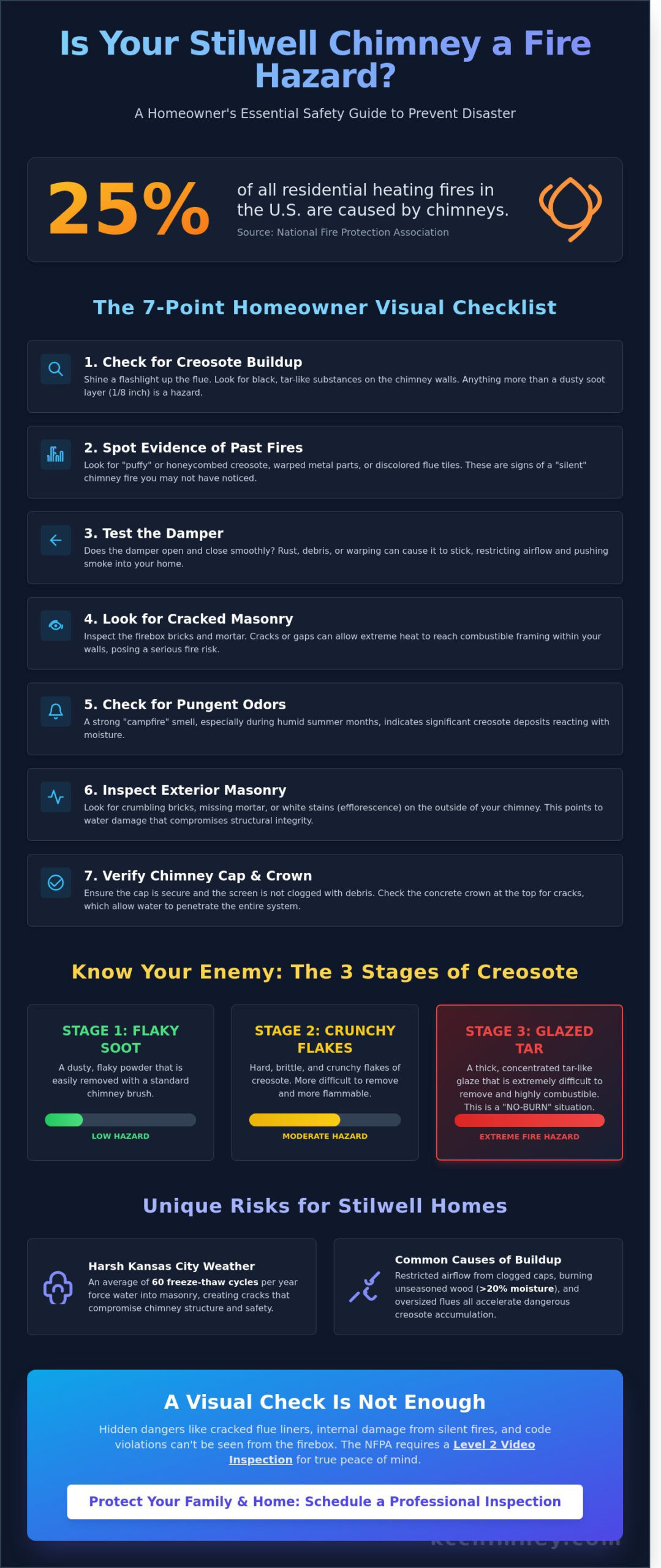
Creosote is a highly flammable byproduct of wood combustion that builds up inside your flue. It exists in three distinct stages. Stage one is a dusty, flaky soot that’s easy to brush away. Stage two looks like crunchy, black flakes. Stage three is the most dangerous; it’s a thick, glazed coating that looks like hardened tar. If you see this shiny glaze, your chimney is a “no-burn” zone. While a visual inspection is helpful, the Why a Visual Check Is Not Enough resource from the CSIA explains that internal cracks often hide behind these layers.
- The Summer Campfire Smell: If your living room smells like a campfire during a humid Stilwell July, you have significant creosote buildup. Moisture reacts with the residue to create that pungent odor.
- Honeycombed Creosote: If you see “puffy” or honeycombed textures, a chimney fire has likely already occurred. This residue indicates the creosote has expanded under intense heat, leaving the structure vulnerable.
- Damper Resistance: If the damper doesn’t open or close smoothly, soot buildup or fallen masonry may be blocking the mechanism.
Exterior Warning Signs: Masonry and Crowns
Step outside and look up. The exterior of your chimney deals with the harsh freeze-thaw cycles of Kansas winters. Check the ground for spalling, which is when the face of the brick flakes off. If you find brick debris on your lawn, the structural integrity of your masonry is failing. This allows moisture to seep into the flue, causing internal rot and dangerous cracks. A cracked chimney crown, the concrete slab at the very top, acts as a gateway for water damage. Without a functional crown and a stainless steel cap, your chimney becomes an open invitation for local wildlife like raccoons or chimney swifts to nest and create flammable blockages.
If you notice any of these signs, it’s time to seek a professional chimney evaluation to ensure your home remains safe. Identifying these issues early can prevent a small repair from turning into a total masonry rebuild. Don’t ignore the physical evidence your home is providing; it’s the best way to protect your family from a preventable disaster.
Detecting “Silent” Chimney Fires and Internal Flue Damage
Many Stilwell residents expect a chimney fire to sound like a freight train or a loud roar. While those explosive events do happen, many chimney fires are “silent” occurrences that burn slowly at temperatures exceeding 2,000 degrees Fahrenheit. You might not see flames or hear a sound, but the internal damage remains catastrophic. This is a critical factor when considering how to know if my chimney is a fire hazard Stilwell families should realize that a single high-heat event can compromise the safety of the entire property. These fires cause masonry and metal to expand and contract with such force that the structural integrity of the venting system fails instantly.
The danger of a silent fire extends beyond the immediate burn. Once the internal flue is damaged, the path is cleared for carbon monoxide to leak into your home. This odorless gas can seep through small cracks in the masonry and enter bedrooms or living spaces. Because the damage is internal, it often goes unnoticed until a professional inspection reveals the hidden hazards lurking behind your hearth. Our team frequently finds that Stilwell homes with older masonry chimneys are particularly vulnerable to these undetected events.
Cracked Flue Tiles and Liner Integrity
The flue liner serves as the most important barrier between a 2,000-degree fire and the combustible wood framing of your home. When clay tiles are subjected to the thermal shock of a chimney fire, they often develop long, vertical cracks. These gaps are a tell-tale sign that a fire has already occurred. According to the NFPA 211 chimney safety standards, any liner with compromised integrity must be repaired or replaced before the fireplace is used again. In most cases, chimney relining with a stainless steel system is the only way to ensure your home remains protected from heat transfer and toxic gases.
Discolored Masonry and Distorted Metal
Physical evidence of a past fire often appears on the exterior components of your system. You should look for specific indicators of extreme heat exposure that suggest your chimney has been compromised:
- Rainbowing: Discoloration or a “heat tint” on metal chimney caps or shrouds that suggests they reached extreme temperatures.
- Distorted Components: Warped or melted dampers and metal liners in factory-built fireplaces that no longer fit together correctly.
- Efflorescence: White, powdery staining on exterior brick that signals moisture is penetrating masonry weakened by previous heat stress.
Recognizing these visual cues is essential for understanding how to know if my chimney is a fire hazard Stilwell homeowners can act on quickly. These signs often point to a system that can no longer contain heat or smoke safely, making it a priority for a professional safety evaluation.
Why a Visual Check Is Not Enough: The Level 2 Inspection
A quick look up the flue with a flashlight isn’t a safety strategy. If you’re wondering how to know if my chimney is a fire hazard Stilwell, you have to look deeper than the surface. A basic chimney sweep focuses on removing soot and debris. A Level 2 safety evaluation is a diagnostic health check. The National Fire Protection Association (NFPA) Standard 211 mandates these inspections during home sales, after a chimney fire, or following a significant weather event. It’s the difference between a routine oil change and a full engine diagnostic.
The NFPA reported in 2021 that failure to clean and inspect equipment, primarily chimneys, accounted for 25% of all home heating fires. Investing in a professional evaluation is a small price for safety. A house fire causes catastrophic loss, but a Level 2 inspection identifies issues before they ignite. We prioritize your family’s peace of mind by using industry-leading standards to find what you can’t see.
The Video Inspection Process in Stilwell
We use specialized, high-resolution cameras to scan the entire interior of your chimney. This technology reveals hazards that stay hidden during a standard visual check. Our technicians look for:
- Hidden Gaps: Separations between liner sections can vent 1,000-degree gases directly into your attic or floor joists.
- Internal Cracks: Even hairline fractures in a clay liner allow heat to transfer to combustible wooden framing.
- Structural Decay: Spalling or crumbling masonry inside the flue that could lead to a collapse.
Every Stilwell homeowner should demand a digital report. We provide clear photos and documentation of our findings. This transparency ensures you understand exactly what’s happening inside your home’s venting system. It also provides a vital record for insurance purposes or future home valuations.
Addressing the #1 Objection: “I Barely Use My Fireplace”
Many Stilwell neighbors assume that low usage means lower risk. In reality, an idle chimney is often more dangerous. When a chimney sits unused, it becomes a prime target for birds, squirrels, and raccoons to build nests. These biological blockages are highly flammable and stop the flow of toxic gases like carbon monoxide. Moisture also settles in unused flues, causing the metal components to rust and masonry to deteriorate faster than in a chimney that’s regularly maintained.
Infrequent users also deal with “cold starts.” When you only light a fire twice a year, the flue stays cold for a longer period during the initial burn. This causes smoke to condense quickly, leading to rapid creosote accumulation. This is why you need an expert chimney inspection in Kansas City even if you’re an occasional burner. Don’t guess when it comes to your home’s safety. Understanding how to know if my chimney is a fire hazard Stilwell starts with a professional camera scan.
Taking Action: Restoring Safety to Your Stilwell Hearth
If you’ve spotted any of the warning signs mentioned, your next move is critical. Stop using your fireplace immediately. Continuing to burn wood in a compromised system increases the risk of a house fire every minute the flames are active. Many homeowners wonder how to know if my chimney is a fire hazard Stilwell families can truly trust, and the answer always begins with a professional assessment. While retail “chimney sweep logs” claim to reduce creosote, they cannot remove the hardened Stage 3 glaze that causes the most dangerous chimney fires. These logs are a chemical supplement, not a replacement for mechanical cleaning.
Professional Cleaning and Hazard Removal
Specialized equipment is necessary to tackle Stage 3 glazed creosote, which looks like thick, shiny tar. Our technicians use industrial-grade rotary tools and chemical treatments to break down this fuel source before it ignites. Beyond cleaning, we address structural integrity by repairing firebox cracks or crumbling mortar joints. These chimney sweep Kansas City services do more than just prevent fires. They protect your home’s resale value and prevent expensive moisture damage. A well-maintained flue ensures that toxic gases like carbon monoxide exit your home safely rather than seeping into your living room through small masonry gaps.
The Best Chimney Services Advantage
KC Chimney has served the Stilwell and greater Kansas City metro area since 2012. We understand the specific masonry challenges posed by the local climate, from rapid freeze-thaw cycles to heavy spring rains that erode mortar. Our certified technicians provide a no-mess guarantee, using high-powered vacuums and drop cloths to keep your home pristine during the process. We don’t just guess about the state of your flue. We use thorough video inspections to document the interior of your system.
This visual evidence takes the guesswork out of how to know if my chimney is a fire hazard Stilwell. You’ll see exactly what we see, from the health of the flue liner to the condition of the chimney crown. We believe in transparency and doing the job right the first time. Ready for a safer home? Schedule your Stilwell chimney inspection today and regain the confidence to enjoy your fireplace all winter long.
Secure Your Hearth for the 2026 Season
Your fireplace should provide warmth without the weight of worry. By using the 7-point homeowner checklist, you can identify visible masonry cracks and creosote buildup that contribute to the 25,000 chimney fires reported annually to the CSIA. While these signs offer a starting point, internal flue damage often remains hidden from the naked eye. Learning how to know if my chimney is a fire hazard Stilwell requires a transition from basic observation to professional validation. A Level 2 inspection is the only way to verify the integrity of your venting system according to NFPA 211 standards.
KC Chimney brings over 10 years of experience serving Johnson County as A+ Rated masonry and safety experts. Our CSIA Certified Technicians don’t just look for problems; they provide lasting solutions that protect your home’s future. It’s our job to ensure your chimney meets modern safety benchmarks through every burn. Protect your home, schedule a professional chimney inspection in Stilwell today! We look forward to helping you enjoy a safe, reliable fire all winter long.
Frequently Asked Questions
Is it a fire hazard if I see soot in my fireplace?
Soot is a byproduct of burning wood and often signals that your system isn’t venting efficiently. While soot itself is carbon, it typically mixes with sticky creosote, which is highly flammable. According to the NFPA, even 1/8 inch of buildup is enough to fuel a chimney fire. If you see dark, powdery residue, it’s time to schedule a professional cleaning to ensure your flue remains clear and safe.
How can I tell if I have creosote buildup without a professional?
You can perform a basic check by shining a bright flashlight up into your smoke chamber. Take a metal scraper or a flat-head screwdriver and scratch the surface of the black gunk on the walls. If the scratch leaves a groove deeper than 1/8 inch, you have dangerous levels of creosote. This simple test helps you determine how to know if my chimney is a fire hazard Stilwell residents should look for.
What does a chimney fire sound like when it is happening?
A chimney fire often sounds like a low-frequency rumble or a loud roaring noise similar to a freight train passing your house. You might also hear intense cracking or popping sounds as the creosote expands and burns. If you hear these noises, immediately evacuate your home and call 911. Firefighters in Johnson County report that these hot fires can reach temperatures exceeding 2,000 degrees Fahrenheit within minutes.
Can I still use my fireplace if the chimney bricks are cracking?
You shouldn’t use a fireplace with visible cracks in the masonry or mortar joints. These gaps allow heat and sparks to escape the flue and reach the combustible wooden framing of your Stilwell home. The Chimney Safety Institute of America (CSIA) notes that heat transfer through a 1/4 inch crack can ignite nearby studs. Repairing these defects early prevents a small maintenance issue from becoming a total house fire.
What is the most common cause of chimney fires in Stilwell homes?
Creosote buildup is the primary cause of chimney fires in Stilwell and across the Kansas City metro area. This highly flammable substance forms when smoke, water vapor, and gases condense as they move up a cold chimney. Data from the US Fire Administration shows that failure to clean equipment, primarily chimneys, accounts for 27 percent of all home heating fires. Burning unseasoned wood with a moisture content above 20 percent accelerates this dangerous buildup.
How often should I have my chimney inspected for fire hazards?
You should have your chimney inspected at least once every 12 months. This annual frequency is the national safety standard set by the NFPA 211 guidelines for all solid fuel-burning appliances. Even if you don’t use your fireplace often, local wildlife or nesting birds can create blockages in just one season. Regular inspections are the most reliable way regarding how to know if my chimney is a fire hazard Stilwell homeowners can trust.
Does homeowners insurance cover chimney fire damage in Stilwell?
Most standard homeowners insurance policies in Kansas cover damage caused by a sudden, accidental chimney fire. However, claims are often denied if the insurer determines the fire resulted from a lack of routine maintenance. If you haven’t documented an inspection in over 3 years, you may face difficulties with your claim. Keeping records of annual cleanings proves you’ve taken the necessary steps to protect your property and your family.
Are gas fireplaces also a fire hazard?
Gas fireplaces are generally cleaner but still present fire hazards if they aren’t maintained. Debris from a deteriorating chimney crown or a bird’s nest can block the vent, causing carbon monoxide to back up into your living space. The American Society of Home Inspectors finds that 15 percent of gas units have faulty valves or cracked ceramic logs. Annual service ensures the pilot light and safety sensors function correctly for your peace of mind.