
What if smoke spilling into your living room isn’t a fire-starting problem, but a warning about airflow? Smoke that lingers or fireplace odors that drift indoors can point to weak draft, a downdraft, a blockage, or a chimney defect. If you’re searching “how to fix a fireplace updraft problem Bucyrus,” start by identifying what may be disrupting the draft rather than trying to force it.
Opening a window or adjusting the fire may change the airflow, but neither check can rule out a chimney problem. A temporary improvement is not a permanent repair.
This guide explains the difference between weak updraft and downdraft, shares safe checks Bucyrus homeowners can try, and explains when recurring trouble calls for an inspection. Best Chimney Services provides chimney inspections, including advanced video inspections, along with cleaning and repairs when needed. The company serves Bucyrus and communities across the Kansas City metro, including Overland Park, Mission Hills, Stilwell, and Spring Hill. Knowing what to watch for can help you decide when to look beyond airflow adjustments.
Key Takeaways
- Recognize signs such as smoke spillage, a fire that’s hard to start, lingering odors, or air moving at the fireplace opening.
- Learn how flue temperature and the home’s replacement-air supply can affect the movement of smoke up the chimney.
- Use visible clues to consider possible causes, but leave suspected blockages or chimney defects to a professional inspection.
- For how to fix a fireplace updraft problem Bucyrus homeowners should stick to safe, accessible checks and stop using the fireplace if smoke enters the room.
- See how an inspection, including an advanced video view of the chimney interior, can help guide next steps when draft trouble keeps returning.
What a Fireplace Updraft Problem Looks Like in Bucyrus Homes
A fireplace should carry smoke and combustion gases away from the room, but airflow can change direction or weaken. A fire that’s difficult to start, smoke spilling past the fireplace opening, or an odor that lingers after use can signal a draft issue. A noticeable current at the opening, especially cold air flowing into the room, is another clue to observe.
Fireplace draft is the movement of air and combustion gases through the firebox and up the flue. Its direction matters because smoke needs to travel outdoors, not into your living space. The Chimney Draft Explained reference describes how temperature and airflow contribute to this movement. A symptom offers useful information, but it doesn’t identify the cause. Smoke spillage, for example, can’t tell you whether the problem is airflow, an obstruction, or a chimney condition.
Understanding these signs is a practical first step in how to fix a fireplace updraft problem Bucyrus homeowners may encounter. Pay attention to when the symptom occurs: during startup, after the fire is established, or when the fireplace isn’t in use. That pattern can help distinguish weak upward flow from air moving down the chimney.
Weak updraft or downdraft: how to tell the difference
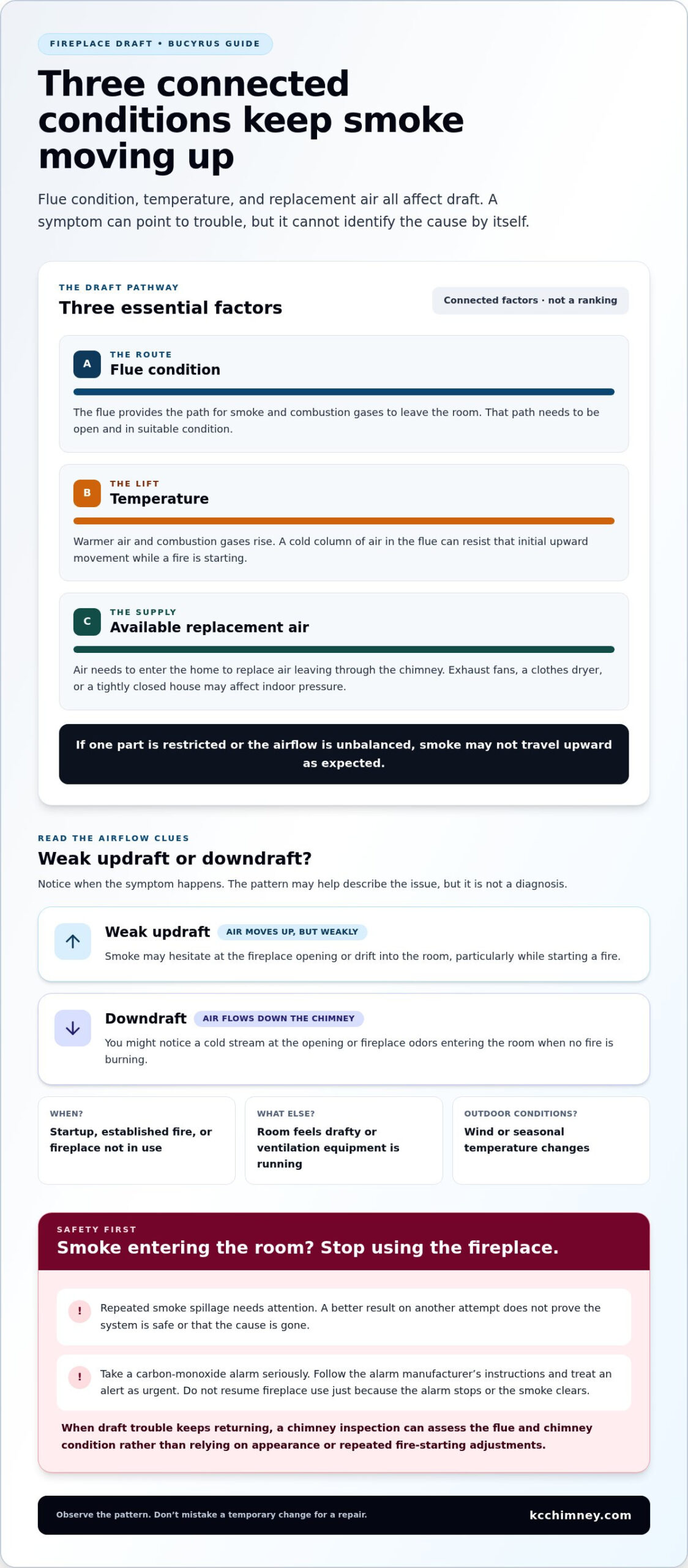
A weak updraft means air and smoke are moving upward, but not strongly enough to carry smoke reliably through the flue. Smoke may hesitate at the opening or drift into the room, particularly while starting a fire. A downdraft means air is flowing down the chimney and into the firebox. You might notice a cold stream at the opening or odors entering the room when no fire is burning.
The distinction isn’t always obvious. Fireplace use, indoor ventilation, and outdoor conditions can change airflow, so the same fireplace may act differently at different times. Note what was happening when the problem appeared, including whether the fire was just starting and whether the room felt drafty. Those observations can help a professional evaluate the issue, but they aren’t a diagnosis.
When a draft problem needs immediate attention
If smoke repeatedly enters the living space, stop using the fireplace. Don’t treat a better result on the next attempt as proof that the system is safe. A temporary change in airflow doesn’t explain why the smoke spilled into the room or establish that the underlying problem has gone away.
Take any carbon-monoxide alarm seriously. Follow the alarm manufacturer’s instructions and treat an alert as urgent. Don’t resume using the fireplace just because the alarm stops or the smoke clears. Recurring draft trouble deserves professional attention. A chimney inspection can assess the flue and chimney condition rather than relying on appearance or repeated fire-starting adjustments.
How Fireplace Draft Works in Bucyrus: Flue, Air Supply, and Pressure
A fireplace doesn’t work in isolation. As the fire heats air and combustion gases, they rise through the flue and exit outdoors. That movement requires an open path in suitable condition, and replacement air must enter the home to take the place of air leaving through the chimney. If either part of that movement is restricted or unbalanced, smoke may not travel upward as expected.
Reliable fireplace draft depends on three connected factors: flue condition, temperature, and available air. The flue provides the route, warmer gases help create upward movement, and the home needs enough replacement air for that flow to continue. These factors interact, so a symptom alone doesn’t prove which one is responsible.
Why a cold flue can make a fire struggle
Before a fire is established, the flue may contain a column of colder air. That air can resist the initial rise of warm exhaust, making smoke more likely to hesitate or spill into the room during startup. As the flue warms, upward flow may become easier, but that doesn’t rule out another issue with the chimney or the home’s airflow.
Follow the fireplace’s normal operating instructions and use cautious fire-starting practices. Don’t take a quick improvement as proof that the draft problem is fixed. If smoke continues to enter the room or the trouble returns, stop using the fireplace and arrange a professional evaluation.
How home pressure and Kansas conditions affect airflow
Air leaving through a kitchen or bathroom exhaust fan, clothes dryer, or other exhaust equipment may affect pressure inside the home. In a tightly closed house, less outdoor air may be available to replace what’s being exhausted. The resulting pressure difference can influence fireplace airflow and sometimes make it harder for smoke to rise. These appliances aren’t always the cause, so note whether symptoms change when they’re operating instead of assuming they explain the problem.
Wind and seasonal temperature changes can also affect pressure around a chimney and the temperature difference between indoors and outdoors. A fireplace may behave differently under different conditions. That variation is a clue to record, not a diagnosis specific to Bucyrus or proof of a chimney defect.
For homeowners considering how to fix a fireplace updraft problem Bucyrus, watching for patterns can help. Note whether the issue occurs at startup, while indoor ventilation equipment is running, or under particular outdoor conditions. Share those observations during an inspection rather than repeatedly adjusting the fire and hoping the trouble stays gone.
When draft concerns recur, a professional chimney inspection can assess the flue and chimney condition alongside the reported symptoms. Best Chimney Services follows National Fire Protection Association standards in its chimney work. A professional chimney inspection can help determine whether cleaning, repair, or further evaluation is the appropriate next step, rather than relying on airflow adjustments alone.
Common Fireplace Updraft Causes in Bucyrus: What to Check Before Assuming
Smoke or a hesitant fire can have more than one explanation. Before deciding that the chimney is damaged, note when the draft changes and what you can safely observe from inside the home. A clue can help focus an inspection, but it can’t confirm what’s happening inside the flue or behind chimney components.
The guide below separates everyday observations from issues that need professional assessment. Use it as a starting point, not a do-it-yourself diagnosis.
| Possible factor | Clue you may observe | What needs professional assessment |
|---|---|---|
| Cold flue | Draft is sluggish at startup, then changes as the fire warms. | Whether another condition is also interfering with draft. |
| Replacement air or room pressure | Symptoms vary when an exhaust fan or clothes dryer is operating. | How airflow and pressure interact with the fireplace and home. |
| Blockage | Smoke flow seems restricted, or draft trouble returns. | Possible debris or creosote inside areas you can’t safely see. |
| Chimney condition | You notice visible deterioration or recurring performance changes. | Possible liner damage, cap problems, or masonry and component deterioration. |
For further context on what a professional inspection may involve, see this Kansas City chimney inspection guide. The aim is to understand the system’s condition, not infer a specific defect from smoke behavior alone.
Air supply, room pressure, and fire-starting conditions
If you notice draft trouble while an exhaust fan or clothes dryer is running, observe whether the symptoms change when that appliance is off. Treat this only as a clue about timing, not a repair or proof of the cause. A cold flue or a fire-starting approach that doesn’t establish upward flow may also contribute to slow draft. Follow the fireplace’s normal operating instructions. Don’t rely on leaving a door or window open as a permanent fix.
Blockages, chimney components, and visible warning signs
Debris, creosote, liner damage, or deteriorating chimney components can interfere with performance, but most of these conditions can’t be confirmed from the firebox. Don’t climb onto the roof, dismantle parts, or modify a cap or liner based on a guess. A cap, liner, or masonry concern calls for professional evaluation. Advanced video inspection gives technicians a detailed view of the chimney interior and helps them assess areas that aren’t visible from the room.
If an inspection identifies damage, the right next step depends on the finding. The Kansas City chimney repair guide explains why repair decisions should follow an assessment rather than an improvised adjustment. For homeowners researching how to fix a fireplace updraft problem Bucyrus, keeping observations separate from conclusions helps prevent a temporary change from being mistaken for a lasting solution.
Safe Steps to Troubleshoot a Fireplace Updraft Problem in Bucyrus
Use a simple sequence to gather useful information without turning a draft concern into a risky repair attempt. Keep homeowner checks to what you can see and operate safely from inside the home. Don’t climb onto the roof, dismantle the fireplace, or modify chimney components.
- Stop if smoke enters the room. If smoke spills into the living space, stop using the fireplace. Don’t keep lighting fires to see whether the problem clears. Follow your carbon-monoxide alarm instructions, and treat an alarm as urgent.
- Observe the conditions. Note whether the issue starts while lighting the fire or develops later. Record the fireplace type, what you notice at the opening, and whether an exhaust fan or clothes dryer is running. These details can help distinguish a one-time change from recurring trouble.
- Check normal controls. Use the manufacturer’s instructions to confirm that the damper is positioned for fireplace use. Check only components that are visible and accessible without tools or taking anything apart. Don’t assume an adjustment has repaired the cause.
- Use normal startup practices, then stop if trouble returns. Use dry, suitable firewood and the fireplace’s usual startup method. Avoid accelerants and forced-draft devices. If draft remains unreliable after these basic checks, don’t keep experimenting with repeated fires.
Safe troubleshooting means observing accessible conditions. Evaluating or altering the chimney itself requires a trained professional. A cold flue or changing airflow may affect startup, but repeated smoke spillage can also point to a blockage or a chimney condition that isn’t visible from the room.
What Bucyrus homeowners can safely observe
Keep your notes specific: whether the fireplace was cold before use, whether smoke appeared immediately or later, and which exhaust appliances were operating. If the symptom changes when an appliance is off, record the timing without treating it as a fix. Limit checks to normal controls and visible areas. Never leave a door or window open as a permanent draft solution, and don’t use improvised tools or devices to push air through the flue.
When to stop troubleshooting and request an inspection
Stop using the fireplace if smoke repeatedly spills indoors or the draft remains unreliable. A professional evaluation can consider your observations alongside the flue condition, airflow clues, and visible chimney components. If the findings point to buildup, chimney sweeping may be an appropriate next step. Cleaning is not a substitute for assessing a suspected defect. This Kansas City chimney sweeping guide offers more context on cleaning as part of chimney care.
For homeowners researching how to fix a fireplace updraft problem Bucyrus, a proper evaluation is safer than relying on trial-and-error fires. Arrange a professional chimney inspection when draft trouble keeps returning, so next steps are based on the system’s condition.
How Best Chimney Services Diagnoses Fireplace Draft Problems Near Bucyrus
Recurring draft trouble needs more than another adjustment to the fire. A professional evaluation considers the pattern you’ve noticed, how the fireplace operates, the flue, and the visible condition of the chimney. Looking at these factors together helps distinguish airflow concerns from possible buildup or damage without assuming that one symptom points to a single cause.
Best Chimney Services serves homeowners in Bucyrus and Miami County, along with communities such as Overland Park, Mission Hills, Stilwell, and Spring Hill. Technicians consider your description of the problem alongside what they can observe in the fireplace and chimney. An advanced video inspection provides a detailed view of the chimney interior, helping technicians assess areas that aren’t visible from the room. It’s a diagnostic tool, not a promise that a particular cause will be found.
Once the findings are understood, the next step can be matched to the condition observed. Depending on the evaluation, that may involve chimney cleaning, liner installation, or chimney repair. A recurring draft problem doesn’t automatically mean one of these services is needed. Inspection findings guide the recommendation.
If draft symptoms keep returning, contact Best Chimney Services to arrange a professional evaluation, or call (816) 805-2271. Sharing when the symptoms occur can help make the inspection more focused.
What a professional chimney evaluation can clarify
An inspection can help separate an airflow pattern from visible buildup or chimney damage. Technicians may consider the flue and accessible chimney components, then use advanced video inspection to view the interior when appropriate. Best Chimney Services’ technicians are CSIA-certified, and the company follows National Fire Protection Association standards. Findings inform possible next steps, but they don’t predetermine a particular repair or outcome.
A local next step for homeowners in Bucyrus and Miami County
As a locally owned and operated company serving Miami County, Best Chimney Services can help homeowners make sense of recurring fireplace symptoms. Clear communication and transparent pricing with no hidden fees support informed decisions about inspection findings and any recommended work. If the fireplace continues to draft unreliably, avoid repeated trial-and-error fires and arrange an evaluation to understand the chimney’s condition.
Take the Next Step Toward a Reliable Fireplace
Now that you know what to observe, keep a brief record of recurring draft trouble instead of trying fire after fire. When you seek guidance on how to fix a fireplace updraft problem Bucyrus, those details can help a professional evaluate the fireplace in context and recommend a sensible next step.
Best Chimney Services supports homeowners in Bucyrus and Miami County, Kansas, as well as Overland Park, Mission Hills, Stilwell, and Spring Hill. Its CSIA-certified, background-checked, insured technicians can use advanced video inspections to provide a detailed internal view of the chimney when appropriate. That added visibility can inform an evaluation, while the findings determine whether cleaning or repair is warranted.
You don’t have to guess at what’s happening inside the flue. Get help with a recurring fireplace draft problem by contacting Best Chimney Services and taking a clear, informed step toward enjoying your fireplace with greater peace of mind.
Frequently Asked Questions
Can wind cause a fireplace to downdraft in Bucyrus?
Yes, wind can influence airflow around a chimney, but a windy-day downdraft doesn’t establish the cause. Note whether the issue appears during particular wind conditions and share that pattern during an inspection. Changes may relate to chimney configuration or nearby surroundings, which need assessment. If smoke repeatedly enters the room, stop using the fireplace. Don’t climb onto the roof or alter chimney components; arrange a professional evaluation instead.
Is a fireplace updraft problem dangerous?
It can be a safety concern, especially if smoke enters your living space. Stop using the fireplace until the problem is understood, and don’t assume a clear-looking room means the issue has passed. Smoke exposure and poor venting deserve careful attention, but the hazard can’t be diagnosed remotely from one symptom. Follow your carbon-monoxide alarm instructions, respond urgently to an alarm, and arrange an evaluation if the fireplace drafts unreliably or behaves unpredictably.
Can a kitchen exhaust fan cause fireplace draft problems?
Yes, a kitchen exhaust fan can change indoor air pressure and affect fireplace airflow in some homes, particularly when replacement air is limited. You can note whether the symptom changes when the fan is off, but that observation doesn’t prove the fan is the only cause. For example, a change may coincide with the fan while another chimney condition is also present. Recurring smoke spillage or unreliable draft still calls for professional assessment.
Does a chimney cap fix a fireplace updraft problem?
Not necessarily. A chimney cap has a protective role, but it isn’t a universal solution for weak or reversed draft. The problem may involve airflow, the flue, or another chimney component, so a technician should assess the symptoms and system before recommending work. Don’t remove or alter the cap, or climb up to inspect it. If draft trouble keeps returning, an inspection can help determine whether the cap is involved.
Can a fireplace insert improve poor draft?
An insert changes the appliance and venting arrangement, so whether it’s appropriate depends on the existing fireplace and chimney system. It isn’t an automatic cure for draft trouble. First, identify why the current fireplace is drafting poorly; then an inspection can help determine whether cleaning, repair, or an insert installation fits the findings. For homeowners considering how to fix a fireplace updraft problem Bucyrus, avoid assuming an insert will improve performance without a project-specific assessment.
What should I do if smoke comes into the room every time I use my fireplace?
Stop using the fireplace rather than trying different fires to see if the smoke clears. Follow your household’s carbon-monoxide alarm instructions, and seek urgent help if an alarm activates or anyone feels unwell. Don’t block or modify the flue. Arrange a professional chimney evaluation so the cause can be assessed, including whether airflow, buildup, or a chimney component may be involved. Share when the smoke appears and what the fireplace was doing.