
Did you know that the heat from a fire in an unlined chimney can ignite a home’s structural combustibles in as little as three and a half hours? It’s a sobering statistic that turns a cozy evening into a major safety concern. Most Kansas City homeowners want a fireplace that provides warmth without worry, yet they often feel stuck wondering how much does chimney relining cost when faced with a cracked or deteriorating flue. It’s frustrating to deal with technical jargon or the fear of high-pressure sales when you’re simply trying to protect your family and your property.
You deserve a transparent look at your options so you can make an informed decision for your home’s future. This guide provides a clear breakdown of the factors that influence your final investment. We’ll explore the long-term value of different materials like stainless steel and cast-in-place liners. You’ll also learn about local Kansas City requirements, including permit needs and how our regional climate affects the durability of your chimney system. Our goal is to help you find a path toward a safe, functional fireplace with the confidence of a seasoned expert by your side.
Key Takeaways
- Understand how a properly installed liner acts as a critical safety barrier against heat and toxic gases in your home.
- Discover the specific variables, such as flue diameter and appliance type, that determine how much does chimney relining cost for your specific property.
- Compare the long-term durability of stainless steel with the structural benefits of cast-in-place liners for historic Kansas City masonry.
- Learn how the unique freeze-thaw cycles of the Kansas City climate impact your chimney’s integrity and the regional labor factors you should expect.
- Identify the essential questions to ask a service provider to ensure you receive high-quality workmanship rather than a high-pressure sales pitch.
Understanding Chimney Relining and Why It Matters
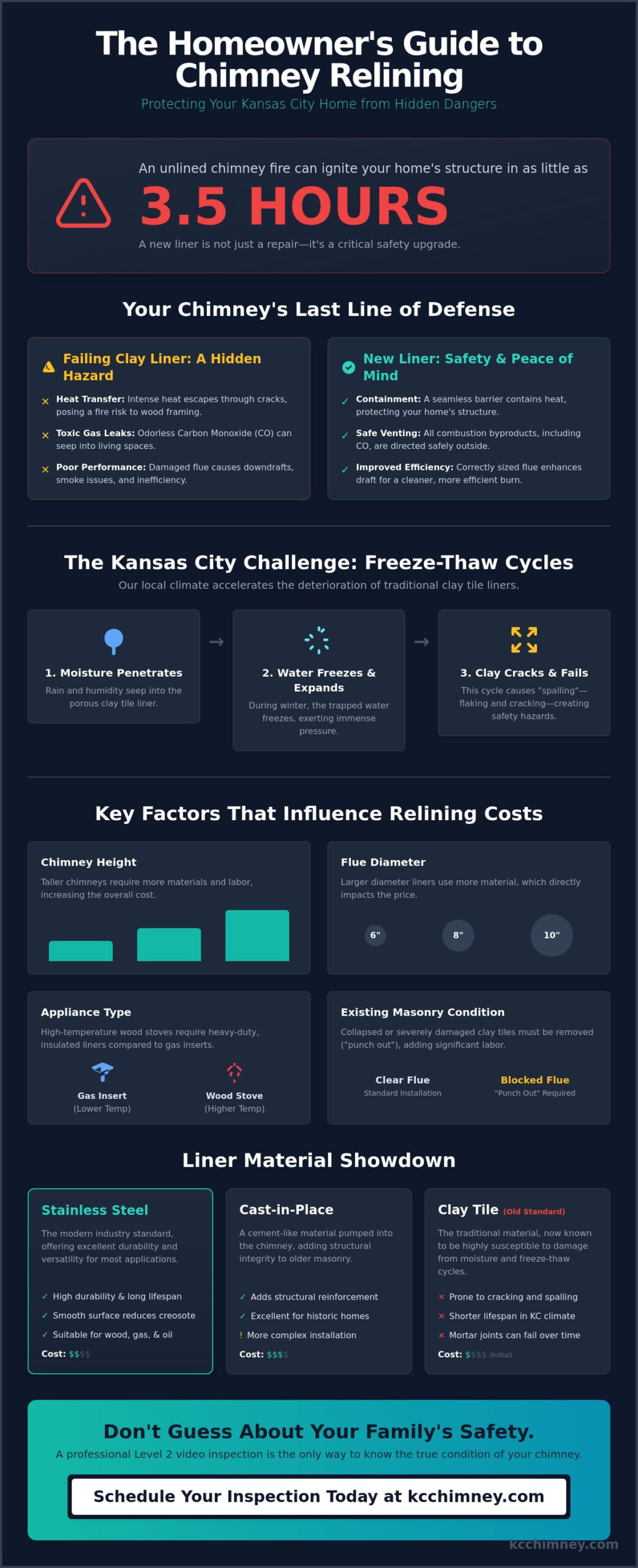
Think of your chimney liner as the protective shield of your home’s exhaust system. It is not just a pipe. It’s a critical barrier that separates high-intensity heat and toxic gases from your family’s living space. Understanding Chimney Flues is the first step in realizing why this structural component is so vital. A liner ensures that the byproducts of combustion, like heat, smoke, and carbon monoxide, are directed safely out of your home without affecting the surrounding masonry or wood framing.
In the Kansas City area, many of our beautiful historic homes rely on original clay tile liners. These tiles were the industry standard for decades, but they are highly susceptible to “spalling.” This occurs when moisture gets trapped inside the porous clay, freezes during our harsh Missouri winters, and then expands. This cycle causes the tile to flake off or crack, leaving your home vulnerable to heat transfer and gas leaks. Because our local climate features frequent freeze-thaw cycles, clay liners often deteriorate faster here than in milder regions.
When homeowners start noticing these issues, the first question is usually how much does chimney relining cost and whether the investment is truly necessary. The answer lies in the safety of your structure. A compromised liner allows heat to transfer directly to the wood framing of your house. Research shows that heat from a fire in an unlined chimney can ignite home combustibles in just a few hours. A new liner eliminates this risk by providing a continuous, seamless path for heat to travel.
Beyond safety, a new liner significantly improves your fireplace’s performance. It creates a consistent, appropriately sized path for smoke to exit. This prevents frustrating downdrafts and keeps your home smelling fresh. When the flue is sized correctly for your specific appliance, it creates a stronger draft, which helps your fire burn cleaner and more efficiently.
The Role of the Flue Liner in Home Safety
The primary job of a liner is containment. It acts as a continuous conduit that carries carbon monoxide and other combustion byproducts safely out of the home. Without this intact barrier, these odorless gases can seep through masonry joints and into your bedrooms. A smooth liner also reduces the areas where creosote can hide. This makes your regular chimney sweeping more effective and lowers the risk of a dangerous chimney fire by keeping the exhaust path clear and manageable.
Signs Your Current Liner is Failing
You might notice small, reddish-brown flakes in your firebox after a storm or a fire. This is a clear sign of shaling, where the clay tiles are literally falling apart. Other red flags include persistent smoke entering the room or a sudden drop in heating efficiency. Since most liner damage is hidden from the naked eye, a professional Level 2 inspection or Level 3 inspection is the only way to confirm the condition of your flue. We often find deep cracks or missing mortar joints that only a specialized camera can reach.
Key Factors That Influence Chimney Relining Costs
Every chimney in Kansas City is unique, which means a one size fits all quote is rarely accurate. When homeowners ask how much does chimney relining cost, we start by looking at the physical dimensions of the flue. The total height of your chimney and the diameter of the required liner are the two most significant drivers of price. A three story historic home in the Plaza area will naturally require more material and specialized equipment than a single story ranch in Overland Park. Larger diameters also increase the cost of the raw stainless steel, especially if your fireplace requires an eight or ten inch flue to vent properly.
The type of appliance you use plays a major role in determining the appropriate material and installation method. A wood burning fireplace produces much higher temperatures and more corrosive byproducts than a gas fireplace insert. Because of these extreme conditions, the Chimney Safety Institute of America emphasizes that the venting system must be specifically matched to the fuel type. If you are switching from a traditional open hearth to a high efficiency wood stove, the liner must be sized down to create the correct draft, which often involves additional labor for insulation and securement.
We also evaluate the condition of your existing masonry. If your original clay tiles have collapsed or are severely “shaling,” we may need to perform a “punch out.” This process involves physically removing the old tile to make room for the new stainless steel liner and its necessary insulation. The National Fire Protection Association (NFPA) often requires this insulation to maintain a zero clearance to combustibles, which is a vital safety standard for preventing house fires. If your chimney has a tight fit or multiple offsets, the labor hours required to safely navigate those bends will increase the total investment.
Material Grades: 304L vs. 316Ti Stainless Steel
Selecting the right grade of steel is an investment in your home’s longevity. While 304L stainless steel is often sufficient for gas appliances, 316Ti is the industry standard for wood burning systems. 316Ti is a high grade stainless steel alloy containing titanium to withstand extreme heat and prevent corrosion. In our local climate, where humidity and temperature swings are common, the extra corrosion resistance of 316Ti ensures your liner won’t fail prematurely due to acidic creosote buildup.
The Complexity of the Installation
Labor costs fluctuate based on how difficult it is for a technician to reach your chimney crown. A steep roof pitch or a chimney that rises high above the roofline requires specialized scaffolding or safety harnesses. If your flue has offsets, meaning it doesn’t run in a perfectly straight line, the installation becomes more technical. Navigating these bends without damaging the liner requires patience and precision. If you suspect your chimney has structural issues or difficult access, scheduling a thorough Level 2 inspection is the best way to get a clear picture of the work required before the project begins.
Comparing Liner Materials: Performance vs. Price
Choosing the right material is the most important decision you’ll make for your hearth’s longevity. While the initial question is often how much does chimney relining cost, the real focus should be on long-term value and safety. In Kansas City, where we see everything from 19th-century brickwork to modern builds, the material must match the architectural needs of the home. We evaluate every chimney based on its structural integrity and the appliance it serves to ensure the liner provides a permanent solution.
Stainless steel remains the lifetime solution for the vast majority of homeowners. It provides a seamless, non-corrosive path for exhaust that handles the high temperatures of wood and the acidic condensation of gas. For those with historic masonry that needs structural help, cast-in-place liners offer a unique benefit. This method involves pumping a cement-like mixture into the chimney, which fills cracks and reinforces the stack from the inside out. While it is a premium option, it can save a chimney that is otherwise too fragile for a metal insert.
You might wonder about traditional clay tiles. Replacing them is rarely the best value because it requires tearing open the chimney breast or stack to install new tiles. This labor-intensive process often costs more than a stainless steel upgrade but lacks the flexibility and durability of metal. Then there is aluminum. Some budget-focused guides suggest aluminum as a cheap alternative. We rarely recommend it. Aluminum is only suitable for certain gas appliances and will literally melt or corrode if used with wood-burning stoves or fireplaces. It simply doesn’t offer the protection a Kansas City home needs.
Why Stainless Steel is the Professional Standard
Stainless steel liners are favored because they are incredibly resilient. They resist the corrosive effects of creosote and moisture, which are common issues in our regional climate. Their flexibility allows them to navigate offsets and bends in old chimneys that would be impossible to line with rigid materials. Most high-quality stainless systems come with lifetime warranties. This adds significant resale value to your home, as future buyers will know the fireplace is safe and up to code.
Insulation: The “Hidden” Cost of Safety
A professional installation is never complete without proper insulation. Whether using a pour-in vermiculite mix or a ceramic blanket wrap, insulation is a required safety component. It ensures the chimney meets zero-clearance standards, meaning the exterior of the masonry stays cool enough to prevent nearby wood framing from igniting. Beyond safety, insulation keeps the flue gases hot. This improves the draft, reduces creosote buildup, and ensures your fire starts quickly and burns efficiently. When calculating how much does chimney relining cost, always ensure insulation is included in the quote.
The Kansas City Variable: Local Costs and Inspections
Geography plays a larger role in your home maintenance budget than you might expect. When you ask how much does chimney relining cost, the answer in the Kansas City metro area is shaped by our unique regional factors. In communities like Overland Park and throughout Johnson County, labor rates reflect the high demand for specialized masonry professionals who understand our specific housing stock. Many of the homes in our area were built during eras where clay tile was the standard, and today, those systems are reaching the end of their functional life. Our local labor market is competitive, but it rewards technicians who possess the specific certifications required to handle these complex structural upgrades.
This focus on specialized expertise isn’t limited to home repairs; for those who prioritize performance in their vehicles, KDM Tuners provides a platform to explore Direct E-commerce Product Sales and Specialized Labor Fees tailored for Hyundai, Kia, and Genesis models.
Our regional climate is particularly tough on masonry. Kansas City experiences intense freeze-thaw cycles where moisture enters the chimney, freezes, and then expands. This process accelerates the degradation of original liners, often leading to structural issues that aren’t common in more temperate states. Because of this, a quote for a chimney in Leawood might include more extensive prep work than a similar project in a different part of the country. These environmental stressors make a thorough expert chimney inspection in Kansas City an essential first step before any relining project begins.
Why a Level 2 Inspection is Non-Negotiable
We believe in “no surprises” when it comes to your home’s safety. A standard visual check isn’t enough to provide an accurate relining quote. We use specialized video technology to perform Level 2 inspections, which involves running a camera through the entire length of the flue. This allows us to identify hidden structural cracks or collapsed tiles that could interfere with the new liner. By catching these issues early, we protect you from unexpected mid-project expenses and ensure the new system is installed on a solid foundation.
Navigating Local Building Permits in Overland Park and Leawood
Chimney relining is classified as “heating and ventilating work” under many local codes, including Kansas City, MO, and surrounding municipalities. This means a permit is generally required to ensure the work meets modern safety ordinances. Working with a CSIA-certified technician is vital here. We understand the specific requirements for different jurisdictions, from the historic districts of KCMO to the newer developments in Overland Park. Ensuring your repair is permitted and inspected by the city protects your home’s resale value and guarantees that the installation meets the highest safety standards. If you’re ready to secure your home’s hearth, schedule a professional assessment today.
Investing in Your Hearth: Choosing the Right Pro
Choosing the right contractor is just as important as choosing the right liner material. While you may be focused on how much does chimney relining cost, the quality of the workmanship determines the true return on your investment. A low bid is often a red flag in this industry. It usually means the contractor is skipping the critical insulation layer or using a lower-grade alloy that won’t stand up to the acidic byproducts of your fireplace. We’ve seen many cases where a budget installation failed in just a few years, leading to even more expensive repairs down the road.
A professional installation is about more than just safety; it’s about respect for your property. Seasoned experts use specialized dust containment systems to ensure your living room stays clean throughout the process. This level of thoroughness extends to the structural work as well. A properly relined chimney significantly boosts your home’s resale value. When a home inspector sees a certified, high-grade liner, it removes a major hurdle from the selling process. It proves you have maintained the property with integrity and prioritized the safety of the structure.
Before you sign a contract for your Kansas City home, ask your chimney professional these essential questions:
- Are you CSIA-certified and familiar with local Kansas City building codes?
- Does your quote include the NFPA-required insulation for zero-clearance safety?
- What specific grade of stainless steel are you installing, and what is the warranty?
- How will you protect my home’s interior from soot and debris during the install?
The Best Chimney Services Approach to Relining
We treat every home as if it were our own. Our approach is built on a foundation of technical authority and neighborly service. We don’t believe in high-pressure sales; instead, we provide a methodical education on your chimney’s specific needs. By following rigorous industry standards and utilizing proprietary safety protocols, we deliver results that last for decades. If your chimney needs more than just a liner, we also specialize in expert chimney repair in Kansas City to ensure the entire masonry structure is sound and secure.
Next Steps for Your Kansas City Home
The path to a safer fireplace starts with an honest assessment. To get an accurate understanding of how much does chimney relining cost for your specific flue, you need a professional evaluation. We recommend clearing the area around your hearth and removing any decorative items from the mantel before our arrival. This allows our technicians to perform a thorough video scan and provide a clear, line-item quote. Don’t leave your family’s safety to chance. Get a Chimney Relining Quote from Best Chimney Services today and enjoy the peace of mind that comes with a job done right.
Secure Your Home’s Hearth for the Future
Protecting your family from the risks of a damaged flue is one of the most important maintenance steps you can take for your home. You now understand that determining how much does chimney relining cost depends on your chimney’s unique dimensions, the material you choose, and the specific structural needs of your Kansas City property. Investing in a high-grade stainless steel liner or a structural cast-in-place solution ensures your fireplace remains a safe, efficient source of warmth for decades to come. By prioritizing professional inspections and proper insulation, you avoid the hidden dangers of shortcuts and low-bid compromises.
Our team has been serving Johnson and Miami Counties since 2012. With CSIA-Certified Technicians and an A+ rated local reputation, we focus on delivering thoroughness and integrity in every project. We handle the technical complexities of local building codes and regional climate challenges so you don’t have to. Schedule Your Professional Chimney Evaluation Today to get a clear, expert assessment of your venting system. We look forward to helping you enjoy a lifetime of worry-free fireside memories.
Frequently Asked Questions
Is chimney relining really necessary if I only use my fireplace occasionally?
Yes, relining is necessary because even a single fire in a damaged flue can ignite your home’s structural framing. Damage like cracks or missing mortar joints allows toxic gases and extreme heat to seep into your walls regardless of how often you light a fire. While it’s a common concern when calculating how much does chimney relining cost, the safety benefits far outweigh the occasional-use argument.
How long does a stainless steel chimney liner typically last?
High-quality stainless steel liners typically last between 15 and 20 years. Many of the premium systems we install come with a lifetime warranty that remains valid as long as you maintain regular professional chimney sweeping. This durability makes them a superior long-term investment compared to traditional clay tiles, which are prone to cracking during Kansas City’s intense freeze-thaw cycles.
Can I reline my chimney myself to save on labor costs?
We strongly advise against DIY installation due to the complex safety standards and physical risks involved. Professional installers ensure that the system meets NFPA 211 standards and local Kansas City building codes, which often require specific permits for heating and ventilating work. Improperly installed liners can lead to poor drafting or carbon monoxide leaks, often voiding your homeowner’s insurance in the process.
Does a new chimney liner increase the value of my home in Kansas City?
A new liner significantly increases your home’s value by providing documented proof of a safe, functional fireplace. In the local real estate market, a certified chimney system is a major selling point that prevents delays during the home inspection process. For those looking to sell or explore investment options, KC Home Offers LLC understands how essential these structural updates are for maintaining a property’s marketability. It transforms a potential liability into a verified structural asset that gives future buyers peace of mind about the property’s safety.
What is the difference between a flexible and a rigid chimney liner?
Flexible liners are designed to navigate the offsets and bends common in older masonry chimneys, while rigid liners are used for perfectly straight flues. Both provide excellent protection when sized correctly for your appliance. Flexible options are often necessary in historic Kansas City homes to ensure a seamless fit through the existing masonry without requiring invasive and expensive structural changes.
How long does the professional relining process take to complete?
A professional relining project typically takes between 4 and 8 hours to complete. The exact timeframe depends on the height of your chimney and whether our team needs to remove old, collapsed clay tiles to clear the path. Most installations are finished in a single day, allowing you to return to using your fireplace safely by the time the sun goes down.
Will a new liner stop my chimney from leaking during heavy rain?
A new liner is designed to contain heat and exhaust gases, not to stop water from entering the external chimney structure. If you have rain leaks, the issue usually stems from a damaged chimney cap, a cracked crown, or porous masonry. We often recommend a comprehensive inspection to see if additional services like crown repair or tuckpointing are needed to keep your chimney completely dry.
Does my insurance cover the cost of chimney relining?
Standard homeowner’s insurance generally does not cover the cost of relining if the damage is due to age or lack of maintenance. However, if your liner was damaged by a sudden event like a chimney fire or a lightning strike, your policy might cover the replacement. When homeowners ask how much does chimney relining cost, we always suggest reviewing their specific policy for “sudden and accidental” clauses.