
A gas fireplace can need more than a quick wipe before the heating season. It doesn’t build up wood ash in the same way as a wood-burning fireplace, but dust, venting concerns, soot, weak flames, unusual odors, or unreliable ignition still deserve attention. Gas fireplace cleaning and maintenance Mission Hills homeowners can rely on starts with the appliance, its venting, and any changes in how it operates.
It’s reasonable to wonder which checks are safe to handle yourself and when to call a professional. This 2026 checklist explains what to look over, what to leave to a technician, and how to prepare for service. You’ll learn which warning signs call for prompt attention and what a useful service visit should address. Best Chimney Services serves Mission Hills homeowners as part of its work across the Kansas City area, with a safety-focused approach to chimney and fireplace care.
Key Takeaways
- Use the fireplace manual to guide routine checks. Gas appliances don’t follow the same cleaning routine as wood-burning fireplaces.
- Match appliance and venting checks to your fireplace model instead of relying on a universal parts list.
- Keep homeowner observations simple, and leave gas-control components and professional assessments to a technician.
- Before booking gas fireplace cleaning and maintenance Mission Hills service, gather your appliance details and note symptoms, recent changes, and typical use.
- Seasonal use, changes in operation, or uncertainty about vent condition can help you decide when to schedule service.
Gas Fireplace Cleaning and Maintenance in Mission Hills: What Belongs on Your Checklist?
It’s understandable to be unsure how much care a gas fireplace needs. It burns differently from a wood fireplace, so wood-fire habits don’t automatically apply. But gas operation doesn’t mean the appliance can be ignored. Routine attention should follow the manufacturer’s instructions and account for the fireplace model, its venting, how often it’s used, and its observed condition.
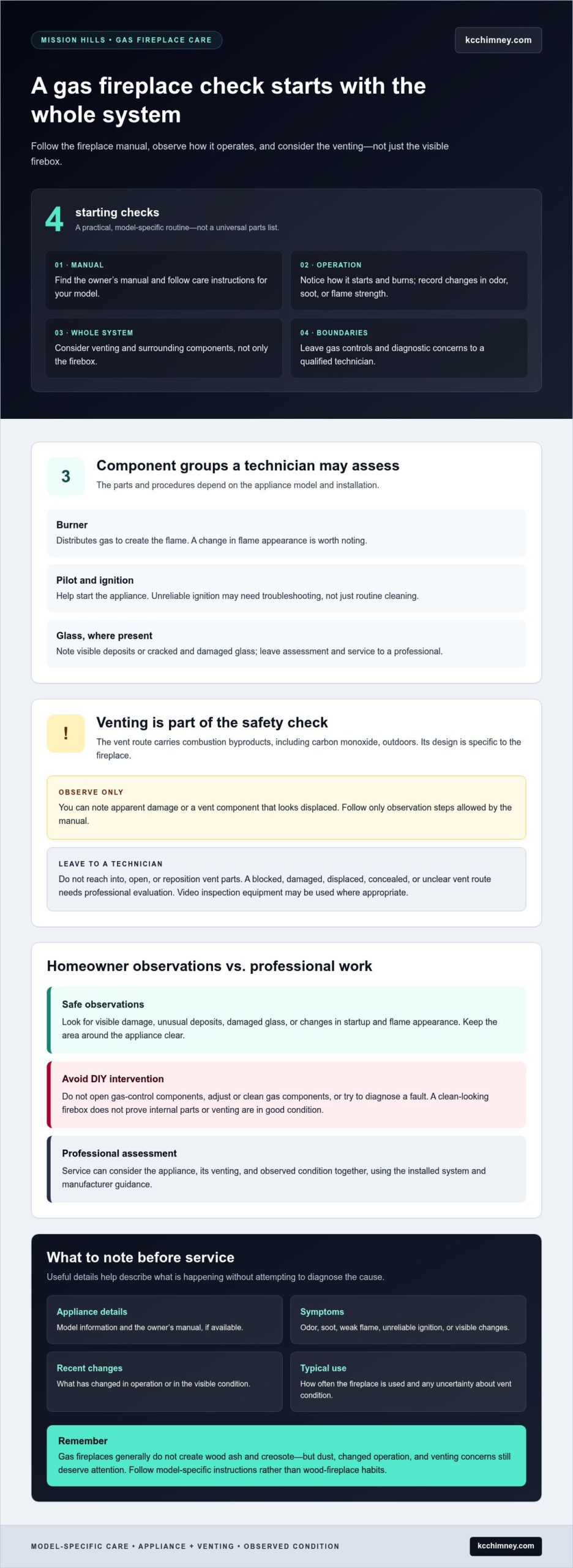
Use these steps as a starting point:
- Find the owner’s manual and follow its model-specific care instructions.
- Observe how the fireplace starts and operates. Note changes such as an unusual odor, soot, or a weak flame.
- Consider the venting and surrounding components, not just the visible firebox.
- Leave gas-control components and concerns that require diagnosis to a qualified technician.
What routine gas fireplace maintenance includes and excludes
Gas fireplaces generally don’t create the wood ash and creosote associated with burning wood, so their maintenance isn’t the same as a standard wood-fireplace sweep. Dust and changes in the appliance’s condition can still warrant attention. The cleaning scope depends on the fireplace model and its manufacturer instructions. Routine care means assessing the appliance and venting, not assuming every unit has the same parts or needs the same procedure.
If the fireplace won’t ignite reliably or its flame has changed, it may need troubleshooting rather than routine upkeep. The gas fireplace repair guide can help distinguish repair concerns from general maintenance.
Why Mission Hills homeowners should consider the whole fireplace system
Mission Hills homes can have different fireplace and vent configurations. Modern fireplace systems use different fuel and venting arrangements, so the installed design matters when planning care. The appliance, the route that carries combustion byproducts outdoors, and the surrounding components all deserve consideration. A professional assessment can focus on the installed system and its observed condition rather than rely on a one-size-fits-all checklist.
Routine gas fireplace maintenance is a model-specific check of the appliance and venting, guided by the manufacturer’s instructions and the fireplace’s observed condition. That’s a practical foundation for planning gas fireplace cleaning and maintenance in Mission Hills. It also helps you recognize when a concern deserves professional attention instead of another cleaning attempt.
Which Gas Fireplace Parts and Venting Checks Matter Most?
A gas fireplace isn’t one standard assembly. Its parts and exhaust route depend on the model and installation, so a useful inspection starts with the appliance manual rather than a universal checklist. Venting carries combustion byproducts outdoors. Depending on the design, the manual may refer to a vent pipe, vent system, chimney, or flue. The terms matter because parts and procedures for one fireplace may not apply to another.
The burner, pilot, ignition, and glass: what a technician may assess
The burner distributes gas to create the flame. The pilot and ignition components help start the appliance, while the glass, where present, separates the fire from the room. A technician may assess their condition and operation as part of service suited to the model. Homeowners can note visible deposits, cracked or damaged glass, or changes in startup and flame appearance. Leave inspection behind panels and any adjustments or cleaning of gas components to a professional.
These observations help describe what’s happening, but they don’t identify the cause. Cleaning alone may not resolve weak flames or ignition trouble, which can have different sources. A comprehensive maintenance guide offers broader background, but your fireplace manual should guide care for your specific unit.
Venting and carbon monoxide: why the route matters
The venting arrangement is designed for the fireplace’s particular configuration. You can note apparent damage or a component that looks displaced, but reaching, opening, or repositioning vent parts is not a DIY task. A blocked, damaged, or displaced section needs professional evaluation. Because combustion byproducts include carbon monoxide, the route that carries exhaust outdoors is central to responsible operation.
Proper venting is an essential part of responsible gas fireplace operation, and its condition should be assessed for the fireplace’s specific design.
For a safe pre-service check, follow only the observation steps allowed by the manual. Don’t open gas-control components or assume the inspection procedure for one model applies to another. If the vent route is concealed or its condition is unclear, a technician can assess it and use video inspection equipment where appropriate.
For gas fireplace cleaning and maintenance Mission Hills homeowners can approach with confidence, share the model information and any visible changes with the technician. A focused fireplace and chimney service visit can consider the appliance, venting, and observed condition together.
DIY vs. Professional Gas Fireplace Maintenance
Homeowners can notice changes and follow the fireplace manual for routine external care. But a clean-looking firebox doesn’t prove that internal components or the vent route are clear and in good condition. Keep visual checks separate from opening the appliance, adjusting components, or trying to diagnose a fault.
| Safe homeowner observations | Actions to avoid | Professional assessment |
|---|---|---|
| Look for visible damage, unusual deposits, damaged glass, or changes in how the fireplace starts or burns. Keep the area around the appliance clear. | Don’t open gas-control components, adjust gas valves or burners, dismantle the fireplace, or reach into venting. | A technician can assess reported symptoms and the appliance and venting condition using procedures suited to the specific model. |
| Follow the manufacturer’s instructions for external care and normal operation. Note when an issue happens and what you observe. | Don’t assume that a normal-looking flame or clean exterior confirms every component is sound. | Professional evaluation can help determine whether a concern calls for cleaning, further inspection, or repair. |
What homeowners can safely observe between service visits
Keep checks simple. From outside the appliance, look for visible damage or an unexpected change, and make sure the fireplace area remains unobstructed. Follow the manual for any routine care it allows. If startup is unreliable, the flame looks different, or a sound or odor has changed, record what happened and when. Those details give a technician a clearer starting point without requiring you to open or handle gas components.
When to stop using the fireplace and arrange professional attention
If you smell gas, leave the area and contact the appropriate emergency or gas utility service from a safe location. Don’t try to locate the leak or operate the fireplace. Stop using the unit and arrange professional attention for unusual soot, repeated ignition failure, damaged glass, or other abnormal operation. Don’t attempt to correct these conditions by adjusting the burner, gas valve, or vent.
For concerns involving the connected chimney system, the Kansas City chimney inspection guide explains inspection context. A chimney-system inspection and a model-specific gas appliance assessment address related but distinct concerns, so describe what you’ve observed when arranging service.
For gas fireplace cleaning and maintenance Mission Hills homeowners can handle routine observations while leaving internal checks and troubleshooting to a technician. Keep your role practical: notice, document, and report. Let a professional assess the parts you can’t safely evaluate yourself.
Mission Hills Gas Fireplace Pre-Service Checklist
A little preparation helps make a gas fireplace service visit more focused. Gather information about the appliance and what you’ve noticed, then leave access to internal components and connected gas equipment to the technician. Use this checklist to prepare for gas fireplace cleaning and maintenance in Mission Hills.
Five preparation steps before a gas fireplace service visit
- Find the manual and appliance details. Locate the owner’s manual and note the fireplace make, model, or other identifying information. The instructions help guide an assessment that fits your unit.
- Write down symptoms. Note unusual sounds or odors, visible residue, ignition changes, or any difference in flame appearance. Record when each symptom occurs, such as at startup or during operation.
- Describe recent changes. Mention changes in use, operation, or the surrounding area that may help explain when a concern began. Include how often you typically use the fireplace.
- Clear safe access. Move nearby items that block access to the appliance, as long as they aren’t connected to the gas system. Don’t move the fireplace or connected equipment.
- Leave panels and components in place. Don’t remove covers, glass, or other parts to prepare for the visit. A technician can determine what access and assessment are appropriate for the model.
What to expect during a professional maintenance assessment
A technician can review your notes, identify the fireplace setup, and assess its visible condition in a way suited to the appliance and its venting. The exact tasks depend on the model, manufacturer guidance, and what the visit reveals, so don’t assume every unit follows the same procedure. If video inspection is appropriate for the setup, it can help examine areas that aren’t readily visible.
Expect the findings and recommended next steps to be explained clearly. Sharing when an issue occurs and how often you use the fireplace helps connect your observations with the appliance’s condition. If your fireplace is part of a larger chimney system, the Kansas City chimney sweeping guide offers related information about chimney care.
Ready to arrange a visit? Schedule gas fireplace service and have your appliance details and observations ready to share.
Schedule Gas Fireplace Cleaning and Maintenance in Mission Hills
Scheduling makes sense if you use your fireplace seasonally and want its condition assessed before relying on it, have noticed a change in operation, or aren’t sure about the venting. You don’t need to diagnose the cause first. A clear description of what you’ve observed helps direct the service conversation toward the appliance and your concerns.
Choose a service visit based on condition, use, and manufacturer guidance
Start with the owner’s manual. It can explain the manufacturer’s recommended maintenance schedule and model-specific care. Don’t assume one interval fits every gas fireplace. Appropriate timing depends on the unit’s guidance, how often it’s used, and its condition. If you’ve noticed an unusual odor, soot, ignition trouble, or another change, arrange professional attention rather than waiting for routine upkeep.
Seasonal users may prefer to plan ahead of regular use, while homeowners who’ve observed a problem should describe it when scheduling. If you’re uncertain about the vent’s condition, say so. That gives the technician a useful starting point without requiring you to inspect or adjust components yourself.
Make the next step straightforward for Mission Hills homeowners
When booking, share the fireplace type and any make or model details you have. Describe what happens, when it happens, and whether anything has changed recently. Mention how often you use the unit and what you’d like the visit to address, such as routine maintenance, a change in operation, or a concern about venting. Clear observations help focus the conversation on the right assessment.
Best Chimney Services serves homeowners in Mission Hills and across the Kansas City area, including Overland Park, Stilwell, Bucyrus, and Spring Hill. Its certified technicians can review your reported concerns and assess the appliance, venting, and observed condition. The technician can explain relevant findings and next steps without treating every fireplace as though it has the same setup or needs.
For gas fireplace cleaning and maintenance Mission Hills homeowners can plan around, use the manual as a guide and take changes in operation seriously. If you’re preparing for the season, have noticed a concern, or want a professional assessment of your fireplace’s condition, schedule a service visit with Best Chimney Services. Share what you know so the discussion can start with your specific appliance and observations.
Plan Ahead for Reliable Fireplace Care
Gas fireplaces don’t need the same care as wood-burning units, but their appliance and venting still deserve attention. Follow the manufacturer’s instructions, note changes in ignition, flame, odors, or visible condition, and leave gas-control components to a technician. These steps can help you decide when to arrange gas fireplace cleaning and maintenance in Mission Hills.
Best Chimney Services serves Mission Hills, Overland Park, Stilwell, Bucyrus, Spring Hill, and the surrounding Kansas City area. Its certified technicians use advanced video inspection equipment where appropriate to assess fireplace and chimney conditions. Share your model information and concerns so the service visit can address what matters in your home.
Before relying on your fireplace, take the next step and schedule gas fireplace service in Mission Hills. Share your observations and arrange a professional assessment of your fireplace.
Frequently Asked Questions
How often should a gas fireplace be cleaned and serviced?
Follow the maintenance schedule in your fireplace manual, since service needs depend on the model, venting, use, and condition. Some fireplace professionals recommend annual inspection and service, but your manufacturer’s instructions should guide your unit’s care. Schedule attention sooner if you notice unusual soot, an unfamiliar odor, or unreliable ignition. A technician can assess the appliance and venting if you’re unsure what your manual recommends.
Does a gas fireplace need chimney cleaning?
It may, depending on the fireplace design and its venting route. A gas unit doesn’t produce wood-fire creosote in the same way a wood-burning fireplace does, but that doesn’t mean a connected chimney or vent never needs attention. The appropriate assessment depends on the setup and its condition. A technician can determine whether chimney sweeping or another form of inspection is relevant to the system.
Can I clean my gas fireplace myself?
You can perform only the external care and observations allowed by the manufacturer’s instructions. For example, keep the area around the appliance clear and note visible changes. Don’t open gas-control components, adjust valves or burners, or dismantle the fireplace to clean inside it. If the manual’s instructions are unclear, leave the internal assessment to a technician familiar with gas fireplaces and their model-specific requirements.
What are signs that a gas fireplace needs maintenance or repair?
Arrange professional attention if you notice unusual soot, a weak or changed flame, repeated ignition trouble, a pilot that won’t stay lit, damaged glass, or abnormal sounds or odors. These observations can indicate that the appliance needs assessment, but they don’t identify the cause on their own. Stop using the fireplace if its operation seems abnormal, and tell the technician when the symptoms occur.
Is it normal to smell gas when using a gas fireplace?
A gas odor during operation should be treated as urgent, not assumed to be normal. Leave the area and contact the appropriate emergency service or gas utility from a safe location. Don’t try to find the source, operate the fireplace, or adjust its controls. Arrange professional attention before using the appliance again. If the smell is present now, prioritize leaving and contacting the appropriate service rather than troubleshooting.
What happens during a gas fireplace maintenance visit?
A technician can review your concerns and assess the appliance and venting in a way suited to the fireplace’s model and observed condition. The scope varies, so the owner’s manual and the unit’s setup matter. Where appropriate, advanced video inspection equipment can help assess areas that aren’t readily visible. The technician should explain relevant findings and next steps. Best Chimney Services serves Mission Hills and nearby communities, including Overland Park, Stilwell, Bucyrus, and Spring Hill.
Should I use my gas fireplace if the glass is cracked or the pilot will not stay lit?
No. Stop using the fireplace and arrange professional assessment if the glass is cracked or the pilot repeatedly goes out. Don’t remove or repair the glass, adjust gas controls, or attempt to troubleshoot the pilot yourself. Tell the technician what happened and when. A qualified assessment can determine what attention the appliance needs before you use it again.