
A clean-looking fireplace can still conceal problems. A fireplace safety inspection for elderly parents in Mission Hills should be done at least once per year and assess the firebox, chimney, flue, damper, and ventilation. It can reveal creosote buildup, cracks, leaks, blockages, and airflow concerns that may affect safe use.
It’s understandable to want a clear picture before your parents use the fireplace, especially if it hasn’t been checked recently or shows signs of wear. An inspection turns hidden concerns into practical findings, helping you understand what needs attention and what appears ready for use.
Here’s what the inspection can cover, including visible masonry and moisture damage, cleaning needs, and repairs. You’ll also learn how the fireplace’s condition and recent changes to the home can shape the next steps.
Key Takeaways
- Arrange a fireplace inspection once a year, especially before regular use, and have the chimney, flue, damper, firebox, and ventilation assessed.
- Look for cracked mortar, damaged caps, stains, rust, and signs of moisture that may point to masonry wear or water entry.
- Use inspection findings to understand whether creosote cleaning, chimney relining, crown repair, or another repair is appropriate.
- For gas fireplaces, an inspection can assess the burner, ignition system, gas lines, and venting, helping clarify what needs attention before use.
Fireplace inspection of the chimney, flue, damper, and firebox
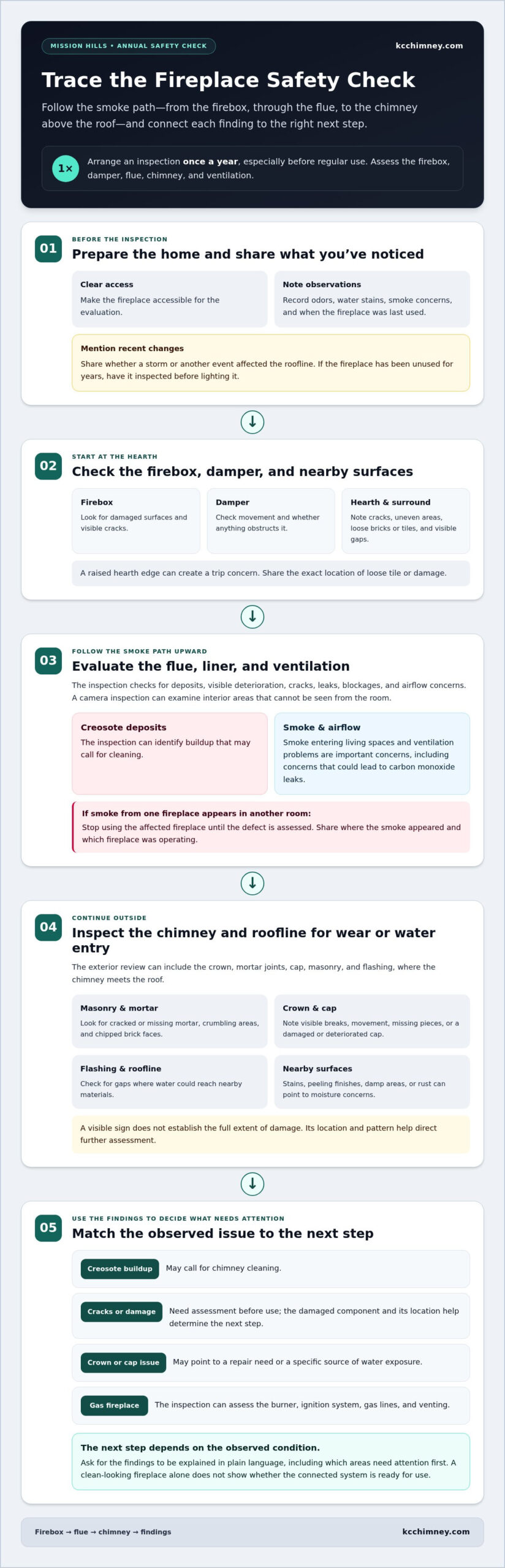
A fireplace inspection follows the path smoke takes, from the firebox through the flue and out above the roof. In Mission Hills, where chimneys and flues are among the Kansas City metro’s oldest, an annual evaluation can reveal wear before regular winter use. It should assess the firebox, damper, flue, chimney, and ventilation, including creosote buildup, cracks, leaks, blockages, and airflow concerns.
At the fireplace, the inspector checks the firebox for damaged surfaces and the damper for movement and obstructions. The flue and liner are assessed for deposits or visible deterioration; a camera inspection can examine interior areas that aren’t visible from the room. Outside, the review can include the crown, mortar joints, cap, masonry, and flashing. These components can show where moisture enters or where chimney repair may be needed.
When choosing a chimney inspector near Mission Hills, compare the written inspection scope and how clearly the findings are explained. Check whether the assessment covers accessible interior and exterior components, airflow, and observed damage, rather than just a quick look at the firebox.
Fireplace safety inspections near Mission Hills should evaluate the chimney and fireplace as one connected system. A chimney sweep inspection can identify deposits that may call for cleaning, while cracks, a damaged crown, or a missing or deteriorated cap may point to repair needs. The right next step depends on the observed condition, not simply the fireplace’s appearance.
For elderly residents, smoke entering living spaces and ventilation problems that could lead to carbon monoxide leaks are important concerns. An inspection helps families understand what the fireplace’s condition reveals before their parents use it. Ensuring a secure living environment often goes hand in hand with broader day-to-day support; for families seeking dedicated assistance for aging loved ones, exploring in home personal care services durham nc highlights how comprehensive care helps seniors remain safe and comfortable at home.
Prepare your parent’s home by clearing access to the fireplace and noting any odors, water stains, or smoke concerns. Share when it was last used and whether a storm or other event affected the roofline. If the fireplace has been unused for years, have it inspected before lighting it. A stuck damper, failed cap or crown, animal occupants, or hardened creosote may otherwise go unnoticed.
Visible masonry and moisture damage
A careful chimney inspection looks beyond loose bricks to trace how moisture may be entering. In Mission Hills, older chimneys can show wear around mortar joints, crowns, caps, and flashing. Water stains near the fireplace or rust on metal parts can also point to moisture concerns. These signs help explain where further assessment may be needed.
Look at the masonry as a connected surface. Cracked or missing mortar can leave gaps between bricks, while chipped brick faces may indicate deterioration. A damaged crown can allow water to reach the chimney structure; a loose or deteriorated cap may leave the flue exposed. Flashing, where the chimney meets the roof, also deserves attention because gaps can let water reach nearby materials.
- Mortar: Note open joints, crumbling areas, or cracks that continue across several bricks.
- Crown and cap: Look for visible breaks, movement, or missing pieces.
- Nearby surfaces: Record stains, peeling finishes, or damp areas around the chimney.
These observations don’t establish the full extent of damage. An inspection assesses accessible masonry, the firebox, and chimney areas for cracks, rust, stains, and signs of water entry. The location and pattern matter: a stain near the roofline may suggest a different entry point from dampness beside the firebox. Clear notes and photos can help families track changes between evaluations.
For an elderly parent, visible damage can raise practical concerns about whether the fireplace should be used before the issue is understood. Share specific observations during the inspection, such as a new stain after rain or mortar that has fallen near the hearth. That detail helps direct attention to the affected area and supports peace of mind through a careful assessment.
If the inspection identifies a damaged or missing cap, chimney cap installation can address that specific source of exposure. The appropriate repair depends on the observed condition and where moisture is entering, not simply on the presence of one crack.
Fireplace cleaning and repair
Inspection findings help distinguish cleaning needs from repair concerns. Creosote inside a chimney flue may call for cleaning, while cracked components or damaged venting need assessment before use. A thorough review connects each concern with the part it affects, such as deposits in the flue or a loose tile at the hearth. Ask for the findings to be explained in plain language, including which areas need attention first.
The hearth deserves a close look because people step across it and place items nearby. Check for cracks, uneven surfaces, and loose bricks or tiles. A raised edge can create a trip concern, while a cracked surface may indicate damage requiring further assessment. The fireplace surround, mantel, and nearby materials should also be examined for wear or structural concerns. Note the exact location of any loose tile or visible gap.
- Cleaning: Creosote buildup is a potential hazard that an inspection can identify.
- Hearth condition: Cracks, uneven areas, or loose bricks and tiles need attention in the inspection findings.
- Fireplace repair: The damaged component and its location help determine the next step.
Smoke behavior can also signal a problem. If smoke from one fireplace appears in another room, stop using the affected fireplace until the defect is assessed. Share where the smoke appeared and which fireplace was operating. Those details help focus the evaluation on airflow and the connected chimney path.
After cleaning or repair, use the inspection findings to understand what changed and which concerns remain. For example, a flue with creosote deposits presents a different issue from a hearth with a loose brick. A clear explanation helps an elderly parent and family member make an informed decision about fireplace use. Keep the written findings with home records, especially when fireplaces have separate flues or differing conditions.
Regular fireplace safety inspections can help improve energy efficiency and prolong the lifespan of the appliance. Costs may vary with fireplace type, condition, and additional services required.
General fireplace inspection components
A useful inspection matches each check to the fireplace’s fuel and design. A wood-burning unit needs attention to creosote, airflow, and the condition of its connected flue. A gas fireplace calls for examination of gas lines, burners, ignition, and venting. An electric unit has different components, including wiring, heating elements, and safety features.
In Mission Hills, a household may have several fireplaces, each with its own flue and condition. Treat each fireplace as a separate system. A clear inspection record should identify the unit, its fuel type, the components examined, and any observed concerns. This prevents one fireplace’s findings from being mistaken for another’s.
For an older adult’s home, use this checklist to organize the inspection:
- Identify each fireplace and whether it burns wood, gas, or uses electricity.
- Note unusual odors, smoke behavior, or problems during use.
- Ask which components were assessed, including venting and the heating system.
- Record findings separately for each fireplace and flue.
A routine inspection service should explain findings in plain language, not just name a concern. For example, “poor airflow” is more useful when the report also identifies the fireplace involved and the area assessed. Technicians can explain whether a finding relates to venting, deposits such as creosote, or another component. That detail helps families understand which fireplace needs attention before heating use.
When a home has multiple fireplaces, tell the inspector which units your parent uses and which remain unused. If smoke from one unit appears near another, describe exactly where and when it happened. These practical details help focus the inspection and keep findings tied to the right system.
Prepare a written list of fireplaces and observed concerns, then arrange a fireplace inspection to review the systems and findings with your family.
Best Chimney Services: Chimney Sweeping
Best Chimney Services can turn inspection findings into practical next steps through chimney sweeping and related fireplace work. If an assessment identifies creosote buildup, sweeping addresses the cleaning need; if the flue liner is damaged, chimney relining may be appropriate. A deteriorated crown can call for crown repair. Matching the work to the documented issue helps families understand what their parent’s fireplace needs before use.
Share the inspection findings and explain which fireplace your parent uses. This gives the service team useful context about the concern and system involved. If changing the setup suits the home, a gas fireplace insert may be an option. Contact Best Chimney Services to discuss the findings and chimney work that may address them.
Make the Next Fireplace Decision Together
An inspection is most useful when its findings become a practical plan your parent understands. Set aside time to review the written observations together, note which fireplace they use, and discuss any concerns before the next fire. That can help your parent take part in decisions about home comfort and fireplace care.
Planning a fireplace safety inspection for elderly parents in Mission Hills gives your family a chance to discuss the home’s needs together. Best Chimney Services offers chimney sweeping, chimney relining, and gas fireplace inserts, along with transparent pricing with no hidden fees. Use the inspection findings to identify which service fits the issue, rather than treating every concern as the same kind of work.
A fireplace safety inspection for elderly parents in Mission Hills can guide the next decision based on the home’s actual condition. For help discussing the findings and appropriate chimney work, contact Best Chimney Services today. A clear conversation is a practical step toward informed choices for your family’s home.
Frequently Asked Questions
What can an inspection reveal?
An inspection can reveal hidden defects and help distinguish a cleaning need from a repair concern. Its findings can record where an issue appears and which fireplace it affects, which is useful in a home with multiple units. Keep the written report with household records; comparing it with later observations can help families notice changes and plan follow-up clearly.
What does a professional fireplace safety inspection include?
A professional inspection evaluates the fireplace according to its fuel and examines accessible parts of the exhaust route. The visit can include visual checks and video equipment to view internal chimney areas. For an older adult’s household, identify each fireplace beforehand and describe any change during use, such as a new odor. This gives the inspection a useful starting point.
How often should a fireplace chimney be inspected?
Have a fireplace chimney inspected at least once per year, ideally before regular winter use. This helps identify concerns before the heating season begins. Arrange an additional evaluation after buying a home, a storm affecting the roofline, new water stains, or unusual odors. In Mission Hills, include every fireplace in the home’s schedule, not only the one used most often.
compare certified chimney inspectors near Mission Hills
Compare the written inspection scope and how clearly findings are explained. Check whether each inspector assesses accessible interior and exterior components, airflow, and observed damage rather than only looking at the firebox.