
Imagine settling in for a cozy winter evening in Overland Park, only to realize the heat you feel isn’t just coming from the hearth, but from a hidden crack behind your masonry. For many homeowners, the internal flue remains out of sight and out of mind until a routine inspection reveals dangerous deterioration. As we move into late 2026, maintaining your home’s safety means staying ahead of aging infrastructure and evolving building codes. Professional chimney relining Johnson County KS is no longer just a repair; it is a critical upgrade that bridges the gap between your home’s original construction and modern fire safety standards.
You likely value the warmth and character your fireplace adds to your home, but you shouldn’t have to worry about the mess or the technical confusion of a major repair. This guide will help you navigate the latest safety requirements and material choices so you can make an informed investment in your property. We’ll explore why stainless steel is becoming the local standard for durability, how to understand the long-term value of different liner types, and what a clean, professional installation looks like under the newest 2026 standards.
Key Takeaways
- Learn why professional chimney relining Johnson County KS is the most effective way to prevent fireplace fires and meet 2026 safety standards.
- Compare the durability of stainless steel liners against traditional clay tiles to find the best fit for our specific Kansas City climate.
- Discover how specialized video inspection equipment identifies hidden flue damage that standard visual checks often overlook.
- Understand the installation process and how professional technicians ensure your home remains clean and mess-free throughout the project.
- See how a new liner acts as a long-term investment by protecting your masonry from the corrosive effects of heat and combustion gases.
Understanding Chimney Relining in Johnson County Homes
Chimney relining is the process of installing a new inner sleeve within your existing chimney flue. Think of it as a specialized exhaust pipe that safely contains combustion byproducts like smoke and carbon monoxide. For homeowners considering chimney relining Johnson County KS, it’s helpful to understand that this isn’t just a cosmetic fix. It’s a structural necessity that keeps your home’s masonry intact and your family safe. Without a functional liner, heat and corrosive gases can seep into your walls, leading to structural failure or fire hazards.
A properly installed liner ensures that every bit of smoke and gas exits the home efficiently. It also improves the “draft,” which is the movement of air that allows your fireplace to burn cleanly and effectively. In many older Kansas City homes, a deteriorating flue can cause poor heating performance and smoky living rooms. By relining, you’re essentially restoring the chimney’s original functionality while upgrading it to meet modern safety standards.
The Purpose of a Chimney Liner
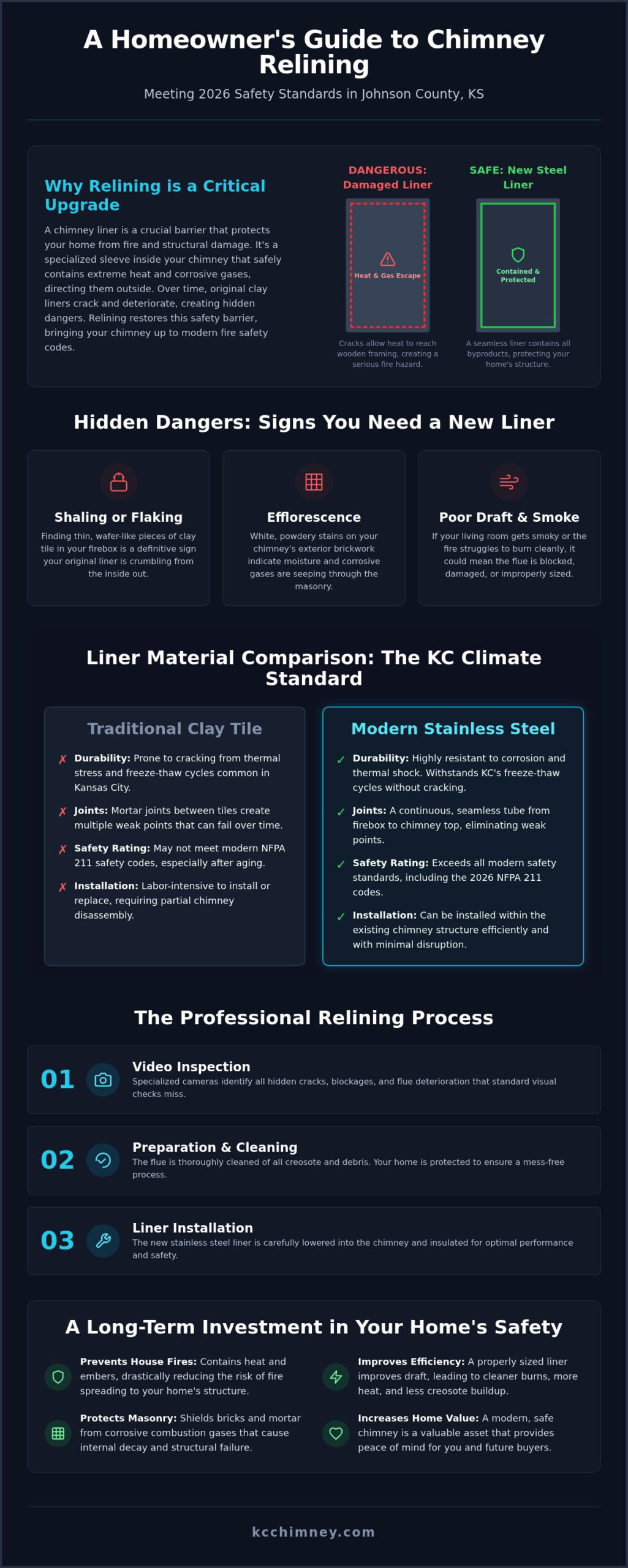
A chimney liner serves three primary functions that are non-negotiable for home safety. First, it protects the house from heat transfer. Without a liner, the heat from a fire can quickly reach combustible materials like wooden framing. Second, it shields masonry and mortar joints from the corrosive byproducts of fuel. Over time, acidic gases can eat away at bricks and mortar from the inside out. If you’re looking for a foundational definition, you can read more about What is a chimney liner? to see how these barriers function. Finally, a liner provides a correctly sized flue. If a flue is too large or too small for the fireplace or stove it serves, efficiency drops and dangerous creosote buildup increases.
Why Johnson County Homes Often Require Relining
Many homes in Mission Hills and Overland Park were built during eras when clay tile liners were the industry standard. While durable, these tiles are prone to cracking after decades of use. When a tile cracks, it creates a pathway for heat and gases to escape into the chimney’s structure. In our region, the intense Kansas City freeze-thaw cycles accelerate this damage. Moisture enters small gaps in the masonry, freezes, and expands, eventually shattering the internal flue tiles from the inside.
Modern safety standards, specifically the NFPA 211 codes, are much more rigorous than the building practices of forty or fifty years ago. Professional chimney relining Johnson County KS allows local homeowners to bring these older chimneys up to 2026 safety benchmarks. It’s a proactive way to ensure your fireplace remains a source of comfort rather than a hidden liability.
Signs Your Johnson County Chimney Needs a New Liner
Most chimney hazards remain hidden from view. While the exterior masonry of your home might look pristine, the internal flue is subjected to extreme temperature swings and acidic combustion byproducts every time you light a fire. Relying on a simple visual check from the hearth isn’t enough to guarantee safety. In many cases, the first sign that you need chimney relining Johnson County KS is only discovered during a professional video evaluation. These internal breaches allow heat to transfer to nearby wooden framing, which is a leading cause of residential fires.
When the internal structure of a chimney begins to fail, it leaves behind specific clues. Identifying these early can prevent a small repair from turning into a major hazard. A comprehensive chimney inspection in Kansas City is designed to find these hidden breaches before they lead to a house fire or carbon monoxide exposure. If you notice excessive creosote buildup despite regular cleanings, it often indicates that your liner is no longer maintaining the proper temperature to exhaust smoke efficiently.
Visual Red Flags for Homeowners
You don’t always need a camera to spot trouble, though professional tools are the only way to confirm it. Keep an eye out for these common warning signs during your routine home maintenance:
- Shaling: If you find thin, wafer-like bits of clay tile in your fireplace firebox, your original clay liner is delaminating. This is a clear indicator that the flue’s structural integrity is compromised.
- Efflorescence: Look for white, powdery staining on the exterior brickwork. This suggests that moisture and corrosive gases are soaking through the liner and the masonry.
- Drafting Issues: If smoke consistently backs up into the room instead of rising, your flue may be improperly sized or obstructed by fallen liner debris.
The Importance of a Level 2 Inspection
In communities like Overland Park and Mission Hills, a Level 2 inspection is often a non-negotiable requirement during real estate transfers. This process involves using specialized internal cameras that travel the full length of the flue. These tools reveal hairline cracks, missing mortar joints, and hidden blockages that are impossible to see from the ground. A Level 2 inspection is the industry standard for verifying liner integrity, utilizing specialized video equipment to document the internal condition of the flue. For homeowners planning to stay in their homes long-term, investing in chimney relining Johnson County KS provides peace of mind that the system is structurally sound. If you haven’t had your system checked recently, scheduling a professional safety evaluation is the best way to ensure your home remains protected.
Stainless Steel vs. Clay Tile: Comparing Relining Options
Choosing the right material for chimney relining Johnson County KS is a decision that impacts your home’s safety and value for decades. While the original builders of many local homes relied on clay tiles, the technology has evolved significantly. Today, homeowners have access to materials that provide superior protection against the specific environmental challenges of the Kansas City metro. Selecting the right liner depends on your appliance type, your budget, and the current condition of your masonry.
It’s essential to match the liner material to your specific fuel source. Wood, gas, and pellet-burning appliances each produce different types of exhaust and heat levels. For example, high-efficiency gas furnaces produce acidic condensation that can eat through standard masonry in just a few seasons. A professional evaluation ensures you aren’t just installing a new sleeve, but the specific grade of material required to handle your fireplace’s unique output.
The Benefits of Stainless Steel Liners
Stainless steel has become the gold standard for chimney relining for several reasons. It is exceptionally resistant to corrosion and can withstand the intense heat of a chimney fire without failing. In our region, we often experience rapid temperature shifts during the winter. Stainless steel liners are designed to expand and contract safely during these cycles, unlike rigid clay tiles which are prone to shattering under thermal shock. Most professional stainless steel installations come with lifetime warranties, providing a permanent solution that protects your home’s structural integrity.
When to Consider Other Materials
While stainless steel is the most common choice, other materials serve specific needs. In certain historical preservation districts within Mission Hills, specific restoration techniques might be required to maintain the chimney’s original architectural character. In these instances, cast-in-place liners are a viable alternative. This process involves pouring a lightweight, cement-like insulation around a removable form, which actually strengthens the chimney structure from the inside out.
Thermosetting resin liners are another modern option, particularly for chimneys with unusual shapes or multiple bends. These liners start as a flexible tube that is pulled through the flue and then “cured” with steam until they harden into a seamless, airtight barrier. When comparing these options, consider the following factors:
- Durability: Stainless steel typically offers the longest lifespan with the least amount of maintenance.
- Installation Mess: Steel and resin liners are generally less invasive than traditional clay tile replacement.
- Structural Support: Cast-in-place liners provide the most reinforcement for crumbling masonry.
Traditional clay tile replacement remains an option, but it is labor-intensive and often requires breaking out the old tiles, which can be a messy and expensive process. Since clay remains susceptible to the same cracking and “shaling” issues that caused the initial failure, it’s rarely the best long-term investment for a modern Kansas City home.
The Relining Process: What to Expect During Installation
Many homeowners worry that a major chimney repair will leave their living room covered in soot and dust. When you choose professional chimney relining Johnson County KS, the process is designed to be as non-invasive as possible. We treat the installation like a surgical procedure, prioritizing the protection of your home’s interior while restoring the safety of your flue. Modern techniques allow us to complete most projects from the roof and the hearth without any major demolition to your masonry.
Preparation starts at the hearth. Technicians secure the area with industrial-grade drop cloths and high-powered HEPA vacuums to ensure no debris enters your living space. Once the home is protected, the team clears the flue of any obstructions, such as old bird nests or shaling clay tiles. This step is vital because a clean flue ensures the new liner fits precisely and functions without restriction. Removing these blockages also eliminates potential fire hazards that might have been lurking behind the old liner.
Step-by-Step Installation Walkthrough
A successful installation requires more than just sliding a pipe down the chimney. First, we perform a deep cleaning to remove any combustible creosote. Next, we often wrap the new stainless steel liner in specialized insulation. This wrap helps maintain a consistent internal temperature, which significantly improves the draft and prevents the rapid cooling of gases that leads to creosote buildup. Finally, the liner is carefully lowered from the roof and connected directly to your fireplace throat or heating appliance using heavy-duty, airtight adapters.
Professional Standards and Cleanup
We understand your time is valuable. A standard chimney relining Johnson County KS project typically takes between four and eight hours to complete, depending on the chimney’s height and condition. Once the liner is in place, we attach a custom-fitted top plate and a high-quality chimney cap to seal out moisture and pests. These finishing touches are essential for protecting your new investment from the Kansas City weather.
To verify the integrity of the new system, we perform a final smoke test or draft evaluation. This confirms that every connection is airtight and that the system meets the latest safety standards. Before we leave, we conduct a final sweep of the workspace with our specialized vacuums, leaving your home as clean as we found it. If you’re ready to secure your home’s future, you can schedule a professional relining consultation with our local team today.
Why Professional Relining is a Critical Investment for KC Homeowners
Investing in chimney relining Johnson County KS is one of the most significant steps you can take to preserve your home’s structural integrity. While it might seem like a hidden utility, the flue liner is your primary defense against the intense heat and corrosive gases produced by your fireplace. A damaged or missing liner is the leading cause of fireplace-related house fires because it allows heat to transfer directly to the wooden framing of your house. By installing a high-quality stainless steel liner, you effectively eliminate this risk, creating a permanent barrier that keeps the fire where it belongs.
Beyond immediate fire safety, a new liner prevents the slow, expensive deterioration of your home’s exterior. When combustion gases seep through cracked clay tiles, they settle into the mortar and bricks, causing them to crumble from the inside out. This often leads to the need for extensive chimney repair in Kansas City. A professional relining project acts as a proactive shield, saving you from the high costs of rebuilding a masonry stack that has been compromised by acidic condensation. It also provides vital protection against carbon monoxide leaks, ensuring that these odorless, dangerous fumes are channeled safely out of your living space.
In the competitive Overland Park real estate market, a certified, lined chimney is a major selling point. Prospective buyers and home inspectors in 2026 are increasingly savvy about fireplace safety. Having documentation that your chimney meets modern standards can prevent delays during a sale and even increase your home’s overall market value. It shows that you’ve prioritized maintenance and safety, which builds trust with future owners.
Meeting NFPA 211 and Local Building Codes
As Johnson County moves toward adopting the 2024 International Code Council standards in late 2026, compliance is more important than ever. Insurance companies frequently require a certified liner installation after any chimney fire or during a major appliance upgrade. Operating an unlined or improperly lined flue isn’t just a safety hazard; it can also lead to legal liabilities or the denial of insurance claims. Professional relining ensures your home remains fully compliant with the latest NFPA 211 safety codes and local building regulations.
Choosing a Trusted Johnson County Partner
Selecting a locally owned business that understands the specific architectural history of Mission Hills and Olathe makes a difference. You need a partner that prioritizes integrity and thoroughness over high-pressure sales. Look for certified technicians who use advanced video tools to prove the need for a liner before the work begins. A neighborly approach to service means every project is handled with the same care we’d give our own homes. Don’t wait for the first freeze of the season to discover a problem. Ensure your hearth is ready for winter by scheduling a professional evaluation for chimney relining Johnson County KS today.
Securing Your Home’s Hearth for the Future
Your chimney is more than just an architectural feature; it’s a critical safety system that requires modern standards to function correctly. By choosing chimney relining Johnson County KS, you are investing in a durable solution that protects your masonry and prevents the leading cause of fireplace fires. Whether you opt for high-grade stainless steel or a cast-in-place restoration, the result is a home that meets rigorous safety benchmarks while providing reliable warmth for years to come.
Our team has served Overland Park, Mission Hills, and the surrounding metro area since 2012. We combine neighborly service with technical mastery, using advanced video inspection tools to identify internal hazards without making a mess in your living room. Our certified technicians prioritize integrity and thoroughness in every project we handle. Don’t leave your family’s safety to chance this winter. Schedule Your Johnson County Chimney Relining Consultation Today and enjoy the peace of mind that comes with a professionally secured hearth.
Frequently Asked Questions
Is chimney relining really necessary if I only use my fireplace occasionally?
Yes, relining is necessary because even occasional use exposes your home to high temperatures and toxic gases. A single crack in an old clay flue can allow heat to transfer to wooden wall studs, creating a fire hazard. Since damage often happens during the expansion and contraction of a fire, infrequent use doesn’t guarantee safety. It’s better to ensure your system is structurally sound before that first cold snap hits.
How much does chimney relining cost in Johnson County, KS?
The cost for chimney relining depends on several specific factors, including the height of your chimney and the diameter of the flue. Material choice also plays a role, as stainless steel and cast-in-place options have different installation requirements. Because every home in Overland Park or Mission Hills is unique, we recommend a professional inspection to provide a detailed, accurate estimate based on your chimney’s current condition and fuel source.
Can I reline my own chimney or do I need a professional?
You should always hire a professional for chimney relining to ensure the system meets local safety codes and insurance requirements. Installing a liner requires specialized tools and technical knowledge of venting physics to prevent carbon monoxide backdrafting. In Johnson County, contractors must be licensed, and a professional installation provides the documentation you’ll need if you ever decide to sell your home or file an insurance claim.
How long does a stainless steel chimney liner last?
A high-quality stainless steel liner is designed to last for several decades, often outlasting the home itself. When installed by a professional, these liners frequently come with lifetime warranties. They are far more durable than traditional clay tiles, which tend to crack during the intense freeze-thaw cycles we experience in Kansas City. Regular annual maintenance and cleanings are essential to maximize the lifespan of your investment.
Do gas fireplaces need a chimney liner?
Yes, gas fireplaces and high-efficiency gas furnaces absolutely require a dedicated liner. Modern gas appliances produce a significant amount of acidic condensation during the combustion process. Without a proper liner, this moisture soaks into your chimney’s mortar and bricks, causing them to deteriorate rapidly from the inside out. Professional chimney relining Johnson County KS ensures your masonry remains dry and structurally sound for the long term.
Will a new chimney liner improve the draft of my smoky fireplace?
A new liner can significantly improve a smoky fireplace by creating a more efficient draft. If your current flue is oversized or cold, smoke won’t rise properly and will spill into your living room instead. By installing an insulated liner that is correctly sized for your fireplace opening, we improve the thermal buoyancy of the exhaust. This ensures that smoke and gases exit your home quickly and reliably every time.
What is the difference between a chimney liner and a chimney flue?
While people often use the terms interchangeably, there is a technical difference between the two. The flue is the actual passageway or “tunnel” inside the chimney that carries exhaust out of the home. The liner is the protective inner sleeve, usually made of metal or clay tile, that sits inside that flue. Think of the chimney as the outer shell, the flue as the space, and the liner as the protective barrier.
How do I know if my current chimney liner is cracked or damaged?
Identifying damage usually requires a professional Level 2 inspection because most cracks aren’t visible from the hearth. However, if you see thin flakes of clay tile, known as shaling, in your firebox, your liner is definitely failing. For a definitive answer, we use specialized video cameras to scan the entire length of the flue. This is the only way to confirm if your chimney relining Johnson County KS is functioning safely.