
The thin layer of material inside your chimney is the only thing standing between a controlled fire and your home’s structural framing. It’s a sobering thought for many homeowners in Johnson County who enjoy their fireplaces during our brisk Kansas winters. You likely understand that keeping this barrier intact is vital for your family’s safety, but you might feel overwhelmed by technical jargon and shifting industry standards. Understanding the chimney relining cost local homeowners across Johnson County encounter in 2026 is about more than just a line item in your home maintenance budget; it’s about investing in the long-term integrity of your property.
Here at Best Chimney Services, we’ve designed this guide to demystify the relining process, helping you move from uncertainty to a clear, professional plan of action. You’ll discover the specific factors that influence local pricing, from material choices like durable stainless steel to the nuances of building codes and permit requirements across our service areas, including Overland Park and Mission Hills. We will walk you through the differences between wood and gas venting needs, explain why a professional Level 2 inspection is a non-negotiable first step, and show you how to ensure your fireplace remains a safe, functional centerpiece of your home for years to come.
Key Takeaways
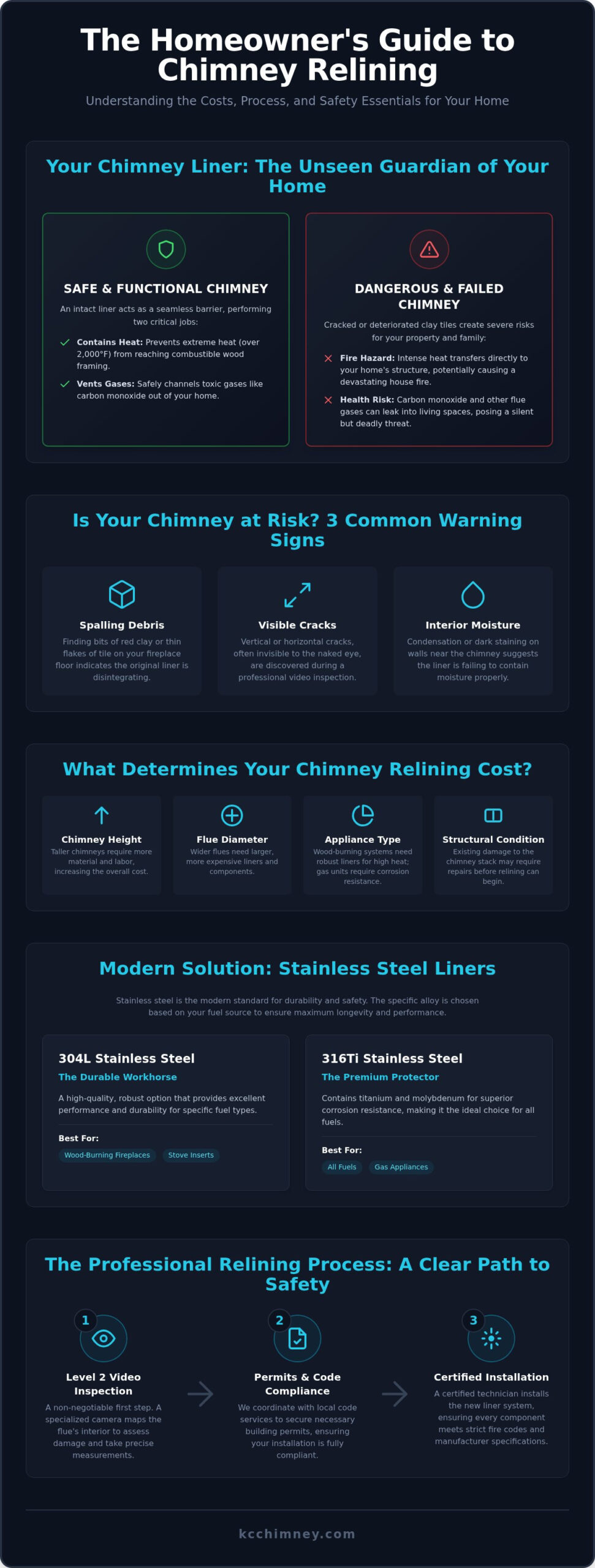
- A chimney liner acts as your home’s primary safety barrier, preventing heat transfer to combustible walls and keeping toxic gases out of your living space.
- Understanding the total chimney relining cost Leawood KS residents pay involves evaluating specific variables like chimney height, flue diameter, and whether you are venting a gas or wood-burning appliance.
- Stainless steel is the modern standard for durability, but the choice between 304L and 316Ti alloys is critical for matching the liner to your specific fuel source.
- Professional relining starts with a Level 2 video inspection to map the flue’s interior and requires coordination with Leawood Code Services for necessary building permits.
- Choosing a certified local technician ensures your installation meets strict Johnson County fire codes and prevents the long-term expenses associated with low-quality materials.
Understanding Chimney Relining: Why Leawood Homes Need It
A chimney liner is a protective conduit designed to contain combustion products. For decades, many homes throughout Johnson County were constructed using clay tile liners. While these were the industry standard for a long time, they aren’t designed to last forever. The intense heat cycles of a fireplace eventually cause these tiles to crack, shift, or deteriorate. When the integrity of this barrier fails, your home loses its primary defense against the heat and gases produced by your hearth. Understanding the chimney relining cost Leawood KS residents invest in their homes starts with recognizing that this isn’t just a mechanical repair; it’s a critical safety upgrade.
Modern relining standards have evolved significantly to address the shortcomings of aging masonry. Today, we focus on creating a seamless, airtight path for smoke and heat. This essential component, often discussed in resources explaining What is a Chimney Liner?, ensures that your home remains isolated from the intense heat of the fire. Without a functional liner, your chimney is essentially an open vent that can allow dangerous elements to seep into your walls.
The Role of the Flue Liner in Fire Prevention
The primary job of a liner is to prevent heat transfer to the combustible wooden framing of your house. Chimney fires can reach temperatures exceeding 2,000 degrees Fahrenheit. Without an intact liner, that heat can ignite nearby studs or joists in a matter of hours. Beyond fire prevention, the liner ensures that toxic gases like carbon monoxide exit your home efficiently. A damaged liner can cause these gases to linger or leak into your living spaces, creating a silent but deadly health risk for your family. We view the liner as a guardian of your home’s structural and personal safety.
Signs Your Leawood Chimney Needs Relining
Identifying a failing liner early can help manage the chimney relining cost Leawood KS homeowners might face by preventing secondary damage to the masonry. Look for these common warning signs:
- Spalling Debris: If you find bits of red clay or thin flakes of tile on your fireplace floor, your original liner is likely disintegrating.
- Visible Cracks: During a professional video inspection, we often find vertical or horizontal cracks in the clay tiles that aren’t visible to the naked eye.
- Interior Moisture: Condensation or dark staining on the walls adjacent to your chimney often indicates that the liner is no longer containing flue gases and moisture properly.
Relining is also a critical step when you decide to install a wood burning stove fireplace insert. Modern appliances are highly efficient but require specific venting diameters to maintain the correct draft. A new liner ensures your investment in a new insert provides the warmth and performance you expect while staying fully code-compliant.
Factors That Influence Chimney Relining Cost in Leawood
Every home in Leawood has its own architectural history, and that history dictates the scope of a relining project. While general estimates provide a starting point, the specific chimney relining cost Leawood KS homeowners encounter depends on the physical realities of their masonry. We don’t believe in guesswork. The total investment is determined by the height and diameter of your flue, as well as the structural condition of the chimney stack itself. A taller, wider chimney naturally requires more material and specialized hardware to secure the new system from top to bottom.
The type of appliance you are venting also plays a major role. Wood-burning fireplaces generate much higher temperatures and more corrosive byproducts than gas units. Following EPA safety guidelines is essential when selecting a liner that can withstand these specific conditions. Because we prioritize your family’s safety, we never provide a quote without first performing a comprehensive chimney inspection in Kansas City. This Level 2 video scan allows us to see exactly what is happening inside your walls before any work begins.
Complexity of the Installation
Installation isn’t always a straight shot. Many older flues in Johnson County feature offsets or “bends” that require flexible liners and careful maneuvering. If your original clay tiles are broken or shifting, we may need to remove them entirely to make room for the new stainless steel sleeve. This labor-intensive process ensures the new liner has the proper clearance. Additionally, the pitch of your roof and the height of the chimney affect the safety equipment and scaffolding required for our technicians to work securely and efficiently.
Local Labor and Permit Variables
Working in Leawood means adhering to specific local standards. For 2026, navigating the City of Leawood’s building permit requirements is a necessary step for any structural chimney work. We handle these details to ensure your home remains fully code-compliant and your insurance coverage stays intact. Labor costs reflect the technical precision required for code-compliant venting. By choosing a locally owned business, you are investing in experts who understand the unique housing stock of Johnson County and the rigorous safety standards our community expects. If you are ready to secure your hearth for the coming winter, consider reaching out to a trusted local professional for a detailed assessment.
Comparing Liner Materials: Performance vs. Long-Term Value
Selecting the right material determines the lifespan of your chimney and the safety of your hearth. While some homeowners explore “patching” cracked clay tiles, this is usually a short-term fix for a systemic problem. A full relining offers a permanent safety barrier. The chimney relining cost Leawood KS homeowners evaluate should reflect the long-term value of the materials chosen. We focus on durability because a liner is a component you should only have to install once.
Stainless steel liners are the professional standard for most residential applications. We typically work with two specific grades: 304L and 316Ti. 304L is a robust choice for wood-burning fireplaces. In contrast, 316Ti includes titanium and molybdenum, which provide superior resistance to the highly acidic condensate produced by gas, oil, and pellet fuels. For historic homes with fragile masonry, cast-in-place liners offer structural reinforcement by pumping a lightweight cementitious mix into the flue. Aluminum liners are a lower-cost alternative, but they are strictly limited to specific gas appliances and cannot handle the intense heat of a wood fire.
Why Stainless Steel is Preferred in Leawood
In our local climate, chimneys face significant temperature swings that can stress masonry. Stainless steel handles these cycles without cracking or shifting. These liners resist the corrosive effects of creosote and acidic moisture that eventually eat away at clay and mortar. Because they are flexible, they can navigate the unique bends found in older Johnson County flues. Most reputable manufacturers offer lifetime warranties on these systems, which provides a level of protection and peace of mind that other materials simply cannot match.
Insulation: The Hidden Key to Performance
A liner is only as good as its insulation. To meet NFPA 211 safety standards, most stainless steel liners require a wrap of ceramic wool or a pour-in insulation mix. This is not just a code requirement; it is a performance booster. Proper insulation keeps the flue gases hot, which creates a stronger draft and prevents the rapid cooling that leads to dangerous creosote buildup. While this adds to the initial chimney relining cost Leawood KS residents invest, it reduces the frequency of heavy cleanings and prevents future damage. We view insulation as a non-negotiable component for any high-integrity installation.
Navigating the Relining Process: Inspections and Local Permits
A successful relining project is built on a foundation of accurate data and local compliance. Starting the process without a clear roadmap often leads to unexpected delays and hidden expenses. In our community, the roadmap begins with a diagnostic phase that ensures the chimney relining cost Leawood KS homeowners plan for covers every technical necessity. We treat your home with the same care we would our own, ensuring that every step of the installation meets rigorous safety benchmarks before a single fire is lit.
The Necessity of a Level 2 Inspection
We never begin a relining project without a Level 2 video inspection. This process involves using specialized high-resolution cameras that travel the full height of your flue to find hidden hazards behind the brickwork. We look for internal masonry gaps, structural settling, and hidden combustible materials that a standard visual check would miss. This level of detail is non-negotiable during home sales or when you are changing the type of appliance connected to the flue. If our cameras reveal significant structural decay, we may recommend specific chimney repair Kansas City homeowners trust to stabilize the stack before the new liner is inserted.
Leawood Codes and Compliance
Adhering to local fire safety ordinances in Johnson County is a critical part of our professional responsibility. We coordinate with the City of Leawood to acquire the necessary building permits for your project. This documentation is vital because a permit ensures the work is documented for future home appraisals and insurance claims. Once the installation is complete, a final inspection by a certified technician verifies that the system drafts perfectly and meets all modern standards. This methodical approach provides the stability and competence you expect from a local expert.
On installation day, you can expect a mess-free environment. We use advanced dust containment systems to protect your living space while we work. After the new liner is secured and insulated, we perform a smoke test to verify the integrity of the seals. This final verification ensures your hearth is ready for the coldest Kansas nights. If you are ready to begin this process with a team that values precision, you can schedule your Level 2 inspection today to get a clear, accurate assessment of your chimney’s needs.
Investing in Your Hearth: Choosing the Right Leawood Professional
The decision to reline your chimney is about more than just a line item in a budget. It is a commitment to the safety and longevity of your home. While it is tempting to look for the lowest possible bid, “cheap” liners often lead to much more expensive chimney repairs down the road. Poorly manufactured materials or rushed installations can fail prematurely, leaving your home vulnerable to the very hazards you were trying to prevent. When you evaluate the chimney relining cost Leawood KS residents invest, remember that technical precision and high-grade materials are what ensure your peace of mind for the next twenty years.
At Best Chimney Services, we prioritize your family’s protection above all else. Our certified technicians have been serving Johnson County since 2012, blending the grit of manual labor with the precision of modern safety standards. We don’t believe in high-pressure sales tactics. Instead, we focus on thorough, advanced video inspections that provide a clear picture of your chimney’s health. This honest, no-nonsense approach is why we’ve become a trusted fixture in the Leawood community. We take pride in our mess-free installation process, ensuring your living room remains as clean as the day we arrived.
The Value of Local Expertise
Our team understands the specific architectural heritage of Leawood. We are familiar with the various chimney designs and masonry styles common in our neighborhoods, from classic brick flues to more complex modern structures. This local knowledge allows us to anticipate challenges before they arise, ensuring a smoother installation and a more reliable draft. By choosing a neighborly expert, you aren’t just getting a mechanical service; you’re building a relationship with professionals who understand our regional climate and housing stock. We provide long-term support and maintenance to ensure your new liner system continues to perform at its peak year after year.
Next Steps for Your Leawood Home
If you suspect your chimney liner is failing or if you haven’t had an inspection in over a year, the first step is a professional evaluation. We will use our specialized cameras to map your internal flue and provide a detailed report of our findings. To prepare for a smooth installation day, we recommend clearing a small area around your hearth to give our technicians room to work. We handle the heavy lifting, the technical permits, and the final safety verifications. Don’t leave your home’s safety to chance. You can schedule your Leawood chimney relining evaluation today and take the first step toward a safer, more efficient fireplace.
Securing Your Home’s Hearth for the Future
A safe fireplace is the heart of a comfortable Kansas winter. By now, you understand that your chimney liner is the most important safety barrier in your home. Whether you are addressing aging clay tiles or preparing for a new insert, the right materials and professional oversight ensure your property remains protected. While the chimney relining cost Leawood KS residents plan for varies based on flue height and material choice, the long-term value of a durable stainless steel system is undeniable. It’s an investment in your home’s structural integrity and your family’s peace of mind.
Best Chimney Services has been locally owned and operated in KC since 2012. Our CSIA Certified Technicians use advanced video inspection technology to provide the precise data you need for a code-compliant installation. We believe in providing honest, neighborly service that prioritizes your safety over high-pressure sales. You deserve a hearth that is as reliable as it is warm. Request an Honest Chimney Relining Quote in Leawood and let our team help you prepare for many cozy seasons ahead.
Frequently Asked Questions
How much does chimney relining cost in Leawood, KS?
The total chimney relining cost Leawood KS homeowners encounter depends on the height and diameter of the flue, along with the specific material grade required for your appliance. Factors like the chimney’s accessibility and whether an old clay liner must be removed also influence the final investment. Because every masonry stack in Johnson County is unique, we recommend a professional video inspection to provide a precise, tailored quote for your home.
Is chimney relining really necessary for my older home?
Relining is essential if your original clay tile liner is cracked, shifting, or missing entirely. Older homes in Leawood often have deteriorating masonry that can no longer contain intense heat or toxic gases. Without an intact liner, heat can transfer to your home’s wooden framing, significantly increasing the risk of a house fire. A new liner restores the safety and structural integrity of your entire chimney system.
How long does a stainless steel chimney liner last?
A high-quality stainless steel liner typically lasts between 15 and 25 years when properly maintained. Many professional-grade liners come with lifetime warranties from the manufacturer, providing long-term peace of mind for your property. To maximize this lifespan, it’s important to schedule annual sweepings and inspections. This regular care prevents the buildup of corrosive creosote and ensures the metal remains in peak condition for decades of use.
Do I need a building permit for chimney relining in Leawood?
The City of Leawood generally requires a building permit for chimney relining projects because they involve structural safety and fire prevention. Obtaining a permit ensures that the work is documented and meets current local building codes. This record is often vital during future home appraisals or insurance claims. A professional service provider will typically handle the permit application process and coordinate the necessary final inspections for you.
Can I use my fireplace while waiting for a relining service?
You shouldn’t use your fireplace if a professional inspection has identified a liner failure. Operating a fireplace with a damaged flue can allow carbon monoxide to enter your living space or ignite nearby combustible materials in your walls. It’s best to wait until the new liner is installed and tested. We prioritize safety and work efficiently to get your hearth back in service as quickly as possible.
What is the difference between a Level 1 and Level 2 chimney inspection?
A Level 1 inspection is a basic visual check of the readily accessible parts of your chimney. In contrast, a Level 2 inspection is more thorough and includes a high-resolution video scan of the internal flue surfaces. This advanced technology allows us to find hidden cracks or gaps that are invisible from the hearth. A Level 2 inspection is the industry standard required before any relining project or home sale.
Does chimney relining improve my fireplace’s heating efficiency?
Relining significantly improves efficiency by creating a flue that is properly sized for your specific appliance. When a flue is too large or poorly insulated, the draft weakens, causing more heat to escape and increasing creosote production. A new, insulated liner maintains higher internal temperatures, which creates a stronger draft. This ensures your fireplace or insert burns fuel more completely and provides more consistent warmth for your home.
Will relining my chimney prevent carbon monoxide leaks?
An airtight, seamless liner is your most effective defense against carbon monoxide leaks. When original masonry liners crack or mortar joints fail, these odorless, dangerous gases can seep through the chimney walls and into your home. A new stainless steel liner creates a dedicated, sealed path that directs all combustion byproducts safely out of the chimney. This provides an essential safety layer for both gas and wood-burning appliances.