
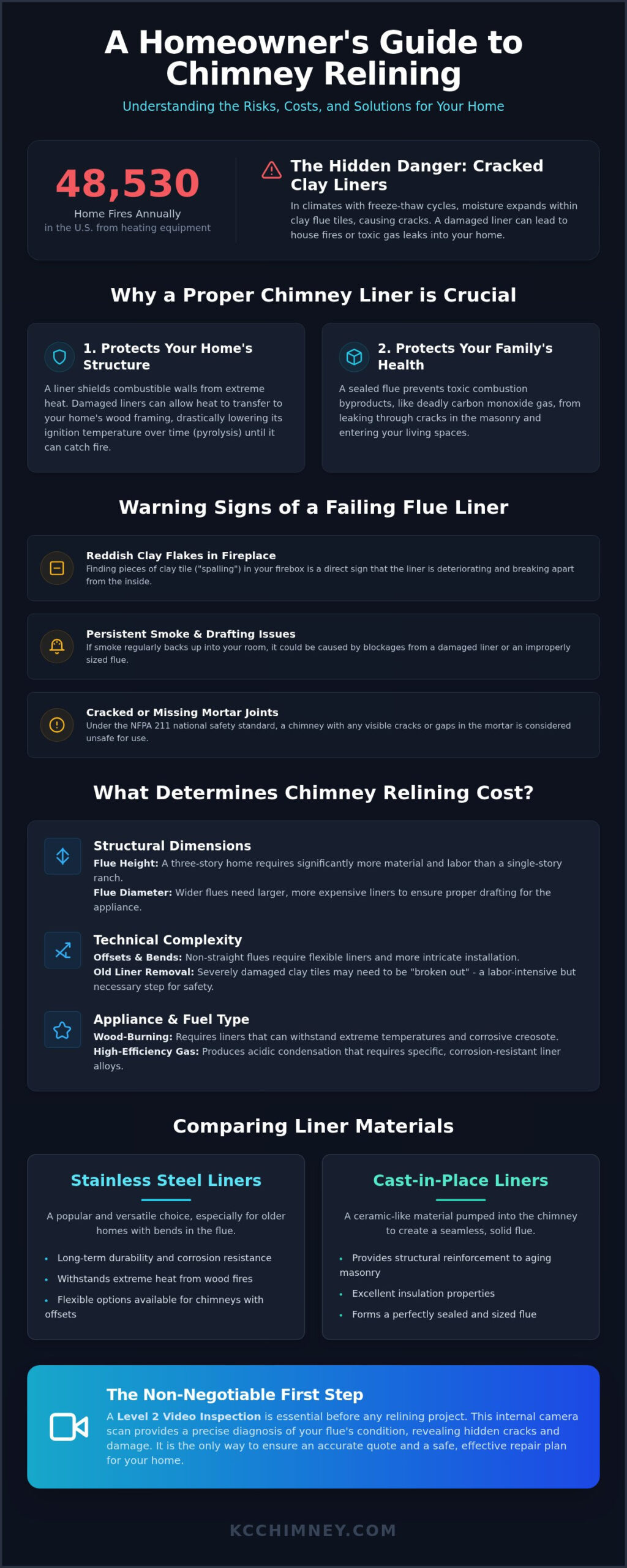
Did you know that heating equipment is a leading cause of home fires, accounting for approximately 48,530 incidents annually in the United States? For homeowners in Kansas City, where historic masonry is a point of pride in neighborhoods like Mission Hills and Overland Park, a cracked clay liner is often the hidden hazard behind those statistics. It’s stressful to balance the safety of your family against the confusion of technical jargon and the potential chimney relining cost in Kansas City.
We understand that you want a fireplace that provides warmth without worry. You’ve likely heard conflicting advice about different materials or felt anxious about the price of structural repairs. This guide demystifies the process by showing you exactly which factors drive local pricing and how to select a liner that offers long-term protection for your property.
We will explain why a Level 2 video inspection is a non-negotiable first step for any project. You’ll also learn how to compare different materials like stainless steel and cast-in-place liners. By the end of this article, you’ll have a clear framework to evaluate quotes from local companies and the peace of mind that your home is ready for the winter season.
Key Takeaways
- Learn how a professional liner protects your home’s interior walls from extreme heat and prevents toxic gases from entering your living space.
- Understand the specific variables, such as flue height and structural bends, that influence the total chimney relining cost in Kansas City.
- Compare the long-term durability of stainless steel liners against the structural reinforcement provided by cast-in-place ceramic coatings.
- Identify the critical warning signs of a failing flue, such as finding reddish clay flakes in your fireplace or experiencing persistent smoke drafting issues.
- Discover why a Level 2 video inspection is the essential first step for local homeowners to ensure an accurate quote and a safe fireplace for the winter.
Understanding Chimney Relining: Why Your KC Home Needs a New Flue
Chimney relining is the technical process of installing a new exhaust conduit within your existing masonry structure. Think of it as a protective sleeve that ensures heat and combustion byproducts exit your home safely. A high-quality Flue Liner serves two vital roles: it shields your home’s combustible walls from intense heat and prevents toxic gases, like carbon monoxide, from seeping into your living spaces. While many older homes in the KC metro were built with clay tile flues, these systems weren’t designed to last forever.
Kansas City homeowners face a unique challenge due to our regional climate. Our extreme freeze-thaw cycles force moisture into the porous clay and mortar. When that water freezes, it expands, causing tiles to crack and joints to fail. Over time, these small fractures compromise the entire system’s integrity. Under the NFPA 211 national safety standard, a chimney with any cracks or missing mortar is considered unsafe for use. Addressing these issues early can help manage the eventual chimney relining cost in Kansas City by preventing more extensive masonry damage.
The Hidden Dangers of Cracked Clay Liners
When moisture mixes with creosote, it creates a corrosive acidic liquid that erodes mortar joints between clay tiles. This decay often goes unnoticed until a professional inspection reveals the gaps. The most significant danger is pyrolysis. This occurs when heat transfers through a damaged liner to the nearby wooden framing of your house. Over years of exposure, the wood’s ignition temperature lowers until it can catch fire even without a direct spark. In our local experience, a compromised liner remains the primary cause of carbon monoxide leaks in area homes.
Relining for New Appliance Installations
If you are planning to upgrade to a gas fireplace insert, you’ll likely need a new liner. Modern appliances are highly efficient and require a specific flue diameter to create a proper draft. We match the liner size to the appliance’s BTU output to ensure gases exit quickly instead of cooling and lingering in the flue. Following these specifications isn’t just about performance; it’s a requirement for staying compliant with Kansas City building codes during any hearth renovation. Proper sizing is a key factor in calculating the overall chimney relining cost in Kansas City for your specific project.
Breaking Down Chimney Relining Cost Factors in Kansas City
Every home in the metro area presents a different set of technical challenges. When we evaluate the chimney relining cost Kansas City homeowners can expect, the physical dimensions of the structure are the first variables we consider. A three-story colonial in Mission Hills requires significantly more material and specialized scaffolding than a ranch-style home in Stilwell. Beyond height, the diameter of the flue plays a role. Larger openings require larger, more expensive liners to ensure proper drafting and safety for your specific fireplace or appliance.
Technical complexity also influences the final quote. Many historic Kansas City flues aren’t perfectly straight. Navigating offsets or bends in the masonry requires flexible liners and precision handling. If your existing clay tiles are severely damaged or too narrow for a modern insert, we may need to perform a “break out.” This process involves removing the old liner entirely to make room for the new system. It’s a labor-intensive step, but it’s often the only way to ensure the new flue meets modern safety standards. To stay ahead of these issues, the EPA suggests an annual professional inspection to catch minor cracks before they turn into major structural problems.
Fuel type is another major factor. Wood-burning systems require liners that can withstand extreme heat and the corrosive nature of creosote. High-efficiency gas appliances produce acidic condensation that can quickly eat through standard metal. We match the liner material to your fuel source to prevent premature failure. If you aren’t sure which material is right for your home, a professional Level 2 inspection can provide the technical clarity you need to calculate your specific chimney relining cost Kansas City.
Material Selection and Long-Term Value
Choosing the right alloy is about balancing the initial investment with life expectancy. High-grade stainless steel, such as 316L, is often the most cost-effective choice over a twenty-year period because of its resilience. For corrosive gas venting, we often recommend specialized alloys like AL29-4C. While drop-in metal liners are common, some homeowners prefer cast-in-place ceramic coatings. These are more labor-intensive but provide the added benefit of strengthening the chimney’s internal structure from the inside out.
Structural Integrity and Masonry Prep
A liner is only as good as the masonry surrounding it. In many cases, chimney repair in Kansas City is a necessary prerequisite. If the exterior crown is cracked or the mortar joints are failing, we must address those issues to prevent moisture from reaching your new liner. Accessibility also impacts the labor portion of your quote. A steep roof pitch or a chimney located in a hard-to-reach spot requires more safety equipment and time to navigate safely. Fully understanding the chimney relining cost Kansas City homeowners face often involves looking at these external masonry needs first.
Comparing Liner Materials: Stainless Steel, Clay, and Ceramic Coatings
Selecting the right material is the most critical decision you’ll make for your chimney’s future. While the material choice significantly impacts the chimney relining cost Kansas City homeowners budget for, it also determines how long your home remains protected from heat and gases. Modern technology has moved beyond traditional clay, offering solutions that are more durable, safer, and often easier to install in older masonry structures. Whether you’re venting a wood stove or a high-efficiency furnace, matching the material to your appliance is a task for a certified professional.
Traditional clay tile replacement is rarely a practical option for existing homes. Installing new clay tiles requires tearing down and rebuilding large sections of the chimney stack, which is labor-intensive and expensive. Most local homeowners find that modern metal or ceramic alternatives provide much better value. These systems create a continuous, jointless path for exhaust, eliminating the common failure points found in old-fashioned tile flues.
The Benefits of Stainless Steel Liners
Stainless steel is the industry gold standard for a reason. These liners are UL listed, meaning they’ve passed rigorous safety testing to meet national standards. This certification is often a requirement for homeowners’ insurance compliance. We utilize both flexible and rigid stainless steel depending on the chimney’s shape. Flexible liners are particularly useful for navigating the shifts and bends common in older KC homes without compromising the flue’s airtight seal.
Proper insulation is a non-negotiable part of a stainless steel installation. We often “pour” a specialized insulation mix around the liner or use a ceramic wool wrap. This step keeps the flue gases hot, which improves drafting and reduces the buildup of dangerous creosote. It also ensures that the exterior masonry stays cool, protecting your home’s structural framing from heat transfer. Choosing a material that fits your specific appliance is the first step in determining your total chimney relining cost Kansas City.
Cast-in-Place and Ceramic Solutions
For chimneys that need structural reinforcement, cast-in-place liners are an excellent choice. This method involves pumping a lightweight, cement-like material into the flue around an inflatable form. Once it cures, it creates a seamless, rock-hard conduit that actually strengthens the entire chimney structure. This “pour-through” method is ideal for stabilizing the aging masonry often found in historic neighborhoods.
If your clay tiles are still structurally sound but the mortar joints are failing, ceramic coatings like HeatShield® offer a targeted remedy. We use specialized tools to apply this ceramic material over the cracks and gaps, restoring the flue’s integrity without the need for a full metal liner. While this can be a more affordable way to manage the chimney relining cost Kansas City projects require, it’s only an option if the underlying tiles are in good condition. A diagnostic evaluation is the best way to see if these specialized repairs can lower your overall chimney relining cost Kansas City while still ensuring long-term safety.
Signs Your Kansas City Chimney Needs a New Liner
Identifying a failing flue doesn’t always require a trip to the roof. Often, your chimney will send clear signals that its internal structure is compromised. One of the most common signs is “shaling.” If you find thin, reddish flakes of clay tile piling up on your fireplace floor, your original liner is literally falling apart. This debris isn’t just a nuisance; it indicates that the protective barrier between fire and your home is thinning. Catching this early is the best way to manage the long-term chimney relining cost Kansas City, as it prevents heat from damaging the surrounding brickwork.
Other red flags are more atmospheric. If smoke backs into your living room instead of rising, or if you notice a persistent campfire smell during the humid Kansas City summers, your liner may have cracks that trap creosote and disrupt airflow. You might also see efflorescence, which appears as white, powdery salt stains on your exterior masonry. This happens when moisture and combustion byproducts seep through a cracked liner and migrate through the brick. Understanding these signs helps homeowners prepare for the chimney relining cost Kansas City before a total system failure occurs.
The Role of the Level 2 Chimney Inspection
While visible debris is a clear indicator, many dangerous flaws remain hidden from the naked eye. A professional chimney inspection in Kansas City is the only definitive way to confirm the health of your flue. Our technicians use high-resolution internal video cameras to scan the entire length of the chimney. This technology allows us to find hairline cracks and shifted tiles that a routine sweep would miss. A diagnostic evaluation provides the technical proof needed to determine if your system is truly safe for another season.
Post-Storm Damage in Johnson County
Sometimes, liner failure isn’t a slow process of wear and tear. In areas like Johnson County, severe weather can cause immediate damage. A lightning strike or sudden house settling during a heavy storm can shatter old clay tiles instantly. When this happens, the chimney relining cost Kansas City might be covered by your homeowner’s insurance policy. We help homeowners distinguish between “sudden and accidental” storm damage and long-term neglect. Documenting these issues with a video inspection is vital for successful insurance claims, ensuring your repairs are funded correctly and your home remains protected.
If you’ve noticed any of these warning signs in your home, don’t wait for a small crack to become a major fire hazard. Schedule a certified inspection today to ensure your fireplace is ready for the first cold snap of the year.
Why Best Chimney Services is KC’s Choice for Safe Relining
Choosing a contractor for your home’s safety requires trust and local expertise. Since 2012, we’ve operated as a locally owned fixture in the community, tailoring our services to the unique architectural needs of Overland Park and Mission Hills homes. We don’t view relining as a generic mechanical task. Instead, we treat it as a precision engineering project designed to protect your family for decades. By choosing a local specialist, you ensure that every dollar of your chimney relining cost in Kansas City is spent on high-quality materials and expert labor that understands our regional climate.
Our technical authority is backed by specialized equipment and certified technicians who prioritize safety over speed. We understand that inviting service providers into your home can be disruptive, which is why we offer a “No-Mess” Guarantee. Our team uses industrial-grade vacuums and heavy-duty drop cloths to protect your carpets and furniture throughout the entire installation. We manage every detail, from the initial Level 2 inspection to the final smoke test, providing a seamless experience that prioritizes your peace of mind.
Our Precision Relining Process
We follow a methodical three-step process to ensure your new flue performs perfectly from the first fire of the season. First, we perform a thorough chimney sweeping to remove all creosote, soot, and loose debris. This creates a clean surface for the new system and reveals the true condition of the masonry. Next, we use digital measurements to size the liner. This step is vital for an airtight fit that matches your specific appliance’s output requirements. Finally, our technicians install the liner with high-temp insulation, which maximizes heating efficiency and prevents the exterior of the chimney from overheating.
Schedule Your Relining Evaluation Today
Don’t wait for a chimney fire or a carbon monoxide scare to address a failing flue. The best time to evaluate your system is before the winter rush begins. We provide comprehensive care for homeowners across the entire KC metro, including Bucyrus, Spring Hill, and Stilwell. Whether you have a historic wood-burning fireplace or a modern gas insert, our team is ready to provide a permanent safety solution for your home. Contact Best Chimney Services for a professional relining quote.
Secure Your Home’s Hearth for the Years Ahead
Investing in a high-quality liner is more than just a repair; it’s a commitment to your family’s safety and your home’s structural longevity. While the chimney relining cost in Kansas City depends on your specific architectural needs, the peace of mind that comes from a certified installation is invaluable. You now understand that visible shaling or poor drafting are urgent calls for attention. You also know that modern materials like stainless steel offer a durable solution to our region’s harsh freeze-thaw cycles.
Since 2012, our team has specialized in protecting Kansas City homes with mess-free chimney maintenance and precision engineering. We start every project with a certified Level 2 video inspection to identify internal hazards before they become emergencies. Don’t leave your fireplace safety to chance this winter. Request Your Professional Chimney Relining Quote Today and let our neighborly experts ensure your home remains a safe haven. We look forward to helping you enjoy a warm, worry-free fire tonight.
Frequently Asked Questions
How much does chimney relining typically cost in Kansas City?
The chimney relining cost in Kansas City varies based on chimney height, flue diameter, and the choice of liner material. A three-story home in Mission Hills will typically require more material and labor than a ranch-style house in Stilwell. Factors like structural damage or the need for a “break out” of old clay tiles also influence the final quote. We provide detailed estimates after performing a Level 2 video inspection to ensure accuracy.
Can I use my fireplace if the clay liner is cracked?
No, you shouldn’t use a fireplace with a cracked clay liner. Cracks allow intense heat and toxic gases to escape the flue and reach your home’s combustible framing. This is a primary cause of house fires and carbon monoxide poisoning. According to NFPA 211 standards, any crack or missing mortar joint makes the system unsafe. We recommend keeping the damper closed until a certified professional evaluates the damage during an inspection.
How long does a stainless steel chimney liner last?
A high-quality stainless steel liner is designed to last for the lifetime of the home when properly maintained. Most of these systems come with a lifetime warranty from the manufacturer. They are highly resistant to corrosion from wood smoke and the acidic condensation produced by gas appliances. Regular annual cleanings by a professional are essential to keep the liner in top condition and ensure your warranty remains valid for decades.
Is chimney relining covered by homeowners insurance?
Coverage typically depends on the cause of the damage. Insurance companies often cover the chimney relining cost in Kansas City if the damage is “sudden and accidental,” such as a lightning strike or a chimney fire. They generally don’t cover repairs caused by long-term wear, neglect, or the freeze-thaw cycles common in Johnson County. We help homeowners document storm-related damage with video inspections to assist in the claims process.
Do I need to reline my chimney if I’m switching to a gas insert?
Yes, relining is a standard requirement when installing a new gas fireplace insert. Modern gas appliances are highly efficient and produce cooler exhaust that must be vented through a properly sized flue. If the flue is too large, the gases won’t rise quickly enough, leading to condensation and carbon monoxide risks. We match the liner diameter to the appliance’s BTU output to ensure safe and efficient operation in your home.
What is the difference between a flexible and a rigid chimney liner?
Rigid liners are straight sections of pipe used in chimneys that don’t have bends or offsets. Flexible liners are more versatile; they are used to navigate the curves and shifts common in older Kansas City masonry. Both are made from high-grade stainless steel and offer excellent protection. Our technicians determine which type is best for your home based on the internal layout discovered during our initial Level 2 video inspection process.
How long does the relining process take to complete?
Most residential relining projects in the KC metro are completed in a single day. Best Chimney Services has refined this process since 2012 to ensure minimal disruption to your home. While the installation is efficient, complex jobs involving the removal of old clay tiles may take longer. We always prioritize a mess-free environment and safety; we ensure the job is done right without rushing the technical details that keep your family safe.
Will relining my chimney improve the draft and reduce smoke?
Yes, a new liner significantly improves fireplace performance by creating a smooth, airtight path for exhaust. Old, cracked clay flues create turbulence and allow air to leak, which weakens the draft and causes smoke to back into your room. By resizing the flue to match your fireplace’s opening, we ensure that smoke and gases exit your home quickly. This makes your hearth safer and much more enjoyable for your family to use.