
In the heart of Spring Hill, the most dangerous threat to your home isn’t a sudden storm but the silent, persistent intrusion of Kansas rain into an unprotected chimney. You probably already know that water is the primary enemy of masonry, yet many homeowners wait until they see damp firebox walls or smell musty odors before taking action. By the time these visible signs appear, you might already be facing the deep structural issues typically identified during a level 3 chimney inspection Overland Park residents seek out when hidden damage is suspected.
We understand the anxiety that comes with choosing the right protection, especially when you’re caught between confusing material options and the fear of a botched installation. This guide will show you how the right chimney cap acts as a permanent shield, saving you from expensive masonry repairs while keeping your hearth dry and safe. You’ll discover the best materials for our local freeze-thaw cycles and how to secure an expert installation that protects your investment for decades to come.
Key Takeaways
- Learn why a chimney cap is your first line of defense against the destructive spalling and water saturation caused by Spring Hill’s heavy spring rains.
- Understand how the right cap prevents the hidden structural damage that often triggers a complex level 3 chimney inspection Overland Park homeowners want to avoid.
- Compare high-durability materials like stainless steel and copper to find a long-term solution that withstands the unique Kansas freeze-thaw cycles.
- Discover why professional installation is necessary to ensure a perfect fit and to identify underlying issues like crown cracks before they lead to leaks.
The Hidden Danger of Rain: Why Spring Hill Chimneys Need Protection
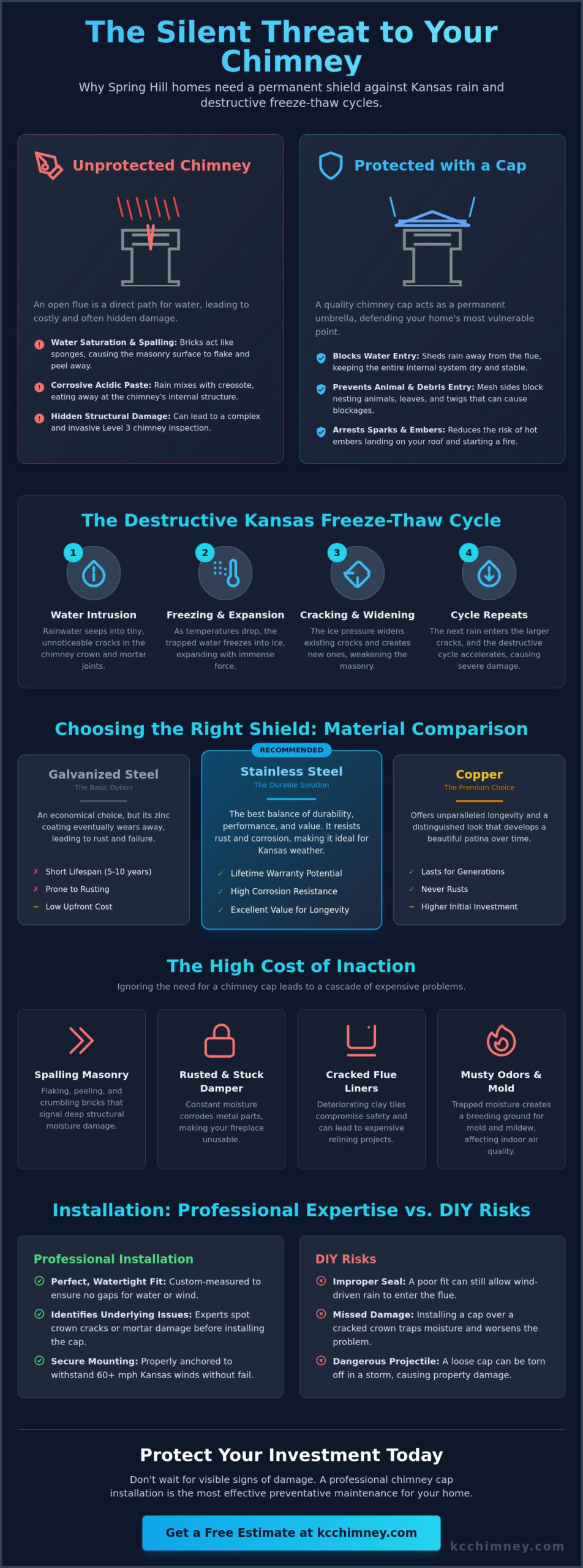
Spring Hill residents know that local weather brings more than just seasonal changes; it brings driving rains that can quickly compromise an unprotected chimney. A chimney cap is essentially a custom-fitted umbrella for your flue. It is a protective covering installed over the opening to prevent water entry while allowing combustion gases to escape. Without this barrier, your chimney is left completely open to the elements, inviting a host of structural problems that often go unnoticed until they become expensive emergencies.
In our region, the porous nature of masonry means that bricks act like sponges during heavy downpours. When these bricks become saturated, they undergo a process called spalling, where the masonry surface begins to flake, peel, or pop off. This isn’t just an aesthetic issue; it’s a sign of deep structural distress. When rain falls directly into an open flue, it lands on the smoke shelf and mixes with creosote deposits. This mixture creates a corrosive acidic paste that eats away at the chimney’s internal structure. If this damage becomes severe, it may necessitate a level 3 chimney inspection Overland Park homeowners rely on to uncover hidden defects behind walls or ceilings.
The Midwest Freeze-Thaw Cycle
The Kansas climate is particularly punishing because of our frequent freeze-thaw cycles. When water seeps into small cracks in your chimney crown or mortar joints, it doesn’t stay liquid for long. As temperatures drop, that trapped moisture expands as it turns to ice, exerting massive internal pressure on the masonry. This expansion widens existing gaps, leading to cracked crowns and loose mortar that invite even more water during the next storm. A professionally installed chimney cap breaks this destructive cycle by keeping the flue interior dry and stable throughout the winter months.
Moisture and Fireplace Safety
Excess moisture is a primary catalyst for the deterioration of internal clay liners. When water sits inside the flue, it encourages the growth of mold and mildew, which can lead to musty odors and poor indoor air quality. Over time, the constant presence of moisture causes clay tiles to crack and flake, a process that can eventually require professional chimney relining to ensure the system remains safe for use. By protecting the various chimney components from direct rainfall, you prevent the slow decay that turns a minor maintenance task into a major restoration project.
How a Quality Chimney Cap Acts as an Umbrella for Your Flue
Think of a professional chimney cap as the heavy-duty umbrella your home needs during a Midwest downpour. While the previous section highlighted the dangers of water saturation, the cap provides the mechanical solution. Its primary job is to shed water away from the open flue and onto the chimney crown. A well-designed cap features a lid that extends past the edges of the flue, ensuring that cascading water doesn’t simply run down the interior walls. Modern caps also serve as spark arrestors; they use specialized mesh to catch hot embers before they can land on your roof and start a fire.
When we look at the three levels of chimney inspection defined by national safety standards, the importance of a secure cap becomes clear. A missing or damaged cap is a red flag that often leads to deeper investigation. If moisture has been allowed to sit inside the structure for years, it can lead to the kind of hidden masonry decay that only a level 3 chimney inspection Overland Park homeowners might eventually face. This invasive process is often avoidable if the cap is kept in good repair.
Anatomy of a Professional Grade Cap
A lid that’s too small is a liability in Spring Hill. We recommend a larger overhang to account for the sideways rain common during our spring thunderstorms. The side mesh panels must be sized perfectly; they need to be tight enough to block wind-blown debris and nesting animals, yet open enough to maintain a proper draft for your fireplace. Finally, the base must be securely mounted. Kansas winds can easily reach 60mph, and a loose cap can become a dangerous projectile if it isn’t bolted or clamped correctly to the masonry.
Preventing ‘Chimney Rot’
Water entry doesn’t just damage the bricks; it destroys the metal components inside your system. Rusted dampers are a frequent result of a missing cap, often becoming stuck in a position that makes your fireplace unusable. Protecting these internal parts is especially vital if you have invested in a modern fireplace insert installation kc. These high-efficiency units rely on a dry environment to function safely and last for their intended lifespan. Keeping the flue dry also prevents that unpleasant “rotten egg” smell that occurs when water mixes with old soot and ash. If you haven’t had your cap checked recently, scheduling a professional assessment is the best way to ensure your flue remains an “umbrella” rather than a funnel.
Comparing Materials: Which Chimney Cap Stands Up Best to Kansas Weather?
Selecting the right material for your chimney cap is a decision that impacts the long-term health of your masonry. While many options exist on the market, the Kansas climate is particularly harsh on metal components. We often see budget-friendly galvanized steel caps fail within just 3 to 5 years because of our high humidity and intense storm cycles. Once the zinc coating wears off, rust begins to bleed onto your chimney crown, leaving unsightly orange streaks and allowing water to bypass the lid entirely. This failure can lead to the very structural issues that require a level 3 chimney inspection Overland Park homeowners want to avoid during a routine safety check.
For chimneys with multiple flues or non-standard masonry dimensions, a custom-fabricated cap is often the only way to ensure a watertight seal. These tailored solutions provide total coverage for the chimney top, protecting the porous crown from direct rain contact. Investing in a properly fitted, high-quality cap today is the best way to prevent the hidden moisture damage that might eventually necessitate a level 3 chimney inspection Overland Park technicians use to diagnose severe internal decay.
Why We Recommend Stainless Steel for Spring Hill
Professional-grade stainless steel is the reliable standard for our region. It offers superior resistance to the corrosive acids found in wood smoke, which can quickly eat through lesser metals. Because stainless steel does not rust, it remains a permanent fixture that protects your flue for decades. Most high-quality stainless components even come with a lifetime warranty, providing peace of mind that your investment is secure. When you compare the one-time cost of stainless to the recurring expense of replacing galvanized caps every few years, the long-term return on investment is undeniable.
The Luxury and Longevity of Copper
For homeowners looking to blend functionality with a high-end aesthetic, copper is an exceptional choice. Copper caps are frequently seen on the historic architecture throughout Mission Hills and Spring Hill, where they develop a distinguished blue-green patina over time. Beyond its beauty, copper is naturally antimicrobial, which can help deter certain pests from nesting near the flue opening. It is a “forever” material that often outlasts the home itself. During installation, we take extra care to ensure the cap is fitted correctly to prevent copper runoff from staining lighter-colored masonry, preserving the clean look of your chimney.
Professional Installation vs. DIY: Ensuring a Watertight Seal
While online retailers often market chimney caps as simple weekend projects, the reality of Kansas weather frequently turns a DIY attempt into a structural liability. A chimney cap isn’t a “one size fits all” accessory; it’s a precision safety component. Sizing errors are the primary reason self-installed caps fail to provide adequate rain protection. When a cap is poorly fitted or improperly anchored, it doesn’t just fail to stop the rain; it can actually cause new problems for your home’s ventilation and structural integrity.
A professional installation involves more than just tightening a few screws. Our technicians prioritize a holistic approach, beginning with a thorough evaluation of the surrounding masonry. We check the chimney crown for hairline cracks and signs of wear before mounting any new hardware. If we discover significant structural decay during this process, we may advise a level 3 chimney inspection Overland Park homeowners use to identify hazards hidden within the chimney’s interior walls. Addressing these issues before the cap goes on ensures that your rain protection is built on a solid, safe foundation.
The Risks of Improper Sizing
Precision measurement is the difference between a dry flue and a smoky living room. If a cap is even slightly too small, it restricts the necessary airflow, which can cause smoke and carbon monoxide to back up into your house. Conversely, a cap that is too large doesn’t provide a proper seal; during heavy Spring Hill storms, wind-driven rain can swirl underneath the lid and enter the flue anyway. We carefully measure both the inner and outer dimensions of the flue tile to ensure the base is perfectly seated. This secure fit is the only way to ensure the cap remains attached during the high wind gusts common throughout Johnson County.
The Safety Factor of Professional Roof Work
Working on a roof in Spring Hill can be treacherous, especially on older homes with steep pitches or multi-story chimneys. Our team utilizes OSHA-compliant safety gear and professional-grade ladders to navigate these heights safely. Beyond personal safety, a professional eye can identify secondary leak points that a simple cap won’t fix. For example, we often find degraded flashing or mortar gaps that allow water to bypass the chimney structure entirely. We always recommend an expert chimney inspection as part of the installation process to catch these vulnerabilities early. Choosing professional service also provides the security of a labor warranty, ensuring that your investment in rain protection remains watertight for years to come. If you want to guarantee your chimney is ready for the next storm, contact our team for a professional cap installation today.
Protecting Your Spring Hill Property with Best Chimney Services
Best Chimney Services is more than just a mechanical provider; we are your neighbors. Since 2012, our locally owned business has served Spring Hill and the greater Johnson County area with a focus on integrity and safety. Our certified technicians have spent over a decade studying the specific architectural needs of Kansas City homes. We know how the local clay soils and weather patterns affect your masonry over time. Whether you need a simple chimney sweep kansas city service or a complex structural repair, we treat every project with the same methodical care. Our commitment to mess-free service ensures that your home stays as clean as your flue throughout the entire process.
Our Custom Chimney Cap Solutions
Every home has unique architectural requirements, and a stock cap from a big-box store rarely provides a perfect seal. We offer high-quality stainless steel and copper options that are custom-fitted to your specific chimney dimensions. If your home features a multi-flue system or a unique masonry top, our team can design a solution that covers the entire crown. This comprehensive coverage is the best way to prevent the deep-seated water damage that often triggers a level 3 chimney inspection Overland Park homeowners find themselves needing when maintenance is neglected. By integrating cap installation with our multi-level safety evaluations, we catch minor issues before they become structural emergencies.
Schedule Your Spring Hill Consultation
Don’t wait for the next heavy rainy season to discover a leak in your living room. We take a no-nonsense, neighborly approach to every consultation, offering transparent, flat-rate pricing so you know exactly what to expect. Our goal is to provide a permanent solution that protects your property for decades. A dry chimney is a safe chimney, and we are here to ensure yours remains a source of comfort rather than a source of stress. If you suspect your current cap is failing or if you have recently moved into a new Spring Hill home, now is the time to act. Professional intervention today prevents the need for a level 3 chimney inspection Overland Park residents might require if hidden moisture damage is allowed to spread. Contact Best Chimney Services for professional cap installation in Spring Hill and secure your home’s future.
Secure Your Spring Hill Home Before the Next Storm
Protecting your chimney from the relentless Kansas rain is one of the most effective ways to preserve your home’s structural integrity. By choosing high-quality materials like stainless steel or copper and ensuring a professional installation, you prevent the slow decay that leads to costly masonry repairs. Taking these proactive steps now helps you avoid the severe internal damage that eventually requires a level 3 chimney inspection Overland Park homeowners often face when moisture has compromised hidden areas of the flue behind walls or ceilings.
Since 2012, Best Chimney Services has provided peace of mind to our neighbors in Spring Hill. Our CSIA Certified Technicians specialize in precision installations and offer lifetime warranties on stainless steel caps, ensuring your investment is built to last for decades. Don’t let another rainy season put your hearth at risk. Secure Your Chimney Today: Schedule a Professional Cap Installation with Best Chimney Services. We look forward to helping you keep your home dry, safe, and efficient for years to come.
Frequently Asked Questions
Do I really need a chimney cap for rain protection in Spring Hill?
Yes, a chimney cap is a non-negotiable requirement for homes in Spring Hill. Kansas weather is notorious for heavy spring rains and winter snow that can easily enter an open flue. This moisture saturates porous bricks and mortar, leading to spalling and structural instability. Without this protection, you may eventually face the extensive repairs identified during a level 3 chimney inspection Overland Park residents schedule to find hidden water damage.
How much does a professional chimney cap installation cost?
The investment for a professional installation varies depending on your chimney’s dimensions and the material you select. While galvanized steel is a cheaper initial option, it lacks the longevity of stainless steel or copper in our humid climate. A professional technician must measure your flue precisely to ensure a watertight seal. This service includes the hardware and the specialized labor required to anchor the cap against the high wind gusts common in Johnson County.
What is the best material for a chimney cap in the Kansas City climate?
Stainless steel is the superior choice for the Kansas City climate because it doesn’t rust or corrode when exposed to our high humidity. It withstands the acidic gases produced by wood fires and remains structurally sound for decades. Copper is also an excellent high-end material that offers similar durability with a unique aesthetic. We generally advise against galvanized steel, as it often fails within five years in our local environment.
Can a chimney cap stop my fireplace from smelling when it rains?
A chimney cap is the most effective tool for stopping “wet soot” odors. When rain enters an open flue, it mixes with creosote and ash to create a musty, acrid smell that can fill your entire home. By keeping the interior of the chimney dry, the cap prevents this chemical reaction from occurring. If you still notice odors after an installation, it’s likely time for a professional cleaning to remove old deposits.
Will a chimney cap prevent birds and squirrels from entering my flue?
Yes, a cap with side mesh acts as a permanent barrier against nesting wildlife. Birds, squirrels, and raccoons frequently use open chimneys as safe places to raise their young, which creates dangerous blockages and fire hazards. The mesh we use is designed to be tight enough to keep animals out while remaining open enough to allow smoke and gases to exhaust safely from your fireplace.
How long does a stainless steel chimney cap typically last?
A professional-grade stainless steel chimney cap is designed to last for the life of your home. Stainless steel resists the corrosive acids in wood smoke and the persistent moisture of the Midwest without rusting. Most of these components include a lifetime warranty, making them a one-time investment. This permanent protection prevents the structural decay that often leads to a level 3 chimney inspection Overland Park technicians use to diagnose severe water intrusion.
Can a chimney cap improve the draft of my fireplace?
Certain cap designs can improve draft by preventing wind from blowing directly down the flue. In the open landscapes around Spring Hill, wind can often cause “backdrafting,” which pushes smoke into your living room. A specialized wind-resistant cap stabilizes the air pressure at the top of the chimney, ensuring that smoke rises and exits correctly. This results in a more consistent fire and better indoor air quality.
Should I replace my chimney cap when I get my chimney swept?
You only need to replace your cap if an inspection reveals structural failure, loose mounting, or significant rust. During your annual sweep, a technician should check the cap’s condition as part of the safety process. If the mesh is clogged or the lid is damaged, replacing it immediately is the best way to maintain your rain protection. Keeping the cap in good repair ensures your masonry stays protected from seasonal water intrusion.