
You settle into your living room for a quiet evening, only to hear frantic fluttering and sharp scratching echoing down through your fireplace damper. It is an unnerving experience, especially when valid worries about smoke blockages, carbon monoxide backup, and foul odors immediately cross your mind. When addressing birds nesting in chimney removal Bucyrus homeowners must balance immediate household protection with careful, deliberate flue maintenance.
You want your living space secure and quiet again, but clearing out wild visitors requires a methodical approach. Federal protections like the Migratory Bird Treaty Act cover species like chimney swifts, meaning unpermitted nest disruption can carry steep legal penalties. In this guide, you will discover how to identify nesting signs, safely navigate federal regulations, and thoroughly clear flammable debris and parasites from your flue. We will walk through the entire recovery process, covering complete flue sanitization and the installation of durable chimney caps to prevent future wildlife invasions permanently.
Key Takeaways
- Recognize critical early warning signs, from distinct scratching noises to draft blockages, before trapped debris triggers dangerous carbon monoxide backups.
- Learn why professional birds nesting in chimney removal Bucyrus services adhere to strict federal wildlife laws to protect migratory species while securing your living space.
- Discover how video flue evaluations and thorough chimney sweeping reveal moisture damage, cracks, and creosote buildup left behind by old nesting debris.
- Explore how durable, stainless steel chimney caps provide permanent exclusion against local wildlife to keep your flue drafting properly year-round.
Signs and Risks of Birds Nesting in Your Bucyrus Chimney
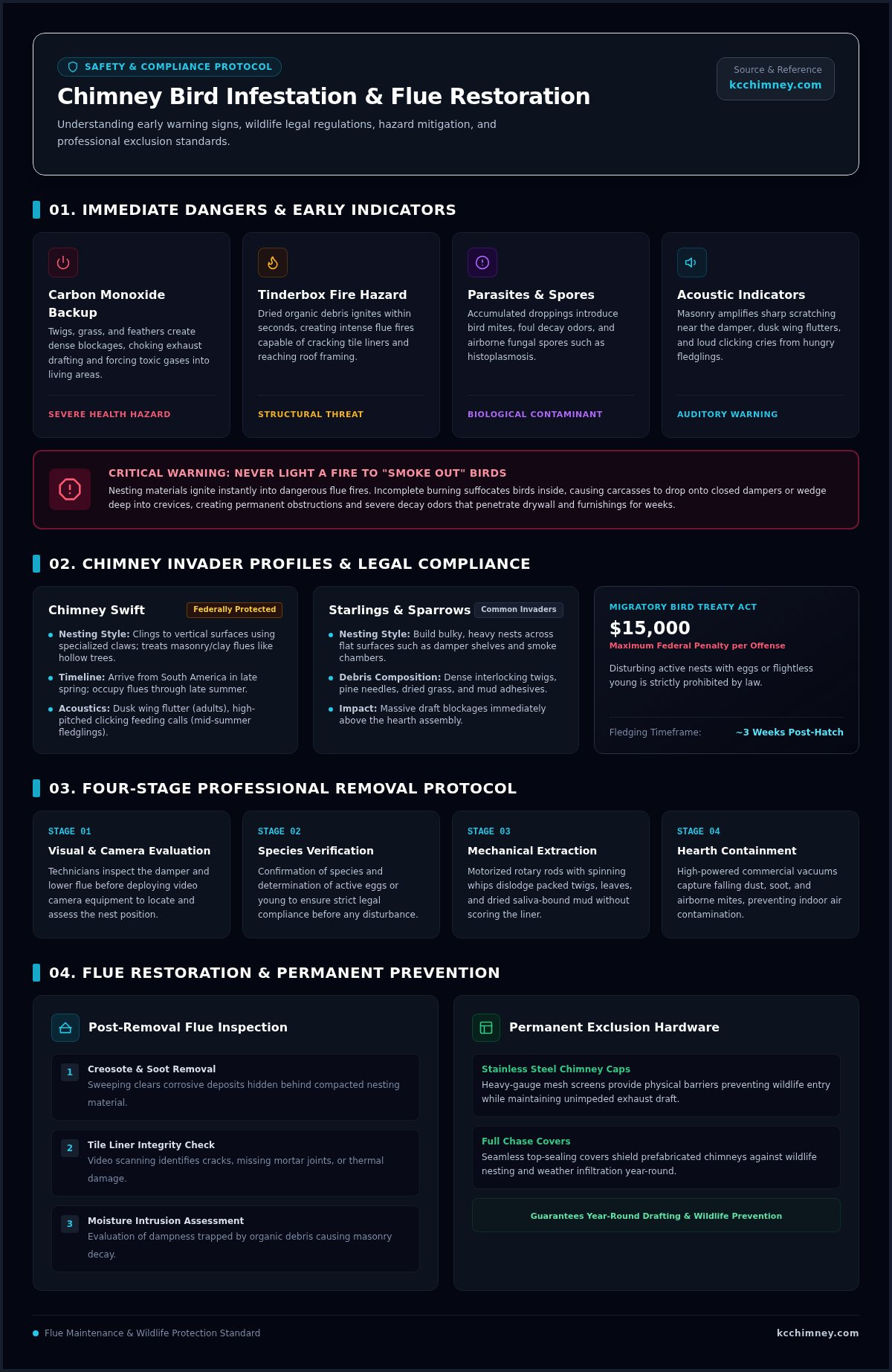
Masonry flues act as natural acoustic amplifiers. When birds settle inside, gentle fluttering turns into loud, persistent scratching right above your fireplace damper. Beyond the irritating noise, an occupied chimney creates severe household hazards. Twigs, pine needles, dried grass, and feathers form dense blockages that quickly choke exhaust drafting. This restriction forces toxic carbon monoxide and smoke backward into your living areas instead of venting safely outside. At the same time, this tinderbox of dry debris creates an immediate chimney fire hazard. Accumulated droppings also harbor bird mites, generate terrible odors, and spread airborne fungal spores like histoplasmosis. When dealing with birds nesting in chimney removal Bucyrus homeowners must treat these early warning signs as urgent safety issues rather than simple annoyances.
Recognizing Common Chimney Invaders in Miami County
Several bird species thrive across rural and suburban eastern Kansas, but their behaviors differ significantly. While European starlings and sparrows build bulky nests on flat damper shelves or smoke chambers, the Chimney Swift is built specifically for vertical structures. Swifts possess unique claws that cannot perch horizontally; instead, they cling directly to vertical surfaces, treating unlined brick or rough clay tile flues like hollow forest trees.
In Bucyrus, swifts arrive from South America in late spring, establishing nests that remain occupied through late summer. Adult roosting typically produces quiet wing flutters at dusk. Once eggs hatch by mid-summer, however, hungry fledglings produce loud, high-pitched clicking sounds whenever parents return with food. Because the federal Migratory Bird Treaty Act protects swifts, nests with active fledglings or unhatched eggs cannot be legally disturbed until the birds fledge and leave the flue naturally.
The Immediate Dangers of Lighting a Fire to Clear Birds
Homeowners occasionally assume they can resolve an infestation quickly by lighting a small hearth fire to smoke the birds out. Never attempt this under any circumstances. Twigs, leaves, and natural adhesives used in nest construction ignite in seconds, frequently sparking a devastating flue fire that can crack tile liners and spread to structural roof framing.
Lighting a fire also suffocates the animals inside. The dead birds then drop directly onto the closed damper or become wedged deep within flue crevices. This leaves you with an immovable obstruction and putrid decay odors that penetrate drywall, furniture, and living spaces for weeks. Humane patience and scheduled clearing are always the safest path forward.
How Professionals Safely Remove Chimney Bird Nests
Removing nesting wildlife from a flue requires precision, proper containment, and absolute compliance with wildlife laws. A reputable sweep never forces a brush down the chimney blind. Instead, technicians follow a four-stage process to protect both the home and the animals inside:
- Visual and camera evaluation: Technicians inspect the damper area and lower flue, then insert advanced video camera equipment to assess the nest location.
- Species verification: The crew identifies the bird species and confirms whether active eggs or flightless young occupy the space.
- Mechanical extraction: Specialized flexible rods and spinning whips dislodge packed twigs, leaves, and dried mud without scoring the liner.
- Hearth containment: High-powered commercial vacuums capture falling dust, airborne mites, and soot before anything drifts into the living room.
Assessing Nest Status and Legal Compliance
Before any clearing begins, technicians verify whether the nest is currently active. Because chimney swifts maintain federally protected status under the Migratory Bird Treaty Act, disturbing eggs or nestlings is a federal offense that can trigger fines reaching $15,000. If young birds are present, a professional establishes a legal waiting window. Fledglings mature quickly, typically taking their first flights within three weeks after hatching. Once the young leave the chimney to feed, technicians return promptly to extract the vacated materials before adults attempt a second brood.
Specialized Tools for Safe Flue Clearance
Clearing packed organic matter requires heavy-duty tools. Twigs bound together by bird saliva create stubborn blockages that easily jam ordinary hand brushes. Sweeps deploy motorized rotary rods that spin flexible whips down the flue, breaking up interlocking twigs from the top down. Navigating steep rooflines on multi-story Kansas homes requires proper safety harnesses and roof staging equipment to ensure technicians work securely above the chimney crown.
Inside the home, clean execution matters just as much. Technicians seal the fireplace opening with heavy poly sheeting and connect commercial HEPA-filtered extraction vacuums. These containment systems maintain negative air pressure, preventing allergen spores, soot, and dried droppings from escaping across your furniture. If you suspect an active obstruction, scheduling professional chimney sweeping ensures your system is handled cleanly and safely. Following these meticulous steps for birds nesting in chimney removal Bucyrus residences stay clean, odorless, and structurally sound.
Post-Removal Flue Inspection and Creosote Cleaning
Extracting the physical nest is only half the battle. Leftover organic matter, damp twigs, and trapped moisture accelerate deterioration along interior flue walls. When damp debris presses against clay tile or masonry for months, moisture leaches into porous surfaces, degrading flue tiles and breaking down surrounding mortar joints. For homeowners addressing birds nesting in chimney removal Bucyrus properties require an in-depth post-clearance inspection and thorough cleaning to restore safety before lighting another fire.
The Value of a Level 2 Chimney Video Inspection
Pulling out twigs doesn’t reveal whether the chimney structure suffered underlying damage. Technicians insert advanced 360-degree video cameras from the hearth straight up to the crown, providing high-definition footage of every flue tile, seam, and joint. This camera evaluation uncovers hidden thermal shock cracks, eroded mortar joints, and separated liner sections where sparks or exhaust gases could enter wall cavities. Scheduling a comprehensive chimney inspection in Kansas City verifies that your flue meets national fire safety standards after wildlife activity, giving you clear documentation of your system’s structural integrity.
Eliminating Health Hazards and Lingering Creosote
Bird droppings contain high concentrations of uric acid, which chemically attacks masonry mortar, turning solid joints into crumbling sand over time. Droppings and molted feathers also host harmful bacteria and parasites, including bird mites, ticks, and fleas. Once their avian hosts depart, these pests frequently migrate downward into living areas in search of new hosts.
Technicians neutralize these lingering health risks by applying specialized antimicrobial treatments to the flue interior and completing a rigorous chimney sweep in Kansas City. Thorough sweeping strips away flammable creosote deposits that may have bonded with loose nesting fibers, restoring clean airflow across the damper. Because wildlife disruptions often involve species safeguarded under the Migratory Bird Treaty Act, documenting a clear, sanitized flue confirms your heating system is both legally cleared and fully prepared for winter burning.
Preventing Future Nesting with Chimney Caps and Chase Covers
An uncapped flue looks like a hollow tree trunk to passing wildlife. Birds naturally seek out these dark, sheltered vertical shafts to build nests protected from wind, rain, and ground predators. Unless you physically seal the flue top, clearing nesting materials simply resets the clock until next season. When managing birds nesting in chimney removal Bucyrus homeowners must finish the job with permanent structural exclusion, ensuring wild birds can never re-enter the flue.
Choosing the Right Chimney Cap for Wildlife Defense
Hardware store wire mesh often causes more problems than it solves. Cheap galvanized screens rust quickly in damp Midwest weather or clog with soot, which restricts appliance drafting. Professional exclusion requires heavy-gauge stainless steel chimney caps with integrated spark arrestor mesh.
This diamond-pattern mesh keeps small birds out while maintaining proper exhaust airflow. Stainless steel and copper resist corrosive flue gases and won’t rust. Rural Bucyrus properties frequently experience heavy windstorms and driving rains across open fields. Professional caps are bolted securely directly to clay flue tiles or mounted across the entire concrete chimney crown using heavy-duty tapcon screws, preventing Kansas prairie gusts from dislodging the assembly.
Protecting Prefabricated Fireplaces with Quality Chase Covers
Homes with manufactured fireplaces utilize framed chimney chases topped with metal covers rather than traditional masonry crowns. Standard builder-grade covers are often thin galvanized sheet metal with flat profiles that hold standing water. Over time, standing rainwater causes these tops to rust, sag, and warp:
- Rust holes and separated joints: Corroded seams create open access points for birds and squirrels to enter the wooden chase structure.
- Custom stainless steel upgrades: Replacing warped tops with custom-fabricated stainless steel chase covers eliminates standing water through cross-broken diagonal creases.
- Comprehensive structural defense: Exploring qualified chimney repair in Kansas City ensures your exterior framing stays weather-tight and animal-free.
Whether your home features a massive multi-flue brick stack or a modern wood-framed chase, custom physical barriers provide lasting peace of mind. To permanently safeguard your flue against seasonal wildlife invasions, schedule a professional chimney cap installation to protect your hearth today.
Why Bucyrus Homeowners Trust Best Chimney Services for Bird Removal
Since 2012, Best Chimney Services has served as a trusted guardian of hearth safety for homeowners across Bucyrus, South Johnson County, and Miami County. When tackling birds nesting in chimney removal Bucyrus residents rely on complete structural solutions rather than quick, temporary fixes. Our team combines hands-on trade craftsmanship with advanced video camera inspection equipment, ensuring every stage of clearing, cleaning, and capping protects both your living room and your chimney’s longevity. We use heavy drop cloths, sealed enclosures, and commercial containment vacuums to guarantee completely mess-free residential fireplace care during every visit.
The Advantage of a Dedicated Chimney Professional Over Pest Control
General pest exterminators understand animal behavior, but they don’t know the intricate venting mechanics of a fireplace. Trapping or scaring an animal out of the home solves only half the problem. A pest control company won’t inspect your clay tiles for thermal shock cracks, sweep away flammable creosote, or evaluate whether acidic droppings have eaten into the mortar joints.
A chimney professional restores the entire system. If nesting wildlife has loosened mortar or damaged flue surfaces, technicians can complete tuckpointing, sweep the flue, and install a heavy-gauge chimney cap in a single, coordinated service call. You avoid coordinating multiple contractors while ensuring your fireplace is completely safe to burn before cold weather arrives.
Schedule Your Bucyrus Chimney Evaluation Today
Scratching sounds and fluttered wings inside your chimney should never turn into a winter smoke hazard or a damaged liner. With prompt service throughout Bucyrus, Stilwell, Overland Park, and surrounding Miami County communities, our seasoned technicians arrive prepared to resolve the issue with honest communication and no high-pressure tactics. We review high-definition video camera footage directly with you, providing straightforward recommendations so you understand the exact condition of your flue.
For safe, dependable birds nesting in chimney removal Bucyrus families can count on, partner with local craftsmen who make home safety their top priority. Schedule your inspection with Best Chimney Services today to clear your flue and restore lasting peace of mind to your hearth.
Secure Your Flue and Protect Your Hearth Today
Don’t let uninvited wildlife jeopardize your living space with hidden flue fires, carbon monoxide spillage, or structural decay. Resolving a nesting issue requires more than pulling out twigs. True protection demands careful legal compliance, thorough flue sweeping, and durable physical barriers. When managing birds nesting in chimney removal Bucyrus homeowners deserve complete safety rather than temporary patch jobs.
Locally owned and trusted across the Kansas City metro since 2012, Best Chimney Services delivers complete peace of mind. Our advanced video camera flue inspections ensure zero hidden hazards remain behind, pinpointing hairline cracks and liner gaps before you light a fire. With a comprehensive service covering removal, sweeping, and custom stainless capping, we ensure your fireplace stays clean and properly guarded. Protect your hearth and schedule bird removal with Best Chimney Services today to keep your family warm and secure all winter long.
Frequently Asked Questions
Is it illegal to remove birds from a chimney in Kansas?
Yes, if the birds are federally protected migratory species like chimney swifts. Under the Migratory Bird Treaty Act, it is illegal to remove or disturb an active nest containing eggs or flightless young without a federal permit. Violations carry fines up to $15,000. Non-native species like European starlings and house sparrows aren’t protected under this law, but accurate species verification by a qualified professional is critical before clearing any nesting materials.
What should I do if I hear chirping birds in my fireplace?
Close your fireplace glass doors or mesh screen immediately and keep the damper shut if birds haven’t fallen past it. This stops disoriented wildlife and wandering parasites from entering your living spaces. Avoid banging on the pipe or poking brooms up the flue. Contact an expert for birds nesting in chimney removal Bucyrus families trust to inspect the flue with internal cameras and outline the safest, legal steps forward.
Can I start a fire to force birds out of my chimney flue?
No, you should never light a fire to smoke out wildlife. Twigs, pine needles, and feathers ignite instantly, creating an intense flue fire that can crack clay tiles and ignite attic timbers. Lighting a fire also suffocates the animals. Dead birds drop directly onto your damper shelf, generating putrid decay odors and an immovable blockage that forces carbon monoxide right back into your home.
How much debris can a bird nest leave inside a chimney?
Nests can range from small twig cups to massive blockages spanning several vertical feet. Starlings and sparrows build dense, bulky piles using twigs, dried grass, leaves, and trash, which quickly choke the damper and smoke chamber. Chimney swifts build small, bracket-shaped twig cups glued together with saliva. Over several seasons, abandoned debris and droppings accumulate into a heavy, flammable mass that requires mechanical rotary equipment to dislodge.
Do chimney caps restrict fireplace airflow while keeping birds out?
Properly engineered chimney caps do not restrict exhaust draft. Professional models utilize specific diamond-mesh dimensions that block birds, bats, and squirrels while providing open surface area for exhaust gases to escape freely. Drafting problems typically occur when homeowners wrap fine window mesh or chicken wire over the flue top. These makeshift covers quickly choke with soot and trap toxic gases, unlike heavy-gauge stainless steel caps.
What health risks are associated with bird nests in chimneys?
Nests introduce significant biological hazards into your living environment. Accumulated droppings can foster Histoplasma capsulatum, an airborne fungus that triggers serious respiratory illness in humans and pets. Nests also harbor bird mites, ticks, and fleas. When addressing birds nesting in chimney removal Bucyrus technicians apply specialized antimicrobial treatments to neutralize lingering airborne bacteria, biting parasites, and pervasive foul odors before they drift into living areas.
How long do baby chimney swifts stay in the flue before leaving?
Chimney swift chicks stay inside the flue for roughly four to five weeks after hatching. During the first two to three weeks, they remain in the small twig nest. As their feathers develop, they climb out and cling directly to the masonry flue walls. Once the young birds take flight to feed outside, technicians can safely and legally extract the abandoned nest and cap the chimney.