
A single hairline fracture in your chimney’s clay liner is more than a minor wear and tear issue; it is a structural breach that directly compromises your home’s safety. When you are faced with the need for cracked flue tile repair, the uncertainty can be overwhelming, especially when you are worried about carbon monoxide leaks or wondering if your fireplace is safe to use during a Kansas City cold snap. You want to protect your family, but conflicting advice from different contractors often leaves you feeling stuck and confused.
It is completely normal to feel protective of your home’s integrity and wary of high pressure sales tactics. At Best Chimney Services, we believe that every homeowner deserves a clear, honest assessment based on rigorous industry standards. This guide provides the clarity you need to make an informed decision. You will learn exactly why these tiles crack, the hidden dangers they pose to your household, and a straightforward framework to help you choose between localized repair and professional chimney relining. By the end, you will have the peace of mind that comes from knowing your fireplace is safe for the season ahead.
Key Takeaways
- Learn how rapid temperature changes cause thermal shock, creating structural gaps in your chimney’s clay liner.
- Understand the serious risks of carbon monoxide leaks and pyrolysis, where heat transfer through cracks can ignite nearby wooden structures.
- Discover why a Level 2 video inspection is the only reliable way to determine if you need cracked flue tile repair or a full system upgrade.
- Get a clear framework to decide between localized sealant repairs and chimney relining based on the extent of the damage.
- Find out what to expect during a professional restoration, including our mess-free approach designed for local Kansas City homes.
Understanding Cracked Flue Tiles: Why Your Chimney Liner Is Failing
Think of your chimney flue tile as the internal skin of your fireplace system. This clay liner serves as the critical barrier between intense heat and the wooden framing of your home. When it works correctly, it directs toxic gases like carbon monoxide safely outside. However, when these tiles fail, they leave your property vulnerable to fire and health hazards. Understanding the root causes of damage is the first step toward a successful cracked flue tile repair.
The Science of Thermal Shock
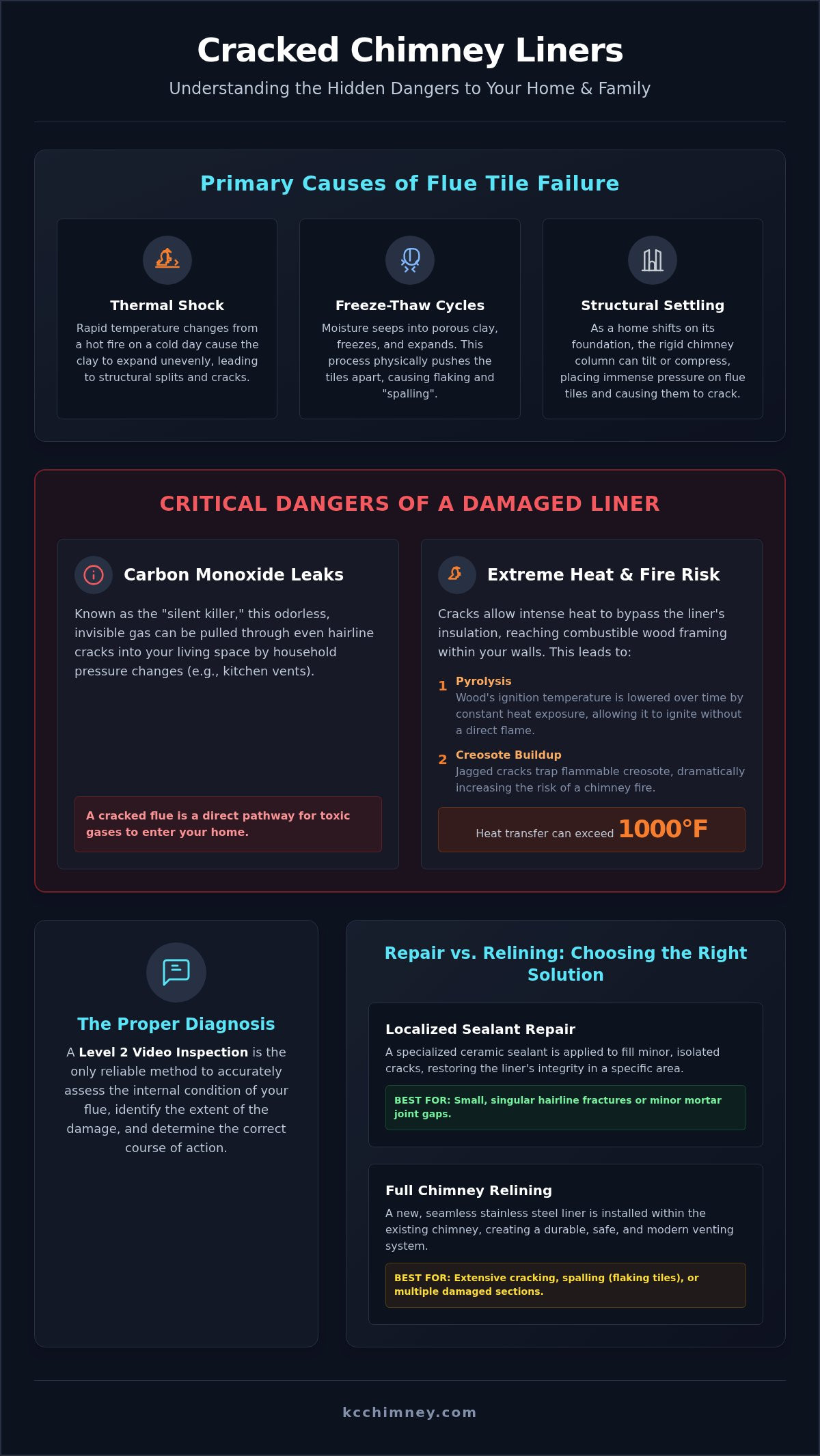
Clay is a durable material, but it lacks the flexibility to handle sudden, extreme temperature changes. When you light a roaring fire on a frigid Kansas City night, the inner surface of the flue tile heats up rapidly while the outer surface remains cold. This creates a massive temperature gradient. The resulting stress causes the clay to expand at uneven rates, creating a “shaking” effect within the material. This physical strain eventually forces the tile to split. Thermal shock is the primary cause of vertical flue cracks. Once these splits occur, they can expand with every subsequent fire, eventually allowing heat to reach the chimney’s exterior masonry.
KC Climate Factors: Freeze-Thaw and Humidity
Our local weather plays a significant role in the lifespan of your chimney. Kansas City winters are notorious for rapid freeze-thaw cycles. Moisture from rain or melting snow seeps into the porous clay tiles. When temperatures drop, that water freezes and expands, physically pushing the clay apart. This often results in “spalling,” where the face of the tile flakes off and falls into the firebox.
In areas like Stilwell and Bucyrus, high summer humidity further accelerates masonry degradation. Moisture lingers in the mortar joints between tiles, softening them over time and making the entire structure less stable. Because of these intense seasonal shifts, spring inspections are critical after a harsh Kansas winter.
Beyond the weather, structural settling is a common issue for homeowners in Mission Hills and Overland Park. As older homes shift on their foundations, the chimney column can tilt or compress. This movement puts immense pressure on the rigid flue tiles, causing them to crack or shift out of alignment. Identifying these issues early through a professional evaluation ensures you choose the right path for cracked flue tile repair before the damage spreads to the rest of the stack.
The Hidden Dangers: Why Small Cracks Pose Big Risks
A single crack in your chimney liner might seem like a minor maintenance item, but it fundamentally changes how your fireplace interacts with your home. These breaches are not merely cosmetic flaws; they are active pathways for heat and toxic gases. When a flue tile loses its integrity, it can no longer perform its primary job of containment. Postponing a cracked flue tile repair often leads to risks that are far more expensive and dangerous than the initial fix.
Carbon Monoxide and Your Family Safety
Carbon monoxide is often called the silent killer because it is impossible to see, smell, or taste. Under normal conditions, the draft of your chimney creates a vacuum that pulls these gases upward. However, pressure changes within your home, such as those caused by kitchen vents or bathroom fans, can create a “backdraft” effect. These pressure differentials can pull flue gases through even the smallest tile gaps and into your living spaces. While working CO detectors are essential safety tools, they are your last line of defense. Even a hairline fracture is wide enough for gas molecules to pass through. If you suspect your liner has reached this stage, a Level 2 inspection is the most reliable way to confirm the extent of the damage and protect your household.
Heat Transfer and Fire Hazards
Your chimney is designed with a specific air space between the flue tiles and the exterior brick masonry. This gap acts as an insulator. When a tile cracks, it bridges that gap. This allows temperatures that can exceed 1000 degrees to transfer directly to the masonry and, eventually, to the wooden wall studs surrounding the chimney. Over time, this constant exposure causes a process called pyrolysis. The wood framing begins to chemically change, lowering its ignition temperature until it can catch fire even without a direct spark. Many devastating house fires actually begin inside the walls rather than in the firebox itself.
Beyond these immediate threats, cracks create a jagged surface that aggressively catches creosote. This highly flammable byproduct of wood burning builds up much faster in damaged flues, significantly increasing the likelihood of a chimney fire. According to NFPA 211 standards, any crack or breach in a flue liner makes the system technically unfit for use. Operating a fireplace with a compromised liner isn’t just a risk; it is a violation of modern safety protocols that puts your property at unnecessary risk. Choosing to address a cracked flue tile repair early ensures that your home remains a place of comfort rather than a source of hidden danger.
How We Detect Damage: The Role of Level 2 Video Inspections
For decades, the standard way to check a chimney was with a flashlight and a mirror. This method only reveals what’s visible from the very top or bottom, leaving the middle 90 percent of the flue a complete mystery. Modern safety standards require a much more thorough approach. A Level 2 video inspection removes the guesswork, providing a high-definition view of every inch of your liner. This is the only way to ensure that hidden breaches aren’t putting your home at risk.
What Happens During a Level 2 Inspection?
During this process, we use a specialized high-resolution chimney camera mounted on a flexible rod. This camera is carefully lowered or raised through the entire length of the flue, sending a live, high-definition feed to a handheld monitor. We document the entire interior, capturing photos and video of any defects. We look for any signs that a chimney inspection kansas city professional would consider a structural safety breach. This video evidence is invaluable for homeowners in Overland Park or Mission Hills, especially during real estate transactions or insurance claims. It provides a transparent record of the chimney’s condition, allowing you to see the damage for yourself and make an informed decision regarding cracked flue tile repair.
Identifying Different Types of Flue Damage
Our technicians are trained to spot subtle indicators of failure that an untrained eye would likely miss. One critical area we examine is the joints between the tiles. We look for “mortar fingers,” which are the visible seals of mortar that should be present at every seam. If these are missing or eroded, it indicates that toxic gases could be leaking into the chimney stack. We also identify:
- Spalling: This is a condition where the face of the clay tile begins to flake off in layers. It is usually a result of moisture freezing inside the pores of the tile, eventually causing the surface to shed like an onion skin.
- Offset Joints: Over time, tiles can shift out of alignment. This leaves the raw masonry of the chimney structure exposed to direct heat and corrosive combustion byproducts.
The orientation of a crack tells a specific story about your chimney’s history. Horizontal cracks often indicate structural settling of the home’s foundation or the chimney column itself. In contrast, vertical cracks almost always suggest thermal shock from a previous chimney fire or rapid heating. Understanding these nuances helps us determine the most effective and long-lasting path for your cracked flue tile repair.
Repair vs. Relining: Choosing the Right Solution
Choosing between a targeted fix and a full system overhaul depends on the severity and location of the damage discovered during your video inspection. While every homeowner hopes for a simple solution, the priority must always be the long-term safety of the structure. A cracked flue tile repair can sometimes be achieved through specialized resurfacing, but if the tiles are shattered or the chimney is structurally unstable, relining is the only responsible path forward.
Joint Repair and Resurfacing
If the damage is limited to eroded mortar joints or a few isolated hairline cracks, specialized sealant systems can restore the flue’s integrity. These heat-shielding mortars are applied to the interior of the flue, filling gaps and smoothing the surface. However, patching has its limits. If a tile is already structurally compromised or has large vertical splits, a surface patch is often a temporary band-aid that won’t stop the underlying expansion and contraction. For these minor issues, professional chimney repair kansas city services can extend the life of your current liner without a full replacement.
The Benefits of Stainless Steel Relining
When multiple tiles are cracked or shifted, stainless steel relining becomes the industry standard for safety. This process involves sliding a high-grade, insulated metal pipe through the entire length of the chimney. This creates a continuous, seamless path for smoke and gas, eliminating the risk of leaks through old masonry joints. Stainless steel is resistant to corrosion and future thermal shock, often coming with lifetime warranties that add significant value to your home.
A new liner also significantly improves the draft and efficiency of your fireplace. It provides a smooth, correctly sized flue that helps smoke rise faster and more reliably. This is especially important if you are considering a fireplace insert installation kc, as modern high-efficiency units require a specific liner diameter to function safely. While the upfront cost of relining is higher than a patch, it removes the need for future cracked flue tile repair and ensures your fireplace is ready for decades of use.
If you aren’t sure which path is right for your home, we can help you weigh the options. Contact us today to schedule your safety evaluation and get a clear, no-nonsense recommendation for your chimney.
Professional Flue Restoration: What to Expect
Deciding to move forward with a cracked flue tile repair is a significant step toward securing your home’s safety. We understand that inviting technicians into your living space can feel disruptive, so we prioritize a process that is as transparent and clean as possible. For our neighbors in Mission Hills and Overland Park, we offer a mess-free guarantee. Our team uses specialized HEPA filtration vacuums and heavy-duty floor protection to ensure that not a single speck of soot enters your home during the restoration.
The timeline for these projects is often shorter than homeowners expect. A typical relining or localized repair usually takes between four to six hours to complete. Once the physical work is finished, we perform an airtightness test to confirm the system is fully sealed. This final check ensures that your fireplace is ready for its first fire of the season, providing you with immediate peace of mind.
The Installation and Repair Process
Our methodical approach follows a three-step framework to ensure the longevity of the work. Every project begins with a deep cleaning. We must remove all creosote and loose debris so that new sealants can bond properly or to ensure a new stainless steel liner has adequate clearance. Following the cleaning, we handle structural preparation. This might involve removing protruding mortar or stabilizing loose tiles to create a smooth path for the new components. Finally, we install the new liner or apply the high-temperature repair sealant. This stage is handled with precision to meet all local Kansas City building codes and safety standards.
Maintaining Your Restored Flue
A professional repair is a long-term investment in your property, but it still requires basic oversight. Scheduling an annual sweeping is the most effective way to monitor the condition of the repair. During these visits, we can verify that the sealant remains intact or that the stainless steel liner hasn’t been affected by unusual soot buildup. We also recommend burning only seasoned hardwoods, which produce less creosote and reduce the thermal stress on your chimney’s internal components. By following these simple steps, you can enjoy your fireplace without the looming worry of structural failure.
If you are ready to restore the safety and efficiency of your hearth, we are here to help. Our certified team is committed to providing high-integrity service that keeps your family protected all winter long. Schedule Your KC Chimney Inspection & Sweeping Today to get started on your path to a safer home.
Secure Your Hearth for a Safer Kansas City Winter
A compromised chimney liner is more than a minor maintenance delay; it’s a safety hazard that requires professional attention. We have explored how thermal shock and structural settling create breaches that allow heat and toxic gases to enter your living space. By prioritizing a certified Level 2 video inspection, you gain the visual proof needed to make an informed choice between localized sealant work and a permanent relining solution. Our team is dedicated to providing the most reliable cracked flue tile repair options while ensuring your home remains clean and protected.
Since 2012, we have served homeowners throughout Johnson and Miami counties with high-integrity service and a mess-free guarantee. Don’t let uncertainty keep you from enjoying your fireplace during the coldest months of the year. You deserve the peace of mind that comes from a safe, efficient hearth. Get a Professional Flue Inspection and Repair Quote in Overland Park today and prepare your home for a cozy, worry-free season.
Frequently Asked Questions
Is it safe to use a fireplace with one cracked flue tile?
No, it is not safe to use a fireplace with even a single cracked flue tile. According to NFPA 211 standards, any crack in a chimney liner is a structural breach that makes the system unfit for use. These gaps allow toxic gases and intense heat to escape into your home’s walls. Operating the fireplace in this condition increases the risk of carbon monoxide poisoning and chimney fires. You should always wait for a professional evaluation before lighting another fire.
How much does it cost to repair a cracked chimney flue in Kansas City?
The total for cracked flue tile repair depends on the location of the damage and the method chosen for restoration. Minor gaps at the joints might only require specialized resurfacing, while extensive vertical cracks often necessitate a full chimney relining. Since every chimney structure is unique, we provide customized quotes based on what we find during a video inspection. This ensures you only pay for the specific safety upgrades your home requires to meet current standards.
Can I repair a cracked flue tile myself with high-temp cement?
You should not attempt to repair a cracked flue tile yourself with high-temperature cement. Applying a patch from the firebox only covers the bottom few inches and fails to address the structural integrity of the entire chimney column. Professional repairs require specialized pumping equipment and high-definition cameras to ensure the sealant is applied evenly throughout the flue. DIY attempts often provide a false sense of security while leaving hidden dangerous gaps higher up in the stack.
How do I know if my chimney flue is cracked without a professional inspection?
It is very difficult to identify a cracked flue without a professional video inspection. One common sign is finding small, flat pieces of clay, known as spalling, in your firebox after a fire. You might also notice a smoky smell in upper rooms or poor drafting. However, most cracks are hairline fractures located deep within the masonry where they remain invisible to the naked eye. A Level 2 inspection is the only reliable way to confirm your chimney’s safety status.
What is the difference between a chimney flue and a chimney liner?
A chimney flue refers to the hollow passage that carries smoke and gases out of your home. The chimney liner is the physical material, like clay tiles or stainless steel, that coats the inside of that passage. While people often use these terms interchangeably, the liner is the critical safety barrier that protects your masonry. If the liner fails, the flue becomes dangerous because it no longer contains the byproducts of combustion properly.
Will a cracked flue tile affect my home insurance coverage?
Yes, a cracked flue tile can significantly impact your home insurance coverage. Most policies require homeowners to maintain their heating systems according to local building codes and safety standards. If a chimney fire occurs and an investigation reveals a pre-existing crack that was never repaired, the insurance company might deny the claim due to negligence. Keeping documentation of your regular inspections and completed repairs is essential for protecting your liability and your property investment.
How long does a stainless steel chimney liner last compared to clay tiles?
Stainless steel chimney liners typically offer superior longevity compared to traditional clay tiles. High-quality stainless steel systems often come with lifetime warranties and are specifically designed to resist corrosion and thermal shock. While clay tiles are durable, they are brittle and prone to cracking during rapid temperature shifts. Upgrading to a metal liner provides a seamless, permanent solution that eliminates the recurring need for localized cracked flue tile repair as your home settles over time.