
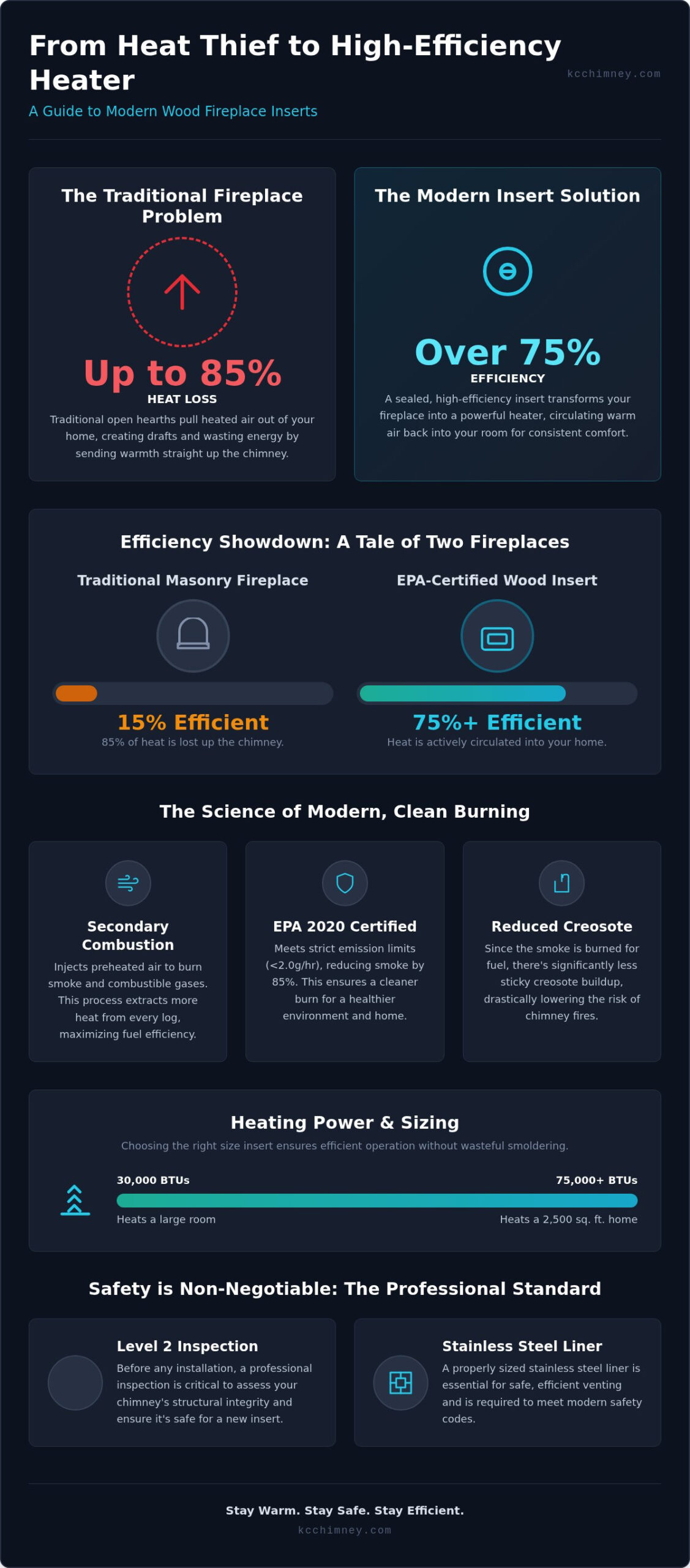
Did you know that a traditional open-hearth fireplace can lose up to 85% of its heat straight up the chimney? For many homeowners in our community, that beautiful masonry hearth is actually a major source of cold drafts and high utility bills. If you’re tired of feeling a chill every time the wind kicks up across the plains, it’s time to consider wood fireplace inserts in Kansas City. These systems don’t just look good. They function as precision-engineered heating appliances that can reach efficiency ratings of over 75%.
We understand that your home’s safety and comfort are your top priorities. You want a fireplace that provides reliable warmth without the smoke backup or the constant worry about chimney integrity. This 2026 guide will walk you through the process of upgrading your hearth, from understanding the current EPA emission limits of 2.5 grams per hour to the necessity of a professional Level 2 inspection. You’ll learn how a high-quality insert reduces your reliance on central HVAC and turns your living room into the cozy, protected sanctuary your family deserves.
Key Takeaways
- Understand why traditional masonry hearths waste energy and how modern wood fireplace inserts in Kansas City convert more wood into usable heat for your home.
- Learn about current EPA emission standards and how secondary combustion technology reduces smoke while maximizing your fuel efficiency.
- Discover the importance of proper firebox measurements to avoid the common pitfalls of over-sizing your new heating appliance.
- Find out why a Level 2 chimney inspection and professional relining are non-negotiable steps for a safe, code-compliant installation.
- Get a roadmap for long-term maintenance, including blower cleaning and gasket inspections, to protect your investment for years to come.
Transforming Your Drafty Kansas City Fireplace into a High-Efficiency Heater
Kansas City winters are famous for their sudden, biting wind chills. If you’ve ever sat by your fireplace only to feel a cold draft on your back, you’ve experienced the primary flaw of an open-hearth system. A traditional fireplace often operates at a dismal 5% to 10% efficiency. This means nearly all the heat generated by your logs escapes through the flue. Even worse, the fire acts like a giant straw, sucking the warm air your furnace just heated right out of the house. This “draft problem” makes your central heating work twice as hard to keep up with the loss.
A Fireplace insert solves this physical energy drain by turning a decorative feature into a high-performance heater. These units are essentially sealed combustion chambers designed to fit directly into your existing masonry opening. By installing wood fireplace inserts kansas city homeowners can finally close the gap between aesthetic appeal and actual thermal performance. These systems create a controlled environment where wood burns slower and hotter, providing a consistent source of warmth that stays inside your living space.
The Difference Between a Standard Fireplace and an Insert
An open-hearth fireplace relies on a massive volume of air for combustion, which creates a vacuum effect throughout your home. In contrast, an insert is a precision-engineered appliance that regulates exactly how much oxygen reaches the fire. While a standard fireplace loses most of its energy, modern inserts reach efficiency levels of 70% to 80%. Most models include a specialized blower system. This fan pulls cold room air into a heat exchanger, warms it against the firebox, and circulates it back into your home. It’s the difference between a campfire in your living room and a professional-grade furnace.
Why KC Homeowners are Upgrading in 2026
The demand for wood fireplace inserts kansas city has reached a new peak as we move into 2026. Local families are prioritizing home resilience and energy independence for several reasons:
- Rising Midwest Energy Costs: With utility rates fluctuating, many are turning to wood as a cost-effective way to “zone heat” the primary areas of their home, reducing the strain on their central HVAC.
- Extreme Weather Preparation: Sub-zero wind chills are a regular threat. A wood insert provides a reliable, non-electric heat source that can keep your family safe during winter power outages.
- Improved Air Quality: Older fireplaces often allow smoke and particulates to linger in the room. Modern inserts are sealed tight, ensuring that exhaust goes up the chimney while the air in your home stays clean and breathable.
Upgrading your hearth is a practical investment in your property’s future. By sealing off the drafty chimney and installing a high-efficiency unit, you’re not just adding ambiance. You’re installing a reliable guardian against the Kansas City cold.
The Science of Wood Insert Efficiency: EPA Standards and Secondary Combustion
High efficiency isn’t just a marketing buzzword. It’s a measure of how much of your wood pile actually turns into usable heat for your home. When you install wood fireplace inserts kansas city homeowners quickly notice they use significantly less wood to achieve the same level of comfort. This is because modern inserts are designed to burn the smoke itself. In an old open fireplace, smoke is simply wasted fuel escaping up the flue. In a high-efficiency insert, that smoke is trapped and re-burned in a process called secondary combustion.
This process is governed by strict federal regulations. The U.S. Environmental Protection Agency has established EPA efficiency standards that require new wood-burning appliances to produce no more than 2.5 grams of particulate matter per hour. This benchmark ensures that your 2026 heating system operates with maximum output and minimal environmental impact. Because these units burn so cleanly, they also produce far less creosote. Since creosote is the primary fuel for chimney fires, a cleaner burn directly translates to a safer home for your family.
Understanding Secondary Burn Tubes and Catalytic Combustors
Most modern inserts use one of two technologies to achieve these clean burns. Non-catalytic inserts use a series of stainless steel tubes at the top of the firebox to inject pre-heated oxygen into the smoke, creating a beautiful “rolling” flame. Catalytic inserts use a ceramic honeycomb coated in precious metals to lower the ignition temperature of the smoke gasses. For the typical Kansas City winter, where we often see long periods of steady cold, catalytic models are often preferred for their ability to provide low, consistent heat for up to 10 or 12 hours on a single load of wood. Before you decide which technology fits your lifestyle, it’s helpful to have a certified safety inspection to ensure your existing chimney can support these high-performance systems.
Environmental Impact and Local Air Quality
Modern wood inserts are a responsible choice for the Kansas City metro area. By utilizing a renewable, locally sourced fuel like seasoned hardwood, you reduce your reliance on fossil fuels and large-scale power grids. These units are engineered to be carbon-neutral over the life cycle of the wood. The strict 2.5 grams per hour particulate limit serves as the gold standard for 2026 residential wood heating, ensuring that the air in your neighborhood stays as clear as the air inside your living room. You get the traditional ambiance of a wood fire with the precision and environmental stewardship of a modern appliance.
Selecting the Perfect Wood Insert for Your Home’s Square Footage
Choosing the right size for your hearth is the most critical step in the planning process. Many homeowners assume that a larger unit is always better, but over-sizing is a common mistake that leads to poor performance. If an insert is too large for the space, you’ll likely find yourself dampening the fire to avoid overheating the room. This results in a smoldering, low-temperature burn that wastes fuel and creates excessive creosote. To find the right fit, start with precise measurements of your existing firebox. You need the height, width at both the front and back, and the total depth to ensure the unit sits securely within the masonry.
When shopping for wood fireplace inserts kansas city residents must also consider their home’s specific layout. A unit that works perfectly in a ranch-style home in Overland Park might struggle in a house with 20-foot vaulted ceilings or a wide-open floor plan. These architectural features change how heat rises and circulates. Large, open spaces often require a unit with a higher BTU output and a high-quality blower system to move air effectively. Before you commit to a specific model, verify that your chimney meets NFPA 211 chimney inspection standards. This ensures your existing structure is safe enough to handle the concentrated heat of a modern insert.
Sizing Guide: BTUs vs. Square Footage
Small inserts are generally rated for spaces up to 1,200 square feet. These are perfect for supplemental heat in a single large room or a cozy basement. Medium to large units, often producing 60,000 to 100,000 BTUs, can heat 1,500 to over 2,500 square feet. If you’re looking to significantly reduce your reliance on your central furnace, a larger unit with a long burn time is often the best choice for the unpredictable Kansas City climate.
Material Choices: Steel vs. Cast Iron
The material of your insert dictates how it radiates heat. Cast iron is traditional and holds heat exceptionally well. It takes longer to warm up but continues to glow and provide warmth long after the fire has dimmed. Welded steel units offer a more modern look and heat up almost instantly. Steel is an excellent choice for homeowners who want quick heat after a long day at work. Both materials are built for longevity in the Midwest, but cast iron typically offers more decorative, rustic styling options compared to the clean, flush-mount lines of stainless steel models.
Finally, consider the blower system. Most high-quality wood fireplace inserts kansas city come with variable-speed fans. On lower settings, you’ll hear a quiet, reassuring hum. On higher settings, the blower is more audible as it works to push warm air into the far corners of your home. Choosing a unit with a high-quality, quiet blower ensures your comfort doesn’t come at the cost of your peace and quiet.
Professional Installation: Why Chimney Inspections are Non-Negotiable
Installing wood fireplace inserts kansas city is a significant home improvement that requires more than just sliding a heavy unit into a brick opening. Because you are fundamentally changing how your chimney functions, safety standards are exceptionally high. The National Fire Protection Association (NFPA) 211 standard requires a Level 2 inspection whenever a new appliance is added or the fuel type changes. This isn’t a mere suggestion. It’s a critical safety baseline that ensures your existing masonry can handle the intense heat and specific venting requirements of a high-efficiency insert.
Before the installation begins, we must address the structural integrity of your chimney. If your exterior masonry has crumbling mortar or a cracked crown, those issues must be resolved through tuckpointing or crown repair. An insert provides heat, but it doesn’t fix a failing structure. Additionally, homeowners with “zero-clearance” or pre-fabricated fireplaces need to be cautious. Not all pre-fab units are rated to house an insert. A professional evaluation is the only way to confirm if your specific model can safely accommodate an upgrade without creating a fire risk.
The Level 2 Inspection Process in Kansas City
We take a thorough, neighborly approach to every project. Our technicians use advanced video camera equipment to perform an Expert Chimney Inspection in Kansas City. We guide a camera through the entire length of the flue to look for hidden cracks, missing mortar joints, or dangerous clearances to combustible materials like wooden framing. This level of detail provides the peace of mind that your new insert won’t create a hazard behind your walls where you can’t see it.
The Importance of a Properly Sized Stainless Steel Liner
A modern insert cannot vent into a standard, oversized masonry flue. Those large brick chimneys were designed for open fires, not the concentrated exhaust of a high-efficiency appliance. To ensure a proper draft, we install a dedicated stainless steel liner that matches the exhaust outlet of the insert. This liner keeps the flue gasses hot, which prevents the rapid cooling that causes dangerous creosote buildup. In our local climate, we often recommend insulated liners to maintain consistent internal temperatures during our coldest months. This precision ensures your system burns efficiently and stays cleaner for longer periods.
If you’re ready to upgrade your home’s efficiency, the first step is ensuring your chimney is up to the task. You can schedule your Level 2 inspection today to begin the process with a focus on safety and precision.
Long-Term Value: Maintenance, Safety, and Savings in Johnson County
Investing in wood fireplace inserts kansas city provides a tangible return that goes beyond simple aesthetics. By using wood as a primary or supplemental heat source, many local families significantly reduce their monthly natural gas or electric bills. This is especially true in the broader KC metro, where winter utility spikes are common. However, maintaining this high level of efficiency requires a commitment to routine care. You aren’t just buying a product; you’re investing in a precision-engineered system that needs professional attention to stay at peak performance.
Annual maintenance involves more than just removing ash from the firebox. To keep your unit operating at the high efficiency levels we discussed earlier, you must inspect the door gaskets for a tight, airtight seal. If air leaks in, your burn time decreases and your wood consumption goes up. You should also clean the blower system annually to prevent dust buildup from affecting the motor’s lifespan. Most manufacturers require professional documentation of these services to keep your warranty valid, making a certified partner essential for your home’s protection. Beyond the hearth, maintaining your other household machinery is just as vital for efficiency; to learn more about keeping your appliances in top shape, check out HomeFix.
Seasonal Maintenance Checklist for KC Homeowners
Many neighbors wait until the first cold snap in October to call a sweep, but the best time for a Chimney Sweep Kansas City: The 2026 Guide is actually the spring. Cleaning out the soot and creosote immediately after the burning season prevents the “charcoal” smell that often wafts into homes during our humid Missouri and Kansas summers. Use this time to check the firebricks for cracks and ensure the secondary burn tubes remain clear of any ash debris that could hinder combustion.
Safety First: Protecting Your Family and Home
Safety is our primary concern as your local chimney experts. While modern inserts are incredibly safe when installed correctly, any wood-burning appliance requires the added protection of working carbon monoxide detectors on every level of your home. In older Johnson County neighborhoods, where masonry chimneys might be several decades old, regular professional inspections are the only way to catch small structural issues before they become fire hazards. We don’t just install your unit; we act as the long-term guardian of your hearth’s health and your family’s peace of mind.
Ensuring your family’s peace of mind often means looking beyond home maintenance to other forms of long-term planning. For those interested in learning about cultural heritage and honoring family traditions, visit Sunnyside Cremation and Funeral for their guide on compassionate funeral planning.
A high-efficiency upgrade is a smart investment for your property’s future and your daily comfort. To ensure your home is ready for a safe and efficient transition, Schedule your pre-installation inspection with Best Chimney Services today and let our certified team provide the technical expertise and neighborly service you deserve.
Securing Your Home’s Warmth and Safety for the Winters Ahead
Upgrading your hearth is about more than just aesthetics. It’s about converting a drafty masonry opening into a precision-engineered heating appliance that protects your family from the Midwest’s sub-zero wind chills. By following the 2026 standards for efficiency and ensuring a professional, code-compliant installation, you turn your living room into a reliable sanctuary. Choosing high-quality wood fireplace inserts kansas city is a proven way to reduce utility costs while increasing your home’s resilience during power outages or extreme cold snaps.
Since 2012, we’ve served neighbors in Overland Park and across the metro area with a commitment to integrity and technical mastery. Our certified technicians specialize in the advanced Level 2 and Level 3 inspections required for these high-performance upgrades. We also provide a mess-free service guarantee; this ensures your home stays as clean as the air your new insert produces. Don’t let another winter pass with an inefficient, drafty fireplace. Upgrade your hearth with a professional wood insert installation today! Let’s work together to make your home the warmest, safest place on the block this season.
Frequently Asked Questions
How much does it cost to install a wood fireplace insert in Kansas City?
Installation costs depend on several factors including the specific model you choose, the condition of your existing masonry, and the length of the required liner. Because every home has unique structural needs, we determine the final cost after a thorough inspection of your chimney’s integrity. Investing in a high-efficiency unit typically pays for itself over time through reduced utility bills and increased home value.
Do I need to line my chimney for a wood insert?
Yes, a dedicated stainless steel liner is a non-negotiable requirement for a safe installation. Most older masonry flues are far too large for modern, high-efficiency appliances. A properly sized liner ensures a strong draft and prevents gasses from cooling too quickly, which is the primary cause of dangerous creosote buildup. It’s a critical safety component that protects your original chimney structure from heat damage.
Can a wood insert heat my whole house?
A wood insert can heat an entire home if the unit is correctly sized for your square footage and your home has an open floor plan. While many wood fireplace inserts kansas city residents install are used for supplemental zone heating, larger models can produce enough BTUs to serve as a primary heat source. The effectiveness often depends on how well air circulates between rooms and the quality of your home’s insulation.
What is the difference between a wood stove and a wood fireplace insert?
The main difference is the installation location and footprint. A wood stove is a freestanding appliance that requires its own hearth pad and dedicated floor space. An insert is specifically engineered to fit inside your existing masonry firebox. Both use the same secondary combustion technology to provide high-efficiency heat, but the insert is the better choice for homeowners who want to keep their current hearth’s look.
How often do I need to clean my wood insert chimney?
You should have your system professionally swept and inspected at least once a year. Even though modern inserts burn very cleanly, some creosote will still accumulate over a full Kansas City winter. Annual maintenance also includes checking the door gaskets for a tight seal and cleaning the blower motor to ensure it continues to move air effectively without overheating.
Will a wood insert work during a power outage?
Yes, your insert will continue to provide significant radiant heat even when the power is out. The firebox remains a sealed, self-sustaining combustion system that doesn’t require electricity to burn wood. While the electric blower fan won’t function without a backup power source, the unit itself will keep your primary living area warm and safe during winter emergencies.
Can I install a wood insert myself or do I need a pro?
Professional installation is essential to meet local building codes and ensure your homeowner’s insurance remains valid. These units are extremely heavy and require precise venting through a stainless steel liner. A professional installer also performs the mandatory Level 2 inspection to catch hidden structural flaws in your chimney that a DIY project would likely miss.
What kind of wood is best to burn in an insert in the KC area?
Seasoned hardwoods like oak, hickory, and ash are the best options for our region. These woods are dense and provide long, steady heat outputs that are perfect for overnight burns. You must ensure the wood is “seasoned,” meaning it has been dried for at least six months and has a moisture content below 20%. Burning wet or “green” wood will result in a smoky fire and rapid creosote accumulation.