
Did you know your home’s masonry endures over 40 freeze-thaw cycles every single year in Miami County? Each time the temperature swings, moisture trapped inside your bricks expands and contracts, slowly turning a solid structure into crumbling debris. If you’ve noticed flakes of brick on your lawn or driveway, you’re likely searching for a chimney water sealant Bucyrus solution that actually lasts. It’s frustrating to watch your investment deteriorate, especially when you’re worried about the high cost of structural masonry repairs or structural failure.
You’re right to be cautious about those generic “waterproofers” found on hardware store shelves. The truth is that the wrong product can actually trap moisture inside and accelerate the spalling process. In this article, you’ll learn how to choose a professional-grade, vapor-permeable water repellent that lets your chimney breathe while keeping the Kansas rain out. We’ll demystify the technical jargon and show you which chemicals provide the long-term protection your home deserves. This knowledge ensures your chimney remains a safe and sturdy guardian of your household for years to come.
Key Takeaways
- Understand how the unique Miami County climate turns porous masonry into a sponge and why standard bricks require specialized protection.
- Discover why a vapor-permeable chimney water sealant Bucyrus homeowners choose must allow interior moisture to escape to prevent structural decay.
- Compare professional-grade repellents to retail sealers to avoid the permanent “white blush” discoloration often caused by low-cost acrylic products.
- Identify the early warning signs of water damage, such as white salt deposits and flaking brickwork, before they require costly masonry repairs.
- Learn the essential surface preparation techniques that ensure a water repellent treatment bonds correctly for long-term durability.
Understanding Chimney Water Penetration in Bucyrus, KS
Water penetration happens when moisture finds its way into the tiny pores of your chimney’s brick and mortar. Many homeowners in Bucyrus view their masonry as a solid, impenetrable barrier, but it actually behaves more like a rigid sponge. Because clay bricks are fired at high temperatures, they contain millions of microscopic pathways. Without a high-quality chimney water sealant Bucyrus professionals recommend, these pathways allow rain and humidity to seep deep into the core of the structure. This process, known as “wicking,” can even draw ground moisture upward through the foundation of the chimney. Given the 2026 winter forecast predicting early and sustained cold snaps for Miami County, taking preventative steps now is essential to avoid structural damage.
The Kansas Freeze-Thaw Cycle Explained
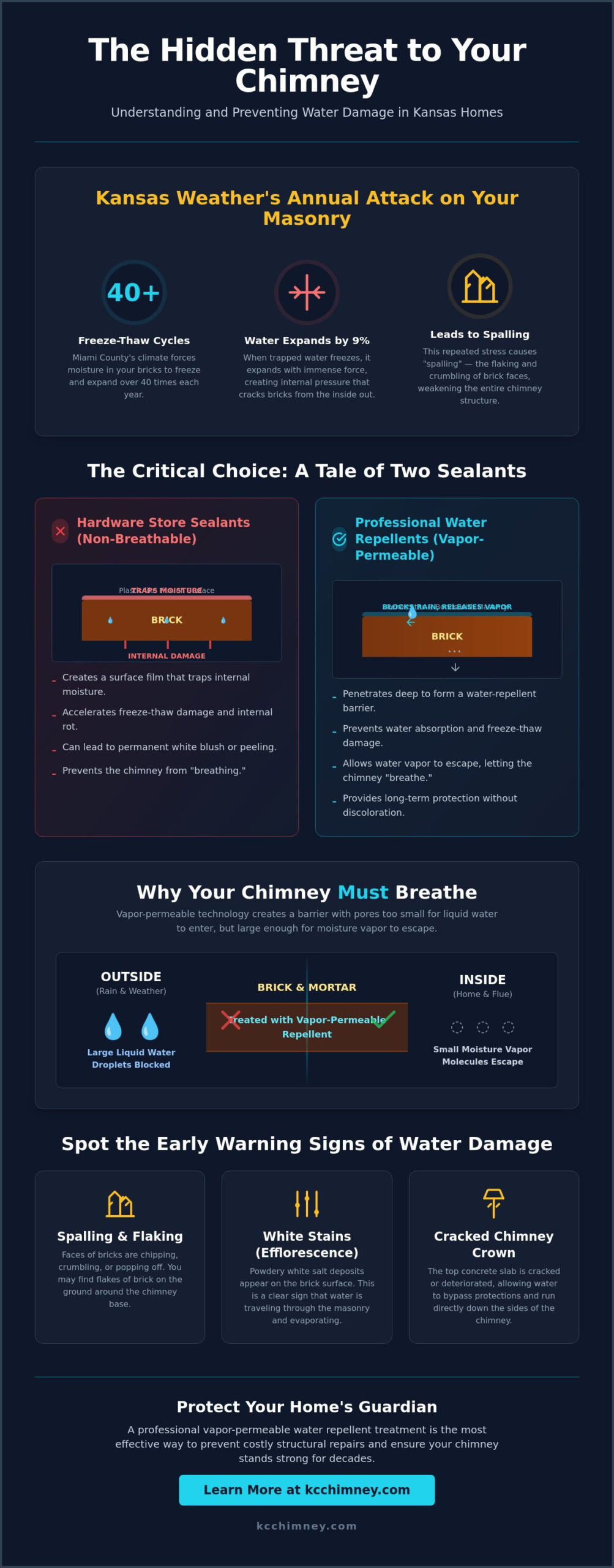
Kansas weather is notoriously hard on masonry because of the sheer number of freeze-thaw cycles we experience annually. When water enters a brick and the temperature drops below freezing, that water expands by approximately 9% in volume. This internal pressure is immense. It pushes against the walls of the brick from the inside out. Over time, this leads to “spalling,” a condition where the outer face of the brick literally pops off. Understanding the chimney structure and function helps illustrate why this isn’t just a cosmetic issue. If left unaddressed over several winters, the cumulative stress can turn a sturdy chimney into a safety hazard that requires expensive rebuilding.
Bucyrus-Specific Masonry Vulnerabilities
Homes in Bucyrus often feature a mix of historic red clay bricks and modern concrete-based masonry. Both types are susceptible to the wind-driven rain common in our open Kansas landscape. When storms blow across Miami County, moisture is forced into the windward side of the chimney at high pressure. Additionally, the chimney crown acts as the primary umbrella for your stack. If the crown is cracked or poorly designed, it directs water straight down the sides of the masonry rather than shedding it away. This localized saturation makes the application of a chimney water sealant Bucyrus residents can trust even more critical for long-term home protection. By sealing these surfaces, you create a barrier that stops the wicking process before the first frost arrives.
Vapor Permeability: Why Your Chimney Must ‘Breathe’ to Stay Dry
Choosing a chimney water sealant Bucyrus homeowners can rely on requires understanding one critical concept: vapor permeability. While many people use the terms “sealing” and “waterproofing” interchangeably, they describe very different chemical processes. A standard film-forming sealer acts much like plastic wrap. It creates a solid coating over the brick that stops water from entering, but it also prevents internal moisture from escaping. Professional-grade water repellents are different. They are penetrating treatments that bond with the masonry at a molecular level rather than just sitting on the surface. This distinction is the difference between a chimney that lasts for decades and one that requires a full rebuild in a few years.
The science behind this is simple but vital for the longevity of your home. Water vapor molecules are significantly smaller than liquid water droplets. A high-quality repellent creates a barrier with pores that are large enough for vapor to pass through but too small for liquid rain to penetrate. This allows your chimney to “breathe.” If you’ve ever seen a chimney with a white, peeling, or milky appearance, you’re likely looking at a failed film-forming product. These retail-grade sealers often trap moisture that naturally migrates from the inside of your home or the combustion process, leading to what professionals call “internal rot.”
The Danger of Non-Breathable Sealants
When you use a non-breathable silicone or acrylic film, you’re essentially setting a trap for your masonry. In our Kansas climate, moisture from your fireplace or humid indoor air moves through the brick toward the outside. If it hits a non-breathable barrier, it pools just beneath the surface. During a freeze, this trapped water expands, causing the brick to shatter from the inside out. Following the guidelines for water-repellent treatments for masonry is the only way to ensure you aren’t accidentally accelerating the decay of your chimney. If your bricks look like they are shedding a layer of skin, it’s a clear sign that a previous owner used an improper coating.
The Silane-Siloxane Advantage
To provide the best protection, we utilize a specialized blend of silanes and siloxanes. Silanes have very small molecules that penetrate deep into the brick, sometimes up to 1/4 inch, to create a hydrophobic zone. Siloxanes have larger molecules that provide excellent surface protection. This combination ensures a long-lasting bond that doesn’t change the appearance of your chimney or trap vapor. In the Bucyrus area, these professional treatments typically offer protection for 5 to 10 years, depending on exposure. Before applying any chemical, it’s wise to have a Level 2 inspection to ensure there are no existing structural cracks that a repellent alone cannot fix.
Professional Waterproofing vs. Standard Hardware Store Sealants
It is tempting to grab a five-gallon bucket of sealer during a quick trip to the hardware store for a weekend project. However, the performance gap between retail coatings and a professional chimney water sealant Bucyrus experts utilize is significant. While big-box products often rely on inexpensive acrylics or low-solids silicones, professional-grade repellents contain much higher concentrations of active ingredients. These chemicals are formulated to penetrate the brick rather than just sitting on top. When a product merely coats the surface, it remains vulnerable to the elements and often results in “blushing.” This is a frustrating white discoloration that occurs when moisture becomes trapped behind the film, ruining the aesthetic of your home.
Professional applications provide a level of consistency that is hard to achieve with a handheld pump sprayer or a brush. We use specialized low-pressure equipment designed to deliver a uniform “flood coat” across the entire masonry surface. This ensures that every mortar joint and porous brick face is fully saturated. Manufacturers often back these professional treatments with performance expectations that you simply won’t find on a store-bought bucket. This makes the service a long-term investment rather than a temporary fix.
Why Retail Products Often Fail
Hardware store sealants generally have a low solids content, meaning the active protective ingredients are heavily diluted. This makes them cheaper to produce, but it also means they break down quickly under intense UV exposure. In the open landscapes of Miami County, the sun’s rays can degrade surface-level coatings within a single season. Once these coatings fail, they often leave behind a patchy, peeling residue. If you decide to apply a professional treatment later, this failed DIY sealer is notoriously difficult to remove. It frequently requires specialized chemical stripping to clear the masonry pores so a high-quality repellent can bond correctly.
The Value of Professional Application
Applying a repellent is about more than just the chemical itself; it’s about proper preparation. We ensure the masonry is thoroughly cleaned and pH-balanced before any product touches the brick. If the surface is too acidic or dirty, the chemical bond will be weak and ineffective. Safety is another primary concern. Climbing steep rooflines with heavy equipment is a risk that homeowners shouldn’t have to take. We typically integrate these treatments with a Level 2 Chimney Inspection. This allows us to confirm that your chimney is structurally sound and free of hidden cracks before we apply the final protective layer. This methodical approach ensures your masonry is truly guarded against the coming freeze.
Signs Your Bucyrus Chimney Needs a Water Repellent Treatment
Identifying the early warning signs of water damage can save you thousands of dollars in structural repairs. Many homeowners in Miami County overlook the subtle changes in their masonry until the damage becomes undeniable. If you start seeing a white, powdery substance on your bricks, that’s efflorescence. These are mineral salt deposits left behind after water evaporates from the masonry. It’s a clear signal that your chimney is absorbing excessive moisture. Applying a professional chimney water sealant Bucyrus homeowners trust can stop this cycle before these salts cause the brick to disintegrate from the inside out.
Physical debris is another major red flag. If you find small chips of brick or the “faces” of the masonry on your lawn or roof, the freeze-thaw process has already begun. This flaking indicates that the structural integrity of the individual bricks is failing. You should also examine your mortar joints. If they feel soft, sandy, or crumble when you touch them, the binder is washing away. This erosion leaves deep gaps that allow even more water to enter the system, accelerating the decay of the entire stack.
The Visual Inspection Checklist
You don’t always need a ladder to perform a basic check. On a dry day, use a garden hose to spray a small section of the chimney. If the water beads up and rolls off, your current protection is holding. If the brick immediately darkens and soaks up the moisture, your chimney is vulnerable. While you are already inspecting your home’s exterior, it’s a perfect opportunity to see if your windows or siding need attention from a service like Sabrina’s Window Cleaning. Look for “step cracking” in the mortar, which often looks like a zigzag pattern following the brick lines. These cracks are prime entry points for wind-driven rain. While you’re looking up, check the metal flashing where the chimney meets the roof and ensure the crown isn’t showing large, visible gaps.
Interior Warning Signs
Sometimes the most telling signs are found inside your living room. A musty or damp smell coming from the firebox after a heavy Bucyrus rainstorm often points to saturated masonry. When the exterior bricks are full of water, that moisture eventually migrates toward the interior of your home. You might notice peeling wallpaper, bubbling paint, or dark water stains on the drywall near the chimney breast. Check your fireplace damper as well. If the metal is difficult to move or shows signs of rust, it’s a symptom of high humidity within the flue. By the time you see interior staining, the exterior saturation has likely reached a critical level. If you’ve noticed any of these red flags, it’s time to schedule a professional chimney inspection to prevent further decay.
The Best Chimney Services Approach to Masonry Protection in Miami County
Our approach to protecting Miami County homes is built on the principle that prevention is always more cost-effective than a full rebuild. We exclusively use 100% vapor-permeable repellents because we understand the high stakes of the Kansas climate. A chimney water sealant Bucyrus homes need must be applied to a substrate that is both clean and structurally sound. We don’t just spray a chemical and leave; we ensure the masonry is prepared to absorb the repellent deeply into its pores. This often means integrating the treatment into a broader chimney repair plan to address any underlying issues first.
A clean surface is non-negotiable for a successful bond. If dust, oils, or efflorescence remain on the brick, the repellent will simply sit on top of the debris and wash away within months. We take the time to verify that the masonry is dry and ready to accept the treatment. This methodical care is part of our commitment to being a guardian of your home, ensuring that every dollar you spend is an investment in your property’s longevity.
Our Proven Application Process
The process begins with an initial safety inspection to identify any existing masonry damage that could compromise the seal. If we find loose mortar or cracked bricks, we may recommend tuckpointing or crown repair before proceeding. We then use specialized chemical cleaning to open the pores of the brick and remove organic growth. Once the substrate is sufficiently dry, we apply the repellent using a saturated “wet-on-wet” technique. This method involves applying a second coat while the first is still wet, ensuring the chemical reaches its maximum penetration depth. This level of thoroughness is what distinguishes a professional application from a standard retail job.
Comprehensive Care for Bucyrus Homes
Maintaining a chimney in Bucyrus requires a holistic view of the entire system. Whether you live in a historic farmhouse with soft clay bricks or a modern home with concrete masonry, your chimney needs regular attention to survive our harsh winters. We often coordinate our water repellent treatments with regular chimney sweep services to ensure both the interior and exterior of your stack are in peak condition. Taking these steps together provides a baseline for home safety and prevents the fear of expensive structural failure. Protect your masonry today with a professional water sealant application from Best Chimney Services and gain the peace of mind that comes with expert, local protection.
Secure Your Bucyrus Home Against the Coming Frost
Your chimney is more than just a functional exhaust; it’s a structural pillar of your home that requires specialized care to survive the Kansas winter. We’ve explored why vapor permeability is the non-negotiable standard for any chimney water sealant Bucyrus homeowners select. By choosing a breathable repellent over a film-forming sealer, you ensure that internal moisture escapes while external rain stays out. Recognizing signs like white salt deposits or flaking brick early can prevent a minor maintenance task from becoming a major structural repair.
Since 2012, our locally owned and operated team has served as a trusted fixture in the community. Our Certified Chimney Technicians are specialists in vapor-permeable masonry protection, bringing the precision of modern safety standards to every project. We take pride in the grit of our manual labor and the integrity of our results, ensuring your home remains a safe haven for your family.
Schedule Your Bucyrus Chimney Inspection & Sealing Today and let us help you protect your investment with a solution built to last. Your peace of mind is our priority, and we’re ready to help your masonry stand strong against whatever the weather brings.
Frequently Asked Questions
How long does chimney water sealant last in the Kansas climate?
Professional-grade water repellents generally protect your masonry for five to ten years depending on the chimney’s exposure to wind and rain. In our region, the intense Kansas freeze-thaw cycles mean most homeowners should plan for a reapplication every seven years. This ensures the chemical barrier remains strong enough to prevent deep moisture penetration before the winter months arrive.
Can I apply chimney sealant myself or should I hire a pro in Bucyrus?
While you can find products at local hardware stores, hiring a professional for a chimney water sealant Bucyrus application is the safest and most effective choice. Experts use specialized silane-siloxane blends that penetrate the brick rather than creating a surface film. Professionals also have the safety equipment needed to reach the top of the stack without risking a fall from a steep roof.
Will waterproofing my chimney change the color of the bricks?
High-quality, vapor-permeable repellents are completely invisible and won’t change the color or texture of your bricks. Unlike cheap retail sealers that can leave a shiny or “milky” appearance, professional treatments bond at a molecular level. This preserves the natural aesthetic of your masonry while providing a powerful hydrophobic barrier against the elements.
Is it too late to seal my chimney if the bricks are already crumbling?
If your bricks are already crumbling or spalling, sealing alone isn’t enough to fix the problem. You must first address the structural damage through tuckpointing or brick replacement to create a stable surface. Once the masonry is restored, applying a repellent is the best way to prevent the new work from suffering the same fate during the next winter.
What is the best time of year to apply water repellent to my chimney?
The ideal time for application is during the dry months of late spring, summer, or early autumn. The masonry needs to be completely dry and the ambient temperature should stay above 40 degrees Fahrenheit for at least 24 hours. Applying the treatment in September or October is a popular choice for Bucyrus residents who want to prepare for the first frost.
Does chimney sealant stop an active leak inside my fireplace?
Water repellents are designed to prevent masonry saturation, but they won’t stop an active leak caused by structural gaps. If you see water dripping into your firebox, the culprit is likely a cracked chimney crown, damaged flashing, or a missing cap. A professional inspection can identify these entry points so they can be repaired before the sealant is applied.
How much does professional chimney waterproofing typically cost in Bucyrus?
The cost of professional waterproofing varies based on the size of the chimney and the amount of surface preparation required. While DIY kits might seem cheaper upfront, they often fail to provide the same long-term protection as a professional-grade treatment. Investing in a certified application prevents the need for much more expensive masonry restoration projects down the road.
Are there specific environmental regulations for chimney sealants in Miami County?
Miami County building codes follow the 2018 International Residential Code, which emphasizes structural integrity and safety. While there aren’t specific local bans on sealant types, using products with high Volatile Organic Compound (VOC) levels is increasingly discouraged. Our team prioritizes eco-friendly, compliant chemicals that meet all modern industry and safety standards.