
Your chimney’s historic exterior is a point of pride for your Mission Hills home, but the hidden condition of its flue is the only thing standing between your family and a devastating house fire. It’s unsettling to realize that a single crack in an aging clay liner can turn a cozy evening into a serious safety hazard. We understand that many neighbors feel overwhelmed by technical jargon or the worry of high-pressure sales tactics when they’re simply looking for a reliable way to protect their property.
Understanding the chimney relining cost Mission Hills homeowners encounter in 2026 doesn’t have to be a source of stress. This guide provides a clear, professional look at the specific factors that drive your investment, from material lifespans to the unique structural needs of our local architecture. You’ll learn how to navigate different liner options and identify exactly what’s required to keep your fireplace safe for decades. We’re here to help you move from confusion to confidence, ensuring your home remains the secure haven it’s meant to be.
Key Takeaways
- Understand how a modern flue liner acts as a critical safety barrier, protecting your home’s historic masonry from extreme heat and corrosive byproducts.
- Compare the benefits of stainless steel and cast-in-place liners to find the most durable and structurally sound solution for your specific fireplace.
- Identify the unique architectural factors, such as chimney height and internal offsets, that determine the chimney relining cost Mission Hills residents should plan for.
- Learn to spot the early warning signs of liner deterioration, including clay spalling and smoke backup, to prevent hazardous house fires.
- See how specialized, mess-free installation techniques preserve the beauty and safety of high-end Mission Hills interiors during the restoration process.
Understanding Chimney Relining and Why It’s Critical for Mission Hills Homes
Relining is the professional process of installing a new, durable flue pipe inside your existing masonry chimney. Think of it as a protective sleeve that directs heat, moisture, and smoke safely out of your home. Without this barrier, the intense heat of a fire and the corrosive acids found in smoke would slowly destroy your chimney’s interior masonry. For many local families, Understanding Chimney Relining is the first step toward a safer winter season. It ensures that toxic gases like carbon monoxide don’t seep through microscopic cracks and into your bedrooms or living areas.
A modern liner does more than just provide a safety shield. It also significantly improves the efficiency of your fireplace. By creating a correctly sized channel for exhaust, a new liner helps your fire burn hotter and cleaner. This prevents the rapid buildup of creosote and stops draft issues that cause smoke to roll back into your home. It’s a vital upgrade for any historic property. While the chimney relining cost Mission Hills homeowners plan for is a significant investment, it’s the only way to modernize an old flue without tearing down the entire brick structure.
The Anatomy of a Mission Hills Chimney
Mission Hills architecture is famous for its character. Many of our local homes feature beautiful, oversized brickwork and complex chimney stacks that house multiple flues in a single masonry column. While these designs are iconic, the original clay tile liners weren’t built to last forever. After 60 or 70 years of harsh Kansas City winters, these tiles often begin to flake and crack due to the freeze-thaw cycle. In some older Johnson County estates, chimneys were even built without any liner at all. This creates a high-risk scenario where extreme heat sits directly against dry, decades-old wooden framing inside your walls.
Relining vs. Repair: When is a Full Liner Necessary?
Homeowners often ask if they can simply patch a few small cracks. Unfortunately, vertical cracks in clay tiles are structural failures that expand every time you light a fire. These gaps also collect creosote, a highly flammable byproduct of wood burning that is the leading cause of chimney fires. If a professional inspection reveals that your flue tiles are shifting or “spalling” (flaking), a localized repair is rarely enough. Relining is the industry-standard solution for structural flue failure. It provides a seamless, continuous path for exhaust that repairs don’t offer. Understanding the chimney relining cost Mission Hills residents encounter involves looking at the long-term durability of these materials, as a properly installed liner can protect a home for several decades.
Comparing Liner Types: Stainless Steel vs. Cast-in-Place Solutions
Selecting the right material for your flue is a decision that balances immediate safety with long-term value. In Mission Hills, the choice usually depends on whether you burn wood or use a gas insert. While several options exist, the specific material you choose is a primary variable in the chimney relining cost Mission Hills homeowners see on their professional estimates. Each material offers unique benefits for the structural integrity of your home.
The fuel type you use dictates the liner’s chemistry. Wood fires produce high heat and acidic creosote, requiring a robust barrier. Gas appliances, while cleaner, produce high levels of water vapor that can turn into corrosive liquid if the flue isn’t sized correctly. The EPA recommends having your chimney and vent professionally inspected to determine which liner material will handle your appliance’s specific exhaust requirements safely.
Stainless Steel: The Gold Standard for Durability
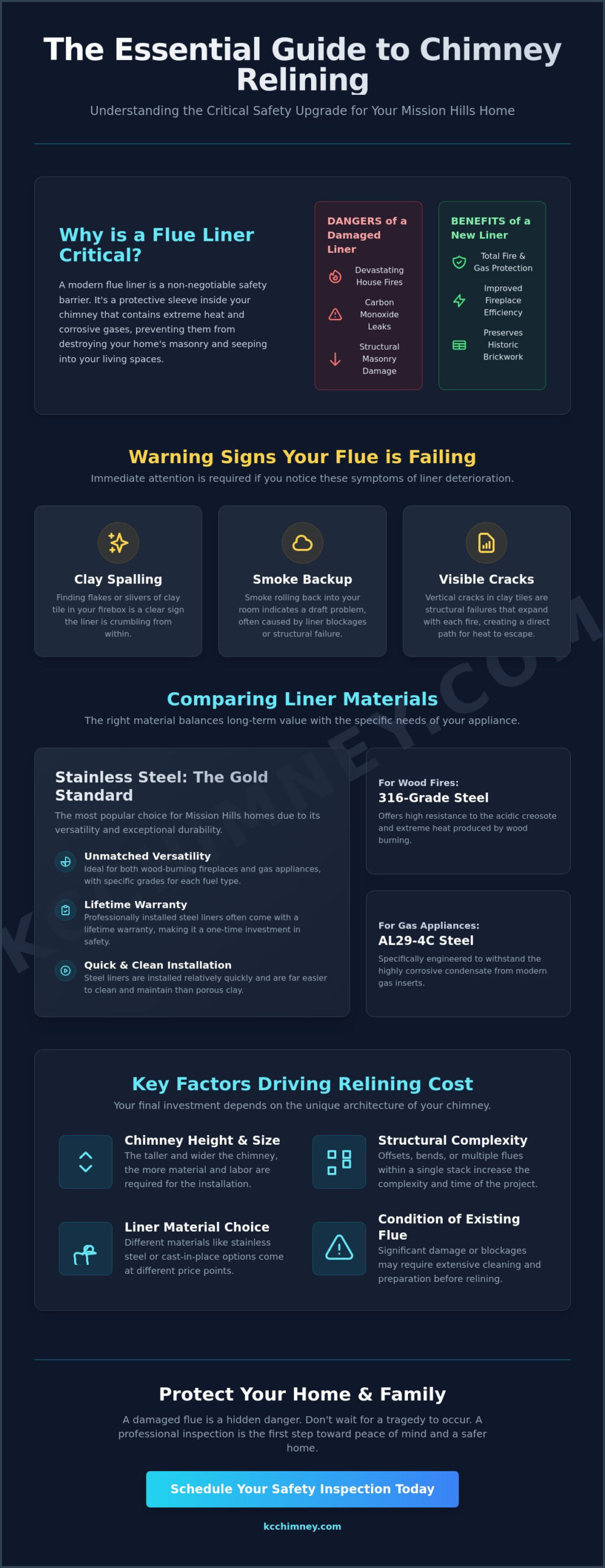
Stainless steel is the most popular choice for Mission Hills residences because of its incredible versatility. We typically use 316-grade steel for wood-burning fireplaces due to its high resistance to corrosion. For high-efficiency gas appliances, AL29-4C stainless steel is the preferred standard as it withstands the super-corrosive condensate those systems produce. These liners are relatively quick to install and are much easier to keep clean than old, porous clay. When installed by a certified technician, these metal liners often come with lifetime warranties, making them a one-time investment in your home’s future safety.
Cast-in-Place and HeatShield® Technology
Cast-in-place liners involve pumping a lightweight, cement-like masonry material into the chimney. This process doesn’t just line the flue; it actually strengthens the entire chimney stack. This is an excellent solution for historic Mission Hills estates where the exterior masonry is fragile or has shifted over time. HeatShield® technology is a specialized version of this approach that uses a ceramic-refractory sealant to fill cracks and restore the original flue’s smoothness. It’s often superior to metal pipes when the chimney has multiple curves or “offsets” that a rigid pipe cannot easily navigate. If you’re unsure which material fits your fuel type, a Level 2 inspection can provide the technical clarity you need.
While aluminum liners exist, they are rarely the right fit for a primary fireplace. Aluminum is thin and only rated for certain low-heat gas appliances, such as older water heaters or furnaces. It cannot withstand the intense temperatures of a wood fire and will melt or degrade rapidly if misused. For the heavy masonry found in our community, sticking to stainless steel or cast-in-place solutions ensures your chimney remains a safe, functional part of your home for the next several decades.
Breaking Down the Chimney Relining Cost in Mission Hills
Mission Hills homes are architectural treasures, but their scale impacts the chimney relining cost Mission Hills residents should expect. Unlike a standard ranch house, a three-story Tudor or Colonial requires significantly more material. A taller chimney means more linear feet of stainless steel or specialized masonry compound. Additionally, the internal diameter of the flue plays a role. Large, historic fireplaces often require wider liners to maintain a proper draft, which naturally increases the material expense for the project.
The path the exhaust takes isn’t always a straight line. Many local chimneys feature “offsets,” which are intentional curves or bends in the masonry. Navigating these bends with a new liner is a technical challenge. It often requires more labor-intensive techniques or the use of specific flexible components to ensure a seamless fit. If your chimney has multiple offsets, the time required for a safe installation will increase. This complexity is why a thorough visual inspection is the only way to get an accurate picture of the work required.
Another factor is the condition of the existing flue. If the original clay tiles are shattered or collapsing, they must be “broken out” to make room for the new liner. This process involves specialized tools and a high degree of care to avoid damaging the surrounding brickwork. It’s a grit-heavy task that requires seasoned professionals to ensure the interior is clean and ready for the new installation. Skipping this step can lead to a liner that’s too small for the fireplace, resulting in poor performance and smoke issues.
Local Labor and Permitting in Johnson County
Adhering to specific building codes in Johnson County is a non-negotiable part of our process. We recommend working with technicians certified by the Chimney Safety Institute of America (CSIA) to ensure the work meets these rigorous benchmarks. Their certification is a baseline for quality, reflecting a mastery of modern safety standards. Before any work begins, a Level 2 inspection is necessary to document the current state of the flue and satisfy local safety requirements. This professional oversight ensures your investment is protected and your home remains compliant with local fire codes.
Hidden Variables That Affect Your Quote
Accessibility is a major variable in any Mission Hills project. Steep roof pitches and high chimney crowns often require specialized scaffolding or safety equipment to protect the technicians and your property. When calculating the chimney relining cost Mission Hills homeowners face, it’s also wise to evaluate the exterior masonry. If the mortar is crumbling, you may need Expert Chimney Repair in Kansas City alongside your relining project to ensure the entire structure is sound. Addressing these issues together is often the most efficient way to preserve your home’s long-term integrity.
Warning Signs Your Historic Flue Requires Immediate Attention
Identifying a failing liner before it becomes an emergency is essential for every homeowner. In Mission Hills, where many chimneys are decades old, the signs of deterioration are often subtle but specific. One of the most common indicators is finding bits of clay or thin pieces of tile, known as shale, on the fireplace floor or in the ash pit. This process is called spalling. It occurs when moisture enters the clay tiles and freezes, causing the surface to flake off. If you see these reddish-brown fragments, your liner is literally falling apart and losing its ability to contain heat.
Beyond physical debris, pay attention to how your fireplace performs during a fire. If smoke rolls back into your living room or you notice a persistent drafting issue, the flue’s internal dimensions may have changed due to collapsing tiles or excessive creosote buildup in cracks. On the exterior, look for white, powdery staining on the brickwork known as efflorescence. This staining suggests that moisture is seeping through the liner and pulling minerals out of the chimney’s mortar. These issues directly influence the chimney relining cost Mission Hills residents eventually face, as ignoring them often leads to more extensive masonry damage that requires tuckpointing or crown repair.
The Role of Video Inspections in Diagnosis
A simple visual look-up from the hearth with a flashlight isn’t enough to verify the integrity of a historic flue. Most dangerous cracks occur high up in the chimney or behind offsets where they are invisible to the naked eye. We use specialized internal cameras to perform an Expert Chimney Inspection in Kansas City, allowing us to see every hairline crack and separated joint in high definition. This technology removes the guesswork and provides clear evidence of whether your liner is safe or needs an immediate upgrade to meet modern fire codes.
Safety Risks of an Improperly Lined Chimney
The dangers of a compromised liner are severe and often invisible. When cracks exist, a process called pyrolysis can occur. This is where heat transfers through the gaps and slowly dries out the wooden framing of your home until it ignites at a much lower temperature than normal. Additionally, porous or cracked masonry allows carbon monoxide to seep into your living spaces instead of exiting through the roof. The liner is the primary barrier between fire and your home’s structure. If you’ve noticed any of these warning signs, you should schedule a Level 2 inspection to ensure your hearth remains a safe feature of your home.
Expert Relining and Safety Inspections with Best Chimney Services
Best Chimney Services approaches every project with the understanding that we’re entering your private sanctuary. We specialize in the complex, historic architecture found across the Kansas City metropolitan area, and our team treats your high-end interiors with the utmost respect. While the technical work happens inside the flue, we prioritize a mess-free environment in your living room. We use heavy-duty drop cloths, high-powered HEPA vacuums, and specialized dust-containment strategies to ensure that not a single speck of soot or clay debris touches your rugs or furniture. This commitment to cleanliness is a hallmark of our professional service.
Our process is built on technical authority and absolute transparency. We provide video-documented inspections so you can see exactly what our technicians see in real-time. This visual evidence removes the mystery from the chimney relining cost Mission Hills homeowners are quoted. Instead of high-pressure sales tactics, we offer clear, warrantied solutions that protect your property value and your family’s safety. These liners are designed for extreme longevity, ensuring that your investment today provides peace of mind for decades to come.
Why Choose a Local Mission Hills Specialist?
Choosing a specialist who understands the specific chimney builds in Johnson and Miami counties makes a significant difference in the quality of your installation. We’re familiar with the oversized flues and unique offsets common in local historic estates. Because we live and work in the community, we maintain a neighborly, professional tone and prioritize direct communication with every homeowner. We only utilize the highest-grade UL-listed stainless steel lining systems. These are engineered to withstand the specific fuel types and venting requirements of both modern inserts and historic wood-burning fireplaces.
Your Next Steps for a Safer Hearth
The first step toward a secure fireplace is scheduling a Level 2 safety evaluation. This is a comprehensive process where we use internal cameras to map the condition of your flue and identify any structural risks. Once we determine the best course of action, we’ll provide a detailed plan that accounts for the specific chimney relining cost Mission Hills residents need for an accurate, no-nonsense budget. On the day of installation, you can expect a methodical process that typically takes between 4 and 8 hours. We handle all the technical setup and heavy lifting, leaving you with a fireplace that is ready for safe use. Contact us today for a professional chimney relining evaluation in Mission Hills.
Investing in a Safer, More Efficient Home
Protecting your Mission Hills estate starts with a clear understanding of your chimney’s internal health. We’ve explored how modern liners stop carbon monoxide leaks and prevent the dangerous transfer of heat to your home’s wooden frame. While variables like chimney height and material choice influence the chimney relining cost Mission Hills homeowners face, the long-term value of a warrantied, stainless steel system is unmatched. It’s about more than just a functional fireplace. It’s about the security of your family and the preservation of your property’s architectural integrity.
Our team has provided A+ rated local service since 2012. We take pride in our status as specialists in historic Mission Hills architecture. With certified CSIA technicians handling every project, you can trust that your home is in the hands of seasoned professionals who value precision over high-pressure tactics. Don’t leave your safety to chance. Schedule Your Mission Hills Chimney Inspection & Relining Quote today to get the technical clarity and expert service your home deserves. We look forward to helping you enjoy your hearth with total peace of mind for years to come.
Frequently Asked Questions
How much does chimney relining typically cost in Mission Hills?
The total chimney relining cost Mission Hills homeowners encounter depends on several variables, including the height of the chimney, the internal flue diameter, and the material selected. A three-story historic residence naturally requires more linear feet of material and labor than a single-story home. We provide transparent, itemized quotes after a thorough inspection to ensure you understand exactly what is required for a safe, durable installation.
Can I use my fireplace if the clay liner is cracked?
You should not light a fire if your clay liner has visible cracks or missing mortar joints. These gaps allow extreme heat and sparks to reach the dry wooden framing inside your walls, which can lead to a house fire. Additionally, a compromised liner permits toxic gases like carbon monoxide to leak into your home instead of venting safely through the roof. Professional relining is the only way to restore the safety of a damaged flue.
How long does a stainless steel chimney liner last?
A high-quality stainless steel chimney liner typically has a lifespan of 15 to 20 years, though many premium systems last much longer with proper care. When installed by a certified professional, these liners often come with lifetime warranties that protect your investment. Regular annual cleanings are necessary to remove acidic soot and creosote that can cause the metal to corrode over time.
Does a gas fireplace need a chimney liner?
Yes, gas fireplaces and inserts require a liner to protect your masonry from the corrosive moisture produced during combustion. Gas appliances create high levels of water vapor that can saturate chimney bricks, leading to structural failure and mold growth if not properly vented. A correctly sized liner ensures these byproducts exit the home quickly without damaging the historic brickwork.
Will relining my chimney improve the draft and stop smoke issues?
Relining your chimney is an excellent way to fix drafting problems and prevent smoke from rolling back into your living room. When a flue is too large or too small for the fireplace opening, it cannot create the proper suction needed to pull exhaust upward. By installing a liner that matches the specific dimensions of your hearth, we restore the correct airflow and improve overall heating efficiency.
Is chimney relining covered by homeowners insurance in Kansas?
Homeowners insurance in Kansas typically covers relining only if the damage was caused by a sudden, unexpected event like a lightning strike or a chimney fire. Most policies do not cover repairs needed due to age, lack of maintenance, or gradual wear and tear of the clay tiles. It’s helpful to have a professional inspection report to provide to your insurance adjuster if you suspect a specific event caused the damage.
How long does the actual installation of a new liner take?
The installation of a new chimney liner usually takes between 4 and 8 hours to complete. Our team works efficiently to prepare the workspace, install the new system, and perform a final safety check within a single business day. While complex historic chimneys with multiple offsets may require extra time, we prioritize a methodical pace that ensures the job is done right without leaving a mess in your home.
What is the difference between a Level 2 and Level 3 chimney inspection?
A Level 2 inspection is a non-invasive process that includes a visual check of all accessible areas and a video camera scan of the internal flue. This is our standard for relining projects. A Level 3 inspection is much more intensive and involves removing parts of the chimney masonry or interior walls to access hidden components. We only recommend a Level 3 inspection if we suspect serious structural failure that cannot be confirmed through standard visual means.