
What if that comforting blue flame is actually signaling a hidden safety risk? When the temperature drops during a freezing winter, a non-responsive hearth is more than just an inconvenience; it’s a direct threat to your home’s comfort. We understand the frustration of clicking a remote only to be met with silence or the worry that comes with a faint gas odor. Mastering Bucyrus gas fireplace troubleshooting is the first step toward reclaiming your warm living space and ensuring your system operates with total reliability.
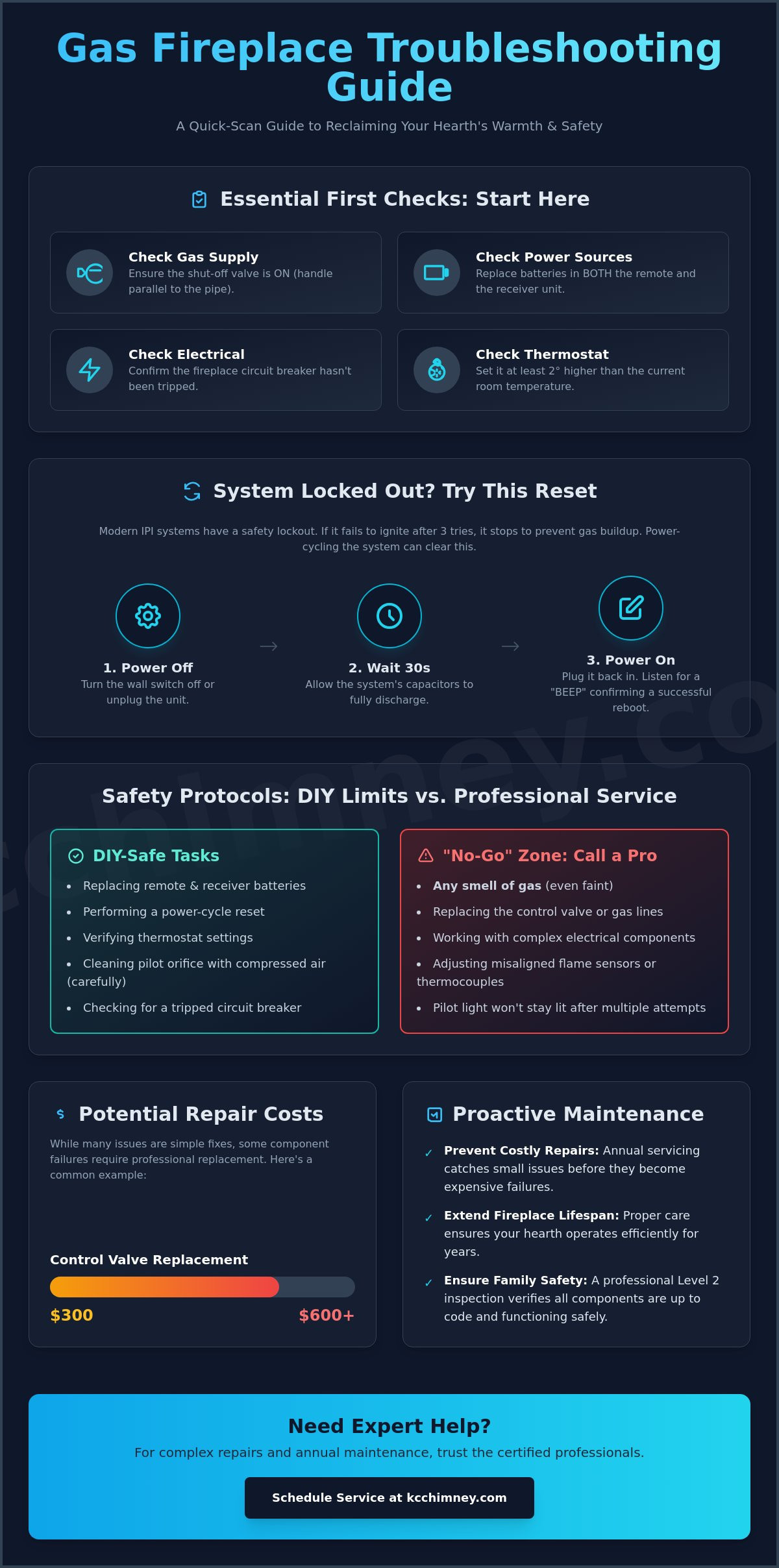
You shouldn’t have to guess whether your fireplace is safe to use. This guide will help you identify common mechanical issues and understand the latest smart technology integration in modern units. We’ll explain when a simple pilot light reset is enough and when a more complex repair, such as a control valve replacement that typically costs between $300 and $600, requires a professional hand. You’ll gain a clear understanding of the 2026 Ohio safety standards and the confidence to keep your family’s guardian of the hearth in peak condition.
Key Takeaways
- Learn how to perform essential first checks, such as verifying gas valves and battery levels, to resolve simple power issues immediately.
- Master Bucyrus gas fireplace troubleshooting by identifying your specific ignition system and cleaning the pilot burner for a more reliable flame.
- Discover how to distinguish between normal operational odors and dangerous gas leaks to ensure your home remains a safe haven all winter.
- Identify the “no-go” zones for DIY repairs where calling a professional technician is the only safe way to handle complex gas components.
- Gain insight into how a Level 2 inspection and seasonal maintenance can prevent costly repairs while extending the life of your fireplace insert.
Essential First Checks for Your Bucyrus Gas Fireplace
When your hearth stays cold on a snowy evening, it’s easy to assume the worst. However, effective Bucyrus gas fireplace troubleshooting often begins with the simplest components rather than a major mechanical failure. Before you assume the control valve has failed, you must verify the basic infrastructure that allows the unit to function. Modern systems are designed with high safety standards, and sometimes a simple lack of communication between the remote and the receiver is the only thing standing between you and a warm living room.
Start your inspection by walking through these fundamental checks:
- The Gas Supply: Ensure the main gas line is active and the local appliance shut-off valve is in the “on” position, which means the handle is parallel to the gas pipe.
- Power Sources: Replace the batteries in both your handheld remote transmitter and the receiver box located behind the bottom louvers of the unit.
- Electrical Connection: Verify that the circuit breaker dedicated to your fireplace is not tripped, as electronic ignition systems require a steady 120V feed.
- Thermostat Settings: Confirm your wall switch or thermostat is set to a temperature at least two degrees higher than the current room temperature.
Understanding how these fireplace components work together helps you narrow down the problem without unnecessary stress. If these basics are in order and the unit still won’t fire, it’s time to look deeper into the power and reset protocols.
Power and Gas Supply Verification
In many Kansas City area homes, the gas shut-off valve is located in the basement directly beneath the fireplace or tucked behind a decorative access panel. If you’ve recently had other gas appliances serviced, it’s possible the technician turned off the main supply. When checking your remote, don’t rely on the fact that the screen is visible. A weak battery may have enough power to run the LCD display but lack the strength to send a radio frequency signal to the receiver. Because Bucyrus experiences occasional winter power outages, you should also identify if your unit has a battery backup pack. This is usually a small plastic box holding four AA batteries that allows the electronic ignition to spark even when the grid is down.
The “Lockout” Reset Procedure
Modern Intermittent Pilot Ignition (IPI) systems are equipped with a safety feature known as a “lockout.” If the system attempts to light the pilot three times and fails, it will stop trying to prevent gas buildup. You can often clear this by power-cycling the system. Turn the wall switch to the “off” position and wait at least 30 seconds. If your unit is plugged into a standard outlet under the firebox, unplug it and plug it back in. You should hear an audible “beep” from the control module. This sound indicates the system has successfully rebooted and is ready for another ignition attempt. If the unit beeps but still fails to light after a reset, the issue likely involves the pilot assembly or the flame sensor.
Troubleshooting Pilot Lights and Ignition Systems
The ignition system is the heart of your hearth. If it fails, the rest of the unit is just a decorative box. Effective Bucyrus gas fireplace troubleshooting requires you to first understand how your unit starts. Older models rely on a standing pilot light, while modern versions use an Intermittent Pilot Ignition (IPI) system. Each has its own quirks. Both can be sidelined by simple environmental factors or a bit of carbon buildup that prevents a clean spark.
Standing Pilot vs. Electronic Ignition
Older gas inserts feature a small, constant flame that stays lit year-round. This “always on” approach is reliable but less energy-efficient than modern electronic sparkers that only ignite when you call for heat. A thermopile is a specialized component that generates millivolts of electricity from heat to power the gas valve without needing external electricity. To safely relight a standing pilot, turn the control knob to “Pilot,” push it in firmly while clicking the igniter, and hold it for 30 seconds before releasing. If the flame dies immediately, you may have a worn thermocouple or a misaligned sensor. Addressing these common gas fireplace problems early prevents total system failure during a cold snap.
- Clean the Orifice: Use compressed air to blow out dust or spider webs from the pilot burner.
- Check the Spark: Look for a visible blue arc when pressing the “On” button; no spark often means a loose wire or a cracked ceramic insulator.
- Inspect the Sensors: Ensure the thermocouple is enveloped by the pilot flame. If it’s covered in soot, gently clean it with a fine abrasive pad.
Professional pilot light repairs typically cost between $100 and $250. This is a relatively affordable fix that ensures your system remains reliable throughout the winter months.
Environmental Factors in Bucyrus
Our regional weather plays a significant role in fireplace performance. Strong wind gusts can actually blow out a pilot light through the vent cap if the termination isn’t properly shielded. Additionally, rural homes in the area often face issues with bird nests or debris obstructing the external vent. During extreme cold, you might encounter the “cold chimney” effect. This happens when a heavy plug of cold air in the vent prevents the fireplace from drafting correctly. If you’ve cleaned the components and still face ignition failures, a professional Level 2 inspection can identify these hidden venting obstructions and ensure your home stays safe.
Deciphering Strange Odors, Noises, and Low Heat Output
Your fireplace communicates its health through more than just a flame. When you notice a new scent or an unusual sound, your home is providing vital data for Bucyrus gas fireplace troubleshooting. While some sensory changes are part of normal operation, others serve as early warning signs of mechanical wear or safety hazards. Distinguishing between a simple maintenance need and a critical repair ensures your family stays warm without unnecessary worry.
Odor Identification: Safety vs. Maintenance
The most critical scent to recognize is mercaptan, the “rotten egg” additive in natural gas. If you detect this sharp, sulfurous odor in your Bucyrus home, stop troubleshooting immediately. Extinguish any open flames, evacuate the house, and call your gas provider from a safe distance. This is a non-negotiable safety protocol. Conversely, a dusty or slightly metallic smell is common during the first few uses of the season. This “dust burn-off” occurs as the unit incinerates microscopic particles settled on the hot gas fireplace inserts or logs.
If you’ve recently installed a new unit, you might notice a chemical “off-gassing” scent. This is the high-temperature paint and lubricants curing, which typically dissipates after the first few hours of operation. However, if a persistent musty smell occurs when the blower kicks on, pet dander or household dust has likely accumulated in the fan housing. Cleaning the blower assembly can resolve this and improve the air quality in your living space.
Mechanical Noises and Blower Issues
Not all sounds indicate a failure. You’ll often hear rhythmic “clinking” or “tapping” as the metal firebox expands and contracts during heating and cooling cycles. This is normal. However, if your fireplace begins whistling, vibrating, or screeching, the blower motor is likely the culprit. Dust buildup on the fan blades can throw the motor out of balance, leading to premature wear. A simple vacuuming of the blower area often restores quiet operation, though a failing bearing may require a professional motor replacement.
- Soot and Ghosting: If you see dark “ghosting” or soot buildup on the glass or logs, your air-to-gas ratio is incorrect. This often stems from a blocked primary air shutter or misplaced decorative logs.
- Low Heat Output: When the fire is burning but the room stays cold, check the blower speed. If the fan isn’t moving air across the heat exchanger, the warmth stays trapped inside the unit.
- Whistling Sounds: This often indicates a slight misalignment in the gas orifice or air shutter, which can be adjusted to optimize the flame.
If your unit is running but failing to heat effectively, the regulator might need adjustment. Many service providers charge between $100 and $150 per hour for these technical calibrations. Ensuring your flame height and blower speed are correctly synchronized is the best way to maximize your investment in a functional, safe hearth.
Safety Protocols and DIY Limits for Homeowners
While basic maintenance like changing batteries is a standard part of Bucyrus gas fireplace troubleshooting, you must recognize where homeowner effort ends and professional risk begins. Working with gas lines and internal components requires specialized tools and certifications to prevent catastrophic failures. We prioritize your safety by establishing a clear “No-Go” zone for DIY repairs. This includes any work involving gas control valves, supply lines, or burner orifices. Handling these parts without training can lead to leaks or improper combustion, compromising the gas fireplace repair safety standards that keep your household secure.
Your unit’s protective glass barrier is another critical safety feature. It doesn’t just keep you from touching the flames; it seals the combustion chamber from your living space. Always inspect the glass for hairline cracks or chips. A compromised glass panel can shatter under high heat or allow exhaust gases to enter your home. If you notice any damage, keep the fireplace off until a technician can replace the panel with the manufacturer-specified ceramic glass.
The Dangers of Carbon Monoxide
Carbon monoxide (CO) is a colorless, odorless gas that can be lethal if it accumulates in your home. Under the Ohio Fire Code, CO detectors are mandatory in residences with fuel-burning appliances. Starting January 1, 2026, regulations require these alarms on every level of the home to ensure maximum protection. Blocked vents or damaged flue liners can cause CO to back-draft into your living area rather than exiting safely outdoors. If you or your family experience sudden headaches, dizziness, or nausea while the fireplace is running, follow the “Get Out Now” protocol. Evacuate immediately and contact emergency services. We recommend testing your detectors at the start of every winter to ensure the sensors and batteries are fully functional.
When to Call a Professional
Some symptoms clearly indicate that a certified technician is needed. If your control valve fails to click or the gas regulator isn’t maintaining a steady flame, these are mechanical failures that require expert replacement. DIY attempts on these parts often void manufacturer warranties, which can be a costly mistake. Additionally, never use standard glass cleaners on your fireplace. These contain ammonia that can bake into the glass, causing permanent clouding or structural weakness. Professional maintenance ensures your unit is cleaned with specialized ceramic conditioners and inspected for internal wear. To schedule a comprehensive safety check, you can book a Level 2 inspection with our team today.
Professional Gas Fireplace Maintenance in Bucyrus
While basic Bucyrus gas fireplace troubleshooting can identify simple power or pilot issues, a comprehensive professional service is the only way to guarantee long-term reliability and safety. A professional visit does more than just fix a current problem; it optimizes your system’s efficiency and helps you avoid the national average repair cost of $150 to $600 that often follows years of neglect. The local experts at Best Chimney Services approach every home with a neighborly commitment to excellence, ensuring your fireplace remains the warm, protective heart of your household. When you schedule a professional chimney inspection in Kansas City, you aren’t just buying a mechanical checkup; you’re investing in your family’s peace of mind.
The 2026 Multi-Point Inspection Checklist
Modern gas fireplace technology has advanced significantly, with 2026 standards focusing heavily on smart technology integration and electronic ignition stability. During a professional Level 2 inspection, our team uses specialized video cameras to examine the internal integrity of the flue and venting system. This is crucial for detecting the “cold chimney” effect or hidden obstructions from rural debris that often plague Bucyrus homes. Our technicians perform a rigorous series of tests, including:
- Venting Integrity: Verifying that the sealed-combustion system is properly exhausting gases to the outdoors.
- Gas Line Pressure Testing: Ensuring no micro-leaks exist within the internal manifold or supply lines.
- Electrical Continuity: Testing the control module and spark igniter to prevent the common “lockout” failures discussed earlier.
- Component Cleaning: Removing carbon deposits from the firebox and logs, and conditioning the ceramic glass to maintain its structural strength.
Why Certification Matters in Johnson County
A gas fireplace is a complex appliance that blends high-voltage electricity, combustible gas, and intense heat. Entrusting this system to anyone without proper credentials is a significant risk. Best Chimney Services prides itself on maintaining certifications from the Chimney Safety Institute of America (CSIA) and the National Fireplace Institute (NFI). These certifications are the industry gold standard, ensuring that your technician understands the latest safety codes and manufacturer requirements for gas fireplace inserts.
Our commitment to the community means we provide a mess-free service experience. We use protective drop cloths and industrial HEPA vacuums to ensure your living room remains as clean as when we arrived. We understand the specific architectural needs of our region, from historic masonry chimneys to modern direct-vent installations. Don’t wait for a freezing winter night to discover a system failure. Book your Bucyrus gas fireplace service today to ensure your hearth is ready to provide safe, reliable warmth all season long.
Protect Your Hearth for the Seasons Ahead
A reliable gas fireplace is more than a convenience; it’s a vital part of your home’s winter defense. By mastering basic Bucyrus gas fireplace troubleshooting, you can quickly address minor battery or power issues before they leave you in the cold. However, always respect the safety limits of your system. If you encounter gas odors, mechanical noises, or ignition failures, professional intervention is the only way to ensure your family remains protected from carbon monoxide and fire hazards.
Since 2012, we’ve served the Bucyrus and Johnson County communities with a commitment to high integrity and safety. Our NFI and CSIA certified technicians bring the technical authority needed to handle complex venting and mechanical repairs. As an A+ rated local professional service, we prioritize doing the job right the first time so you can enjoy your fireplace with total peace of mind. Keep Your Bucyrus Home Safe; Schedule Your Gas Fireplace Inspection Today. Let’s work together to keep your family hearth warm and secure all winter long.
Frequently Asked Questions
Why does my gas fireplace pilot light keep going out in the wind?
Pilot lights often go out during high winds because the external vent termination cap is damaged or poorly shielded. In the open landscapes around Bucyrus, strong gusts can create a downdraft that snuffs out the flame. A certified technician can install a high-wind vent cap to provide better protection and ensure your pilot stays lit during Kansas storms.
How do I know if my gas fireplace thermocouple is bad?
You can tell a thermocouple is failing if the pilot light ignites but goes out immediately after you release the control knob. This component must generate enough millivolts to keep the gas valve open. If cleaning the soot off the tip doesn’t solve the problem, the part likely needs replacement, which is a standard step in Bucyrus gas fireplace troubleshooting.
Is it normal to smell gas when I first turn on my fireplace?
A faint, momentary smell of gas is normal during the first few seconds of ignition as the gas reaches the burner. However, a persistent “rotten egg” odor is a serious safety concern. If the smell remains after the unit is running or occurs when the unit is off, turn off the main gas supply and contact a professional immediately.
How often should a gas fireplace be serviced in Bucyrus?
You should have your gas fireplace serviced once every year, ideally before the first cold snap of the season. Annual maintenance ensures the venting is clear of debris and the safety sensors are correctly calibrated. Regular professional inspections extend the life of your unit and prevent the most common mid-winter failures.
Can I clean my gas fireplace glass with Windex?
No, you should never use Windex or any ammonia-based cleaner on your fireplace glass. Ammonia can react with the intense heat to cause permanent white “clouding” or etching on the ceramic surface. Always use a specialized gas fireplace glass conditioner to safely remove white film and soot without damaging the structural integrity of the glass.
What do the blinking lights on my fireplace control module mean?
Blinking lights on the control module are diagnostic codes that indicate specific mechanical errors. For example, two blinks might mean a flame rectification failure, while three blinks could signal a system lockout. Consult your owner’s manual or a certified technician to interpret these codes accurately for your specific model during your Bucyrus gas fireplace troubleshooting process.
Why is there soot building up on my gas logs?
Soot buildup usually happens when the air-to-gas ratio is incorrect or if the decorative logs have shifted out of their designated positions. When logs block the burner ports, they cause “flame impingement,” which creates carbon deposits. Proper log alignment and air shutter adjustments are necessary to ensure a clean, efficient flame that doesn’t produce excess carbon.
Does a gas fireplace work during a power outage in Bucyrus?
Most gas fireplaces will work during a power outage if they have a battery backup system or a millivolt ignition. Standing pilot units don’t require external electricity to operate the gas valve. For newer electronic systems, ensure you have fresh batteries in the receiver box to power the sparker when the grid is down.