
Could your historic Mission Hills chimney be a hidden fire hazard even if it looks perfect from the street? Most of us take immense pride in the timeless masonry of our English Tudors and Colonials, but it’s easy to forget that the inner workings of a fireplace age differently than the brick exterior. Scheduling a Mission Hills fireplace and chimney inspection is about more than just clearing out soot. It’s about ensuring your home remains a safe sanctuary for your family throughout the 2026 burning season.
You likely want the warmth of a crackling fire without the nagging worry of carbon monoxide leaks or chimney fires. We understand that concern. This guide will show you how to protect your home’s historic value while meeting the 2024 NFPA 211 safety standards. We’ll break down the differences between the three levels of inspection, explain how we comply with the 2018 International Building Codes, and discuss why the City of Mission Hills requires a $75 fee for permit-related inspections. You’ll gain the clarity needed for a mess-free service that provides total peace of mind.
Key Takeaways
- Learn why the specific architectural styles and extreme temperature swings in Mission Hills require a specialized approach to masonry and chimney care.
- Identify which of the three NFPA inspection levels you need to schedule a Mission Hills fireplace and chimney inspection that meets current safety standards.
- Discover the primary warning signs of creosote buildup and structural decay that could compromise your home’s safety during the burning season.
- Follow a simple preparation checklist, including clearing a workspace and pausing fireplace use, to ensure your technician can provide a thorough, mess-free report.
- Gain peace of mind by understanding how certified safety inspections protect your family and preserve the integrity of your historic chimney system.
Why Mission Hills Homes Require Specialized Fireplace & Chimney Inspections
Mission Hills isn’t just any neighborhood. The stately architecture here often includes complex, older masonry that requires a seasoned eye to evaluate correctly. While a generic service provider might offer a “quick look,” a professional Expert Chimney Inspection in Kansas City goes much deeper. We focus on the structural integrity of your hearth, ensuring that your investment in a high-value Johnson County property remains protected. A thorough Mission Hills fireplace and chimney inspection identifies hidden vulnerabilities before they become costly repairs or safety hazards. Proactive maintenance is the best way to preserve the elegance of these homes while keeping your family safe.
Regional Climate Impacts on Kansas Masonry
Kansas City weather is famously unpredictable. Our region experiences extreme temperature swings that create a brutal freeze-thaw cycle. When moisture enters porous brick and then freezes, it expands, causing the masonry to crack or spall. This damage often starts at the chimney crown, which is the top-most layer of protection. During our humid summers, excess moisture can also lead to rust on dampers and unpleasant odors that drift into your living space. A high-quality chimney cap is essential here to keep out local wildlife, like raccoons or birds, which frequently seek nesting spots in open flues. Understanding chimney function and construction helps homeowners realize that the exterior is only half the story. The interior venting system must be just as resilient as the brickwork outside.
Historic Home Considerations
Many Mission Hills estates were built before modern safety codes required clay or metal flue liners. An unlined chimney is a significant fire risk because heat can transfer directly to combustible wood framing within your walls. In these multi-story brick structures, maintaining flue integrity is vital for proper drafting and smoke containment. We prioritize balancing modern safety standards with the need for historic preservation. Our technicians look for specific regional issues, including:
- Original, unlined flues in pre-1940s builds that require modern relining for safety.
- Structural shifts in multi-story masonry that could lead to stability issues.
- Eroded mortar joints that need precise tuckpointing to match historic aesthetics.
Protecting these architectural details requires a specialized approach that respects the home’s history while implementing 2026 safety protocols. We don’t just look at the surface; we ensure every component of your venting system is prepared for the cold months ahead.
Understanding the Three Levels of Chimney Inspection (NFPA 211)
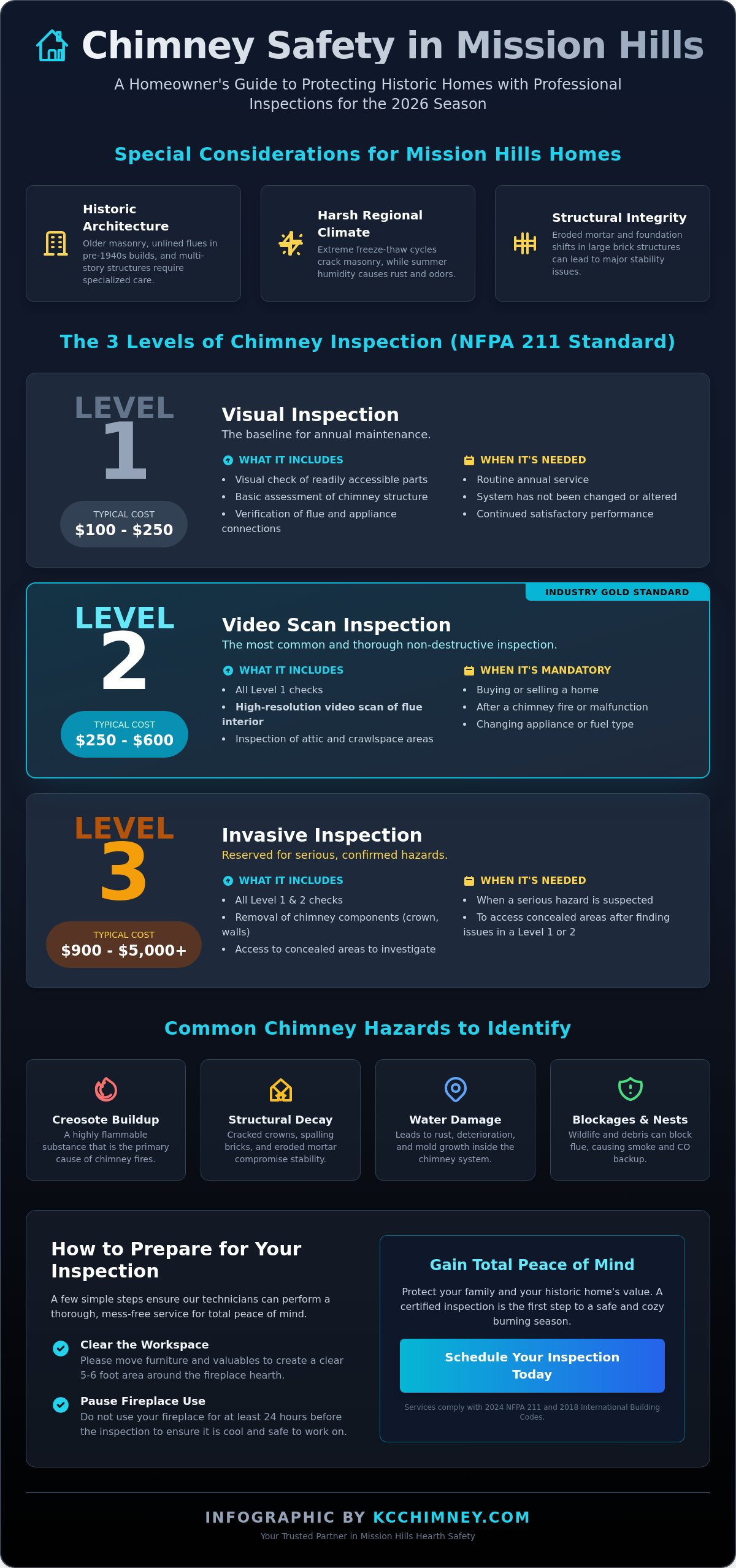
Safety standards aren’t suggestions; they’re the blueprint for a secure home. The National Fire Protection Association establishes the Three Levels of Chimney Inspection (NFPA 211) to ensure every venting system is evaluated based on its specific needs. As of the active 2024 edition, these levels provide a standardized way for homeowners to understand exactly what kind of service they’re receiving. Whether you’re performing routine maintenance or preparing for a property sale, knowing which level to request is the first step in a professional Mission Hills fireplace and chimney inspection.
- Level 1: This is a visual check of the readily accessible portions of your fireplace and chimney. It’s the baseline for annual maintenance when your system hasn’t changed. Industry costs for this visual assessment typically range from $100 to $250.
- Level 2: This is the most common requirement for Mission Hills homeowners. It includes everything in Level 1 plus a high-resolution video scan of the internal flue. It’s the industry gold standard, generally costing between $250 and $600.
- Level 3: This is an invasive inspection reserved for suspected hazards. It may involve removing portions of the chimney crown or walls to access hidden areas. Because of the labor involved, costs can range from $900 to $5,000.
When is a Level 2 Inspection Mandatory?
A Level 2 evaluation isn’t just a recommendation; it’s often a requirement during major life events. If you’re buying or selling a home in Mission Hills or Overland Park, a Level 2 inspection provides the necessary documentation for real estate disclosures. You also need this level of service after a chimney fire, a lightning strike, or one of our severe Kansas windstorms. If you’re planning to upgrade your hearth by installing gas fireplace inserts, a Level 2 check ensures the existing structure can handle the new fuel type safely. Meeting these requirements helps you stay compliant with the 2018 International Building Codes adopted by Johnson County.
The Role of Video Scanning Technology
We believe you shouldn’t have to take an inspector’s word for it. That’s why we prioritize high-resolution video scanning during our Level 2 evaluations. Our internal cameras travel the full length of your flue to identify hairline cracks or gaps in the liner that the naked eye simply can’t see from the hearth or the roof. This technology provides you with visual proof of your chimney’s condition, which is invaluable for insurance claims or real estate records. If you’re ready to see the true health of your flue, you can schedule a certified inspection to get a detailed look inside your system.
Common Chimney Hazards Found in Johnson County Residences
Owning a home in Mission Hills means managing a structure that faces unique environmental pressures. During a Mission Hills fireplace and chimney inspection, we frequently encounter hazards that are invisible from the living room but critical to your home’s safety. These issues often stem from the age of the local housing stock and the intense seasonal shifts we experience in the Kansas City area. Adhering to the NFPA 211 standard helps us identify these risks before they lead to structural failure or fire. We look for everything from chemical buildup to structural decay to ensure your system is venting correctly.
Creosote: The Hidden Threat
Creosote is a highly flammable byproduct of incomplete combustion. It accumulates on the inner walls of your flue whenever you burn wood. This substance progresses through three dangerous stages. Stage one is a thin, dusty layer of soot. Stage two becomes crunchy, black flakes that are harder to remove. Stage three is a thick, glazed tar that is highly combustible and often the primary fuel for chimney fires. Understanding What Is Creosote? is essential for any wood-burning homeowner. If an inspection reveals stage three buildup, immediate professional cleaning is necessary to prevent a disaster.
Exterior Masonry and Crown Issues
Your chimney crown is the concrete slab at the very top of your stack. It serves as the first line of defense against Kansas storms. When this crown cracks, water seeps into the porous brickwork below. This leads to spalling, where the faces of the bricks begin to flake and pop off due to moisture expansion. We often see this in older Johnson County homes where original mortar has begun to erode. Timely tuckpointing can save the structure; however, ignoring these cracks often leads to a total chimney rebuild. A professional Mission Hills fireplace and chimney inspection identifies these vulnerabilities early, protecting your property value and preventing interior water damage to your ceilings and walls.
Beyond masonry, we look for flue liner deterioration. Traditional clay tiles are prone to cracking over decades of use. These gaps allow heat and toxic gases to escape into the home’s framework. We also check for obstructions. Given the lush tree canopies in Mission Hills, chimneys often collect leaves, twigs, and even animal nests that block proper airflow. These blockages cause smoke to back up into your home, increasing the risk of carbon monoxide exposure. Identifying these hazards early is the most cost-effective way to maintain a safe, functional hearth.
How to Prepare for Your Mission Hills Fireplace Inspection
Properly preparing for your Mission Hills fireplace and chimney inspection allows our technicians to perform a detailed evaluation without delays. The first and most critical step is to stop using your fireplace at least 24 hours before your appointment. A chimney must be completely cool to the touch for us to safely use our high-resolution video equipment. We also require a 5-foot workspace around the hearth. This area provides enough room for our ladders, cameras, and protective sheeting. We recommend removing any fragile decor, such as family photos or seasonal displays, from the mantel and the immediate area. For the safety of everyone involved, please ensure that pets and children remain in a separate part of the house until the service is finished.
What to Expect During the Appointment
Most professional inspections take between 45 and 90 minutes to complete. We understand that homeowners often worry about soot and dust entering their homes. That’s why we utilize a rigorous mess-free process involving heavy-duty drop cloths and industrial-strength HEPA vacuums. These vacuums are designed to capture microscopic particles, ensuring your living room remains as clean as when we arrived. After the inspection, we don’t just hand you a bill and leave. We provide a comprehensive post-inspection briefing where we review the internal video footage and the written safety report with you. This step gives you a clear view of your flue’s health and any structural issues we’ve identified.
Questions to Ask Your Inspector
Being an informed homeowner is key to long-term hearth safety. When your technician arrives, don’t hesitate to ask about their credentials. You should always verify that they are CSIA certified, as this ensures they follow the latest safety protocols. Ask for a specific update on the condition of your chimney’s flashing and crown. These components are your primary defense against moisture, and catching a small leak now can prevent a major masonry failure later. Finally, ask if there is any specific preventative maintenance you should consider during the spring or summer months to keep your system in peak condition. If you want to ensure your family’s safety before the next cold snap, contact us to schedule your inspection and get professional answers to all your hearth questions.
Trusting KC Chimney for Your Mission Hills Hearth Safety
Choosing a partner for your Mission Hills fireplace and chimney inspection means finding someone who understands the weight of local history. We aren’t just technicians; we’re neighbors who recognize the specific architectural nuances of Mission Hills and Overland Park. Our team treats every home with the measured care required for historic masonry, ensuring your venting system remains a source of comfort rather than a safety risk. We believe in doing it right the first time. This commitment to high standards distinguishes us as a high-integrity choice in a crowded Kansas City service market.
Our technicians prioritize your peace of mind by adhering to the most rigorous industry safety standards. We maintain a steady, informative rhythm throughout the process, moving logically from the initial assessment to the final safety report. You won’t find any “mystery” repairs or high-pressure sales tactics here. Instead, we provide clear data and expert recommendations based on the 2024 NFPA 211 guidelines. Whether you need chimney sweeping, relining, or the installation of new wood fireplace inserts, we offer a professional remedy for every household concern.
The KC Chimney Professional Difference
We pride ourselves on a neighborly service model that treats your family’s safety as our primary mission. Our solutions are built for longevity and durability. We prefer long-term fixes over quick, temporary patches that fail after a single Kansas winter. If our inspection reveals structural vulnerabilities, we provide a detailed plan for Expert Chimney Repair in Kansas City. From tuckpointing to crown repair, we handle every project with the grit of manual labor and the precision of modern engineering. This balanced approach protects your home’s future value while keeping your family safe today.
Ready for a Safer Season?
Timing is everything when it comes to chimney health in Johnson County. We recommend scheduling your annual service in the early spring or late summer. Avoiding the “fall rush” ensures you have plenty of time to address any necessary maintenance before the first frost arrives. Regular inspections are an investment that pays off by preventing the need for total masonry restoration later. If you’re ready to secure your home for the 2026 burning season, take the first step toward total peace of mind. Schedule Your KC Chimney Inspection & Sweeping Today and let a local expert protect your family’s hearth.
Secure Your Hearth for the 2026 Season
Your home’s fireplace is more than a heating source; it’s the heart of your living space. Protecting that heart requires moving beyond basic cleaning to a professional safety standard. By understanding the 2024 NFPA 211 levels and identifying hazards like stage three creosote or masonry spalling early, you prevent minor issues from becoming dangerous hazards. A comprehensive Mission Hills fireplace and chimney inspection provides the detailed safety report you need to burn with confidence all winter long.
KC Chimney has provided specialized care to the Kansas City metro since 2012. Our CSIA Certified Technicians bring a 5-star local reputation for mess-free service to every appointment. We treat your historic masonry with the respect it deserves while utilizing modern video technology to ensure total accuracy. Don’t leave your family’s safety to chance this year. Book Your Mission Hills Chimney Safety Inspection Today and enjoy the warmth of a secure, well-maintained home.
Frequently Asked Questions
How much does a chimney inspection cost in Mission Hills?
A standard Level 1 visual check typically costs between $100 and $250. If you require a detailed Level 2 video inspection, the industry rate generally ranges from $250 to $600. For complex structural issues, a Level 3 inspection can cost between $900 and $5,000. Additionally, the City of Mission Hills charges a $75 fee for inspections specifically related to building permits. These figures reflect current 2026 industry standards for professional safety evaluations.
How often should I have my fireplace inspected in Kansas City?
You should schedule a professional evaluation once every year according to the 2024 NFPA 211 standard. Even if you don’t use your fireplace frequently, local factors like the Kansas freeze-thaw cycle and nesting wildlife can cause structural damage or flue blockages. Regular annual checks ensure that small cracks in the masonry or crown don’t turn into expensive restoration projects during the winter months. Consistent maintenance is the best way to protect your home’s value.
What is the difference between a chimney sweep and a chimney inspection?
An inspection is a diagnostic process used to evaluate the structural integrity and safety of the venting system. In contrast, a chimney sweep is the mechanical removal of soot and creosote buildup from the flue. While we often perform both during a single visit, the inspection is what provides the detailed safety report. This process identifies hidden hazards like cracked liners or eroded mortar joints that a simple cleaning might miss.
Do I need an inspection if I have a gas fireplace?
Yes, gas fireplaces require annual inspections to ensure the venting system is clear and all components are functioning safely. While gas burns cleaner than wood, these systems are still prone to obstructions from debris or local wildlife. We also check for proper drafting and potential carbon monoxide leaks. A Mission Hills fireplace and chimney inspection for gas units protects your home from moisture damage and silent venting failures.
What happens if the inspector finds a problem with my chimney?
If a hazard is identified, we provide a written report and review the video footage with you to explain the issue clearly. We then offer a professional remedy, such as tuckpointing for masonry decay or chimney relining for a compromised flue. You’ll receive a detailed estimate for the necessary repairs. This allows you to make an informed decision about restoring your home’s safety before you light the next fire of the season.
Is a Level 2 inspection required for a home sale in Kansas?
The NFPA 211 standard mandates a Level 2 inspection whenever a property is sold or transferred. This requirement ensures that both the buyer and seller have a clear understanding of the chimney’s internal health. In Mission Hills, this process often involves documenting the condition of historic masonry and flue liners. This documentation helps ensure the home meets the 2018 International Building Codes adopted by Johnson County during the real estate transaction.
How long does a professional fireplace inspection take?
A standard appointment typically lasts between 45 and 90 minutes. This timeframe allows our technicians to set up protective equipment, perform the visual check, and conduct a high-resolution video scan of the flue. We also take time to discuss the findings with you and answer any questions about your system. Our mess-free process ensures that we leave your home as clean as we found it, regardless of the inspection’s complexity.
Can I inspect my own chimney with a flashlight?
A flashlight only reveals the first few feet of the flue and cannot identify hairline cracks or structural issues deep within the stack. Professional inspectors use specialized internal cameras to see every inch of the liner and check the integrity of the chimney crown and flashing. Attempting a DIY inspection often leads to a false sense of security. Approximately 90 percent of chimney hazards are hidden from view and require professional tools to detect.