
You’ve spent the afternoon preparing your Mission Hills home for guests, but as soon as they walk through the door, a heavy, acrid scent of old ash hangs in the air. It’s a frustrating moment that leaves many homeowners asking, why does my fireplace smell like soot Mission Hills? This lingering odor is more than just a nuisance; it’s often a signal from your chimney that something is out of balance. Whether it’s a humid Kansas City afternoon or a chilly evening, that campfire smell shouldn’t be a permanent resident in your living room.
We understand the anxiety this causes regarding your indoor air quality and the fear of a potential chimney fire. At Best Chimney Services, we believe your hearth should be a source of warmth, not a source of worry. This guide will help you discover the hidden causes of fireplace odors, from the “stack effect” to dangerous creosote accumulation. You’ll learn how to neutralize these smells permanently and determine if your chimney requires a professional inspection to ensure it’s safe for the winter. By understanding the science behind the scent, you can reclaim your home’s fresh air and restore your peace of mind.
Key Takeaways
- Learn how local humidity acts as a catalyst, turning hidden chimney deposits into the pungent campfire smell drifting through your living room.
- Discover why does my fireplace smell like soot Mission Hills by identifying how the “Stack Effect” and negative air pressure pull odors into your home.
- Differentiate between simple soot and dangerous, flammable creosote buildup that often signals an increased risk of chimney fires.
- Master immediate troubleshooting steps, like firebox cleaning and damper checks, to manage odors before your next professional maintenance visit.
- Understand why a Level 2 inspection and specialized rotary sweeping are the only ways to permanently neutralize odors and guarantee a safe hearth.
The Science of the Stench: What Causes That Soot Smell?
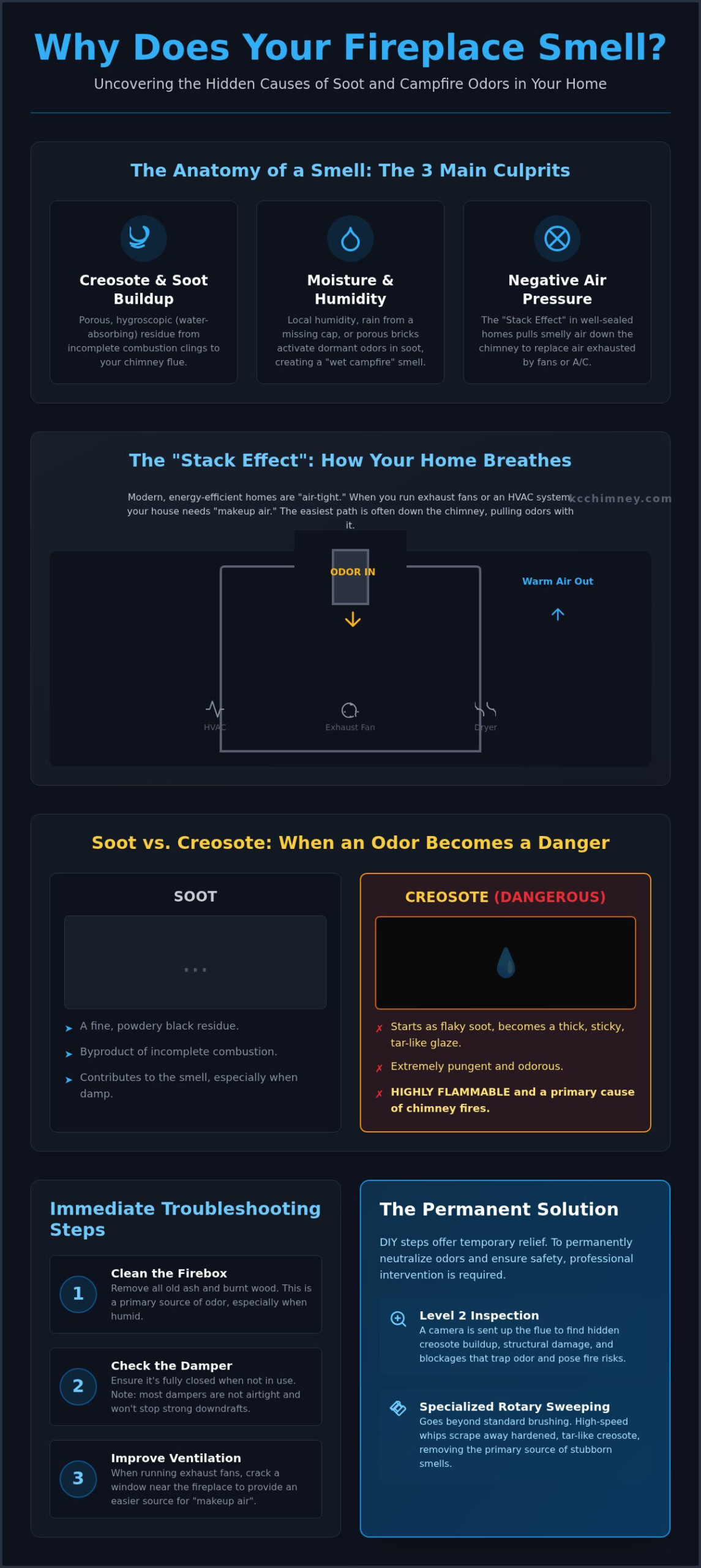
The odor drifting into your living room isn’t just “old fire.” It’s a complex chemical cocktail. When homeowners ask why does my fireplace smell like soot Mission Hills, we often point to three main culprits: creosote buildup, moisture, and airflow issues. This lingering scent is usually a combination of fine carbon particles and hygroscopic creosote. What is soot? Scientifically, it’s the byproduct of organic matter that didn’t burn completely, leaving behind a powdery residue that clings to every surface of your flue.
In our local climate, humidity is the primary catalyst. Mission Hills summers are notoriously muggy. This moisture in the air doesn’t just sit outside; it enters your chimney. Because soot and creosote are “hygroscopic,” they act like a sponge, pulling moisture out of the air. This reaction creates that heavy, acrid scent that seems to permeate the room even when you haven’t lit a fire in months. You’ll likely notice the smell is strongest on humid days or immediately after a rainstorm.
Creosote: The Sticky Source of Odor
Every time you burn wood, some of the energy escapes as smoke. As this smoke cools on its way up the chimney, it condenses into creosote. This substance starts as a flaky soot but quickly transitions into a thick, tar-like layer that bonds to your flue tiles. It carries a pungent, smoky aroma that lingers long after the embers are cold. Creosote is a highly flammable, odorous glaze that hardens inside the chimney. Because it’s so sticky, it traps other debris, making the smell even more concentrated over time.
The Role of Moisture and Humidity
Mission Hills is home to some of the most beautiful historic masonry in the Kansas City metro. However, older bricks and mortar are naturally porous. Over decades, these materials develop tiny cracks that allow humidity to seep into the structure. When this moisture meets the old soot inside, it creates a “wet campfire” effect. This is why does my fireplace smell like soot Mission Hills even during the off-season. The moisture reactivates the dormant odors trapped in the masonry.
If your chimney is missing a cap, or if the crown has small fissures, rainwater can enter directly. This saturation turns dry soot into a damp sludge, amplifying the odor significantly. A missing chimney cap is often the culprit behind a sudden spike in smells after a heavy Johnson County thunderstorm. When the flue is damp, the air moving through it picks up these scent molecules and carries them straight toward your couch.
The Mission Hills “Stack Effect” and Pressure Issues
Your home acts like a giant straw. This phenomenon, known as the “Stack Effect,” describes how air moves vertically through a building. Warm air is less dense than cold air, so it naturally rises and escapes through the upper levels of your house. As this air leaves, it creates a vacuum in the lower levels that must be filled. If you are wondering why does my fireplace smell like soot Mission Hills, the answer often lies in how your home is pulling “makeup air” back inside. The easiest path for that air is frequently the large, open chimney flue, which brings the scent of old ash along with it.
This issue is particularly common in Mission Hills, where many historic homes have been meticulously retrofitted with energy-efficient windows and high-grade insulation. While these upgrades are excellent for your utility bills, they make the house “tight.” In a well-sealed home, there aren’t enough small cracks for air to enter naturally. When you turn on a kitchen exhaust fan, a clothes dryer, or even the air conditioning, you are actively pumping air out of the house. This creates negative pressure, forcing the chimney to become an air intake vent. Instead of smoke going up, smelly chimney air is pulled down into your living space.
Negative Pressure in Modernized Homes
Modernized homes often struggle with the “Makeup Air” problem. When the house is starved for air, it competes with your fireplace for every cubic foot. If your HVAC system is located in a basement or utility closet near the hearth, it might be the primary culprit. As the system pulls air to circulate through the vents, it can easily overpower the natural draft of a cold chimney. Following EPA safety guidelines for proper burning can reduce the amount of residue left behind, but even a relatively clean chimney will smell if the air is flowing the wrong way.
Why Dampers Aren’t Airtight
Many homeowners believe that closing the damper will block out all odors. Unfortunately, traditional throat dampers are usually made of cast iron or steel. These metal-on-metal seals are rarely airtight. Over time, heat and moisture cause the metal to warp slightly, leaving gaps where microscopic soot particles and odors can seep through. If your home is under negative pressure, a standard damper won’t stop the downdraft entirely.
- Throat Dampers: Located just above the firebox; prone to rusting and poor sealing.
- Top-Sealing Dampers: Installed at the top of the flue with a rubber gasket; these provide a much more effective seal against both weather and smells.
If you suspect pressure issues are causing your fireplace odors, a professional evaluation is the next logical step. You can learn more about how we diagnose these complex airflow problems in our chimney sweep Kansas City guide. Understanding the mechanics of your home’s air pressure is the first move toward a fresher-smelling hearth.
Soot vs. Creosote: When an Odor Becomes a Danger
Not all chimney deposits are created equal. While soot is a fine, powdery substance consisting mostly of carbon, creosote is a tar-like byproduct of wood smoke that sticks to your chimney walls. If you’ve been asking why does my fireplace smell like soot Mission Hills, it’s vital to understand that a strong odor often indicates a progression from simple soot to dangerous creosote. While soot can be brushed away easily, creosote hardens into a thick glaze that is incredibly flammable. This substance is the primary fuel for chimney fires, and the stronger the smell, the more fuel is likely present in your flue.
A persistent smell isn’t just a nuisance; it’s an early warning system. When that acrid odor becomes overwhelming, it typically correlates with Stage 2 or Stage 3 creosote buildup. At these levels, the substance has transformed from a flaky crust into a hard, shiny glaze. This is a concentrated fuel source waiting for a spark. This is why a professional chimney inspection kansas city is so critical for your peace of mind. Our technicians use high-resolution cameras to see deep into the flue, identifying these hidden hazards that your nose can’t fully categorize but your family’s safety depends on.
Health and Air Quality Risks
The impact on your home’s environment goes beyond the unpleasant scent. Soot and creosote release fine particulate matter, often referred to as PM2.5. These microscopic particles are small enough to enter the lungs and even the bloodstream, potentially causing long-term health issues. For sensitive residents in Mission Hills, this can trigger sudden allergies or aggravate existing respiratory conditions like asthma. Removing the source of the odor doesn’t just clear the air; it provides a vital psychological sense of safety. Knowing your hearth is clean allows you to enjoy your home without the nagging worry of what you’re breathing in every time you sit by the fireplace.
Identifying “Stage 3” Creosote Odors
Stage 3 creosote has a very distinct profile that sets it apart from common ash. Unlike the campfire scent of light soot, this heavy buildup often smells like burnt asphalt or hot tar. It’s thick, glassy, and can even drip down into the firebox when the weather warms up. If you’re still wondering why does my fireplace smell like soot Mission Hills after a light cleaning, Stage 3 creosote is the likely culprit. You won’t be able to remove this with standard homeowner tools or a basic hardware store brush. Stage 3 creosote is a concentrated fuel source that requires specialized chemical or mechanical removal to ensure your chimney is no longer a serious fire hazard.
Homeowner Troubleshooting: How to Stop the Odor Now
While a deep clean requires specialized equipment, you can take immediate steps to mitigate the unpleasant scent in your living room. If you’re wondering why does my fireplace smell like soot Mission Hills, the first step is always removing the physical source of the scent. Start by thoroughly cleaning out all cold ash and charred debris from the firebox. Even a small amount of leftover ash can absorb Kansas City humidity and amplify the smell. Use a dedicated ash vacuum or a simple broom and dustpan to ensure the floor of the firebox is completely clear.
Next, inspect your damper. Ensure it is closed tightly when the fireplace is not in use. While we’ve discussed that these metal seals aren’t airtight, a properly seated damper still acts as a primary barrier against major downdrafts. You can also place a bowl of natural absorbent, such as baking soda or active charcoal, inside the firebox. These materials work to pull odor molecules out of the air rather than simply covering them up. If these manual steps don’t provide relief, it is a clear sign that the odor is coming from deeper within the flue where homeowner tools cannot reach.
Temporary Odor Neutralizers
For a quick fix before guests arrive, place a shallow bowl of white vinegar on the hearth. Vinegar is excellent at neutralizing alkaline odors like wood smoke. You should avoid using heavy perfumes, scented candles, or masking sprays directly near the masonry. These products often combine with the acrid soot smell to create a sickeningly sweet, heavy atmosphere that is more difficult to clear. A thorough firebox scrubbing with a stiff brush and a mixture of warm water and vinegar can also strip away surface-level odors that have settled into the brickwork over the summer months.
Managing Airflow and Downdrafts
If the smell persists despite a clean firebox, you likely have a pressure imbalance. You can perform a simple “Window Test” to confirm this. Crack a window in the same room as the fireplace; if the odor begins to dissipate within ten minutes, your home is under negative pressure. To manage this, try the following:
- Adjust HVAC Registers: Ensure your air conditioning or heating vents aren’t blowing directly across the fireplace opening.
- Balance the Room: Avoid running high-powered exhaust fans in the kitchen or bathrooms for extended periods if you notice the smell getting worse.
- Consider Upgrades: A top-sealing damper acts like a “cork” for your chimney, providing a rubber-gasket seal that is far superior to traditional throat dampers.
Troubleshooting these issues can provide temporary relief, but persistent smells usually indicate a need for professional intervention. If you’ve cleaned the firebox and balanced the pressure but the scent remains, contact Best Chimney Services for a comprehensive evaluation. We can help you identify exactly why does my fireplace smell like soot Mission Hills and provide a permanent solution for a fresher home.
Professional Solutions for a Fresh Mission Hills Hearth
While DIY troubleshooting can offer temporary relief, a professional chimney sweep kansas city is the only permanent solution for persistent soot odors. If you’re still asking why does my fireplace smell like soot Mission Hills after cleaning your firebox, the problem is likely deep within your flue. We use specialized rotary brushes that spin at high speeds to safely strip away the hardened creosote that standard wire brushes can’t touch. These professional-grade tools are necessary to remove the concentrated fuel sources that cause the most pungent, tar-like smells.
At Best Chimney Services, we understand that every Mission Hills home has unique architectural needs. We don’t rely on guesswork. Our technicians use advanced video camera equipment to perform a thorough Level 2 inspection of your chimney’s interior. This allows us to identify the exact cracks or moisture entry points that are contributing to the odor. By seeing what the naked eye cannot, we provide a precision remedy that ensures your chimney is both fresh-smelling and structurally sound for the upcoming winter.
The Best Chimney Services Cleaning Process
Our team prioritizes the integrity of your home with our mess-free sweeping guarantee. We know that Mission Hills residents take pride in their interiors, so we use industrial-grade HEPA vacuums to capture microscopic soot particles before they can enter your living space. This containment strategy prevents the “dusty” smell from spreading during the service. Every sweep includes a multi-level safety evaluation, ensuring that your fireplace meets rigorous industry standards before you light your next fire.
Long-term Prevention: Caps and Waterproofing
To keep odors from returning, we focus on moisture management. Installing a custom chimney cap is often the most effective way to keep rain out and odors down. For the porous brickwork common in Johnson County, we also recommend masonry waterproofing. This treatment allows the brick to breathe while preventing it from absorbing the high humidity that reactivates old soot smells. Scheduling an annual maintenance visit ensures we catch minor issues before they become major odor problems, keeping your hearth a source of pride. If you want to know why does my fireplace smell like soot Mission Hills, the answer is often a lack of preventative protection that we can easily resolve.
Restore Freshness and Safety to Your Home
A lingering fireplace odor is your home’s way of asking for attention. We’ve explored how Mission Hills’ unique humidity and air pressure issues pull acrid scents into your living space. More importantly, we’ve distinguished between simple soot and the significant fire hazard posed by hardened creosote. Understanding why does my fireplace smell like soot Mission Hills is the first step toward a safer, more comfortable home.
You don’t have to live with the embarrassment of a smoky-smelling hearth. Best Chimney Services has been a locally owned fixture in the community since 2012, providing specialized care for Johnson County masonry. Our certified technicians use advanced video technology to pinpoint hidden issues and provide a mess-free cleaning guarantee for every home we serve. We take the guesswork out of chimney maintenance so you can focus on enjoying your fireplace with total peace of mind.
Schedule your Mission Hills chimney inspection and professional sweep with Best Chimney Services today. Let us help you prepare for a cozy, odor-free winter season.
Frequently Asked Questions
Is the soot smell in my house dangerous to breathe?
Breathing in soot particles can irritate your respiratory system and impact your overall indoor air quality. These particles contain fine particulate matter, known as PM2.5, which is small enough to enter the lungs and even the bloodstream. For sensitive residents or those with asthma, even a faint odor can trigger symptoms. While a light smell is a nuisance, a heavy acrid odor indicates a concentration of combustion byproducts that shouldn’t be circulating in your home.
Why does my fireplace smell worse when it rains?
Rain increases local humidity, which reactivates the hygroscopic properties of creosote and soot trapped in your flue. When water enters the chimney or moisture levels rise, these deposits absorb the liquid and release a more pungent “wet campfire” scent. If you notice this after every storm, it often signals a missing chimney cap or a cracked crown. These structural issues allow water to saturate the interior masonry and amplify the stench.
Can I clean my own chimney to get rid of the smell?
Homeowners can effectively clean the firebox, but removing deep-seated odors requires professional equipment. Standard consumer brushes often fail to remove hardened, glazed creosote that acts as the primary source of the odor. Best Chimney Services uses specialized rotary brushes and high-powered HEPA vacuums to reach every corner of the flue safely. A professional sweep ensures the odor is neutralized without creating a mess inside your Mission Hills living space.
Will a chimney cap stop the soot odor?
A chimney cap helps by keeping rain out, but it won’t eliminate existing smells on its own. If moisture is the primary catalyst for your odor, a cap is a vital preventative tool for your home. However, if the flue is already coated in thick creosote, you must have the chimney professionally swept first. Once the deposits are removed, the cap prevents future water saturation from reactivating any dormant soot particles in the masonry.
How much does a professional chimney sweeping cost in Mission Hills?
Costs for professional chimney maintenance vary based on the level of inspection required and the condition of your flue. A standard Level 1 or Level 2 inspection is typically the first step to assess the work needed to neutralize odors. While we don’t provide fixed pricing without an evaluation, investing in a professional sweep is more affordable than repairing structural damage. Regular maintenance is an investment in your property’s safety and long-term value.
Why does my fireplace smell like a campfire in the summer?
This is usually caused by “The Stack Effect” combined with high Kansas City humidity. During the summer, warm air enters the chimney and mixes with moisture, while negative pressure in the home pulls that smelly air downward. This is exactly why does my fireplace smell like soot Mission Hills residents often find the odor is most noticeable on hot, muggy afternoons when the air conditioning is running and pulling air into the house.
What is the difference between soot and creosote smells?
Soot has a dusty, ashy scent similar to a cold campfire, while creosote smells more like burnt asphalt or hot tar. Soot is a powdery carbon byproduct that is relatively easy to brush away from the firebox. Creosote is a sticky, flammable glaze that hardens over time and bonds to the flue. If the smell in your home is sharp and acrid, it likely points to a more dangerous creosote buildup rather than simple soot.
Should I leave my damper open or closed in the summer?
You should keep your damper closed whenever the fireplace isn’t in use to minimize airflow issues. Closing the damper provides a basic barrier against downdrafts that pull odors into your living room. However, most metal dampers aren’t airtight. If you’re wondering why does my fireplace smell like soot Mission Hills despite a closed damper, you might need a top-sealing model. These use a rubber gasket to truly “cork” the chimney and block smells.