
Imagine a freezing January night in Overland Park where you have a fire roaring, yet you’re still shivering because your heat is escaping straight up the chimney. It’s a frustrating reality for many local homeowners who realize their traditional masonry fireplace is actually a giant vacuum for warm air. When comparing gas vs wood fireplace inserts, the choice often comes down to how you want to spend your time and money during our unpredictable Midwest winters.
You likely love the cozy atmosphere of a hearth but dread the mess of ash, the chore of wood storage, and the anxiety of potential chimney fires. It’s hard to enjoy the glow when you’re worried about creosote buildup or rising utility bills. This guide will show you how to transform that drafty opening into a high-efficiency heater that secures your home and provides peace of mind. We will examine the critical differences in cost, maintenance, and heating performance to help you select the perfect insert for your specific lifestyle and architectural needs.
Key Takeaways
- Stop heat loss by understanding how a high-efficiency insert seals your hearth and eliminates the “chimney effect” that pulls warm air out of your home.
- Weigh the long-term benefits of gas vs wood fireplace inserts to decide if you value the instant convenience of a remote or the resilient heat of a traditional fire.
- Discover how modern EPA-certified wood technology maximizes fuel efficiency while significantly reducing creosote buildup and messy ash.
- Learn about the direct-vent options for gas inserts that provide a safe, hermetically sealed heating solution for busy Kansas City families.
- Prepare for a successful installation by starting with a professional Level 2 inspection to verify your chimney’s structural integrity and safety.
Transforming Your Hearth: Why a Fireplace Insert Beats an Open Fireplace
For many Kansas City homeowners, the traditional masonry fireplace is a beloved architectural feature that unfortunately performs poorly as a heat source. A fireplace insert is a specialized, high-efficiency heating appliance engineered to slide directly into your existing masonry firebox. It effectively turns a decorative hole in the wall into a powerful heater. Whether you choose wood or gas, these units are designed to seal the fireplace opening and prevent the massive energy loss common in older homes.
When you begin comparing gas vs wood fireplace inserts, it’s helpful to understand that both options solve the same fundamental problem: the “chimney effect.” In a standard open fireplace, the fire consumes massive amounts of oxygen. This creates a vacuum that pulls the warm air you’ve already paid to heat out of your living room and sends it straight up the flue. This process actually makes the rest of your house colder by drawing in drafts from windows and doors.
The Inefficiency of Traditional Masonry Fireplaces
Open fires are notoriously wasteful, often losing up to 90% of their heat through the chimney. In the historic neighborhoods of Mission Hills or the established homes in Overland Park, these draft issues are a constant battle during the winter months. An insert addresses this by using a dedicated stainless steel chimney liner. This liner creates a controlled, airtight venting system that ensures combustion gases exit safely while keeping the heat inside your home. By sealing the firebox, you eliminate the constant flow of cold air that typically enters through the damper even when a fire isn’t burning.
How Inserts Save Money on KC Utility Bills
The primary benefit of an insert is its ability to push heat back into your living space through convection. Most units feature a built-in blower system that pulls cold air from the room, warms it around the firebox, and circulates it back out. This allows you to practice “zone heating,” where you turn down your central furnace and focus your warmth on the room where your family actually gathers. It’s a practical way to lower your monthly energy costs without sacrificing comfort.
Beyond the immediate fuel savings, an insert acts as a permanent barrier against air infiltration. When you aren’t using the hearth, the sealed glass doors and heavy-duty gaskets prevent your conditioned air from escaping. To maximize these benefits, it’s vital to schedule an expert fireplace insert installation in KC. A professional ensures the unit is sized perfectly for your masonry opening, providing a secure fit that protects your home’s structural integrity and your family’s safety.
The Convenience of Gas Fireplace Inserts: Instant Heat and Modern Ease
For many busy homeowners in Overland Park, the primary appeal of a gas insert is the “instant-on” capability. You don’t have to worry about hauling logs through the house or spending twenty minutes getting a fire to catch. With a remote control or a wall switch, you can enjoy a warm, flickering fire in seconds. This makes it much easier to enjoy your hearth on a weeknight after work or during a quick morning coffee before the commute. When comparing gas vs wood fireplace inserts, the factor of time is often the deciding point for families with packed schedules.
Modern gas technology has also solved the “fake” look of older models. Today’s units feature hand-painted ceramic logs that look like authentic oak or birch, paired with glowing ember beds that shimmer just like real coals. Beyond the looks, these systems offer incredible climate control. Many models include built-in thermostats that automatically adjust the flame height to maintain a consistent room temperature. You don’t have to keep adding fuel to stay warm; the insert does the work for you.
Maintenance and Safety for Gas Systems
It’s a common misconception that gas units are maintenance-free. While they don’t produce ash or creosote, they still require a professional chimney inspection in Kansas City at least once a year. Our technicians check the integrity of the gas lines, test the safety shut-off valves, and ensure the pilot assembly is clean. Over time, a white film can develop on the inside of the glass doors due to minerals in the fuel. We clean this buildup to prevent permanent etching and keep your view of the flames crystal clear. While the sensory experience of EPA-certified wood fireplace inserts is hard to beat, the safety and simplicity of a well-maintained gas system are excellent for long-term peace of mind.
Venting and Installation Requirements
Installing a gas insert involves running two flexible aluminum liners down your existing chimney. This is known as a co-linear system; one pipe pulls in fresh air for combustion while the other safely vents exhaust outside. This setup is ideal for homes where wood storage is a challenge or where the existing masonry flue is no longer safe for open fires. Direct Vent technology is the gold standard for indoor air quality because it uses a completely sealed combustion chamber that never draws air from inside your home. If you’re ready to upgrade your living room, exploring our professional gas fireplace inserts can help you find a model that balances style with high-efficiency performance.
The Power of Wood-Burning Inserts: Maximizing Ambiance and Resilience
While gas offers convenience, many Kansas City homeowners still prefer the raw heating power and sensory experience of a wood-burning unit. There is an unmatched ambiance in the crackle and scent of real logs that a gas system cannot fully replicate. However, when choosing between gas vs wood fireplace inserts, it is important to realize that today’s wood models are a far cry from the smoky stoves of the past. Modern units feature EPA-certified technology that utilizes secondary combustion to burn off smoke and gases before they exit the flue. This results in a cleaner burn that produces significantly more heat from every log, often meeting the strict 2.0 grams of particulate emissions per hour standard.
For larger, open-concept homes in the metro area, wood inserts are often the superior choice for raw heat output. They generate high BTU levels that can warm several thousand square feet, effectively reducing your reliance on a central furnace during the peak of winter. Wood is also a renewable, carbon-neutral fuel source that appeals to those looking to reduce their environmental footprint while utilizing a locally available resource. It’s a hardworking solution for homeowners who don’t mind the physical labor of stacking and hauling wood in exchange for a powerful, natural heat source.
Survival and Resilience During KC Ice Storms
In Missouri and Kansas, winter weather is notoriously unpredictable. When severe ice storms knock out power lines, a wood-burning insert becomes more than just a cozy feature; it is a critical survival tool. Unlike most gas units that require electricity or battery backups to operate their blowers, a wood insert provides intense radiant heat and light regardless of the grid status. It offers a sense of security and resilience, ensuring your family stays warm and safe even when the rest of the neighborhood is in the dark for days at a time.
The Reality of Wood Maintenance and Creosote
Choosing wood requires a commitment to safety and regular upkeep. The primary concern is creosote, a highly flammable byproduct of wood combustion that coats the inside of your liner. This is especially prevalent if you burn unseasoned “green” wood, which contains high moisture levels. To keep your system safe, you must schedule an annual chimney sweeping in Kansas City. Our team uses specialized tools to remove these deposits before they can ignite and cause a chimney fire. A helpful tip for maximum efficiency is to only burn wood that has been seasoned for at least six months. Properly dried wood burns hotter and cleaner, which minimizes creosote buildup and keeps your glass doors clear.
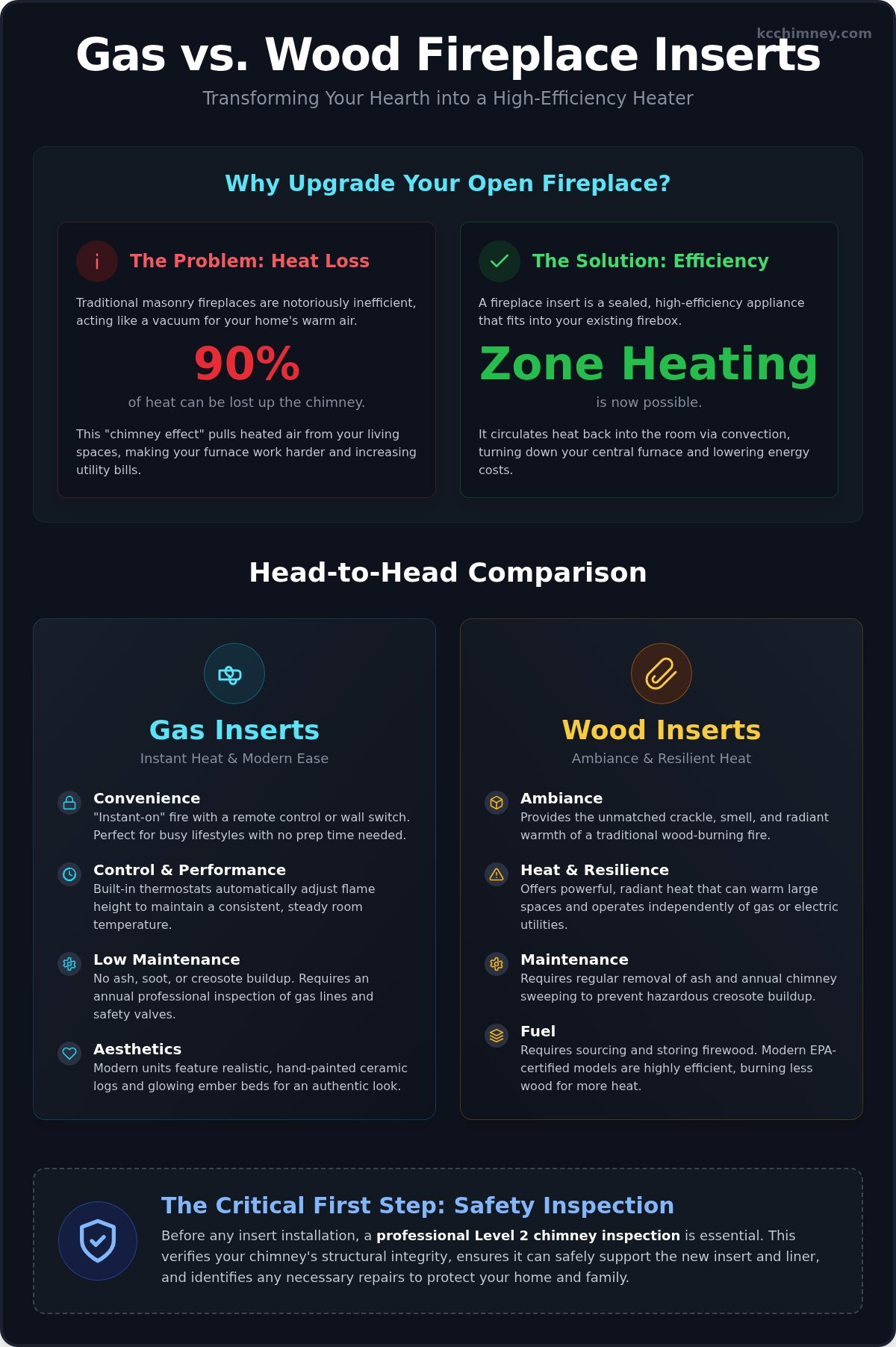
Gas vs. Wood Fireplace Inserts: Comparing Maintenance, Costs, and Performance
Deciding between gas vs wood fireplace inserts often comes down to your budget for both the initial installation and the years of maintenance that follow. Initial investment varies based on the complexity of your chimney’s current state. Gas units often involve a lower upfront cost for equipment and installation compared to wood-burning models, which may require more robust flue relining. However, wood inserts can provide a faster return on investment if you source your own firewood locally. In the Kansas City area, natural gas prices are relatively stable, providing a predictable operating cost for those who prefer the convenience of gas.
The lifespan of these appliances is a significant consideration for your investment. A high-quality insert, whether gas or wood, typically lasts between 15 and 25 years with proper care. Because these units are sealed systems, they protect your home’s structure by keeping moisture and corrosive combustion byproducts out of the original masonry flue. This proactive approach can prevent the need for extensive expert chimney repair in Kansas City later on.
Maintenance Showdown: Professional Sweep vs. Gas Technician
The type of care your hearth requires depends entirely on the fuel. Wood-burning inserts demand a hands-on approach. You’ll need to manage ash removal regularly and inspect door gaskets to ensure a tight seal. Most importantly, a professional sweep must clear the flue of creosote annually. Gas units are less messy but require a technical touch. A qualified technician will clean the burner ports, test the oxygen depletion sensor, and ensure the blower fan is free of dust. If you’ve noticed your current unit is struggling to stay lit or is making odd noises, we provide expert gas fireplace repair to get your system back in peak condition.
Aesthetics and Home Value Impact
In the competitive Johnson County real estate market, a functional fireplace is a major selling point. Modern gas designs with clean, minimalist lines appeal to buyers looking for a contemporary, move-in ready feel. Conversely, rugged wood stoves are highly sought after in rural or more traditional KC neighborhoods where buyers value self-sufficiency. Regardless of the style, an insert adds tangible value by proving the home is energy-efficient and well-maintained. This upgrade transforms a drafty liability into a premium asset that buyers recognize and value.
If you are ready to secure your home’s future and lower your heating costs, contact us today for a professional consultation and take the first step toward a safer hearth.
Choosing the Right Fit for Your Kansas City Home: Installation and Next Steps
Selecting between gas vs wood fireplace inserts isn’t just about the fuel; it’s about how the appliance fits into your daily rhythm. While we’ve discussed efficiency and heat output, the final decision often rests on how much time you want to spend managing your hearth. In Kansas City, where winter weather can shift from a mild afternoon to a deep freeze in hours, having a heating source that matches your lifestyle is essential for comfort and safety.
To help narrow your choice, consider this lifestyle checklist:
- Time Commitment: Do you want heat at the press of a button, or do you enjoy the ritual of building and tending a fire?
- Fuel Access: Do you have a reliable source for seasoned hardwood, or would you prefer the steady supply of a natural gas line?
- Storage Space: Does your property in Mission Hills or Overland Park have a dry, accessible area to stack a cord of wood?
- Emergency Preparedness: Are you looking for a heat source that operates during a total power outage without the need for battery backups?
The Importance of Professional Level 2 Inspections
Before any installation begins, a professional safety assessment is a non-negotiable step. An internal video scan allows our technicians to see every inch of your flue, identifying hidden structural cracks or gaps in the masonry that could pose a fire hazard. These defects are often invisible to the naked eye but can be bypassed safely by the specialized liner systems used in modern inserts. A Level 2 inspection is a comprehensive evaluation required by NFPA standards whenever an appliance is replaced or the fuel type is changed, ensuring the entire chimney system is fit for use. This process provides the documentation and peace of mind you need before making a significant investment in your property.
Why Local Expertise Matters in Overland Park and Mission Hills
Kansas City’s unique geography plays a role in your chimney’s health. Our region is known for heavy clay soils that expand and contract, which often leads to foundation shifting and masonry settling. A neighborly service provider understands these local architectural quirks and knows how to reinforce a chimney system against the specific stresses of our climate. We take pride in our specialized niche, blending modern safety standards with the grit of manual labor. Our team also prioritizes your home’s interior, providing mess-free guarantees so that your living room remains spotless during the installation process. When you’re ready to upgrade, Schedule your fireplace insert consultation with Best Chimney Services today!
Securing Your Home’s Warmth and Safety
Choosing between gas vs wood fireplace inserts is ultimately an investment in your home’s efficiency and your family’s comfort. Whether you prefer the instant ease of a gas system or the rugged reliability of wood, an insert eliminates the drafty “chimney effect” and keeps heat where it belongs. This upgrade transforms your living room into a functional focal point while lowering your long-term heating costs and protecting your masonry from moisture damage.
Since 2012, our team of Certified Chimney Professionals has helped KC metro homeowners navigate these technical choices with integrity and care. We include detailed Level 2 video inspections with all major services to identify hidden safety issues before they become emergencies. Our mess-free guarantee ensures that your indoor repairs and installations are handled with precision and absolute respect for your property. We take pride in being a reliable guardian of your hearth, ensuring every project meets modern safety standards.
Upgrade your hearth with a professional fireplace insert installation! We look forward to helping you create a safer, more efficient home for many winters to come.
Frequently Asked Questions
Do I need a chimney liner for a gas or wood insert?
Yes, you absolutely need a dedicated chimney liner for both gas and wood systems. When comparing gas vs wood fireplace inserts, the venting requirements are different, but the need for a sealed path is universal. A stainless steel liner for wood or a co-linear aluminum system for gas ensures that combustion gases exit your home safely. This prevents carbon monoxide and heat from seeping through your old masonry into the home’s structure.
Will a wood insert smell like smoke in my house?
A properly installed wood insert should not leave a smoky odor in your living room. Because these are sealed appliances with heavy-duty gaskets and ceramic glass doors, the smoke is contained within the firebox. It is then directed straight up the dedicated liner. If you notice a smell, it often indicates an issue with the door seal or the chimney draft, which our technicians can address during a routine maintenance visit.
Can I install a fireplace insert myself to save money?
We strongly advise against DIY installation for any heating appliance. Installing an insert involves complex tasks like running gas lines, securing heavy liners, and ensuring airtight seals. In Overland Park and Mission Hills, local building codes require specific permits and professional oversight to ensure the system is safe. Attempting this yourself can void your manufacturer warranty and, more importantly, create significant fire hazards for your family and property.
What is the most efficient fireplace insert for a large home?
For large, open-concept homes in the Kansas City metro, an EPA-certified wood insert often provides the highest BTU output. These units are designed to burn wood gases twice, which generates intense heat capable of warming several thousand square feet. High-output gas models are also excellent for consistent zone heating. The best choice depends on whether you prefer the raw power of wood or the steady, automated control of a gas thermostat.
How long does a typical fireplace insert installation take in KC?
Most fireplace insert installations in our area are completed within a single day. Our team arrives prepared to handle the unit placement, liner installation, and final safety testing in one visit. If your chimney requires extensive repairs or a complex relining process, we will communicate that timeline clearly after our initial inspection. We prioritize a mess-free process to ensure your home stays clean and comfortable while we complete the work.
Does a gas fireplace insert work during a power outage?
Most modern gas fireplace inserts will continue to provide heat during a power outage. These units typically use a battery backup system to operate the pilot light and gas valve. While the electric blower fan that circulates air won’t function without power, the unit will still emit significant radiant heat to keep your room warm. This makes gas a reliable backup option for Kansas City homeowners during unpredictable winter storms.
Is a wood-burning insert better for the environment than gas?
Both options have environmental benefits. Wood is a renewable, carbon-neutral fuel source, and modern EPA-certified inserts reduce particulate emissions by roughly 70 percent compared to older stoves. Gas burns much cleaner in terms of air quality because it produces almost no smoke or soot. When evaluating gas vs wood fireplace inserts for sustainability, you are choosing between a renewable biomass fuel and a cleaner-burning fossil fuel source.
How often should I have my fireplace insert inspected by a professional?
You should have your insert inspected by a professional at least once every year. For wood-burning units, this is critical for removing flammable creosote buildup. For gas systems, we focus on cleaning the burner, checking the sensors, and ensuring the gas valves are operating correctly. Regular inspections are the best way to protect your investment and ensure your hearth remains a safe, reliable heat source for the long term.