
Last winter, a Stilwell homeowner noticed a few thin flakes of clay on their hearth, unaware it was the first sign of a failing flue liner. This subtle clue is one of the primary signs of chimney flue damage Stilwell residents overlook until a chimney fire or structural failure occurs. It’s natural to feel anxious when you notice debris in your firebox or strange smells in the living room. You want to keep your family safe, but you also worry about repair costs that can reach $15,000 for a full chimney replacement in the Kansas City metro.
We believe your fireplace should be a source of comfort, not stress. You can protect your home and your budget by learning how to identify hidden flue damage before it compromises your safety or violates Johnson County’s 2018 building codes. This guide provides a clear checklist of warning signs, explains why the Kansas freeze-thaw cycle is so destructive to clay liners, and clarifies when a professional Level 2 camera inspection is the right move for your home.
Key Takeaways
- Understand why the chimney flue is the “lung” of your venting system and how its integrity keeps toxic gases out of your living space.
- Identify “shaling,” which is the most frequent of the signs of chimney flue damage Stilwell residents find when cleaning their hearths.
- Learn why a solid brick exterior doesn’t guarantee a safe interior and how hidden gaps can lead to house fire hazards.
- Discover how the rapid temperature swings in the Kansas City metro cause moisture to expand and crack traditional clay liners.
- See why upgrading to a stainless steel liner provides a permanent solution that withstands local weather patterns better than clay.
Understanding the Chimney Flue: Stilwell Homeowner Safety Basics
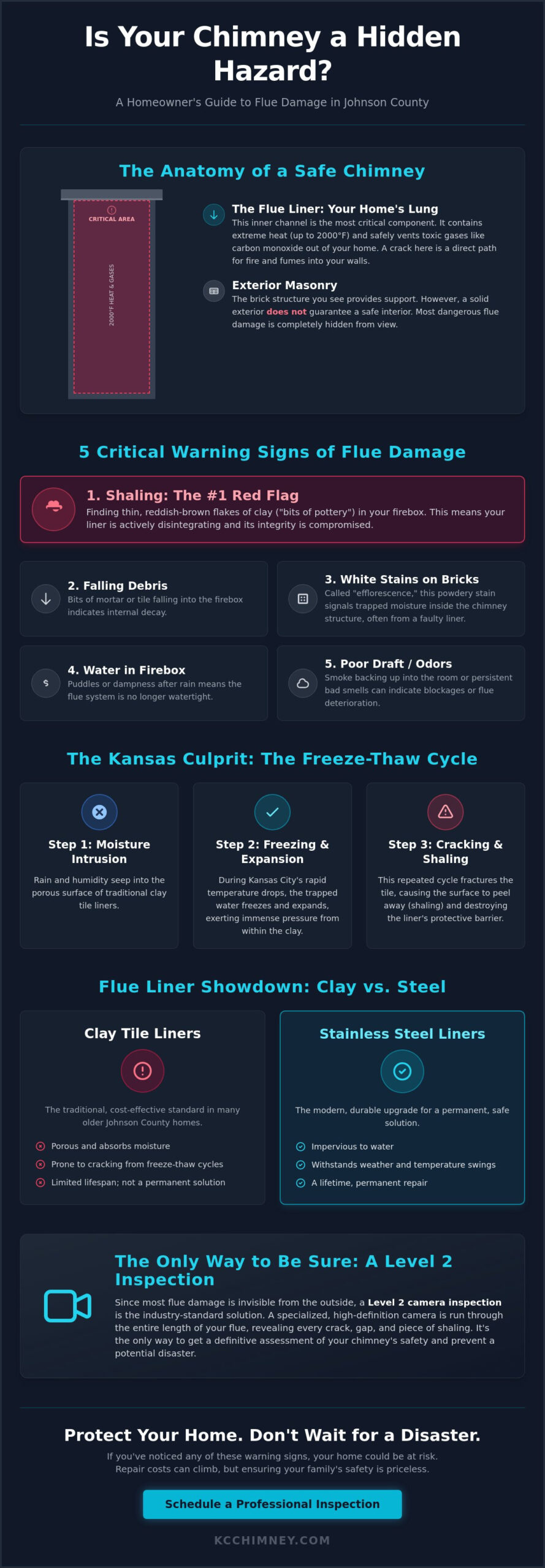
Think of your chimney as more than just a stack of bricks on the side of your house. It’s a complex venting system where the flue acts as the inner “lung,” breathing out toxic combustion byproducts while keeping your family safe from the dangers of fire. Understanding the Chimney Flue is the first step in responsible homeownership. Without a healthy, intact flue, dangerous gases like carbon monoxide can backdraft into your living space instead of exiting through the roof. The chimney flue liner is the primary barrier between 2000-degree heat and your Stilwell home’s wood framing. In many of the older neighborhoods across Johnson County, these liners are made of clay tiles that were never intended to last the entire lifespan of the house.
When these internal components fail, the results are often invisible from the sidewalk. You might have a beautiful masonry exterior that looks perfectly fine, while the interior is slowly crumbling. This is why recognizing the early signs of chimney flue damage Stilwell residents often encounter is so critical. A compromised liner doesn’t just reduce efficiency; it creates a direct path for sparks to reach the combustible materials inside your walls. We see this frequently in local homes where the original builder-grade materials have finally succumbed to decades of use and weather exposure.
The Anatomy of a Safe Venting System
A functional chimney relies on three main parts working in harmony: the firebox where you build the flame, the flue that channels the exhaust, and the chimney crown that seals the top from the elements. It’s vital to differentiate between the exterior masonry chimney and the interior flue pipe. While the exterior bricks provide structural support and aesthetic appeal, the interior flue is the workhorse that handles high-intensity heat and corrosive soot. If you suspect any issues, a chimney inspection in Kansas City can provide a high-definition look at these internal components. This process ensures your system meets the 2018 International Residential Code standards adopted by Johnson County.
Common Flue Materials in Johnson County
Clay tile liners remain the standard in traditional Stilwell builds. They are cost-effective but notoriously porous and prone to cracking during the rapid temperature swings common in our region. Stainless steel liners have become the modern, durable upgrade for damaged systems. They offer a seamless, non-corrosive path for smoke and are often the best solution for relining a failing chimney. For local historic restorations, cast-in-place liners provide a reinforced, cement-like barrier that can actually strengthen the chimney’s structure. Each material has its place, but identifying the signs of chimney flue damage Stilwell homeowners typically see is the only way to know when it’s time to switch from clay to a more resilient option.
5 Warning Signs of Chimney Flue Damage You Can Spot Today
You don’t need to climb onto your roof to identify the most common signs of chimney flue damage Stilwell homeowners encounter during routine maintenance. Most indicators appear right in your firebox or on the exterior masonry of your home. Paying close attention to these signals is the best way to prevent a minor crack from turning into a major hazard. If you notice white, powdery stains on your exterior bricks, you’re looking at efflorescence. This isn’t just a cosmetic issue. It’s a signal that moisture is trapped inside the masonry, often because a compromised flue liner is allowing water or condensation to seep into the chimney structure. If you find actual puddling or water inside your fireplace after a heavy Kansas thunderstorm, your flue system is no longer watertight. These visual cues are often the only internal signs of chimney flue damage Stilwell properties show before a total liner failure occurs.
Detecting Shaling and Debris
Shaling is the absolute most critical indicator of a failing clay tile liner. It appears as thin, reddish-brown flakes or “bits of pottery” scattered among the ash on your firebox floor. This happens when moisture gets trapped inside the porous clay tiles. When that moisture freezes and expands during a typical Johnson County cold snap, it causes the surface of the tile to peel away in layers. Once shaling begins, the structural integrity of your liner is gone. The walls of the flue become thinner and more susceptible to heat transfer, which significantly increases your risk of a house fire. If you find these flakes while cleaning out your hearth, scheduling a professional chimney sweeping is a necessary first step to clear the debris and assess the extent of the tile loss.
Drafting Issues and Smoky Fireplaces
A damaged flue liner does more than just leak; it disrupts the “stack effect” necessary for your chimney to function. This physical process relies on a smooth, airtight channel to pull hot air up and out of your home. When cracks or gaps form in the liner, the draft is weakened, leading to smoke backing up into your living room. You might also notice a persistent, smoky smell that lingers even when you haven’t burned a fire in days. This odor is often the result of soot and creosote getting trapped in the cracks of a damaged flue. More importantly, poor drafting can lead to the silent buildup of carbon monoxide in your home. If your fireplace is suddenly difficult to light or frequently fills the room with haze, the internal venting system is likely failing.
The Invisible Danger: Why Most Flue Damage is Hidden
A common misconception among Stilwell homeowners is that a sturdy, attractive brick exterior equals a safe fireplace. In reality, the most dangerous issues are often tucked away where you can’t see them. The masonry shell of your chimney is built for structural support and weather resistance, but it isn’t designed to withstand the direct, intense heat of a fire. That’s the job of the flue liner. Even small hairline cracks in clay tiles allow intense heat to escape the venting system. Combustible materials behind the chimney can ignite at temperatures as low as 200 degrees if the flue is breached. Because the flue is encased in layers of brick and mortar, these signs of chimney flue damage Stilwell residents should watch for are impossible to detect from the hearth or the roofline without specialized tools.
When heat leaks through these invisible gaps, it doesn’t just stay in the chimney. It radiates into the wooden studs, headers, and floor joists that sit right against the masonry. This is why a chimney that looks “perfectly fine” on the outside can actually be a ticking time bomb. Relying on a simple visual check is often the reason why serious issues go unnoticed for years. Identifying the internal signs of chimney flue damage Stilwell properties often hide requires a more technical approach to ensure the thermal barrier remains intact.
The Role of Level 2 Video Inspections
Since we can’t see through solid brick, we use high-definition camera equipment to scan every inch of the flue’s interior. These specialized cameras travel the full length of the system, providing a 360-degree view of the liner walls. This is the only way to find missing mortar joints, shifted tiles, or longitudinal cracks that indicate a compromised system. The National Fire Protection Association (NFPA 211) standard requires these Level 2 inspections during real estate transfers in Stilwell or after a chimney fire. If a scan reveals structural breaches, prompt chimney repair in Kansas City is necessary to restore the safety of your hearth. We believe in showing you the footage so you can see exactly what’s happening inside your walls.
Heat Transfer and Pyrolysis
When a flue liner is cracked, it subjects the surrounding wood framing to a process known as pyrolysis. This is the chemical decomposition of wood caused by prolonged exposure to heat. Over several years, the wood’s ignition temperature actually lowers as it becomes “charred” from the inside out. Eventually, the wood can ignite at much lower temperatures than a fresh piece of lumber. This process is the primary cause of “mysterious” house fires that start inside the walls rather than in the firebox. A cracked flue speeds up this decomposition, making it vital to address damage before the framing reaches its breaking point.
The Impact of Kansas Freeze-Thaw Cycles on Your Flue
Stilwell experiences a specific weather pattern characterized by rapid temperature swings, particularly during the transition months of late autumn and spring. These fluctuations are the primary cause of the signs of chimney flue damage Stilwell residents find in their homes. Traditional clay liners are naturally porous and absorb moisture from the local air. When the temperature drops below freezing, that trapped water expands with incredible force. This cycle eventually turns microscopic surface cracks into deep, structural breaches that compromise the entire venting system. It’s a relentless process that happens every time the thermometer bounces across the 32-degree mark.
Beyond the air temperature, the ground beneath your home plays a significant role in chimney health. Johnson County is famous for its expansive clay soil. This soil shifts significantly between wet and dry seasons, which often leads to minor chimney settling. While the exterior brick might appear stable, this ground movement can cause the internal flue tiles to shift or separate. When tiles become misaligned, they create jagged edges that collect dangerous amounts of soot and hinder proper airflow. Detecting these misalignments early is the only way to prevent a total system failure.
Winter Hazards in Stilwell
Even a small, contained chimney fire can thermally shock a cold clay liner, causing it to shatter instantly. In Stilwell, ice dams frequently form on the chimney crown during the transition from snow to sleet. This ice forces water into any existing masonry cracks, which then freezes and accelerates the shaling process. To avoid these mid-winter emergencies, the best time for a check-up is before the first frost typically hits in mid-October. Waiting until you’re ready to light the first fire of the season often means you’re already behind the damage curve.
Humidity and Creosote Interaction
Kansas City’s summer humidity doesn’t just make the outdoors uncomfortable; it makes your chimney more corrosive. When moisture mixes with existing creosote deposits, it creates an acidic slurry that slowly eats away at clay tiles and mortar joints. This chemical reaction produces a distinct “dirty sock” smell that often drifts into your living room on humid July days. If you notice this odor, it’s a clear signal that your flue is deteriorating from the inside out. To keep your home safe and fresh, you should schedule a professional Level 2 inspection before the next heating season begins.
Professional Solutions: Protecting Your Stilwell Hearth
Once you’ve identified the signs of chimney flue damage Stilwell homeowners often see, such as shaling or smoky drafts, the focus shifts to restoration. Living with a damaged flue is a gamble you don’t need to take. Professional chimney relining is the industry standard for repairing a compromised system without the massive expense of a full masonry tear-down. By installing a high-grade stainless steel liner, we create a seamless, airtight path for exhaust. This modern upgrade eliminates the vulnerabilities of old clay tiles, ensuring that heat and toxic gases stay contained until they exit the chimney cap. It’s the most effective way to restore a “condemned” chimney to full service.
A stainless steel liner provides a permanent fix that actually improves the performance of your hearth. Unlike clay, which is prone to cracking during Kansas freeze-thaw cycles, stainless steel expands and contracts without losing its structural integrity. It also heats up faster than masonry, which creates a stronger draft and reduces the rate of creosote buildup. Most high-quality liners come with a lifetime warranty, giving you peace of mind that your home is protected for decades. It’s an investment in your property’s safety and its long-term value in the Stilwell real estate market.
When is Relining Necessary?
Relining becomes a non-negotiable requirement if a Level 2 camera inspection reveals cracked tiles, missing mortar between joints, or significant shaling. It’s also required by code when changing fuel types, such as installing a new gas fireplace insert. In many cases, relining is a far more cost-effective solution than rebuilding a masonry stack from the ground up. We provide expert fireplace repair to address these internal breaches and ensure your system meets the 2018 International Residential Code standards adopted by Johnson County.
Next Steps for Stilwell Homeowners
If you’ve noticed any debris on your hearth or strange odors in your home, adopt a “safety first” mindset and stop using the fireplace immediately. Continuing to burn fires in a damaged flue increases the risk of a house fire every time you light a match. Always ensure your flue work is handled by CSIA-certified technicians who understand the specific venting requirements of local architecture. Contact Best Chimney Services for a professional Stilwell flue evaluation today to confirm your chimney is safe for the coming season.
Secure Your Stilwell Hearth for the Seasons Ahead
Identifying the internal signs of chimney flue damage Stilwell properties exhibit is the first step toward a safer home. Whether you’ve found red clay flakes on your hearth or noticed a persistent smoky smell, these indicators suggest your home’s primary fire barrier is failing. Remember that the Kansas freeze-thaw cycle works against traditional clay liners every winter. A high-definition camera inspection is the only way to confirm your system meets the 2018 International Residential Code standards.
Our team has been serving Stilwell and Johnson County since 2012. As A+ rated local masonry experts, we prioritize your family’s peace of mind above all else. Every technician on our crew is CSIA certified, ensuring your inspection follows the highest national safety standards. Don’t wait for a structural failure to address hidden cracks. Schedule Your Stilwell Chimney Flue Inspection Today and enjoy your fireplace with total confidence this winter.
Frequently Asked Questions
Is it safe to use my fireplace if I see small cracks in the flue?
No, you shouldn’t use your fireplace if you notice any cracks in the liner. Even a tiny breach allows 2000-degree heat to reach the combustible wood framing of your home. These small gaps are early signs of chimney flue damage Stilwell families should take seriously to avoid house fires. We recommend a professional evaluation before your next fire to ensure the thermal barrier is still intact.
How much does a chimney flue inspection cost in Stilwell?
A professional chimney inspection in the Stilwell area typically ranges from $200 to $460 depending on the depth of the scan. According to current 2026 industry data, a Level 1 inspection averages between $200 and $400, while a Level 2 camera inspection costs between $260 and $460. In nearby Lenexa, homeowners usually pay an average of $249 to $344 for these essential safety assessments.
What is the white powdery stuff on my chimney bricks?
The white powdery substance on your bricks is called efflorescence. It occurs when water saturates your masonry and dissolves natural salts, which then crystallize on the surface as the moisture evaporates. This is a red flag that your chimney is absorbing too much water. If you don’t address it, this moisture will eventually reach your flue liner and cause the shaling or cracking common in Johnson County.
Can a chimney flue be repaired without replacing the whole thing?
Yes, most flue issues can be resolved with chimney relining rather than a full masonry teardown. We install a seamless stainless steel liner inside your existing chimney stack to create a new, airtight venting path. This process is significantly more cost-effective than rebuilding the entire structure and provides a permanent solution that handles the Kansas City climate much better than original clay tiles.
How long does a clay tile chimney liner typically last in Kansas?
Clay tile liners generally last between 20 and 50 years, but the volatile Kansas climate often reduces this lifespan. The frequent freeze-thaw cycles in our region cause these porous tiles to expand and contract until they eventually crack or flake. If your Stilwell home was built more than 25 years ago, it’s likely your original liner is nearing the end of its reliable service life.
Will a new chimney liner improve my fireplaces heating efficiency?
A new stainless steel liner significantly improves heating efficiency by optimizing the draft. These liners heat up much faster than heavy masonry, which helps the chimney pull smoke and gases out of your home more effectively. This better airflow also reduces the rate at which creosote accumulates on the flue walls, meaning you’ll spend less on frequent cleanings while enjoying a more consistent, warmer fire.
What happens during a Level 2 chimney inspection?
During a Level 2 inspection, we use a high-definition camera system to scan the entire interior of your flue. Our technicians also inspect accessible areas of the chimney in your attic, basement, or crawlspace to check for proper clearances and structural integrity. This is the nationally recognized standard for home sales in Stilwell and is the most thorough way to identify hidden signs of chimney flue damage Stilwell houses might have.
Why does my fireplace smell like a campfire even when it is not in use?
That campfire smell is usually caused by creosote deposits reacting with the high humidity common in the Kansas City metro. When air is pulled down your chimney instead of up, it brings the odor of soot and charred wood into your living room. This often indicates a drafting problem or a breach in the flue liner that is allowing outside air to bypass the normal venting path.