
A lower-cost damper is not always the more energy-efficient choice. In the top damper vs. throat damper efficiency comparison for Spring Hill, a throat damper generally costs less upfront, while a top-mounted damper closes the flue from above and can limit drafts and heat loss more effectively when the fireplace is idle. The right option depends on your chimney’s condition and how you use the fireplace.
It makes sense to consider installation cost first, especially if your existing throat damper still works. But its position and seal matter too: a worn or poorly closing throat damper can let outside air enter through the fireplace, while a top damper closes the chimney from above.
This guide compares how the two designs work, their energy-efficiency trade-offs, installation and retrofit considerations, and practical advantages and drawbacks. You’ll also find a clear decision guide to help you understand which option may suit your Spring Hill home.
Key Takeaways
- A throat damper closes at the firebox, while a top-mounted damper seals the flue from above. Their location affects how well they limit drafts when the fireplace is idle.
- A top-mounted damper generally offers a tighter seal, while a throat damper usually has a lower upfront cost. Compare the potential energy benefit with the condition of your existing system.
- Retrofit needs depend on the chimney and damper condition. A missing or damaged throat damper may make a top-mounted replacement worth considering.
- Rust, sticking, or difficulty operating a damper can signal a problem. Never close a damper while a fire is burning.
- Chimney sweeping removes soot and debris that may interfere with damper movement, and an inspection can help identify what needs attention.
Why Your Chimney Needs a Damper?
In Spring Hill, choose a damper based on your chimney’s construction and how you use the fireplace, rather than assuming one type suits every home. During heating season, a tight closure can limit warm-air loss when the fireplace is idle. The flue layout determines which damper will fit.
Airflow and Heat-Loss Control
A chimney damper controls airflow between the firebox and flue. Open it before lighting a fire so smoke and fumes can rise through the chimney. Close it only after the fire is fully out. A throat damper seals at the firebox, while a top-mounted damper closes the flue from above. Its position can create a tighter barrier against drafts when the fireplace is not in use.
| Option | Location and airflow | Protection when closed |
|---|---|---|
| Throat damper | Above the firebox; operated by a lever or handle | Limits airflow at the firebox |
| Top-mounted damper | At the chimney top; controlled from inside | Seals the flue and includes a cap |
Both types must open fully to vent smoke. Never close either damper while a fire is burning, because smoke and carbon monoxide can enter the home. Before lighting a fire, confirm that the damper is open.
A top-mounted damper’s cap also helps keep rain, wildlife, and debris out of the chimney opening. A throat damper closes the firebox but does not cover the chimney top, so a separate cap is needed to keep animals and moisture out. A properly functioning damper can also help limit downdrafts that bring cold air into the living room.
Damper Choice and Maintenance
Start by identifying your existing damper and chimney configuration. A throat damper sits inside the fireplace opening; a top-sealing unit attaches at the upper end of the flue. Your fireplace-use frequency and the effect of idle airflow on your home also matter. Spring Hill homeowners who use their fireplaces often should consider smoke venting, closure, and cap protection together.
Include the flue and damper in an annual chimney inspection. A professional can assess wear, rust, water damage, and whether soot or debris is interfering with the damper’s movement. Chimney sweeping removes soot and debris that can cause sticking. If a lever resists movement or the seal looks damaged, do not force it. Have the condition assessed before relying on the damper.
Energy Efficiency: Which Damper Saves You More Money?
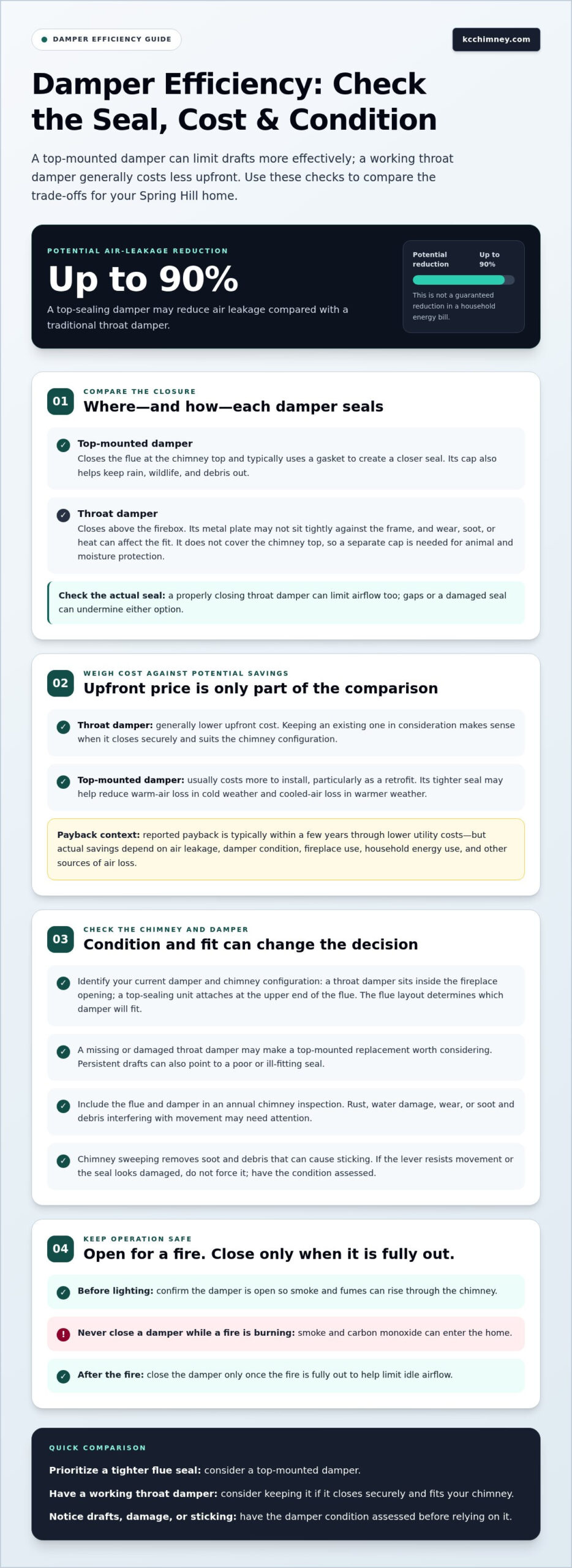
For many fireplaces, a top-mounted damper can improve energy efficiency because it may seal the flue more tightly. A traditional throat damper generally costs less upfront, but gaps in its metal-to-metal closure can let drafts in and conditioned air out. The better long-term value depends on the existing seal, how often you use the fireplace, and how much air escapes while it is idle.
Compare the Seal, Not Just the Upfront Cost
A throat damper closes at the firebox rather than sealing the full chimney shaft. Its metal plate may not sit tightly against the frame, especially as heat, soot, and wear affect the fit. A top damper closes at the chimney top and typically uses a gasket to form a closer seal. That difference can matter in a Spring Hill home during cold weather, when lost indoor heat has to be replaced.
A top-sealing damper can reduce air leakage by up to 90% compared with a traditional throat damper. That figure describes potential leakage reduction, not a guaranteed reduction in a household’s energy bill. Actual savings depend on the chimney’s condition, the damper’s seal, fireplace use, and the home’s other sources of air loss.
How the Seal Affects Heating and Cooling
When the fireplace is idle, a well-sealed flue helps keep warm indoor air from escaping up the chimney. In warmer weather, it can also help keep cooled air inside. A more stable indoor temperature may reduce how often heating or cooling equipment runs, an efficiency benefit frequently emphasized by residential HVAC specialists such as Caribbean Heating & Cooling. A throat damper can also limit airflow when it closes properly, but its seal generally covers less of the chimney.
For homeowners comparing top-damper and throat-damper efficiency in Spring Hill, consider both the initial expense and the ongoing effect of drafts. Top dampers usually cost more to install, particularly as retrofits, while throat dampers have a lower upfront cost. The tighter top seal can provide energy savings over time, and reported payback is typically within a few years through lower utility costs. The result depends on actual air leakage and household energy use.
- Choose a top damper when limiting drafts and sealing the full flue are priorities.
- Keep a working throat damper in consideration when it closes securely and the current chimney configuration suits it.
- Address a poor seal if drafts persist, since a damaged or ill-fitting damper can undermine either option.
A damper is only one part of fireplace efficiency. The fireplace type has the greatest effect on how efficiently it burns, so an efficient closure won’t correct poor performance during a fire. If you’re weighing a fireplace upgrade alongside damper choices, wood fireplace insert options can be part of that broader comparison.
What’s The Difference Between Top-Mount and Throat Dampers?
The key difference is location: a throat damper sits above the firebox, while a top-mount damper sits over the flue. That placement affects how each damper opens, seals, and protects the chimney.
Throat Damper Placement and Operation
A throat damper is a metal plate where the firebox meets the chimney. Usually made of cast iron or steel, it moves with a knob, lever, handle, or pulley. Open it before lighting a fire to let smoke rise into the flue. Close it after the fire is fully out to reduce airflow through the fireplace.
Because of its position, the plate seals the firebox, not the entire chimney shaft. Heat, soot, and moisture can affect the metal and its fit over time. If the handle sticks or the plate does not sit evenly, gaps may remain. A throat damper also does not cover the flue opening, so a separate chimney cap protects it from rain and debris.
Top-Mount Damper Placement and Operation
A top-mount, or top-sealing, damper sits at the chimney’s upper flue opening, where a cap would traditionally sit. A spring-assisted chain or cable runs down into the firebox, allowing you to operate it from below. Open it before lighting a fire, then close it after the fire is fully out.
Unlike a throat plate, a top-mounted unit closes the flue from above and usually has a gasket to create a seal. Its cap helps keep rain, wildlife, and debris out when closed. When open, the assembly allows smoke to vent while covering the top of the flue against outside elements.
The operating control can help you identify the system. A lever or knob at the fireplace opening often operates a throat damper; a chain hanging inside the firebox can operate a top-sealing model. Some top-mounted designs use a cable or lever, so check where the mechanism connects before deciding which type you have.
Both designs must move freely and open fully to provide proper airflow. A top damper is farther from direct flames, while a throat damper sits closer to the firebox heat. Neither position removes the need to inspect the flue and closure. An annual chimney inspection can assess wear, moisture damage, and whether the damper operates correctly.
For a Spring Hill homeowner, the damper must match the flue opening and existing chimney construction. Check the control mechanism, confirm the damper opens fully, and note whether a separate cap protects the chimney. These details help distinguish the designs and compare their energy-efficiency trade-offs.
Installation costs and retrofit considerations
In Spring Hill, retrofit complexity depends on the damper type, chimney access, flue condition, and existing construction. A top-mounted unit can cost more upfront than a simple throat damper, but fit and operation matter alongside price.
Whether a permit is required in Spring Hill depends on the scope of work and local building rules. A damper replacement should not automatically be treated the same as work that alters the chimney structure.
What Changes the Installation Work?
A throat damper sits inside the fireplace opening, so replacement can be difficult if its frame is damaged or masonry restricts access. If the existing throat damper is in good condition, a like-for-like replacement may be simpler. A top-mount damper attaches at the chimney top, requiring roof access and a suitable flue opening.
For a top-mounted retrofit, the chimney’s height, flue dimensions, condition, and surrounding structure affect the work. Installation or replacement costs depend on the damper’s size, type, material, and chimney complexity. There is no single cost for every Spring Hill home: a straightforward flue and a complex chimney call for different preparation.
Installation, Testing, and Retrofit Steps
A top-damper installation on an existing chimney can often be completed by experienced professionals in a few hours. The process includes sweeping and cleaning the flue to remove soot, creosote, and debris before fitting the damper. A clean passage helps the installer assess the flue opening and position the assembly correctly.
After mounting, the damper is tested to confirm smooth operation and a complete seal. The control should open the unit fully for venting and close it securely when the fireplace is idle. Testing matters: a poorly fitted seal can leave drafts and let heated indoor air escape, reducing the expected energy benefit.
A missing or damaged throat damper is a common reason to consider a top-mount retrofit. Before choosing, assess the chimney flue and existing cap arrangement. The replacement must fit the flue and allow smoke to vent without obstruction. If chimney damage or an unsuitable opening affects the fit, address that condition as part of the installation plan.
Compare the lower upfront cost of a throat damper with the higher cost and roof access involved in installing a top-mounted model. Consider whether the existing throat unit can be replaced effectively or whether its condition makes a retrofit more practical. A correctly installed and tested damper helps limit drafts and the loss of conditioned air when the fireplace is idle.
Throat damper advantages and drawbacks
A throat damper can be a sensible choice if your existing fireplace has one that closes properly. Its familiar firebox-level control and lower initial cost are practical advantages. But the metal plate sits close to firebox heat, and its seal may allow drafts if it no longer fits snugly. The trade-off is clear: lower upfront expense may come with greater exposure to wear and air leakage.
Where a Throat Damper Makes Sense
Throat dampers are built into many traditional fireplaces, so keeping a sound existing unit avoids changing the chimney’s setup. A lever or handle opens it for a fire and closes it once the fire is fully out. In areas with little rain or wildlife, a functioning throat damper may be sufficient for limiting airflow through the fireplace. The chimney still needs a cap to protect its upper opening.
That separate cap matters because the throat plate closes the firebox, not the chimney top. Rain, debris, and animals can still enter through an uncovered flue. Consider both components together: a working throat damper controls airflow from below, while a chimney cap guards the opening against outside elements. A damaged cap can leave the chimney exposed even when the damper works.
Wear, Sealing, and Service Life
Cast-iron and steel throat dampers can rust or warp after repeated exposure to heat and moisture. A plate that no longer lies flat may not seal tightly, allowing heated indoor air to escape during the heating season. Soot and moisture can also affect moving parts and closure, so traditional dampers may need regular attention.
Most throat dampers need replacement every 15 to 20 years, depending on use and conditions. Treat that as a general lifespan estimate, not a schedule that overrides visible condition. A stuck handle, unusual resistance, rust, or water damage deserves attention sooner. If soot or debris is interfering with movement, chimney sweeping can remove buildup and help identify whether the damper itself is worn.
For the comparison, a throat damper’s strongest case is a sound existing unit, a lower initial cost, and modest exposure to rain or wildlife. A top-sealing damper may better suit homeowners prioritizing a tighter seal and protection at the chimney opening. Choose based on the damper’s condition, chimney configuration, and heating needs, not age alone.
If soot or debris is making your damper difficult to operate, arrange chimney sweeping to address buildup and assess the flue.
Best Chimney Services: Chimney Sweeping
Best Chimney Services provides chimney sweeping to remove soot and debris that can interfere with damper movement. If a throat damper sticks, is unusually difficult to operate, or has visible buildup, sweeping can remove deposits inside the flue. It also helps keep the chimney clear while you assess whether the damper needs further attention.
For Spring Hill homeowners comparing damper options, a clean flue provides a clearer starting point for assessing airflow and operation. If sweeping reveals damage or persistent trouble, the next step depends on the chimney’s condition and the work needed.
Contact Best Chimney Services to discuss chimney sweeping, or visit kcchimney.com.
Make the Next Fireplace Decision With Confidence
Use your comparison of top damper vs. throat damper efficiency in Spring Hill as a starting point for assessing your fireplace system. Consider how the chimney is built, how often you use the fireplace, and whether a change would address the problem you notice. The right damper choice is part of a broader plan for safe, dependable fireplace use.
Best Chimney Services can help with the next step through chimney sweeping, chimney relining, or gas fireplace inserts. Sweeping addresses soot and debris, while relining and insert installation serve different chimney and fireplace needs. The right service depends on the issue you want to resolve.
Share your fireplace concerns and discuss a practical path forward. Contact Best Chimney Services to talk through your chimney needs. A clear assessment can help you make a considered decision for your home.
Frequently Asked Questions
Making Your Decision: Which Damper Is Right for You?
Choose based on the chimney’s layout, the current damper’s condition, and how you use the fireplace. In Spring Hill, a top-sealing unit may suit a homeowner who prioritizes a tight closure, while a working throat damper may remain practical in an existing system. Check that the damper opens fully and closes properly. For homes in Overland Park, Mission Hills, Stilwell, Bucyrus, and Spring Hill, chimney configuration matters more than neighborhood.
What Is a Top-Sealing Damper?
A top-sealing damper is mounted over the chimney flue and operated from inside the firebox with a chain or cable. Its cap-style assembly also helps shield the flue opening from rain and debris. For example, a control chain descending into the firebox rather than a plate lever may operate a top-sealing unit. The damper must fit the flue opening.
What Is a Traditional Damper?
A traditional damper is usually a metal plate installed at the throat, just above the firebox. A lever, knob, or handle moves the plate to open or close the passage. You can assess its condition from the fireplace opening: look for rust, a plate that sits unevenly, or a sticking control. A separate chimney cap protects the flue opening above.
Which Damper Is Right for Your Client?
The right damper depends on the chimney’s design, the existing unit’s condition, and your home’s heating priorities. A throat damper that closes properly may remain suitable; a top-sealing model may better address drafts through the flue. In Spring Hill, an inspection can assess the flue, damper, and cap together. Best Chimney Services offers chimney inspections and sweeping to identify conditions that need attention.
What Is the Difference Between a Top-Sealing Chimney Damper and a Throat Damper?
A top-sealing damper closes the flue at the chimney’s upper opening, while a throat damper closes near the firebox. This affects where you inspect and operate the mechanism. For instance, a chain or cable inside the firebox can lead to a top-mounted assembly, while a lever often connects to a throat plate. Both must open completely before you use the fireplace.
Which Is More Energy Efficient: a Top Damper or a Throat Damper?
A top damper can be more energy efficient when the fireplace is idle because its gasketed closure may seal the flue more tightly. A throat damper can still help if its plate closes evenly and remains in good condition. In either case, assess drafts around the unused fireplace rather than assuming the damper alone determines household energy use.
How Much Heat Loss Can a Top-Sealing Damper Prevent Compared With a Throat Damper?
A top damper can reduce air leakage by up to 90% compared with a traditional throat damper. This figure refers to air leakage, not a guaranteed percentage of heat or energy-bill savings. The actual effect depends on the seal, chimney condition, and how often the fireplace is used. A worn gasket or poorly closing plate can change how much air passes through.
Are Top-Sealing Dampers Compatible With All Fireplaces and Chimneys?
No. A top-sealing damper must fit the chimney’s flue opening and configuration. The condition of the flue and existing chimney components also affects suitability. Gas fireplaces require particular care: never completely seal an appliance’s flue with a top damper. A chimney assessment can determine whether the assembly fits and operates without obstructing the fireplace’s required venting.