
The part of a fireplace that guides smoke toward the chimney sits out of sight, just above the damper. Smoke chamber parging cost in Overland Park depends on the chamber’s condition, the amount of damaged masonry, access, and whether the work is a localized repair or a broader rebuild. The smoke chamber channels smoke and combustion gases from the fireplace into the chimney, while parging smooths its interior surfaces.
It’s reasonable to want a clear explanation before agreeing to work inside a hidden part of your fireplace. A small patch may suit localized damage when the surrounding masonry is sound; widespread deterioration may call for broader repairs. The proposed scope should follow the inspection findings, not just the visible surface.
This article explains the smoke chamber’s function, the conditions that affect repair scope, and how to compare patching with more extensive work. You’ll also learn what a useful written quote should describe, so you can understand the proposed repair and its cost factors before deciding.
Key Takeaways
- Understand how the smoke chamber channels fireplace gases and why its interior condition matters.
- See how damage, repair scope, and access can affect a parging quote.
- Learn what a small patch can address and when broader masonry work may be needed.
- Know which scope details and documentation help make a written repair quote clear.
Repair cost factors
An estimate for smoke chamber parging in Overland Park starts with the masonry’s condition, not just the fireplace’s appearance. An inspection can reveal loose mortar, open joints, failed coating, or deterioration hidden above the damper. A video inspection can show whether the damage is limited to one area or extends across the chamber. That distinction shapes the work: a localized repair differs from preparing and parging a broader surface.
The surface shape and repair method also affect the scope. Spray-on parging coats existing surfaces, while cast-in-place work adds masonry over corbelled areas. Rough, stepped brick may need more preparation than a relatively smooth chamber. Creosote and other deposits can obscure masonry, so inspection findings should clarify whether cleaning is needed before repairs. Access to the chamber and the condition of nearby mortar also affect the labor involved.
Permit requirements for chimney work depend on the work involved and applicable local rules. For smoke chamber parging in Overland Park, confirm permit requirements with the city before scheduling the repair.
Smoke chamber parging cost in Overland Park depends on the chamber’s condition, the repair area, access, and related masonry or damper work. The exact cost for your fireplace should be stated in a written quote.
Read the proposed scope alongside the inspection findings. If the report shows isolated mortar damage but the quote describes extensive rebuilding, the findings should explain the recommendation. A useful description identifies affected surfaces, preparation, the parging method, and adjoining repairs. It should distinguish smoke-chamber work from separate firebox, flue, or damper repairs.
These details explain why fireplaces can need different work, even when both show interior wear. In Overland Park homes, a sound estimate connects observed conditions to specific repair tasks instead of relying on a broad label such as “chimney repair.”
Requesting documented repair quotes
A useful quote connects the fireplace’s observed condition to specific masonry work. It should identify the smoke chamber, describe visible or camera-documented damage, and explain the proposed repair area. For example, “loose mortar at the chamber transition” gives clearer context than “chimney repair.” Written findings also help distinguish parging from work on a damper, firebox, or flue.
Smoke chamber inspections and evaluations should be performed by licensed, certified chimney technicians trained and equipped for the work. Compare documentation by looking for the technician’s qualifications, inspection method, and findings. The quote should make clear which observations support each task, rather than presenting a broad recommendation without explanation.
- Inspection findings: Identify the chamber surfaces examined and describe damage, such as open joints or deteriorated coating.
- Repair scope: State what preparation, masonry work, and parging method the proposed repair includes.
- Related work: Separate chamber repairs from adjoining work, such as damper or firebox repairs.
- Completion details: Explain what the finished work will address and how any limits to the repair area are defined.
These details make it easier to compare two quotes by scope, even when the proposed methods differ. If one includes only a localized patch and another covers a broader part of the chamber, the inspection findings should explain that difference. A clear written description also reduces confusion about which repairs are included and which are separate.
Keep the inspection notes and quote together. If a photo or camera image supports a recommendation, the documentation should identify the area shown. For example, an image of stepped brick can clarify why surface preparation or a particular parging method is included in the scope.
For a clearer understanding of how inspection findings guide repair planning, explore chimney inspection and repair details.
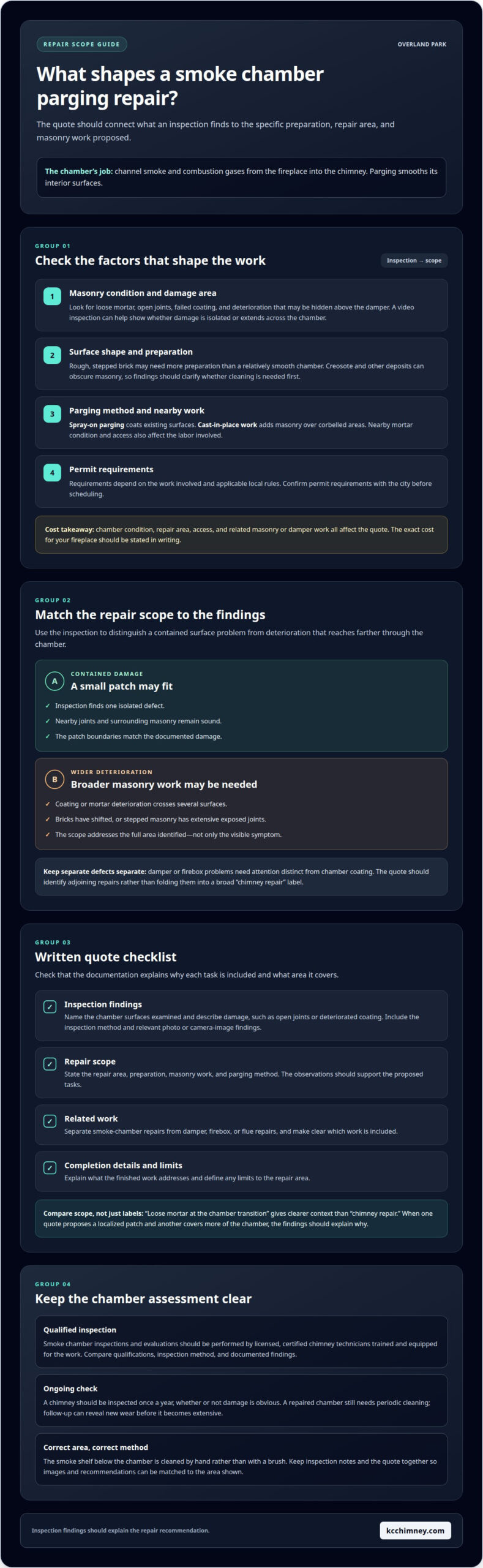
Small patch versus full repair
A small patch may fit when an inspection shows one isolated defect and the surrounding smoke-chamber masonry remains sound. For example, a limited area of failed parging with firm nearby joints may need less work than a chamber with widespread loose mortar. A camera inspection can show whether the visible damage continues behind or above the affected spot.
Broader repairs are more likely when deterioration crosses several surfaces, bricks have shifted, or the chamber’s stepped masonry has extensive exposed joints. In those cases, covering one damaged area could leave nearby defects untouched. The repair scope should address the full area identified in the inspection, rather than treating a visible symptom without considering the surrounding structure.
- Localized damage: A contained patch may suit one small failure where adjacent masonry is stable.
- Widespread wear: Deteriorated coating across multiple surfaces points to more extensive parging.
- Structural concerns: Loose or displaced masonry can require repair beyond a surface patch.
- Related defects: Damper or firebox problems need separate attention from chamber coating.
A chimney inspection helps distinguish these conditions before work begins. A chimney sweep can examine the chamber and identify whether deposits, blocked views, or hidden damage affect the assessment. The smoke shelf below the chamber is cleaned by hand rather than with a brush, keeping the inspection focused on the correct area.
Annual inspections matter even after parging. A repaired chamber still needs periodic cleaning, and a chimney should be inspected once a year, whether or not damage is obvious. Follow-up can reveal new wear before it becomes extensive. If a patch is proposed, its boundaries should match the documented damage; if the findings show widespread deterioration, the scope should explain how the broader repair addresses it.
What is chimney smoke chamber parging and when is it needed?
The smoke chamber sits above the fireplace damper, where smoke and combustion gases begin moving into the chimney. Its sloped interior guides those gases upward. In a corbelled chamber, brick steps create corners and exposed mortar joints. These irregular surfaces can collect combustion byproducts, including creosote, rather than providing a smooth path.
Parging applies a masonry coating to the chamber’s interior to cover uneven joints and create a smoother surface. Spray-on parging coats existing chamber surfaces. Cast-in-place parging adds new masonry over corbelled surfaces and can also strengthen older or damaged chambers. The appropriate method depends on the masonry’s condition and the chamber’s shape.
Local construction can help explain why this work comes up during inspections. In Mission, Kansas, some smoke chambers in 1950s tract housing have rough, stepped brick rather than smooth, sloped walls. The age of a home alone doesn’t establish a need for parging. The chamber’s actual surface and masonry condition guide the repair decision.
The 2006 NFPA-211 Code Book addresses smoke chamber parging in section 11.2.1.13. That reference helps identify where the subject appears in the code book; it does not, by itself, establish what work a particular existing fireplace needs. An inspection should document the chamber’s construction, surface condition, and any deterioration before repair scope is set.
A video camera inspection can show interior surfaces that are difficult to assess from the fireplace opening. This is useful when rough brick, open joints, or damaged coating appear farther inside the chamber. The findings help distinguish a chamber that needs parging from one whose visible irregularities are part of its construction.
For an assessment of your fireplace’s smoke chamber, arrange a chimney inspection and use its documented findings to understand whether parging is appropriate.
Best Chimney Services
Best Chimney Services helps homeowners understand chimney inspection findings and related maintenance needs. If an inspection identifies concerns beyond the smoke chamber, chimney sweeping can address routine chimney care, while chimney relining may be relevant when the flue needs attention. Crown repair addresses a separate issue at the chimney top. The right next step depends on the documented findings, so keep the repair scope focused on the identified condition rather than combining unrelated work.
For help understanding how chamber concerns relate to the rest of your fireplace system, contact Best Chimney Services. Share the inspection findings or quote details, and the team can explain the chimney services relevant to your fireplace.
Make Your Next Chimney Decision With Confidence
Knowing what shapes smoke chamber parging cost in Overland Park can help you focus on the key decision: whether the proposed work matches your fireplace’s condition. Treat the written scope as a tool for understanding the repair, not just a figure to approve. A clear explanation gives you a sound basis for deciding how to proceed and keeping records for future chimney care.
If you’re weighing a recommendation, the next useful step is to discuss the specific findings and how they relate to your fireplace. Best Chimney Services can explain the chimney work that fits those findings, including sweeping or relining where relevant.
Contact Best Chimney Services to discuss your chimney concerns and decide on a practical next step. A well-informed decision starts with clear findings and a scope you understand.
Frequently Asked Questions
What is a smoke chamber?
A smoke chamber is the transition space between the fireplace opening and the chimney flue. It sits above the damper, while the smoke shelf is below it. These nearby parts have different roles, so a visible issue near the damper doesn’t automatically show which surface needs attention. A documented inspection can locate the concern and distinguish chamber findings from flue or smoke-shelf conditions.
What factors affect smoke chamber parging cost, such as size, access, and damage?
The chamber’s dimensions affect how much surface needs treatment, while access can shape the preparation and labor involved. Damage matters because a limited area of failed coating differs from deterioration involving adjoining masonry. For example, a larger chamber with several affected surfaces may require a broader scope than a small, localized defect. The written quote should connect these conditions to the proposed work.
What materials and methods do chimney contractors use for smoke chamber parging?
Masonry material can be applied as a spray-on coating or through cast-in-place work, depending on the chamber’s construction and condition. Spray-on application covers existing surfaces; cast-in-place work adds masonry over corbelled areas. In a quote, look for the method and the surfaces it addresses. This wording helps clarify whether the proposal targets an uneven finish, damaged masonry, or both.
How do smoke chamber parging costs compare with smoke chamber repair or rebuilding?
Parging addresses the chamber’s interior surface, while repair or rebuilding can involve more extensive masonry work. A rebuild may be considered when deterioration extends beyond a coating or localized defect. Cost depends on the chamber’s condition, access, and scope; a written quote should state the cost for your case. Compare the described work, not just the labels used for each option.
What risks come from delaying smoke chamber parging or repair?
Delaying repair can leave loose mortar, open joints, or failed coating untreated, allowing a localized problem to become more extensive. Exposed joints in corbelled chambers can also collect combustion byproducts, while a patch may leave nearby defects unaddressed.