
A cracked brick can be more than a cosmetic flaw: movement in Johnson County’s clay soil may affect masonry as the soil swells when wet and shrinks when dry. Masonry repair in Overland Park, KS, starts by identifying whether damage is limited to brick and mortar or points to a deeper issue. The price depends on the damage, access, and whether its cause also needs attention. Best Chimney Services provides transparent pricing with no hidden fees, with a project-specific estimate based on the work.
It’s understandable to wonder whether a crack can wait. Small, stable damage may be mainly an appearance concern, while cracks that spread, return, or appear with loose mortar need closer attention. This guide explains what affects brick repair costs, what a masonry assessment looks for, and how upkeep can help protect brickwork. You’ll also learn when a chimney-related masonry concern calls for specialized care and what to consider before taking the next step.
Key Takeaways
- Compare the scope of brick or stone repair before weighing an estimate: replacing damaged units and repairing mortar are different kinds of work.
- Learn how tuckpointing renews failing mortar joints and what signs can help distinguish mortar wear from brick damage.
- Plan the work around site access, material matching, and cleanup so the repair fits the home and its surroundings.
- Recognize when a chimney concern calls for chimney-specific care, such as sweeping, crown repair, or relining, rather than general masonry work.
How much does brick repair cost?
In Overland Park, work can include brick and stone replacement, mortar repair, and repairs to chimneys, steps, porches, or other structures.
Kansas weather can affect repair needs: Johnson County clay soil swells when wet and shrinks when dry, which can contribute to masonry movement. Freeze-thaw cycles also make sound drainage and stable support important for retaining walls.
Brick and Stone Replacement
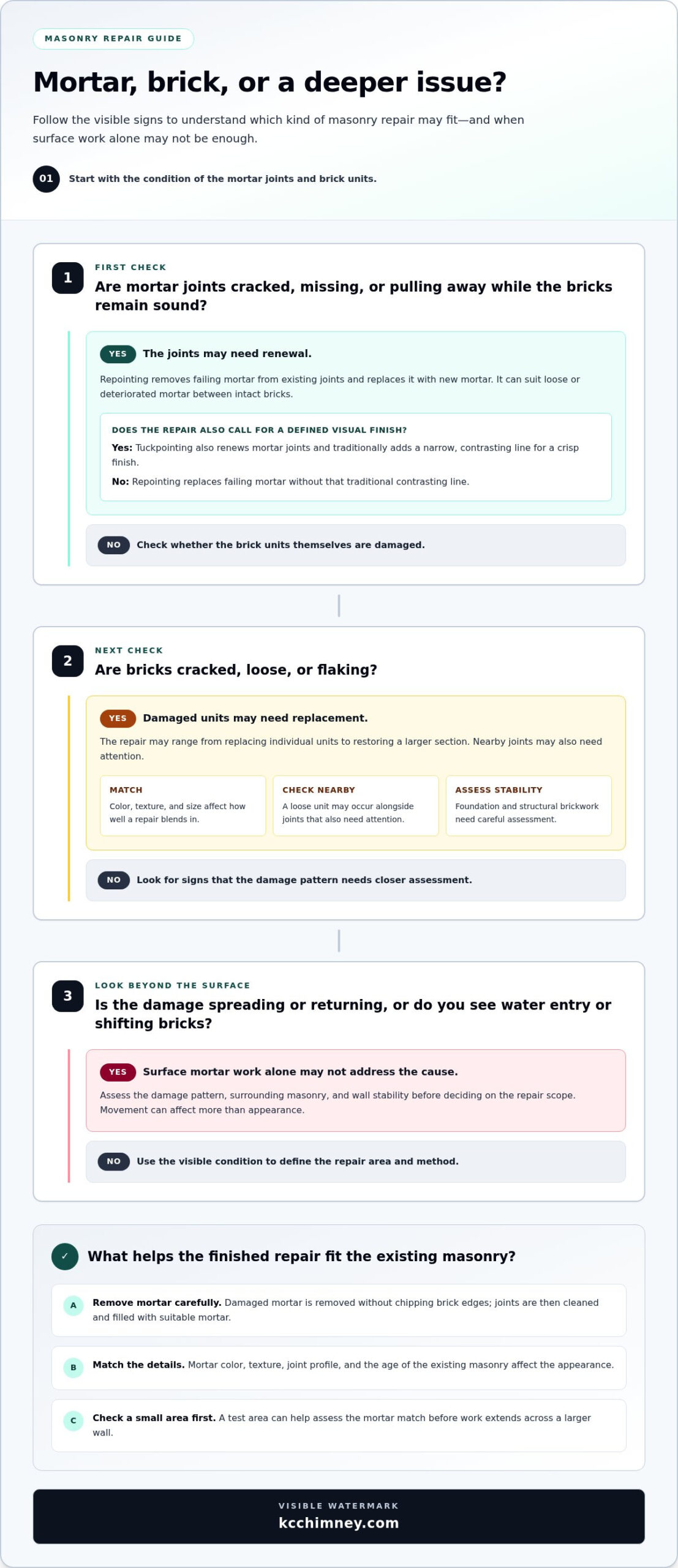
Brick and stone repair can range from replacing individual damaged units to restoring a larger section. An assessment considers whether bricks are cracked, loose, or flaking, as well as the surrounding mortar and wall stability. Matching the existing material matters: differences in color, texture, and size can make even a small repair stand out on a brick-and-stone exterior.
Look at the damage pattern, not just one chipped face. A loose brick beside a window, for example, may also require attention to nearby joints. Foundation and structural brickwork need careful assessment because movement can affect more than appearance. Brick steps and porches also depend on stable support beneath the visible surface.
Cost Factors for Brick Repairs
The repair area, number of units, access, and material match all affect the price. Replacing a few reachable bricks differs from rebuilding a section around a chimney or repairing elevated masonry. Stone may require extra care to match its shape and finish. A clear scope identifies the damaged areas and explains which work addresses them.
Outdoor kitchens may include details such as stone veneer, brick surrounds, and joints exposed to weather. Foundation repairs can involve underlying movement, not just surface replacement. These differences are why a general benchmark cannot set the price for every project. For masonry repair in Overland Park, KS, describe the affected structures and show where cracks or loose units appear when requesting an estimate.
Tuckpointing and repointing
Mortar joints help hold brickwork together and keep water from entering the wall. In Overland Park, a contractor may recommend joint repair when mortar is cracked, missing, or pulling away, while bricks remain sound. The right scope depends on whether deterioration affects the joints alone or the masonry units too.
Repointing removes failing mortar from existing joints and replaces it with new mortar. Tuckpointing also renews mortar joints, traditionally adding a narrow, contrasting line for a crisp visual finish. Full brick replacement removes damaged units and installs matching replacements, making it suitable when the bricks themselves have deteriorated.
For example, loose mortar between intact bricks may call for repointing rather than replacing the whole wall. If several bricks are broken, the damaged units may need replacement before the joints are finished. Tuckpointing may suit a repair that also calls for a defined appearance. These methods address different conditions and are not interchangeable.
A sound installation starts with carefully removing damaged mortar without chipping the brick edges. The joints are then cleaned and filled with suitable mortar, and the surface is shaped to match the surrounding construction. Color, texture, joint profile, and the age of the existing masonry all affect the final appearance. A small test area can help assess the mortar match before work extends across a larger wall.
Inspect the pattern before deciding: one eroded joint differs from widespread gaps around a chimney or foundation. Water entry, recurring cracks, or shifting bricks can indicate that surface mortar work alone will not address the cause. In older Kansas City masonry, preserving sound brick while renewing failed joints can retain more of the original material.
For deteriorated joints on a chimney, chimney tuckpointing can be part of targeted masonry maintenance. Matching mortar and joint shape helps the repair sit naturally beside the existing brickwork.
Project planning, installation, and cleanup
Permit requirements for masonry projects in Overland Park depend on the scope of work and applicable local rules. Distinguish surface mortar repairs from structural changes before planning the project.
Start with a written scope that identifies the affected area, repair method, and materials. For example, a proposal for a loose retaining wall should address both the visible masonry and the wall’s support and drainage. Retaining walls need a compacted base and drainage to address soil movement and freeze-thaw cycles.
Site access also shapes the work. Note nearby doors, windows, garden beds, and outdoor surfaces that need protection. A narrow side yard can affect how materials reach a residential wall, while a patio may need protection from dust and mortar debris. Clearing the work area helps protect belongings and landscaping.
Weather matters during installation: wet conditions can affect the work area, and temperature changes influence masonry exposure. Plan around the forecast and repair method rather than selecting a date without considering site conditions. In Overland Park, local clay soil swells when wet and shrinks when dry, so movement around a wall may inform the repair plan.
Before work begins, agree on how the crew will protect the site, handle removed material, and leave the area. Ask for the repair limits to be marked clearly. If a porch needs several loose bricks replaced, for instance, define which steps and adjacent joints are included. This helps prevent confusion about the finished work.
At completion, review the repaired area for consistent joints, secure units, and debris removal. Check that outdoor paths are clear and materials have not been left against the wall. For a retaining wall, make sure drainage routes remain unobstructed. These practical checks help confirm the planned work is complete and the space is ready to use.
Masonry maintenance in Overland Park
Natural biological and chemical weathering gradually wears masonry, including brick, stone, and mortar. In Overland Park, maintenance starts with looking for changes: open joints, loose units, surface flakes, or persistently damp areas. These clues help distinguish routine wear from damage that may need closer assessment. Check the same wall after wet weather and during dry conditions to spot changes.
Age and material offer useful context. Brick in older neighborhoods near downtown Overland Park and Nall Hills is described as 60 to 70 years old. The northern area includes many 1950s and 1960s ranches and split-level homes with brick fronts. Newer construction south of 135th Street includes manufactured stone homes, where maintenance should account for veneer details as well as visible surfaces.
For stone veneer, check whether water can drain properly. Missing or improper flashing or a weep screed can create problems in newer Overland Park homes. An assessment of a veneer wall should look beyond its face to how water is directed away. Concrete near the wall, such as a patio or walkway, can also show where water collects after rain.
Retaining walls need attention to both the masonry and surrounding conditions. Look for leaning sections, displaced blocks, and blocked drainage paths. A stable-looking face does not show whether water is escaping behind the wall. If movement appears, note its location and pattern before planning repair or rebuilding.
Deferred repairs can allow deterioration to worsen exponentially. Periodic maintenance helps new and historic masonry perform well for decades or centuries. Addressing deteriorated mortar before adjacent units loosen can limit how much original material needs attention. For chimney concerns involving a damaged chase cover, arrange chase cover replacement to address that specific part of the structure.
Best Chimney Services: Chimney Sweeping
Best Chimney Services helps homeowners with chimney upkeep through sweeping, relining, and crown repair. If a masonry concern involves the chimney, identify whether you see damaged mortar, a worn crown, or signs that the flue needs attention. These issues call for different work, and a chimney assessment can help clarify the next step.
Chimney sweeping addresses buildup inside the flue, while chimney relining serves a different part of the system. Crown repair focuses on the masonry top that protects the chimney. For example, crumbling at the crown differs from deteriorated mortar in the chimney wall, even if both appear near the roofline.
For chimney-specific care, contact Best Chimney Services or visit kcchimney.com.
Protect the next step in your home’s care
Make the next decision with a clear view of what needs attention. Note where you see changes, take photos, and track whether the damage grows or returns. This gives you a practical starting point for discussing masonry repair in Overland Park, KS, and helps distinguish chimney concerns from broader brickwork needs.
For chimney-related care, Best Chimney Services offers chimney sweeping, chimney relining, and gas fireplace inserts. These services address fireplace and chimney needs rather than general masonry construction. If your concern involves the chimney system, choose a next step that fits the issue and supports a careful assessment.
Contact Best Chimney Services to discuss chimney care for your home. A clear plan can help you move forward with confidence and protect the place you call home.
Frequently Asked Questions
Are cracked bricks a problem?
Cracked bricks can signal a problem, especially when cracks spread, return, or appear with loose units or failing mortar. A crack limited to one brick may differ from a pattern crossing several courses. Photograph the area and note whether the crack changes after wet weather. Movement, water entry, or damage near a chimney or foundation deserves prompt attention.
What is the average cost of masonry repair in Overland Park, KS?
This is a broad benchmark for brick repair, not a quote for chimney work or a particular home. For masonry repair in Overland Park, KS, the price depends on the damaged area, access, materials, and repair scope. Best Chimney Services provides transparent pricing with no hidden fees and a project-specific estimate based on the work.
What do Overland Park masonry contractors charge for brick, stone, and chimney repairs?
There is no single charge for every brick, stone, or chimney repair. The price depends on the type and extent of damage, material matching, access, and whether the work involves mortar joints, chimney components, or replacement masonry. Best Chimney Services provides transparent pricing with no hidden fees, with a project-specific estimate based on the work.
Which masonry repair contractors in Overland Park are licensed, insured, and well reviewed?
Best Chimney Services states that its technicians are insured and certified, and that its professionals hold CSIA certification. The company’s homepage displays 184 Google reviews. The information provided does not establish a licensing claim, so don’t treat the word “licensed” as confirmed here. For homeowners in Overland Park, Mission Hills, Stilwell, Bucyrus, and Spring Hill, those stated credentials and reviews offer specific details to consider.
What are the signs that brick or stone masonry needs repair?
Cracked bricks, damaged mortar, leaks, odors, or smoke backflow can signal a need for chimney repair. On a stone wall, watch for loose veneer, displaced pieces, and damp areas that persist after rain. A practical first step is to photograph the condition and note its location, such as near a window, roofline, or fireplace. This record can help clarify what has changed.
How can homeowners compare masonry repair estimates and warranties in Overland Park?
Compare estimates by matching their scope, materials, and cleanup details, not just the total. Check that each describes the same damaged areas and distinguishes mortar work from unit replacement. Review any written warranty terms for covered work, exclusions, and duration. Best Chimney Services provides transparent pricing with no hidden fees; its estimate can help define the proposed chimney-related work.