
A small crack in your chimney may point to damage beyond the spot you can see. A chipped brick or worn mortar joint might be a localized issue, while water stains, loose masonry, or damage near the crown can call for a closer assessment. For homeowners considering masonry repair in Mission Hills, the challenge is working out which signs need attention and what kind of repair fits the problem.
The right repair starts with identifying the location and likely source of the damage, not guessing from one visible symptom. An inspection can help determine whether the chimney needs focused tuckpointing, crown repair, or a closer look at its internal condition.
This guide covers warning signs to look for, how common chimney repairs differ, and how to prepare for local service. You’ll learn what information to document and which questions can help you understand a proposed scope, so you can plan work around the chimney’s condition rather than assume it needs more repair than it does.
Key Takeaways
- Look for missing mortar, cracked or loose bricks, staining, and other visible deterioration. One sign alone does not establish the full repair scope.
- Water can contribute to masonry damage. The right repair depends on which chimney component is affected.
- Tuckpointing, crown repair, brick repair, and relining serve different purposes. They are not interchangeable fixes.
- For masonry repair in Mission Hills, document symptoms, review the proposed scope, and discuss access before work begins.
- Best Chimney Services provides chimney inspections, including video inspections, to assess conditions and guide next steps.
Masonry Repair in Mission Hills: Recognize Chimney Damage That Needs Attention
Missing mortar, cracked or loose bricks, stains, and visibly worn areas can all signal a chimney problem. A single symptom cannot show what caused the damage or how much repair is needed. A surface mark may be cosmetic, while a loose brick or open joint may affect stability or allow water to enter. Have chimney masonry damage assessed promptly, since a visible symptom may be only one part of a larger issue.
Chimneys combine masonry units and mortar joints, materials used in structures ranging from walls to chimneys, as described in this general overview of Masonry. Notice what has changed and where. Then have the relevant chimney components assessed instead of choosing a repair from appearance alone.
Which visible chimney masonry problems should homeowners notice?
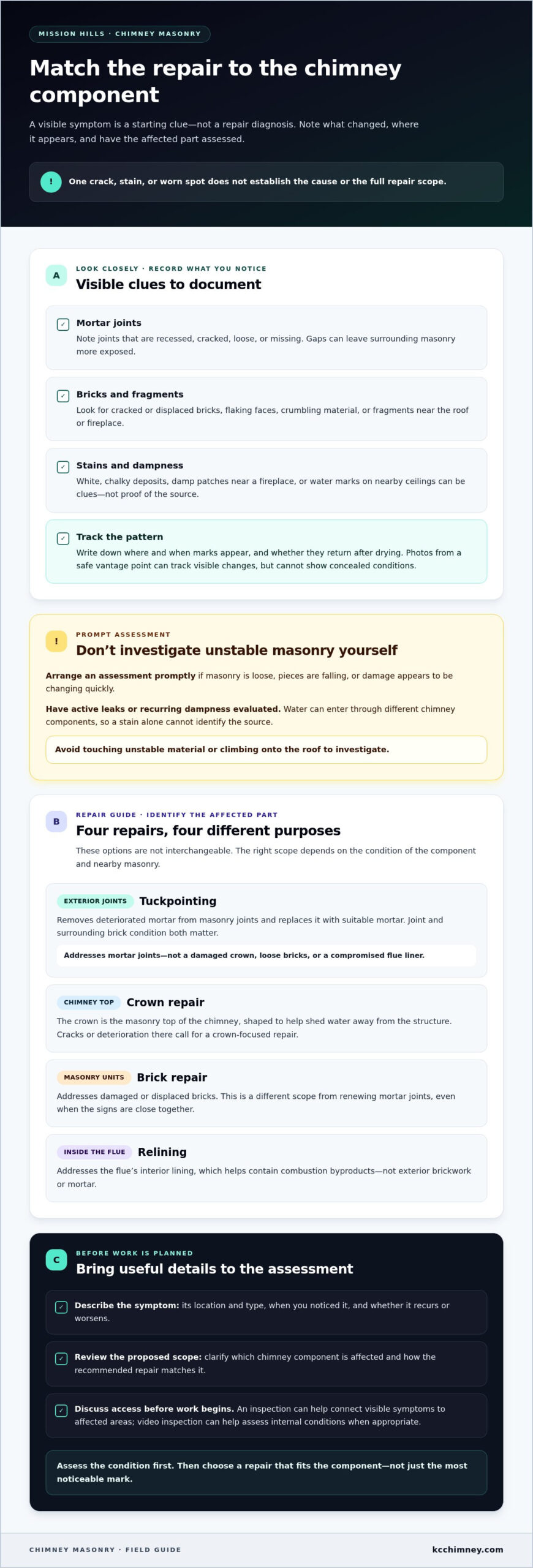
Look for mortar joints that are recessed, cracked, loose, or missing. Gaps or joints worn back from the brick face can leave the surrounding masonry more exposed. Cracked or displaced bricks deserve attention too: a brick shifted out of line is different from discoloration on an even surface. Record flaking brick faces, crumbling material, and fragments on the roof or near the fireplace.
Stains can help identify where to investigate, but they do not establish the cause. White, chalky deposits on masonry, damp patches around a fireplace, or water marks on nearby ceilings may point to moisture. These interior signs are clues, not proof that the chimney masonry is the source. Note where and when marks appear and whether they return after drying. Photographs taken from a safe vantage point can help track visible changes, but they cannot show concealed conditions.
When does chimney masonry damage call for prompt attention?
Arrange an assessment promptly if masonry is loose, pieces are falling, or damage appears to be changing quickly. These signs may indicate a more serious concern than surface wear. Avoid touching unstable material or climbing onto the roof to investigate.
Active leaks and recurring dampness also need professional evaluation. Water can enter through different parts of a chimney, so a stain alone cannot identify the source or show whether the masonry, crown, or another component needs attention. A chimney inspection helps connect visible symptoms with affected areas and determine the next step.
If you’re considering masonry repair in Mission Hills, keep a brief record of the location and type of damage, when you noticed it, and whether it recurs or worsens. This gives the inspection a useful starting point. An assessment can help distinguish surface wear from damage that needs repair.
How Chimney Masonry Damage Develops and Which Repairs Address It
Water is a common contributor to chimney masonry deterioration. If it enters through an opening or damaged component, repeated exposure can weaken mortar joints and affect brick surfaces over time. A visible crack, however, does not establish where water entered or how far the damage extends. The CPSC chimney inspection warning underscores the value of inspecting chimneys for damage rather than relying on their appearance from the ground.
The appropriate repair depends on which part of the chimney is affected. Exterior mortar, the masonry crown, individual bricks, and the flue liner have different functions, so one repair cannot substitute for another. An assessment connects the observed condition to the affected component and repair scope.
What is tuckpointing, and when can it address chimney mortar damage?
Tuckpointing removes deteriorated mortar from masonry joints and replaces it with suitable mortar. It can renew joints when the surrounding brickwork is appropriate for that repair, but not every crack or damaged area is a tuckpointing candidate. The condition of both the joints and the surrounding masonry matters. Learn more about Kansas City tuckpointing work to understand this chimney-specific repair.
Tuckpointing addresses deteriorated mortar joints, not a damaged crown, loose bricks, or a compromised flue liner. The joints and adjacent masonry should be considered together. Replacing mortar alone will not correct a separate problem in another chimney component.
When might a chimney crown or other component need repair?
The crown is the masonry top of the chimney, shaped to help shed water away from the structure. Cracks or deterioration there call for a crown-focused repair, while damaged or displaced bricks may need brickwork addressed. These scopes differ from renewing mortar joints, even when the symptoms appear close together. Crown repair addresses the chimney top; brick repair addresses damaged masonry units.
Relining is different again. The flue liner is inside the chimney and helps contain combustion byproducts; it is not the exterior brickwork or mortar. Relining addresses the flue’s interior lining, not exterior masonry damage. A chimney inspection, including video inspection when appropriate, can help assess internal conditions separately from visible exterior wear.
For masonry repair in Mission Hills, avoid choosing a repair based only on a photograph or one symptom. Best Chimney Services provides chimney tuckpointing and crown repair. An inspection can help identify which part of the chimney needs attention. Learn more about chimney care and repair at Best Chimney Services.
Compare Chimney Masonry Repair Options for a Mission Hills Home
A repair recommendation should match the affected chimney component, not just the most noticeable mark. Tuckpointing, crown repair, brick repair, and relining address different conditions. A small visible defect does not automatically mean the chimney needs a full rebuild. Inspection findings and the extent of deterioration help determine whether work can stay focused or needs to cover multiple components.
| Observed condition | Likely repair category | Purpose | Assessment caveat |
|---|---|---|---|
| Deteriorated mortar joints | Tuckpointing | Renew affected joints | Joint condition and mortar suitability guide the approach. |
| Cracks or deterioration at the chimney top | Crown repair | Address the masonry crown | An inspection should establish the extent and source of damage. |
| Cracked, loose, or displaced bricks | Brick repair | Repair or replace affected masonry units as appropriate | Nearby joints and surrounding masonry may also need assessment. |
| Concern inside the flue | Relining | Address the chimney’s interior liner | Exterior masonry signs alone cannot determine liner condition. |
Tuckpointing or broader chimney masonry repair: what is the distinction?
Tuckpointing is mortar-joint work, not a catch-all term for every chimney defect. If the crown, bricks, or other components are also affected, the scope may extend beyond the joints. That does not mean every chimney needs extensive work. Inspection findings determine which areas need attention. A chimney repair guide for Kansas City homeowners can help clarify how broader chimney repair differs from focused tuckpointing.
How does a professional assessment clarify the repair scope?
Visible exterior conditions help direct an inspection, but they do not settle the diagnosis. A cracked crown, for example, may warrant a closer look at nearby masonry. Concerns about the flue call for attention to the chimney’s interior. Video inspection can help examine internal conditions when appropriate. The Kansas City chimney inspection guide explains how findings inform next steps.
The Chimney Safety Institute of America (CSIA) offers chimney safety information that can help homeowners understand why an assessment matters. For masonry repair in Mission Hills, the practical goal is a clear scope tied to the observed condition, not a predetermined repair size. Best Chimney Services provides chimney inspections and chimney repair to help identify affected components and plan appropriate work. Visit Best Chimney Services for help with chimney repair decisions.
Plan Chimney Masonry Repair in Mission Hills: Scope, Safety, and Preparation
A clear repair plan starts with useful observations, followed by an assessment and a defined scope of work. You do not need to diagnose the chimney yourself. Your notes can explain what you’ve noticed, while an inspection identifies which components need attention. For masonry repair in Mission Hills, the plan depends on the chimney’s condition, the areas affected, and the access required to complete the work.
What information helps clarify a chimney repair project?
Before the service visit, note when you first saw the damage and whether it has changed. Record where staining or leakage appears, whether it returns after drying, and whether you see signs inside or outside the home. Take photographs from the ground or another safe location. Do not climb onto the roof or approach loose masonry for a closer view.
Share relevant chimney history, such as earlier repairs or recurring moisture concerns. Describing what you observed can help guide the assessment, even if you are unsure whether a detail matters.
What should homeowners expect from inspection through repair planning?
The visit begins with examining visible chimney conditions and identifying which components may be involved. Findings may point toward a repair category, such as tuckpointing or crown repair, or show that further assessment is needed. The goal is to connect proposed work to observed conditions instead of assuming one symptom explains the whole chimney.
Use this four-step plan to prepare and follow the project:
- Document symptoms: Note locations, when the damage appeared, and whether dampness or staining recurs.
- Arrange an assessment: Share your observations and let the chimney’s condition guide the evaluation.
- Review the scope: Understand which components are affected, what repair category is proposed, and whether further assessment is needed.
- Plan repair access: Discuss how the work area will be reached and prepared, since access can affect the project plan.
Consider access before work begins. The affected area may be near the top of the chimney, along its exterior, or inside the flue, and each location can require a different plan. Do not try to clear loose masonry or make temporary repairs yourself. Leave unstable areas undisturbed and point them out during the visit. The repair plan should reflect both the condition found and the access required.
A project-specific assessment also helps set expectations without relying on a generic price or timeline. The proposed work should identify the relevant components and explain why they need attention. If inspection findings reveal concerns beyond the area first reported, clarify the scope before planning the repair.
Best Chimney Services provides chimney inspections and chimney repair in Mission Hills and the Kansas City metro. Request local chimney service to start planning an assessment for your home.
Arrange Chimney Masonry Repair in Mission Hills with Best Chimney Services
Best Chimney Services is a locally owned Kansas City metro business serving Mission Hills and nearby communities. Its chimney work includes tuckpointing, crown repair, chimney repair, and chimney inspections. This chimney-specific service helps homeowners move from noticing a concern to understanding which part of the chimney needs attention.
Which Best Chimney Services offerings relate to chimney masonry?
Tuckpointing addresses deteriorated mortar joints, while crown repair focuses on damage to the masonry at the top of the chimney. When the concern involves another area, chimney repair addresses the affected component based on inspection findings. These services are not interchangeable, so identifying the location and nature of the damage helps shape the repair plan.
A chimney inspection provides a starting point for understanding visible conditions before repair planning. If internal conditions need a closer look, video inspection equipment can help examine the inside of the chimney. Where appropriate, the assessment considers what is visible outside alongside relevant internal findings. This keeps the repair discussion focused on the chimney’s condition rather than treating every masonry symptom as the same job.
How can Mission Hills homeowners take the next step?
When arranging an assessment, describe what you’ve noticed. You might mention where mortar appears recessed, whether a stain returns, or if a crack or other visible change seems to be progressing. Photos taken from a safe location can also help show what caught your attention. You do not need to determine the cause or choose a repair before the chimney is assessed.
Inspection findings help clarify which chimney components are involved and whether the next step is a focused repair or a broader scope. Recommendations should reflect the chimney’s observed condition and the project’s needs. Reviewing those findings before planning work gives you a clearer understanding of what the repair addresses and why.
For masonry repair in Mission Hills, an assessment helps plan work around the actual condition of the chimney. Best Chimney Services provides local Kansas City metro chimney inspections and repair, including tuckpointing and crown repair. Describe the concern and arrange an assessment to get started.
Ready to discuss a chimney concern at your Mission Hills home? Schedule chimney service with Best Chimney Services and take the next step toward a clear, project-specific repair plan.
Take the Next Step Toward a Well-Planned Chimney Repair
A chimney concern can feel uncertain until you know what needs attention and why. Rather than guess at the repair, start by understanding the chimney’s condition and the work that may be needed.
For masonry repair in Mission Hills, a focused assessment can connect the visible issue to the affected chimney components. From there, you can review the proposed scope and how the work addresses the condition. That clarity helps you make an informed plan while keeping your home’s safety and protection in mind.
Best Chimney Services provides chimney inspections and repair to help you plan around the project’s findings. Arrange chimney masonry service with Best Chimney Services to discuss your chimney and plan the next step.
Frequently Asked Questions
Is cracked chimney mortar dangerous?
Cracked or missing mortar can leave joints vulnerable to further deterioration, but appearance alone cannot establish whether the chimney is structurally unsafe. Do not pull at loose joints or masonry to test them. If cracks are changing, bricks appear unstable, or fragments are falling, keep clear of the area and arrange an assessment promptly. An in-person evaluation can determine whether repair is needed and what work is appropriate.
Can tuckpointing stop a chimney leak?
Tuckpointing may help if water is entering through deteriorated mortar joints, but it cannot be assumed to stop every chimney leak. Water may enter around another component, such as the crown or flashing. Renewing sound joints will not correct a separate opening elsewhere on the chimney. An assessment helps identify the affected area so the repair can address the likely source, not just the most visible symptom.
How long does chimney masonry repair take?
Repair duration depends on the affected components, amount of work, access to the chimney, and site conditions. A focused mortar repair and work involving several chimney areas are different projects, so a standard time estimate will not fit every home. Best Chimney Services can explain the expected work after assessing the chimney and defining the repair scope, giving you a project-based expectation.
Does a cracked chimney crown mean the chimney needs rebuilding?
No. A visible crack in the crown does not by itself show that the entire chimney needs rebuilding. The recommendation depends on the crown’s condition, nearby masonry, and any other affected components. An assessment can determine whether crown repair is suitable or whether the findings point to a broader scope. A ground-level view or photograph alone cannot reveal the chimney’s full condition.
How much does masonry repair in Mission Hills cost?
There is no useful one-size-fits-all price for masonry repair in Mission Hills. Cost depends on the type and extent of damage, which chimney components need work, access, and the repair required. Homeowners in Mission Hills, Overland Park, Stilwell, Bucyrus, and Spring Hill can arrange an assessment to define the project scope. Best Chimney Services can then discuss a repair plan for the chimney based on its condition.
Can chimney masonry be repaired during winter in Mission Hills?
Whether a repair can proceed during winter depends on the weather, site conditions, materials, and work involved. The suitable timing depends on the specific chimney and repair plan, not the season alone. If water is entering or masonry is loose, seek an assessment rather than assuming the weather rules out attention. Keep clear of unstable areas while arranging the next step.