
If you’re wondering how to keep birds out of chimney openings, the safest first step may be to leave the chimney alone. Chirping or fluttering can raise concerns about smoke, odors, debris, or blocked venting, but sealing an occupied flue can put birds at risk and create a hazard in your home. Before taking action, find out whether a bird or nest may already be inside.
A properly fitted chimney cap can help prevent birds from entering while allowing the chimney to vent as intended. Timing matters: if you hear activity, don’t remove a nest or cover the opening. Chimney Swifts and their nests are federally protected, and birds can be difficult to identify from below. Avoid disturbing wildlife and seek appropriate guidance before any work begins.
This guide explains how to prevent birds from entering a chimney, what to do if you suspect a bird or nest is inside, and when a professional inspection can help. You’ll also learn how chimney cap installation can protect a clear flue without interfering with proper fireplace use.
Key Takeaways
- Unfamiliar calls, movement, or debris can point to activity in the flue, but sounds alone may not identify what’s inside.
- A suitable chimney cap can deter birds while allowing exhaust to flow.
- If you suspect a bird, nest, or blockage, don’t light a fire or seal the chimney before the situation is assessed.
- Look for visible cap damage from the ground, and arrange an inspection if you’re unsure about activity or an obstruction inside.
- Best Chimney Services provides chimney cap installation, inspections, and sweeping for Kansas City-area homeowners.
Why Birds Enter Kansas City-Area Chimneys, and What Homeowners Should Notice
Chirping, fluttering, or light tapping near the fireplace can make you wonder what’s happening above the firebox. You might also find small pieces of nesting material near the hearth or notice birds gathering around the chimney outside. These signs are worth noting, but they don’t confirm that a bird, nest, or blockage is present.
The chimney opening leads into the flue, the passage that carries smoke and exhaust out of your home. Without suitable protection, the opening can provide access to a sheltered space. Birds are one possible source of activity, but wind, loose chimney components, or debris can also cause unexpected sounds. An inspection can help distinguish between these possibilities.
How to Recognize Possible Bird Activity in a Chimney
Listen for chirping or fluttering that seems to come from the flue, and watch from a safe place for birds entering or leaving the chimney. Nesting material near the fireplace may be another clue. Sounds and debris can have other causes, so don’t treat either as proof of what’s inside. Observe from indoors or the ground rather than climbing onto the roof.
Why Chimney Openings Can Attract Birds
An uncovered chimney can resemble a sheltered hollow, protected from some weather and disturbances. Chimney Swifts are associated with chimneys; the Chimney Swift Wikipedia page describes their habitat and migratory patterns. Whether birds can enter depends in part on the chimney’s design and condition, and a sound or ground-level view alone can’t confirm what’s happening inside.
For homeowners considering how to keep birds out of chimney openings, a properly fitted cap is a practical prevention measure. The cap must fit the chimney’s configuration and deter entry without blocking the flue’s exhaust path. If you can’t tell what type of opening or protection your chimney has, an inspection can help identify the appropriate next step.
Pay attention to changes in fireplace operation. If smoke enters the room, you notice an unusual odor, or you suspect something is blocking the flue, stop using the fireplace until the cause has been assessed. Don’t try to clear a suspected obstruction by lighting a fire or reaching into the chimney. Video inspection equipment can help assess internal conditions when the source of a concern isn’t visible.
How a Chimney Cap Helps Keep Birds Out Without Blocking the Flue
A chimney cap fits over the chimney’s top opening. It helps keep birds and other debris out while leaving a clear path for smoke and exhaust to escape. A properly selected and installed cap can help keep birds out of chimney openings, but it must suit the chimney and the appliance venting through it.
An improvised cover, such as a board or material placed over the opening, isn’t a safe substitute. It may block exhaust, interfere with fireplace operation, or create other hazards. Even a purpose-made cap needs to match the chimney configuration. If you suspect a bird or nest is already inside, have the situation assessed before covering the opening. Chimney Swifts and their nests are protected, as described by the U.S. Fish & Wildlife Service on Chimney Swifts.
What to Look for in a Bird-Resistant Chimney Cap
A suitable cap should fit securely, use durable construction, and have openings designed for the particular chimney system. Screening can help deter entry, but it isn’t automatically suitable for every flue or appliance. The design must allow exhaust to flow as intended. Don’t choose a cap based only on appearance or assume that one size or screen design fits every chimney.
Why Fit and Inspection Matter
A cap that has loosened, shifted, or become damaged may leave gaps birds can use to enter. An inspection can assess the cap, flue, and visible parts of the chimney for wear, obstruction, or a mismatch with the chimney setup. Best Chimney Services uses video inspection equipment to assess internal chimney conditions when needed.
Consider existing bird activity before installing a cap. A cap is a prevention measure for a clear opening, not a way to trap or seal in a bird. Best Chimney Services provides chimney inspections to assess your chimney’s condition. Once the opening is clear, a properly fitted cap can help protect the flue while preserving its intended venting function. Learn more through the Kansas City chimney inspection service.
Birds in the Chimney: Safe Responses, Risks, and Common Mistakes
Preventing a bird from entering an empty chimney is different from responding to a bird or occupied nest already inside. A cap can help deter future entry, but installing one before checking for activity could trap wildlife or obstruct a flue. If you hear movement or suspect a nest, pause fireplace use and don’t try to solve the problem from the roof or hearth.
What to Do if You Hear or See a Bird Inside
Keep children and pets away from the fireplace opening, and don’t reach into the firebox or flue. Don’t light a fire, use smoke, or use tools to encourage a bird to leave. Stop using the fireplace until the source of the activity and the flue’s condition have been assessed. A chimney inspection can help identify a nest or obstruction. Wildlife guidance may also be needed to determine the appropriate response.
Birds can be difficult to identify from below, and legal protections depend on the species and circumstances. Don’t assume every bird or nest has the same status. If you can’t confidently identify the animal, avoid disturbing it and seek guidance from an appropriate wildlife authority before removal or chimney work. A chimney professional can assess the flue and help determine whether it’s safe to use or ready for maintenance once wildlife concerns are addressed.
Why You Should Not Seal an Occupied Chimney
Blocking the chimney opening while a bird may be inside can trap it. A makeshift cover can also interfere with venting, creating a safety concern if the fireplace is used. Don’t install a cap, cover the opening, or attempt nest removal until the situation has been properly assessed. Wildlife rules can vary by species and change over time, so check current federal and Kansas guidance rather than assuming the same rules apply in every situation.
Keep the steps separate: first address suspected wildlife activity safely, then consider prevention. Once the chimney is clear and suitable for work, a fitted cap can help reduce the chance of future entry. Best Chimney Services provides chimney inspections and uses video equipment to assess internal conditions. Inspection and sweeping help evaluate chimney condition, but they don’t replace wildlife guidance when a bird or occupied nest may be present.
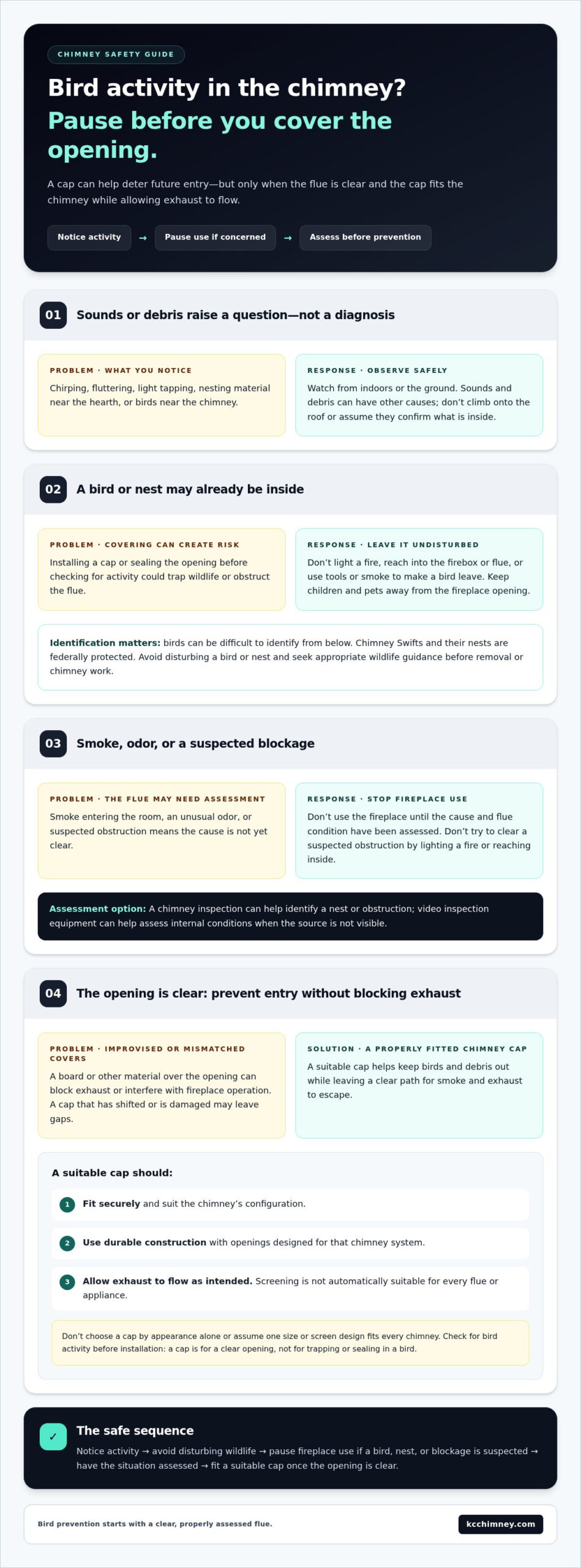
How to Prevent Birds From Entering Your Chimney: A Practical Checklist
Use this sequence to approach how to keep birds out of chimney openings safely, without disturbing wildlife or risking a blocked flue:
- Observe from a safe location. Note unusual sounds, birds entering or leaving, or material near the fireplace or chimney.
- Assess what you can see from the ground. Look for a cap that appears loose, damaged, or displaced, and note any visible material around the opening.
- Address suspected activity before prevention. If a bird, nest, or blockage may be inside, don’t light a fire, reach into the flue, or cover the chimney. Arrange an assessment before cap installation or other chimney work.
- Prevent re-entry once the chimney is clear. A properly fitted cap can help protect the opening while allowing the flue to vent as intended.
A Safe Homeowner Check From the Ground
Use binoculars if they help you see the chimney top more clearly. Don’t climb onto the roof, remove components, or put a hand or tool into the flue. Note when sounds occur, what you see, and whether the cap looks damaged. These observations can help guide a professional chimney assessment.
Repeat a visual check seasonally and after you notice a change, such as a new sound or visible damage. You don’t need to diagnose the problem from the ground. The goal is to notice changes early and leave roof access and chimney work to trained professionals.
When to Arrange a Chimney Inspection
Arrange an inspection if you suspect a blockage, see damage, or notice recurring bird activity. An inspection can assess the cap, flue, and visible chimney structure. When appropriate, video inspection equipment can help technicians assess internal conditions that aren’t visible from the fireplace opening.
Chimney sweeping and inspection support routine maintenance, but they don’t replace wildlife guidance if a bird or occupied nest may be present. Once activity has been addressed and the chimney is suitable for work, cap installation can help reduce the chance of another entry. Arrange a chimney inspection or sweeping to assess a suspected obstruction or maintenance concern.
Keep Birds Out With Professional Chimney Cap Installation in Kansas City
A suitable chimney cap can help prevent future bird entry, but first make sure the flue is clear and there’s no existing bird activity. Installing a cap over an occupied chimney could trap wildlife or interfere with needed venting. If you hear movement, see signs of a nest, or suspect an obstruction, have the chimney assessed before arranging prevention work.
Best Chimney Services installs chimney caps and provides chimney inspections and sweeping for Kansas City-area homeowners. An inspection helps clarify the chimney’s condition so the next step is based on what’s present, not guesswork. If wildlife may be inside, seek appropriate wildlife guidance before any work that could disturb it.
What a Professional Chimney Assessment Can Address
A professional assessment can include checking visible chimney components and evaluating whether the flue may be obstructed. The chimney’s construction and configuration help determine what type of cap will fit and how it should be installed. If internal conditions aren’t visible from the fireplace, technicians can use video inspection equipment to assess the flue. This can help distinguish a cap or maintenance concern from a possible obstruction that needs attention first.
Once the chimney is clear and ready for work, a properly fitted cap can help deter birds while preserving the flue’s intended exhaust path. Learn more about chimney cap protection for Johnson County homes in this guide to choosing prevention that suits the chimney.
A Straightforward Next Step for Kansas City Homeowners
Recurring bird activity, visible damage, or concern about a blocked flue are good reasons to arrange professional chimney help. An inspection can establish what’s going on before any work is recommended. If the chimney is clear and a cap is appropriate, installation can provide a practical barrier against future entry. If there’s activity inside, address that concern first rather than sealing the opening.
Best Chimney Services serves homeowners in Overland Park, Mission Hills, Stilwell, Bucyrus, and Spring Hill. For help assessing a chimney or planning cap installation, schedule a chimney inspection or cap installation.
Protect Your Chimney With a Safe, Lasting Plan
The key to keeping birds out of chimney openings is to prevent access without compromising the flue. A properly fitted cap can help, but suspected activity or a blockage should be assessed before any cover is installed. If birds may be nesting inside, avoid disturbing them and seek appropriate wildlife guidance before chimney work begins.
Best Chimney Services helps Kansas City-area homeowners with chimney cap installation, inspections, and sweeping. Technicians can use video inspection equipment to assess internal chimney conditions when needed, helping clarify whether the flue needs attention before prevention work. Locally owned and operated since 2012, the team can help you understand the condition of your chimney and the next practical step.
Ready to address bird activity, a damaged cap, or a chimney maintenance concern? Schedule a chimney inspection or cap installation with Best Chimney Services.
Frequently Asked Questions
Can birds get into a chimney with a cap?
Yes. Birds may still get in if a cap is loose, damaged, or unsuitable for the chimney. A properly selected and fitted cap can help prevent entry, but not every design works with every flue or appliance. If you notice bird activity or visible cap damage, don’t use the fireplace until the chimney has been assessed. An inspection can help determine whether the cap and flue are in suitable condition.
What should I do if I hear birds in my chimney?
Don’t light a fire, reach into the flue, or try to block the opening. Keep children and pets away from the fireplace, and observe from a safe location. Sounds alone can’t confirm whether a bird, nest, or blockage is present. Homeowners in Overland Park, Mission Hills, Stilwell, Bucyrus, and Spring Hill can arrange a chimney inspection to assess the flue before using the fireplace again.
Is it safe to remove a bird’s nest from a chimney?
Don’t remove or disturb a nest based only on general online advice. Whether handling is allowed can depend on the bird, whether the nest is active, and current rules. Avoid using the fireplace or sealing the chimney while you seek appropriate guidance. Before any nest handling or removal, check current federal and Kansas requirements and contact an appropriate wildlife authority if you’re unsure about the species or situation.
How do I keep birds out of my chimney naturally?
The most reliable prevention is a suitable, correctly fitted chimney cap, not an improvised cover or repellent. A cap helps deter entry while allowing the flue to vent as designed. If you’re researching how to keep birds out of chimney openings, first make sure no bird, nest, or obstruction is already inside. Have the chimney assessed if you’re uncertain, and address existing activity before installing or adjusting a cap.
Can I put a screen over my chimney to keep birds out?
Use only a screen or cap designed for your chimney and connected appliance. An improvised screen could restrict exhaust flow, become damaged, or fail to block access. Don’t cover the opening without understanding the flue’s requirements. A chimney professional can assess the chimney configuration and help determine a suitable cap. If you’ve noticed bird activity, address that concern before installing or changing chimney hardware.
Will a chimney cap stop birds from nesting in my chimney?
A suitable cap can help block access and reduce the chance of future entry, but it can’t resolve an active nest or prove the flue is clear. If you suspect birds are already inside, don’t use the fireplace or seal the opening. Have the chimney assessed first. Best Chimney Services provides inspections and chimney cap installation for Kansas City-area homeowners, including those in Overland Park and Spring Hill.
Should I use my fireplace if I think a bird is in the chimney?
No. If you suspect a bird, nest, or blockage, stop using the fireplace until the chimney has been assessed. Smoke and exhaust need a clear path, and an obstruction may create a household hazard. Don’t try to drive a bird out with heat or smoke. Keep people and pets away from the fireplace opening, then arrange an inspection. Technicians can use video equipment to assess internal chimney conditions when needed.