
If your fireplace damper is stuck open in Stilwell, don’t force it closed. Wait until the fire is completely out and the fireplace is cold; if the damper still won’t move, leave it alone and have it inspected. A rusted damper may be repairable if its plate and frame are still structurally sound.
A stuck-open damper can let cold air into your home, but using the fireplace with a partly open or closed damper may prevent smoke and carbon monoxide from venting reliably. It’s sensible to seek a clear fix without replacing a part that may still be sound. This guide explains how to identify the damper type and check its position safely, why forcing it can worsen the problem, and when a stuck or rusty damper may be repaired. You’ll also learn why a partly open damper isn’t a safe compromise for a fire and how to manage drafts while the fireplace is out of use.
Key Takeaways
- Identify whether your fireplace uses a throat damper or a top-mounted damper before trying its control, and look for signs that the plate is still obstructing the flue.
- Don’t force a control that resists movement. Rust, soot buildup, warped metal, or damaged linkage can all prevent smooth operation.
- Notice cold air entering through the fireplace when it’s not in use; a poor seal or damaged damper may be letting drafts pass.
- Learn which temporary steps can limit heat loss while the fireplace stays out of use, and when professional chimney service can help address the underlying issue.
Is it safe to use my fireplace if the damper only opens halfway?
No. Don’t light a fire if the damper is only partly open; smoke and carbon monoxide may not vent reliably. Check its position only when the fireplace is completely cold.
-
Check Whether the Damper Is Open
Shine a flashlight up the flue from the firebox, keeping your hands and face clear of the opening. A traditional throat damper is open when its plate clears the passage; seeing the sky above can also indicate an open route. Control positions vary, so check the damper itself rather than relying only on the knob or rod. Controls vary, so don’t force one that resists.
-
Perform Safe Visual Checks
With the firebox cold, look upward through the fireplace opening and note whether the metal plate covers any part of the flue. Check for visible rust, soot buildup, or a plate that appears crooked. Don’t climb onto the roof, reach into the flue, or move hot metal. If you can’t see the damper clearly, stop rather than probing it.
-
Check the Chimney Draft
Before lighting anything, hold your hand near the firebox opening to feel for air moving down from the chimney. A downward draft can indicate an open damper, but it doesn’t prove the passage is fully clear. You can also check for a clear opening with a flashlight. Smoke entering the room after lighting means the fireplace isn’t venting properly.
-
Keep the Fireplace Out of Use If the Opening Is Partial
Don’t treat a halfway-open damper as a safe compromise. A restricted flue opening can let smoke spill into the room, and you can’t detect carbon monoxide by sight or smell. If smoke remains indoors even after the damper is open, stop using the fireplace until the venting problem is addressed. A misaligned plate may still obstruct the flue.
Drafts caused by a poorly sealing damper
- Check whether the draft is coming from the fireplace before assuming the damper is the only cause. With the fireplace cold and unused, note whether cold air enters through the firebox. If a closed damper still lets air through, it may have a worn seal, bent plate, or crack. These gaps can let outdoor air into the room even when the control appears closed.
- Compare the airflow on calm and windy days. Wind can push air down the chimney, making a loose seal or open damper more noticeable. Partly closing an adjustable damper may reduce downward airflow on a windy day, but it won’t repair a poor seal. Don’t burn a fire with the damper partly closed.
- Look for signs that the damper plate isn’t meeting its frame. A visible gap, a crooked plate, or cold air despite a closed control can point to damage or misalignment. Don’t bend the metal or wedge anything into the flue. Have a stuck plate inspected to determine whether the issue is the seal, hinge, or linkage.
- Consider how much heat an open flue can draw from the home. An open fireplace damper can allow up to 600 feet of heated air to escape while the fireplace is unused. Closing it after the fire is fully out helps limit that loss. If the damper cannot close, the opening can continue to affect indoor comfort.
- Check the chimney exterior for signs of water entry, since moisture can contribute to rust at damper pivot points. A damaged chase cover may allow water into the chimney; chase cover replacement can address that exterior component. A tighter-sealing top-mounted damper may also seal better than an older throat damper, but the right fix depends on the condition of the existing assembly.
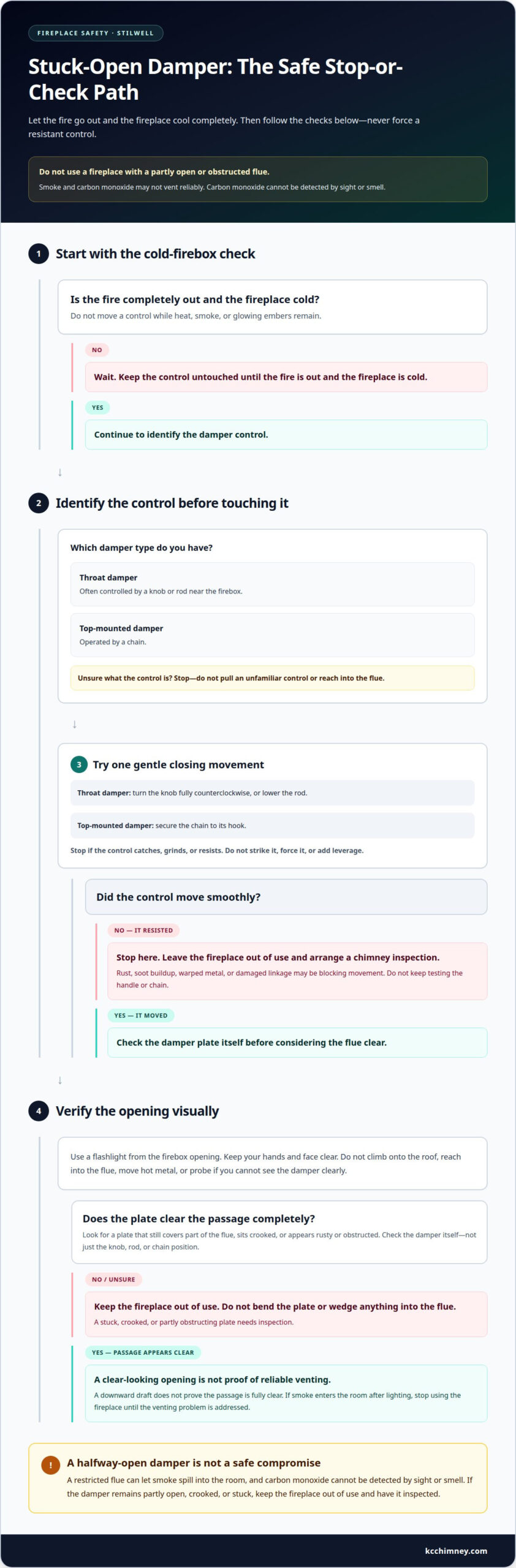
How to close a fireplace damper manually when it is stuck open
- Wait until the fire is completely out and the fireplace has cooled. Don’t move the control while heat, smoke, or glowing embers remain. In Stilwell, if your fireplace damper is stuck open, how to close it safely starts with confirming the firebox is cold. Closing it too early can trap smoke and heat inside.
- Identify the control before trying to use it. A traditional throat damper often has a knob or rod near the firebox; a top-mounted damper uses a chain. Don’t pull an unfamiliar control or reach into the flue. The control type determines the closing motion, so identify it before applying gentle pressure.
- Try one gentle movement in the closing direction. A throat damper closes when its knob is turned fully counterclockwise or its rod hangs low. A top-mounted damper closes when its chain is secured to its hook. For a fireplace damper stuck open, how to close it in Stilwell depends on the mechanism. Stop if the control catches or grinds.
- Don’t force or strike a jammed control, or add leverage. Rust, soot, warped metal, or broken linkage can block movement; extra force may damage the plate or mechanism. Check the cold firebox with a flashlight. If the plate remains open or sits crooked, leave the fireplace unused and arrange a chimney inspection.
If the damper still resists after one gentle attempt, stop rather than assuming you need to apply more force. Don’t force a stuck or difficult-to-move fireplace damper; have a professional inspect it. Keep the fireplace out of use while the problem remains unresolved, and describe what happened, including whether the control caught, ground, or wouldn’t move. Don’t keep testing the handle or chain in the meantime.
A fireplace damper that is difficult to open or close may be rusted shut or stuck open, and an experienced chimney sweep can help. Arrange for the damper and its operating mechanism to be inspected before using the fireplace again. Whether the control feels immovable or the plate does not appear to sit correctly, a professional inspection is the next step; do not treat a small amount of movement as a reason to resume use.
How to reduce heat loss through a fireplace with a damper stuck open
- Keep the fireplace out of use until the damper can close and the flue is ready for safe operation. An open damper gives indoor air a path up the chimney, letting warm air escape and cold air enter. Don’t block the flue while a fire burns or while smoke or embers remain.
- Limit drafts at the room side while the fireplace is cold and unused. Close fireplace doors, if fitted, and keep the hearth area clear. Doors can reduce the direct flow of room air toward the firebox, but they won’t seal a stuck-open damper or fix a damaged plate.
- Use a chimney plug only as a temporary measure for an unused, completely cold fireplace. A 12-by-12-inch plug has been suggested for a downstairs fireplace, but the opening must match the plug. Remove it before lighting any fire, and don’t use it to cover a flue that still contains heat or smoke.
- Note where the draft enters and whether it changes with the outdoor wind. Air moving down through the fireplace can make a room feel colder, while warm indoor air escapes upward through the open flue. Check whether the airflow continues after you close any fireplace doors. These observations can help explain the issue during an inspection.
- Arrange an assessment of the damper and flue rather than relying on a plug as a repair. The cause may involve a stuck plate, damaged linkage, or a seal that no longer closes properly. Request a chimney assessment to determine what’s preventing closure and what repair fits the fireplace.
Best Chimney Services
Best Chimney Services can inspect a damper that won’t move or seal properly. Soot buildup around the damper may be addressed with chimney sweeping, while chimney relining can help when the flue needs a liner. If moisture entering the chimney is a concern, crown repair may address damage to the chimney crown.
The right next step depends on what’s affecting the damper and flue. Don’t use the fireplace if the damper remains partly open or smoke enters the room. Share what you’ve noticed, such as a stuck control, visible rust, or persistent drafts, to help clarify the concern.
Contact Best Chimney Services to discuss your fireplace damper concern.
Take the Next Step Toward a Reliable Fireplace
If you’re in Stilwell and deciding how to close a fireplace damper stuck open, start with a clear assessment of the chimney and damper. Keep the fireplace out of use until it can vent properly, and don’t force a control that resists. The cause matters: soot, corrosion, damaged linkage, or a flue issue can call for different work.
Best Chimney Services can assess the concern and discuss suitable chimney care, including sweeping or relining when appropriate. If you’re considering a different fireplace setup, gas fireplace inserts are another option. The goal is a safe, functional fireplace solution that suits your home, not a rushed fix.
Contact Best Chimney Services to discuss your fireplace and take a practical next step toward restoring confidence in your hearth.
Frequently Asked Questions
Can a rusted damper be fixed without replacing it?
Repair may be possible if the damper plate and frame remain structurally sound. A chimney technician can clear soot around the throat, free the hinges, remove rust from pivot points, and adjust or reseat the plate. Rust concentrated around a hinge is different from a badly warped or weakened plate. An inspection helps determine whether the existing assembly can be restored.
What’s a Chimney Damper, Anyway?
A chimney damper is a metal flap inside the flue that opens or closes the passage between the firebox and chimney. It helps manage airflow: an open route lets smoke escape, while a closed damper limits airflow when the fireplace isn’t in use. It’s separate from the chimney cap, which covers the chimney opening at the top.
Why Is My Fireplace Damper Stuck, and Can It Be Repaired?
Moisture can corrode pivot points, while soot or creosote can build up around the plate and frame. Heat may warp the metal, and a handle or linkage can break. If the control moves without moving the plate, the linkage may be at fault. A technician can assess the cause and whether the plate and frame are sound enough for repair.