
If you’re researching flexible chimney liner installation Spring Hill homeowners can rely on, start with an inspection of the flue, the connected appliance, and any signs of damage. A flexible liner isn’t automatically the right fix for every chimney. Cracks, deterioration, or a new fireplace insert may raise liner questions, but the right solution depends on the chimney’s condition and the appliance it serves.
Best Chimney Services LLC provides chimney inspections and relining, with advanced video inspections to view the chimney’s interior. Its CSIA-certified professionals follow NFPA standards and explain the proposed work with transparent pricing and no hidden fees.
This guide explains what inspection findings can signal a liner concern, how the chimney and appliance affect liner selection, and what a professional installation involves. You’ll also learn how flexible liners compare with other options and how to prepare for an assessment at your Spring Hill home.
Key Takeaways
- Smoke, weak draft, or visible damage are reasons to arrange a professional assessment, but symptoms alone don’t determine whether a liner needs replacement.
- Chimney measurements, appliance requirements, and inspection findings shape the installation plan.
- Compare liner options by the chimney’s route and condition, not flexibility alone. The full venting system matters.
- Prepare for flexible chimney liner installation Spring Hill by noting appliance use, symptoms, and past chimney concerns for the inspection.
- Best Chimney Services supports homeowners with local service, detailed video inspections, and a clear explanation of the project.
When does a Spring Hill chimney need flexible liner installation?
Smoke entering the room, a fireplace that struggles to draft, or visible chimney damage can raise an immediate question: does the liner need attention? These signs warrant a professional assessment, but none proves on its own that flexible liner installation is the right repair. For homeowners in Spring Hill, Kansas, the decision should follow what an inspection reveals about the chimney and the appliance it serves.
A liner forms the passage that carries combustion byproducts through the chimney. It also helps protect chimney walls from heat and corrosive byproducts while providing a flue suited to the connected appliance. The chimney liner overview explains common liner types, including flexible metal liners. The right choice for a home depends on its chimney and appliance, not simply on the liner type.
What signs make a chimney liner inspection worthwhile?
Pay attention to changes in fireplace operation and to anything visible without entering the chimney. Smoke spilling into the room, persistent odors, weak draft, or cracks and deterioration in visible masonry are reasons to arrange an assessment. These clues can have more than one cause. A draft problem, for example, doesn’t independently confirm a damaged liner.
If smoke is entering your living space or another safety concern arises, stop using the fireplace until a professional has assessed it. Don’t climb onto the roof, reach into the flue, or attempt a repair. Note when the issue occurs and which appliance is in use. Those details can help the inspection focus on the relevant conditions.
How can an inspection clarify the next step?
An inspection helps separate visible evidence from assumptions about the repair. Best Chimney Services provides chimney inspections and relining, using advanced video inspections to view the chimney’s interior. This view can help identify observed damage or other conditions along the flue, giving you a clearer basis for discussing next steps.
Findings guide the recommendation. If the inspection identifies damage, a liner concern, or a mismatch between the flue and the connected appliance, the appropriate work can be considered in context. A symptom alone shouldn’t trigger an automatic recommendation to install a flexible liner. The chimney’s condition and the appliance’s needs matter. Best Chimney Services’ CSIA-certified professionals follow NFPA standards, and liner planning starts with the assessment findings.
For flexible chimney liner installation Spring Hill homeowners should ask what the inspection found and whether those findings support relining. A clear explanation of the observed conditions helps you understand why a particular next step is being considered.
How does professional flexible chimney liner installation work?
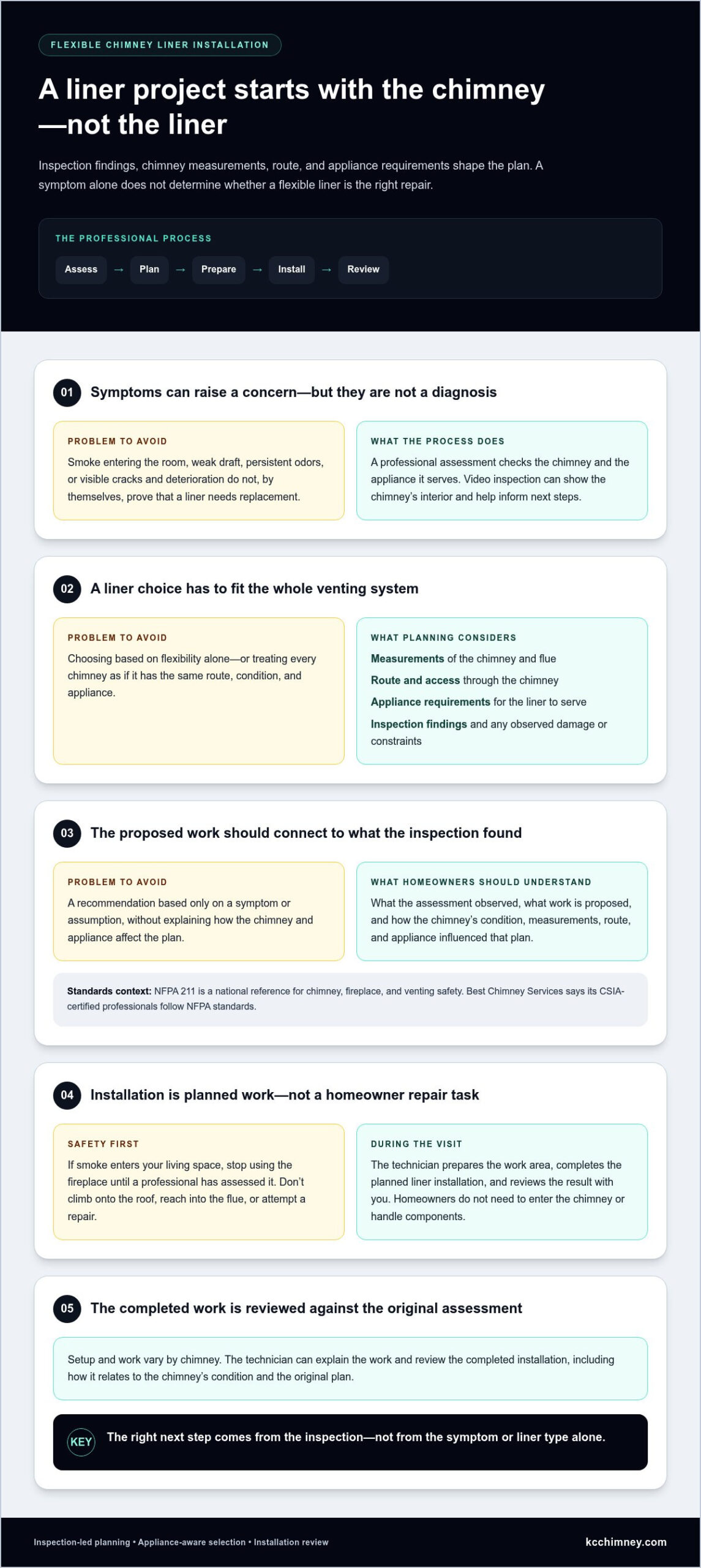
A well-planned liner project follows a clear progression: assess the chimney, plan around its condition and appliance, prepare the work area, install the liner, and review the completed work. The details depend on the home. For flexible chimney liner installation Spring Hill homeowners should expect recommendations grounded in the chimney’s measurements and inspection findings, not a one-size-fits-all approach.
What happens during assessment and installation planning?
Before installation, the technician considers the existing flue, access points, route through the chimney, and the appliance the liner will serve. Measurements and appliance requirements help guide liner selection because the liner must suit the complete venting system. The NFPA 211 Standard provides a national reference for chimney, fireplace, and venting safety. Best Chimney Services follows NFPA standards.
Inspection findings also shape the scope. The technician may identify damage along the flue or constraints in the installation route that affect the planned work. Those observations should be explained before the project proceeds. Homeowners should understand what the assessment found, what work is proposed, and how the appliance and chimney influenced the plan.
A liner recommendation should connect to specific measurements and conditions, rather than relying on a symptom or assumption. Best Chimney Services uses advanced video inspections to view the chimney’s interior and help inform project planning.
What should homeowners expect during the installation visit?
During the installation visit, the technician prepares for the work, completes the planned liner installation, and reviews the result. Liner installation involves the chimney’s internal route and must account for the connected appliance and inspection findings. Homeowners don’t need to enter the chimney or handle components themselves.
The setup and work involved can vary by chimney. The technician can explain the work and review the completed installation with you, including how it relates to the original assessment.
Best Chimney Services is locally owned and serves Spring Hill and the Kansas City metro. Its CSIA-certified professionals follow NFPA standards, with installation planning tied to the chimney’s actual conditions. To discuss an inspection-led liner project, visit Best Chimney Services’ chimney liner installation.
How do you decide whether a flexible chimney liner fits your Spring Hill home?
A flexible liner is one possible approach, not an automatic answer to every chimney concern. Suitability depends on how the chimney is built and routed, the appliance it serves, and what an inspection shows. For flexible chimney liner installation Spring Hill homeowners should look beyond flexibility alone. The full venting system and the liner’s compatibility with it guide the decision.
Use this framework to understand which details shape a professional assessment. It isn’t a substitute for inspecting and measuring an individual chimney.
| Factor | What the technician evaluates | Why it matters |
|---|---|---|
| Chimney route and access | The flue’s route, including bends or offsets, and how the technician can reach it | Route and access inform the installation plan. Flexibility by itself doesn’t establish suitability. |
| Appliance requirements | The fireplace, insert, or other connected appliance and its venting needs | The liner must be considered as part of the appliance’s complete venting system. |
| Chimney condition | The existing flue and any observed damage or deterioration | Condition may affect whether relining is appropriate and what work the chimney needs. |
| Inspection findings | What the inspection shows about the current configuration and the proposed work | A recommendation should respond to observed conditions rather than assumptions. |
Which chimney and appliance details affect liner selection?
A technician considers the flue’s route and access alongside the appliance it serves. A chimney with a different route or configuration may call for a different installation plan, while appliance requirements help determine what kind of liner is suitable. Material and compatibility are technical decisions, not details to infer from a product label or from the word “flexible.”
General information about liner categories can help you understand the conversation, but it can’t establish what belongs in a specific chimney. The Chimney Safety Institute of America (CSIA) provides chimney safety education and professional certification resources. A recommendation for your home still depends on inspection findings, measurements, and the appliance’s requirements.
What questions should the inspection findings answer?
Ask what the inspection observed and how those observations support the proposed work. Useful questions include:
- Does the existing liner show damage, deterioration, or a configuration that doesn’t suit the connected appliance?
- How does the recommended work address the specific condition observed?
- What measurements or appliance requirements informed the liner selection?
Clear answers connect the recommendation to evidence and help you understand why a flexible liner is being considered, or why another plan may better address the chimney’s needs. Best Chimney Services uses advanced video inspections and CSIA-certified professionals to support inspection-led chimney work for Spring Hill homeowners.
How can Spring Hill homeowners prepare for a chimney liner project?
A little preparation can make a chimney liner visit more productive. You don’t need to inspect the flue yourself or diagnose the cause of a draft problem. Instead, gather what you know about the appliance, how you use it, and any changes you’ve noticed. The inspection and conditions at your home will shape the work plan.
What information should homeowners share before the visit?
Before the appointment, jot down details that can help explain the situation. Include the fireplace or appliance type, how often you use it, and when you first noticed a concern. Be specific. For example, mention whether smoke appears when starting a fire or whether an odor remains after use.
- Describe smoke, odor, weak draft, or visible chimney damage, including when you notice it.
- Share relevant prior inspection or chimney repair information if you have it.
- Note changes to the appliance or how the system is used.
- Keep inspection reports or repair records accessible for the technician.
These notes offer useful context, but they don’t replace a professional assessment. Don’t climb onto the roof, enter the chimney, or attempt repairs. If smoke is entering the room or another safety concern arises, stop using the fireplace until it has been assessed.
What should homeowners expect from communication and estimates?
Clear communication should help you understand what the inspection found and how those findings inform the proposed work. Best Chimney Services provides text updates and transparent, itemized estimates with no hidden fees. The estimate should make the proposed scope understandable, while the inspection and site conditions determine the plan. Don’t assume two chimneys need the same work.
Before work begins, review the estimate and discuss any part of the scope you’d like explained. A helpful conversation connects the proposed liner work to the appliance, chimney condition, and observations from the visit. If new conditions affect the plan, clear communication helps you understand how they relate to the work being considered.
For flexible chimney liner installation Spring Hill homeowners can approach with confidence, preparation means sharing useful information and understanding the assessment, not doing technical work themselves. Best Chimney Services serves Spring Hill and the Kansas City metro, including Overland Park, Mission Hills, Stilwell, and Bucyrus. Its CSIA-certified professionals follow NFPA standards, and its transparent pricing includes no hidden fees.
Ready to arrange a chimney assessment and discuss liner work for your home? Schedule a chimney liner assessment with Best Chimney Services.
Why choose Best Chimney Services for flexible liner installation in Spring Hill?
A liner decision should rest on what the chimney inspection shows and how the venting system serves your home. Best Chimney Services LLC is locally owned and operated, serving Spring Hill and the Kansas City metro, including Johnson and Miami counties. For homeowners considering flexible chimney liner installation Spring Hill, the company connects the proposed work to the specific chimney, appliance, and inspection findings.
What local service and professional standards does the company bring?
Chimneys need thoughtful care in every season. Best Chimney Services serves homeowners across this part of Kansas and provides chimney inspection, repair, and liner installation. Recommendations are guided by the conditions observed at your home, not assumptions about what every chimney needs.
CSIA-certified professionals perform the work, and the company follows NFPA standards. Advanced video inspections provide a detailed internal view of the chimney, helping connect observed conditions to a proposed repair or relining plan.
Best Chimney Services’ homepage displays 184 Google reviews. Reviews can offer additional perspective on other customers’ experiences, while an inspection remains the basis for understanding your chimney’s condition and the work being considered.
What is the next step for a Spring Hill homeowner?
Start by sharing what you’ve noticed, which appliance you use, and any relevant inspection or repair history. An inspection can clarify whether a liner concern exists and what options fit the chimney’s condition. If the assessment points to another chimney repair, understanding the finding and its connection to the recommended work can help you make an informed decision.
Best Chimney Services also provides chimney repair for concerns such as crown, flashing, and masonry damage. Any next step for your home should be based on what a professional observes there. The company provides clear communication and transparent pricing with no hidden fees, so you can discuss the proposed work plainly.
To discuss a chimney inspection, repair, or liner installation in Spring Hill, contact Best Chimney Services at (816) 805-2271. Share what you’ve observed and ask about arranging an inspection to inform the next step.
Take the Next Step Toward a Clear Chimney Plan
A liner project is an opportunity to make a thoughtful decision about your home’s venting system, not a reason to rush into a particular repair. Use the inspection conversation to understand what was observed, how it affects your chimney, and why a proposed approach fits your fireplace or appliance. With flexible chimney liner installation Spring Hill, the right next step begins with your home’s specific conditions and a clear explanation of the work being considered.
Best Chimney Services brings an inspection-led approach to chimney concerns, with CSIA-certified professionals who follow NFPA standards. Advanced video inspections help inform the assessment, while transparent, itemized estimates with no hidden fees make the proposed scope easier to understand. The company homepage displays 184 Google reviews, offering another perspective as you consider your options.
To discuss your chimney’s condition or possible liner work, contact Best Chimney Services about liner installation. Call (816) 805-2271 to arrange a conversation about your home’s needs.
Frequently Asked Questions
Can a flexible chimney liner be installed in an older masonry chimney?
Yes, an older masonry chimney may be a candidate, but its age alone can’t determine whether relining is needed or which liner is suitable. An inspection should establish whether the flue is lined, its current condition, and what appliance it serves. Older homes can have different chimney configurations, so the appropriate solution depends on the specific structure and inspection findings, not simply on how long the home has stood.
Is a flexible chimney liner suitable for both wood-burning and gas appliances?
A flexible liner may suit a wood-burning or gas appliance if the liner and venting configuration are appropriate for that specific appliance and fuel. The word “flexible” doesn’t establish compatibility. For example, a liner selected for one fireplace setup shouldn’t automatically be assumed suitable after an appliance change. Have the chimney and appliance requirements assessed together before choosing a liner for flexible chimney liner installation Spring Hill.
How does a chimney video inspection help assess a liner?
A video inspection gives the technician a detailed internal view of the flue, which can help reveal conditions that aren’t visible from the room or the chimney exterior. It can help document the location and appearance of suspected damage for discussion with the homeowner. The camera’s view supports the assessment, but it doesn’t replace professional interpretation of the chimney’s condition or determine a repair without considering the full venting system.
What happens if a chimney liner is damaged?
A damaged liner may no longer provide the protection and containment the chimney system is designed to provide. The appropriate response depends on the type, location, and extent of the damage, so an inspection should guide the repair plan. If you suspect damage, avoid using the fireplace until it has been professionally assessed. Damage after a chimney fire can be hidden from view, making an inspection especially important.
Can a flexible liner follow bends or offsets in a chimney?
A flexible liner can be considered for some chimney routes that include bends or offsets, but that feature alone doesn’t confirm that it will fit or function appropriately. The technician must assess the route, access, chimney condition, and connected appliance requirements. A particular bend may affect the installation plan, so the suitability of a flexible liner needs to be determined for the individual flue rather than assumed from a general product description.
Does installing a chimney liner mean the chimney no longer needs inspection?
No. Installing a liner doesn’t remove the need to keep the chimney and venting system inspected and maintained. The liner is one part of the overall system, and its condition can change with use or after an event such as a chimney fire. Continue arranging professional chimney inspections, particularly if you notice smoke leakage, a new odor, or a change in fireplace performance.
Does Best Chimney Services serve Spring Hill, Kansas?
Yes. Best Chimney Services serves homeowners in Spring Hill, Kansas, as well as communities across the Kansas City metro, including Overland Park, Mission Hills, Stilwell, and Bucyrus. The company provides chimney inspection, repair, and relining services. If you’re in Spring Hill and have a question about a chimney concern, share what you’ve observed so the team can discuss the appropriate inspection or service.