
An annual fireplace inspection is a practical schedule for a home in Stilwell. The National Fire Protection Association recommends that fireplaces and chimneys be inspected annually. A fireplace inspection in Stilwell can identify visible damage, buildup, or other concerns before you rely on your fireplace for the season.
It’s reasonable to expect more than a quick look. You need to know what the technician examines, how findings are documented, and what next steps may involve if something needs attention.
This guide explains the main parts of an inspection, including the flue, crown, cap, masonry, and flashing, as well as what written findings and photos can help you understand. You’ll also learn how inspection pricing is determined; the cost depends on the inspection scope, access, and the chimney’s condition, and is provided after a quote request.
Understanding the process helps you plan maintenance with less guesswork and make informed decisions about fireplace safety and care.
Key Takeaways
- Learn which visible and internal chimney components an inspection can cover, from the flue to the flashing.
- Understand what clear written findings and inspection photos can help you assess before deciding on repairs.
- Use the National Fire Protection Association’s annual inspection recommendation to plan routine fireplace care.
- See how inspection scope, access, and chimney condition shape the pricing discussion, without relying on a one-size-fits-all estimate.
- Find out when chimney sweeping may help address soot and creosote buildup identified during an inspection.
Technician credentials and customer service expectations
When arranging a fireplace inspection in Stilwell, consider the technician’s relevant training, inspection method, and clarity when explaining the results. A thorough appointment should identify the fireplace type, describe the areas examined, and distinguish observed defects from recommended next steps.
Credentials matter because a chimney has connected parts that call for different inspection skills. Choose a technician who can explain their qualifications and how they apply to your fireplace, whether it burns wood or gas. The National Fire Protection Association recommends annual fireplace and chimney inspections, so ask how the visit fits into routine maintenance.
Good service begins before the technician arrives. When scheduling, describe the fireplace type, the concern prompting the visit, access to the hearth, and whether you have previous inspection records. These details help the technician prepare. For example, if smoke enters the room, explain when it happens and whether the fireplace is wood-burning or gas.
Some signs call for prompt attention rather than routine scheduling. If smoke spills into the living area, there is a strong unexplained chimney odor, or you see damage such as loose masonry, stop using the fireplace until the concern is assessed. If you suspect a chimney fire, leave the home and contact emergency services.
Service coverage can affect appointment planning in Stilwell and nearby parts of Johnson County. Regional crews may travel between communities, so the route, appointment window, and access to the property can shape scheduling. Share the property address and any gate or driveway instructions when arranging the visit; this helps the crew plan its arrival without confusion.
Pricing should be explained in relation to the work, not just the appointment label. Inspection scope, chimney access, fireplace type, and the need for additional diagnostic work can all affect the quote. The price depends on the case and is provided after a quote request, with scope, access, fireplace type, and any additional diagnostic work among the deciding factors.
Travel fees depend on service boundaries and routing, so the location matters alongside the inspection details. A useful estimate separates inspection work from any proposed repair or installation, and explains what each item covers. Before approving additional work, review the findings and the proposed scope so you can make an informed decision.
Expect a professional visit to follow a clear sequence: discuss the reported concern, examine accessible fireplace and chimney components, record relevant findings, and explain recommended next steps. When scheduling, describe any urgent signs; for a routine visit, provide the last service date if you know it. These details help the technician focus on your home’s needs.
Written inspection reports and photos
A clear report helps you understand what the technician observed and what needs attention. In Stilwell, use its written findings and photos to connect a concern with a specific chimney area.
Written Inspection Findings
A useful report identifies the fireplace and chimney components examined, then describes each finding in plain language. Look for specific locations, such as the firebox, flue, or chimney exterior, rather than broad labels like “needs work.” A clear report separates observed conditions from suggested follow-up, so you can see what the technician found and why a next step may matter.
Check whether the report explains the condition, its location, and the recommended response. For example, a note about damaged mortar should identify where it appears and whether chimney repair is recommended. If the report uses technical terms, the technician should explain them in context. Ask for clarification about any finding you can’t connect to a visible area or reported concern.
Inspection Photos
Photos can show where a finding is and what it looks like, especially inside the flue or above the roofline. Review each image alongside the report. A useful photo identifies a component or location, such as the chimney crown, cap, or an interior flue surface. The image and written note should refer to the same concern.
Ask the technician to explain what each image shows and how it relates to the fireplace’s condition. For example, a close-up of a crack is easier to interpret when you know whether it is on the crown, masonry, or flue lining. Photos document visible conditions, while the written explanation provides context. Together, they should make the finding’s location clear.
Save digital images with the inspection report and label them by area, such as “firebox” or “chimney exterior.” If a later report documents the same location, comparing images can help you follow the maintenance history. A photo alone doesn’t explain the recommended action, so use the technician’s explanation to understand what should happen next.
For a related overview of chimney inspection services, consider how the written findings and visual documentation fit together. A specific report, clear images, and an explanation of each recommendation give you practical records for future fireplace care.
Annual inspection and cleaning guidance
Plan a chimney inspection each year, then decide on cleaning based on fireplace use and the flue’s condition. In Stilwell, scheduling before winter use gives you time to address findings before relying on the fireplace.
Chimney Inspection Levels
NFPA 211 describes three inspection levels, each with a different scope. Level 1 examines readily accessible parts; Level 2 adds a closer assessment of accessible areas, often using video equipment. Level 3 is more extensive and may require access to concealed areas. Ask which level fits the reason for the visit and what areas it covers.
The National Fire Protection Association recommends that fireplaces and chimneys be inspected annually. This recommendation applies whether you use the fireplace often or only occasionally. Inspection and cleaning address different needs: an inspection assesses condition, while cleaning removes deposits. Creosote buildup as thin as 1/8 inch can fuel a dangerous chimney fire reaching temperatures over 2,000°F.
Cleaning frequency depends on how often you burn, the fuel you use, and the deposits inside the flue. Households that heat seriously with wood should have their wood stove flue swept at least once a year, and sometimes mid-season. Track fireplace use and note changes, such as a new appliance or smoke entering the room, to help guide the next visit.
Oklahoma and Adair County rules don’t apply to a home in Stilwell, Kansas. The annual schedule here reflects the National Fire Protection Association’s recommendation, not a claim about a local inspection mandate.
Preparing for an Inspection
Before the appointment, let the fireplace cool completely and clear loose items from the hearth. Make a path to the fireplace and gather earlier inspection reports or repair records. Tell the technician whether the appliance burns wood or gas, and describe specific symptoms, such as smoke spilling into the room during startup.
For a visit before winter, share the last known cleaning date and any changes since then. A new insert, recent chimney work, or unusual odor can help focus the assessment. Keep pets and household items away from the work area so the technician can access the fireplace and related components.
After the inspection, keep the report with your home records and follow its recommendations. If it identifies deposits, discuss whether cleaning is needed; if it documents damage, review the location and proposed repair. These records help Stilwell homeowners plan seasonal fireplace use based on the chimney’s documented condition.
For homeowners who regularly use a fireplace, annual chimney cleaning and inspection are recommended. These tasks serve different purposes: inspection assesses the chimney’s condition, while cleaning removes deposits. Following the annual guidance keeps both needs in view.
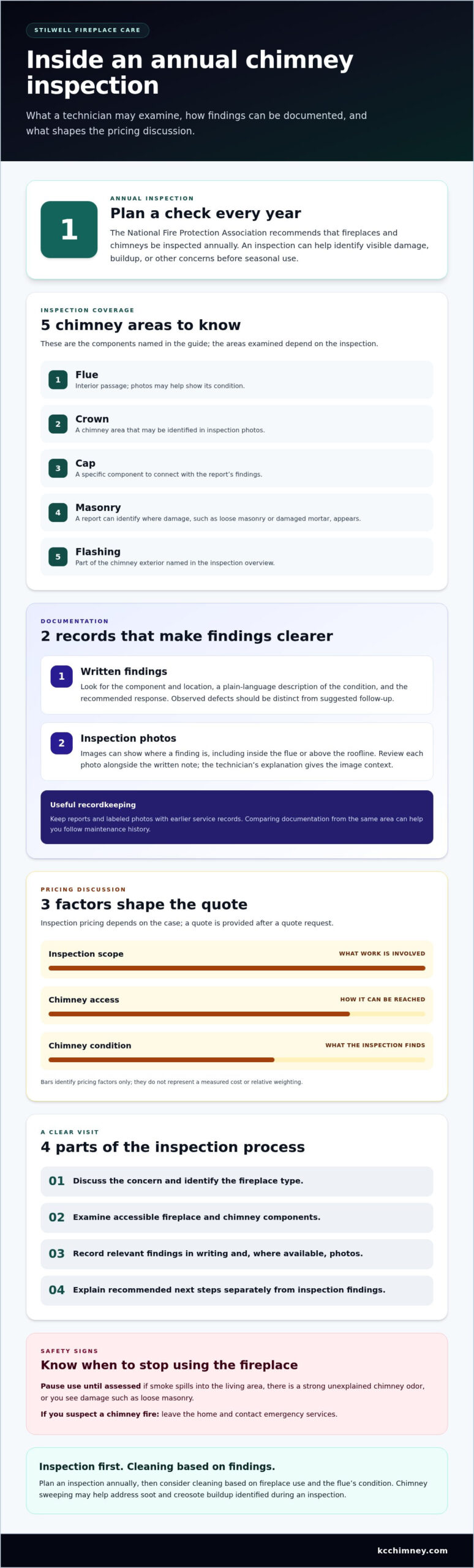
Inspection of the flue, crown, cap, masonry, and flashing
A chimney inspection follows the route smoke and combustion gases take, then checks the exterior surfaces that protect the structure. In Stilwell, the chimney’s age and visible condition help focus attention on areas needing closer examination.
Flue, Crown, and Cap Checks
The flue carries smoke upward, so the technician examines its interior for deposits, gaps, deterioration, and obstructions. Video inspection equipment can show areas that aren’t visible from the fireplace opening. Ask which portions were examined and whether any finding affects the flue’s condition or calls for further inspection.
At the chimney top, the crown covers the masonry and the cap sits over the flue opening. The inspection looks for cracks, loose material, corrosion, or a cap that appears damaged or displaced. A damaged crown may need repair; a missing or compromised cap can leave the flue exposed to debris and weather.
Age can shape the inspection. Stilwell chimneys built before 1945 are frequently missing components intended to help protect homes from fire and fumes. The technician should identify any missing components and explain their location and significance, rather than treating the chimney’s age alone as proof of a defect.
Masonry and Flashing Checks
On the exterior, the technician checks bricks and mortar joints for cracks, gaps, or loose sections. They also examine the chimney’s connection to the roof, where flashing helps seal the joint. Look for findings that name the affected area, such as open mortar near the roofline or separated flashing beside the chimney.
Water entry can leave signs inside the home, too. For example, staining near a fireplace or dampness around a chimney wall can help direct attention to the exterior. Share those observations during the appointment; they may help the technician connect an interior symptom with a specific masonry or flashing area.
Some Stilwell-area flues from the 1950s, 1960s, and 1970s have been in use for nearly 50 years and may need repair or rebuilding. That history makes a close assessment useful, but the inspection should still describe actual conditions. A Level 2 inspection may help examine accessible internal areas, while a Level 3 inspection addresses concealed areas that require more extensive access.
Before approving a repair, compare the written findings with the location and proposed work. For example, crown repair should correspond to a finding on the crown, while a flue concern may call for a different remedy. Clear connections between the observed condition and repair plan help you understand what needs attention.
Inspection pricing
The scope, access, and chimney condition help determine what a fireplace inspection in Stilwell involves. Ask for a clear description of what the inspection covers before approving the work.
Start with the inspection level. A visual assessment of accessible areas differs from a Level 2 inspection that uses additional diagnostic methods. A Level 3 inspection can involve more extensive access to concealed areas. Each level requires a different scope, so the label alone doesn’t show what your appointment includes.
Chimney height and access can affect the work involved. A steep roof, limited access, or a tall exterior chimney may require additional setup. Fireplace type matters, too. Wood-burning systems and gas appliances have different components to inspect, so describe the appliance clearly when arranging a visit.
The chimney’s condition shapes the next steps. Visible mortar deterioration, a damaged crown, or a concern inside the flue may call for further evaluation. Keep proposed repair work distinct from the inspection. An inspection identifies and documents conditions; repairs address specific findings and have a separate scope.
Before accepting a quote, review these details:
- Inspection scope: Which fireplace and chimney areas will the technician examine?
- Access: Does the estimate account for roof access or other site conditions?
- Diagnostic work: Does the stated scope include camera inspection or another method?
- Follow-up: Are recommended repairs listed separately from inspection work?
Credentials are another useful comparison point, but a “certified” label alone doesn’t explain the inspection scope. Ask what the certification covers and how the technician documents findings. A clear explanation connects the examination, report, and any proposed repair without treating them as one undefined charge.
For example, a report may describe a crack in the crown, while a separate estimate outlines crown repair. A different finding, such as deteriorated mortar, may call for another repair plan. Separating these items helps you understand what the inspection established and which work addresses each condition.
The price depends on the case and is provided after a quote request. The main cost factors are inspection level, fireplace type, chimney condition, access, and any additional diagnostic work. Share the property location, appliance type, and reason for the visit in your request; those details help define the proposed scope.
Review the written estimate before scheduling. Confirm that it names the inspection work, explains any additional diagnostic steps, and keeps repair recommendations distinct. This makes it easier to understand the proposed scope and what each item covers.
This is a listed service price.
Best Chimney Services: Chimney Sweeping
Best Chimney Services helps homeowners address inspection findings with chimney sweeping, relining, and crown repair. If the report identifies soot or creosote buildup, sweeping addresses deposits inside the chimney. Relining may be relevant when findings point to a liner concern, while crown repair addresses damage to the chimney crown.
Use the report to identify the specific issue and discuss the related next step. For example, a damaged crown calls for a different response than buildup in the flue. Clear findings connect the service to the observed condition, rather than treating every chimney concern the same way.
For help understanding the next step after an inspection, contact Best Chimney Services.
Make Your Next Fireplace Decision With Confidence
Use your inspection findings as a practical starting point for planning fireplace care. If a report identifies deposits, chimney sweeping can address buildup; if it notes a liner concern, relining may be relevant. For homeowners considering a different fireplace setup, Best Chimney Services also offers gas fireplace inserts.
A fireplace inspection in Stilwell can give you a clearer basis for deciding what to address before regular use. Keep the inspection report with your home records, and use its specific findings to guide decisions about next steps. The right work depends on the documented condition, not assumptions about what every chimney needs.
When you’re ready to discuss an inspection finding or related chimney service, contact Best Chimney Services today. A clear next step can help you move forward with care and confidence.
Frequently Asked Questions
What does a fireplace inspection include?
A fireplace inspection assesses the appliance and connected chimney, including accessible interior and exterior areas. The technician considers the fireplace type, visible wear, and reported issues such as smoke entering the room. Video inspection equipment can help examine internal chimney surfaces. Tell the inspector if smoke appears only during startup; this detail helps focus the assessment and explain relevant findings in the final report.
How much does a fireplace inspection cost in Stilwell, Kansas?
Inspection pricing depends on the job’s scope. The inspection level, fireplace type, chimney condition, access, and any additional diagnostic work all affect the quote. Best Chimney Services describes its pricing as transparent, with no hidden fees. Request an itemized estimate that separates inspection work from any recommended repair, so you can understand what each part covers before approving it.
Which fireplace inspectors serve Stilwell, Kansas?
Best Chimney Services serves Stilwell homeowners seeking chimney inspection and related care. Its service area also includes Overland Park, Mission Hills, Bucyrus, and Spring Hill. Share your address and fireplace type when arranging an inspection, especially if your home is near a community boundary. This helps clarify the property location and focus the request on the chimney and appliance involved.
How do I find a certified chimney inspector near Stilwell?
Look for an inspector whose credentials apply to chimney work and who can explain the inspection scope in plain language. Best Chimney Services identifies its technicians as CSIA-certified and says its work follows National Fire Protection Association standards. Check that the inspection record names the areas examined and explains findings clearly. This helps you understand what the technician assessed at your home.
How often should a fireplace and chimney be inspected?
The National Fire Protection Association recommends that fireplaces and chimneys be inspected annually. If possible, schedule the inspection before regular winter use, so the system can be assessed before the heating season. Cleaning frequency depends on fireplace use and deposits inside the flue. Households that heat seriously with wood should have the wood stove flue swept at least once a year, and sometimes mid-season.