
A chimney liner lasts longer when it’s correctly sized for its appliance, properly installed, and maintained. In Stilwell, extending the life of a chimney liner starts with an inspection at least once a year. Homeowners who use a fireplace regularly should also have the chimney cleaned once a year.
A liner does more than protect the chimney structure. It helps contain heat and carry smoke and carbon monoxide out of the home. Incorrect sizing or damage can disrupt draft and allow smoke or carbon monoxide to back up indoors, so routine care supports safety and dependable fireplace use.
This guide explains how a liner protects your home, what can shorten its service life, and how stainless steel may help. You’ll also learn how moisture, creosote, appliance fit, and local weather affect liner condition, plus signs that it may be time for a closer inspection. With the right maintenance and a liner suited to the appliance, homeowners can make informed decisions about chimney safety and long-term performance.
Key Takeaways
- Correct liner sizing helps maintain proper draft and carry smoke and carbon monoxide safely out of the home.
- Stainless steel can suit a range of fuel types, while liner material and appliance compatibility affect service life.
- Annual chimney inspections and regular cleaning help identify buildup or deterioration before it worsens.
- Water stains, damaged masonry, or other signs of moisture can point to chimney problems that need attention.
- Weather exposure can wear down the chimney above the roofline, making water protection and timely repairs important.
Heat and carbon monoxide protection
A chimney liner creates a protected passage for combustion gases, directing smoke and carbon monoxide outdoors while reducing heat exposure to nearby building materials. If that passage cracks, separates, or leaks, hot gases can reach parts of the home that weren’t designed to withstand them. Chimneys connected to newly installed wood stoves have caught fire within weeks, underscoring why correct installation matters from the first use.
Fit matters as much as material. A liner must match the connected appliance to establish proper draft and carry exhaust away. If the flue is oversized or undersized, smoke may spill back into the room, carbon monoxide may enter the home, or the appliance may not operate properly. Carbon monoxide poisoning affects many people each year, making a safe, intact vent path an important household concern.
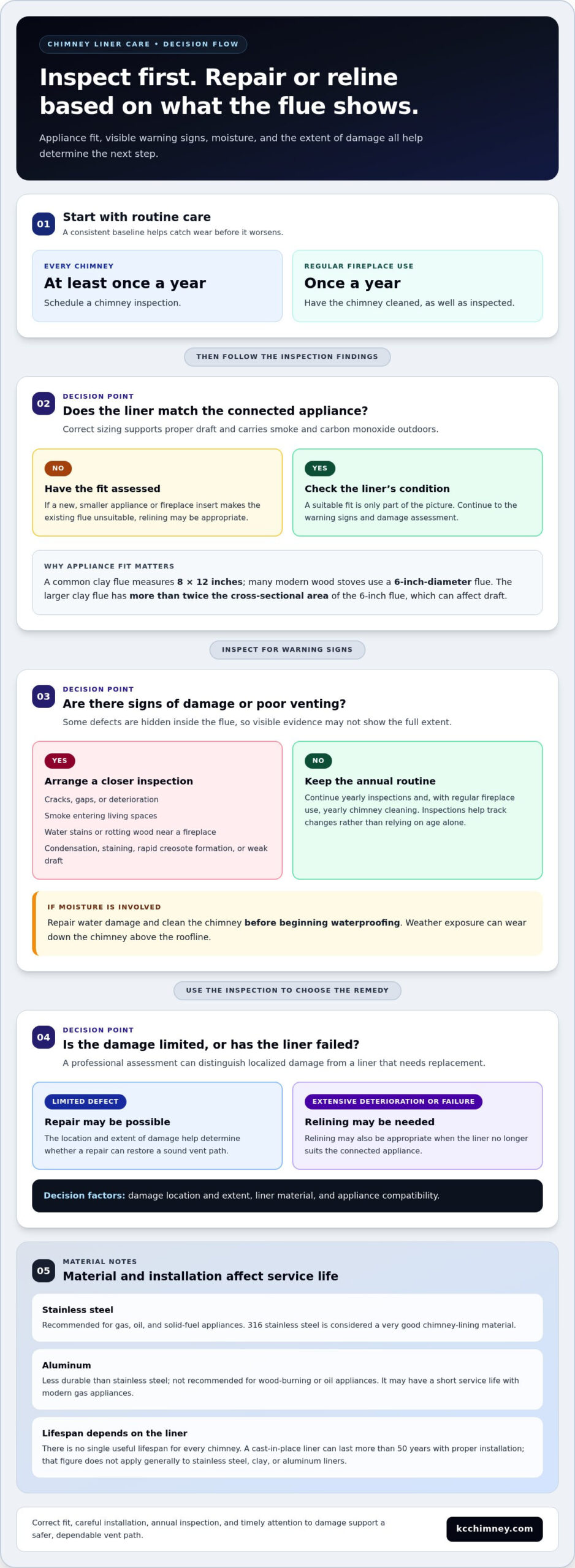
For example, a common clay flue measures 8 by 12 inches, while many modern wood stoves use a 6-inch-diameter flue. The larger clay flue has more than twice the cross-sectional area of the 6-inch flue. That difference can affect draft when an appliance connects to an existing chimney. Wood stoves are often designed for round openings of six or eight inches, so the liner’s size should match the appliance’s venting requirements rather than simply follow the old flue dimensions.
Installation details matter after sizing. Incorrect materials or poor liner installation can allow smoke to leak and create carbon monoxide hazards. Chimney liners must meet UL Standard 1777 requirements and be suitably listed and labeled. Installers should follow the liner manufacturer’s instructions and use the specified components. Where insulation is needed, its installation must follow those same instructions; the chimney’s clearances and applicable requirements also affect the setup.
A liner can also support appliance performance. Proper sizing helps maintain draft, and a well-sized liner can extend an appliance’s life and improve heating efficiency. Relining may be appropriate when a homeowner switches to a smaller, more efficient appliance or adds a fireplace insert, because the existing flue may no longer suit the new equipment.
Inspections help identify defects that aren’t visible from the room, while repairs address damage before it compromises the vent path. If relining is recommended, clear documentation of liner failure and the reason for the work helps homeowners understand the decision. Extending the life of a chimney liner in Stilwell starts with matching the appliance and liner, followed by careful installation and attention to damage.
Liner lifespan
A chimney liner’s service life depends on its material, installation, appliance, and maintenance. A damaged liner can sometimes be repaired; extensive deterioration or a liner that no longer suits its appliance may call for relining.
Maintenance for Stainless Steel Liners
Maintaining a stainless steel liner means inspecting and cleaning the vent path, then addressing moisture or creosote buildup. These steps matter because corrosion, deposits, and poor draft can affect the liner and appliance. Homeowners who use a fireplace regularly should schedule annual chimney cleaning and an inspection at least once a year to identify wear before it worsens.
Fuel and appliance operation also affect maintenance needs. Condensation, staining, rapid creosote formation, or weak draft can signal that flue gases are cooling, though fuel and appliance use may contribute too. An insulated liner may address these symptoms when cooling is involved. Repair water damage and clean the chimney before beginning waterproofing.
Signs of Liner Damage or Failure
Liner damage can include cracks, gaps, deterioration, or signs that the vent path no longer serves the connected appliance properly. Some defects are hidden inside the flue, so visible evidence may not show the full extent. Water stains on walls or ceilings, rotting wood around a fireplace, or smoke entering living spaces are reasons to take the condition seriously.
Material and installation history can help explain a liner’s condition. Aluminum liners are less durable than stainless steel and aren’t recommended for wood-burning or oil appliances. They may also have a short service life with modern gas appliances. A professional inspection can distinguish localized damage from a liner that needs relining.
Different liner materials have different durability profiles, so there isn’t one useful lifespan for every chimney. A cast-in-place liner can last more than 50 years with proper installation. That figure depends on the stated condition, proper installation; it isn’t a general lifespan for stainless steel, clay, or aluminum liners.
Stainless steel is recommended for gas, oil, and solid-fuel appliances. Alloy selection matters: 316 stainless steel is considered a very good chimney-lining material. The appliance’s fuel, operating conditions, fit, and exposure to moisture influence how the liner performs over time. Annual inspections help track changes rather than relying on age alone.
Repairs suit some limited defects, while relining addresses a liner that has failed or no longer matches the appliance. For example, a new, smaller appliance can make an existing flue unsuitable. The deciding factors include damage location and extent, liner material, and appliance compatibility. A professional chimney relining assessment can clarify whether repair or relining best restores a sound vent path.
What maintenance extends the life of a stainless steel chimney liner?
Caring for a stainless steel liner means combining regular cleaning and inspection with timely attention to moisture and draft changes. Homeowners who use a fireplace regularly should have the chimney cleaned once a year and inspected at least once a year by a CSIA-certified chimney specialist.
Keep cleaning and inspection on schedule
Cleaning removes deposits that build up as a fireplace operates, while an inspection helps identify developing problems. These are distinct tasks, and both support an informed view of the liner’s condition. For a household that burns wood regularly, clean the chimney annually; an inspection at least once a year provides a routine opportunity to assess it.
Changes in use matter, too. Switching fuel or appliances can affect how the liner performs, so mention any change during the annual inspection. A liner that served one appliance may need attention after a different one is installed. Matching the liner to the current setup keeps maintenance focused on the system in use.
Respond to moisture and draft symptoms
Condensation, staining, rapid creosote formation, and weak draft can point to flue gases cooling inside the chimney. An insulated liner may address these symptoms when cooling is a factor. Fuel and appliance operation can also contribute, so insulation alone may not resolve every cause. An inspection helps put the symptoms in context before repairs are chosen.
Moisture requires a careful sequence of work. Repair water-leak damage and clean the chimney before applying waterproofing. Waterproofing doesn’t replace repairs to existing damage or remove deposits inside the flue. For example, a stain near the fireplace or on a ceiling can prompt attention to both the leak and the affected chimney.
Use symptoms to guide follow-up
Watch for recurring changes between inspections. A new stain, repeated condensation, or weaker draft can reveal information about the liner and appliance’s operation. Note when the symptom appears and whether it follows a change in fuel or fireplace use. These details can help distinguish a moisture issue from one related to the appliance or flue-gas cooling.
Regular chimney sweeping supports liner maintenance by removing deposits, while repairs address damage rather than simply covering its effects. If cleaning doesn’t resolve rapid creosote buildup or weak draft, mention those symptoms during the inspection. A considered response can target the cause, whether it involves moisture, cooling, fuel, or appliance operation.
How can homeowners tell if a chimney liner is damaged or failing?
Clues can appear inside the home, around the fireplace, or on the chimney itself. Water stains on walls or ceilings, wood rot near a fireplace, smoke entering a room, or recurring draft trouble deserve attention. These signs don’t reveal the liner’s full condition by themselves, but they can point to problems affecting the chimney system.
Water damage can leave visible evidence before the liner can be seen. A stain near the chimney or damp, deteriorating wood around a fireplace may indicate water penetration. Moisture can crack or deteriorate a flue lining system, while water entering a chimney can rust its accessories. Follow the trail rather than treating an indoor stain as an isolated cosmetic issue.
Pay attention to changes while using the fireplace. Smoke backing into the living space may indicate improper draft, incorrect liner sizing, or a venting problem. Weak draft, condensation, staining inside the chimney, or rapid creosote formation can also point to cooling flue gases. Fuel and appliance operation may contribute, so these symptoms don’t identify a single cause on their own.
Record what happens and when. Note whether smoke appears as a fire starts, whether staining returns after rain, or whether a draft change began after an appliance change. Those details can connect a symptom to moisture, appliance use, or liner performance. Don’t assume that a fireplace that still operates has an intact flue; some liner defects remain hidden.
A chimney inspection can assess areas homeowners can’t see from the fireplace opening. It can help distinguish water damage, liner deterioration, and a mismatch between the flue and appliance. If relining is recommended, the failure should be documented and the reason explained clearly. That evidence helps homeowners understand whether the issue calls for a repair, liner replacement, or work on another chimney component.
Water-related clues can extend beyond the liner itself. A cracked crown, for example, can let water enter near the chimney; a damaged chase cover or missing cap can also leave parts of the system exposed. Moisture may then affect masonry, accessories, and the flue lining. Look for recurring stains and visible exterior deterioration, not only changes inside the home.
Treat smoke entering a room or signs of carbon monoxide backup as urgent safety concerns. Stop using the affected appliance until the venting problem has been assessed. A clean fireplace opening cannot confirm that the liner is sound, and no visible damage doesn’t rule out a hidden defect. Timely inspection and appropriate repairs can identify the issue before it causes further chimney or home damage.
How does Kansas weather affect chimney liner lifespan and maintenance?
In Stilwell, moisture is a key weather-related concern for chimneys. It can affect the masonry, chimney accessories, and flue lining, so the liner’s condition depends partly on protecting the entire structure. The Chimney Safety Institute of America identifies water as a major threat to chimneys.
Look closely at the chimney above the roofline. Bricks exposed to weather often deteriorate faster than brickwork below the roof, which is more sheltered. Crumbling or damaged masonry can let water enter. Once moisture reaches the flue, it can crack or deteriorate the lining system, potentially compromising the passage that carries combustion gases outdoors.
Water can damage more than brick and liner material. Chimney accessories may rust, while persistent water penetration can damage a central heating system. In severe cases, moisture-related deterioration can contribute to a chimney tilting or collapsing. Recurring water entry is a structural concern, not just a stain to cover inside the home.
Look for signs such as water stains on ceilings or walls, visible deterioration above the roof, and rust on chimney components. Each clue can help focus an inspection. A stain near the chimney after rain may indicate water entry, while rust on an accessory points to prolonged moisture exposure. Neither symptom alone identifies every damaged component.
Waterproofing can help protect brick masonry, but it doesn’t replace repairs to existing damage. Repair water leaks and clean the chimney before waterproofing. Brick masonry chimneys need waterproofing every other year. This interval supports ongoing protection, while the chimney’s current condition determines whether repairs must come first.
The crown matters because it helps shield the chimney’s top. A cracked crown can allow a leak near the chimney within a couple of months if the repair isn’t done perfectly. Proper crown repairs are therefore important for limiting water entry. Addressing visible cracks promptly can help prevent moisture from reaching masonry and flue components.
After severe weather or visible signs of leakage, pay attention to new stains, rust, and masonry changes. Track where the symptoms appear and whether they return after rain. A professional inspection can assess the exposed chimney and identify water-related damage that isn’t visible indoors. For help assessing moisture exposure and chimney condition, arrange a chimney evaluation.
Use the contrast between exposed masonry and the more sheltered brickwork below the roofline to guide maintenance checks. Note any visible deterioration concentrated near the top, especially after weather exposure, rather than judging the chimney by its indoor appearance alone. Checking the exposed area can help an inspection consider the full route moisture may take to reach the flue lining.
Best Chimney Services: Chimney Sweeping
Best Chimney Services provides chimney sweeping to help homeowners maintain a clean, well-functioning flue. Homeowners who use a fireplace regularly should have the chimney cleaned once a year. An inspection can identify liner damage or moisture concerns that cleaning alone won’t address.
If an inspection reveals a failed liner, chimney relining may restore a suitable vent path. Water entry near the crown may call for crown repair instead. Matching the work to the issue addresses the cause, whether it’s deposits, liner deterioration, or a damaged crown.
For chimney sweeping, relining, or crown concerns, contact Best Chimney Services to discuss your chimney.
Make Your Chimney’s Next Season a Safer One
For homeowners focused on extending the life of a chimney liner in Stilwell, the next step is to connect the liner’s condition with how the fireplace is used. A planned appliance change, recurring performance concern, or inspection finding can guide a sensible maintenance decision before the next heating season.
Best Chimney Services offers chimney sweeping and chimney relining for ongoing care or liner concerns. If you’re considering a gas fireplace insert, discuss how the change may affect the existing venting system. Matching the work to the home’s needs keeps the focus on dependable fireplace use rather than unnecessary repairs.
Bring your questions and any inspection findings into the conversation. Contact Best Chimney Services today to discuss the next step for your chimney. A clear plan can help you move forward with greater confidence and peace of mind.
Frequently Asked Questions
What factors shorten the life of a chimney liner?
Moisture, unsuitable materials, poor installation, and deposits can all shorten a liner’s useful life. Water entering through a damaged chimney top can reach masonry and flue components, while an appliance that doesn’t match its liner can contribute to poor draft and excess deposits. In Kansas, homeowners in Stilwell, Overland Park, Mission Hills, Bucyrus, and Spring Hill can watch for recurring leaks or staining and raise them during maintenance.
How often should a chimney liner be inspected and cleaned?
Have the chimney inspected at least once a year. Homeowners who use a fireplace regularly should have it cleaned once a year. Inspection and cleaning serve different purposes: cleaning removes deposits, while an inspection assesses the chimney and liner’s condition. A change to a different appliance can affect how the existing flue performs, so mention it during the next inspection.
What is the average lifespan of stainless steel, clay tile, and cast-in-place chimney liners?
A cast-in-place liner can last more than 50 years with proper installation. Stainless steel and clay tile liners don’t have one lifespan that applies to every chimney; material condition, installation, moisture exposure, and appliance use all matter. Clay tiles have been used to line chimneys for 100 years, but that history doesn’t establish an individual liner’s service life. Inspections help assess actual condition rather than age alone.
What are the safety risks of using a chimney with a damaged liner?
A damaged liner can let smoke and carbon monoxide leak into the home or expose nearby materials to heat, increasing fire risk. Incorrect sizing can also disrupt draft, cause smoke to back up, or prevent an appliance from operating properly. If smoke enters a room or the chimney shows signs of damage, stop using the appliance until the venting system has been assessed. Visible wear may not reveal hidden liner damage.